Part IV
Fruit & vegetable
Kitchen-garden crops and market fruit — common, heirloom, and exotic — filed as food first.
50 plates in this section
Food first. Traditional notes are kitchen history, not a prescription. Nightshade leaf, raw cassava, and unripe astringent fruit stay on the plate’s caution line.
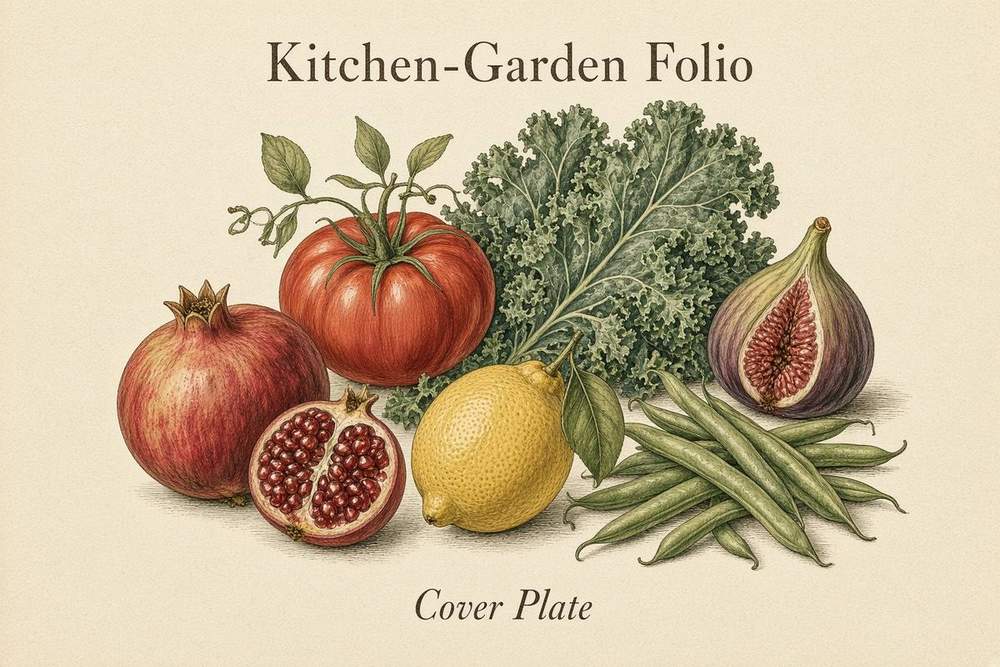
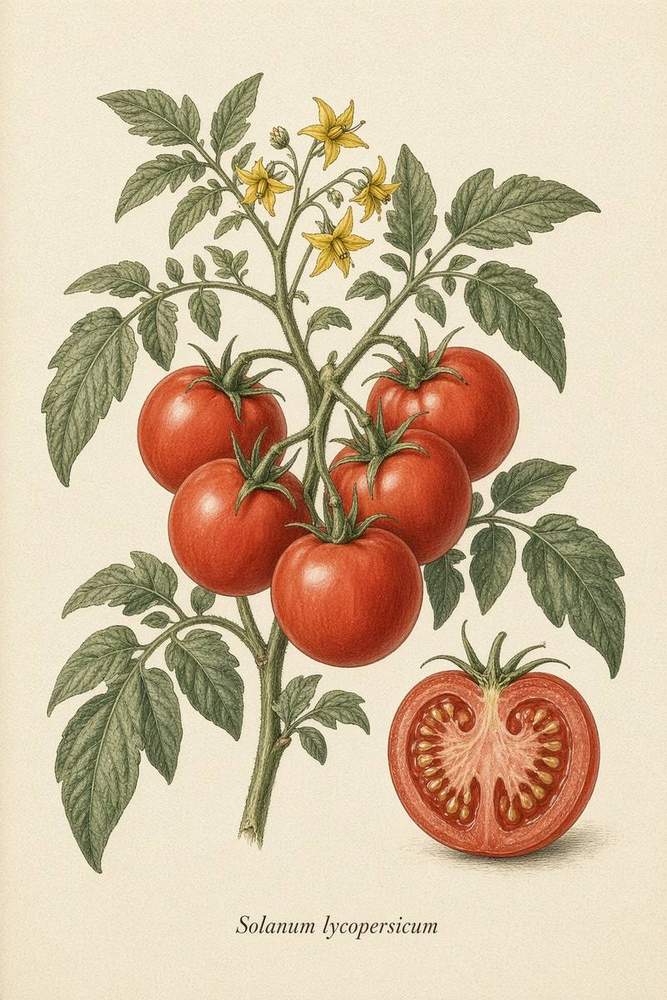 No. 187
Tomato
Solanum lycopersicum
The kitchen-garden berry we treat as a vegetable — acid, sweet, and the color of a summer table.
Acid, sugar, a little green stem. Heirlooms taste of the variety; a winter hothouse tastes of the box.
Harvest: 60–85 days from transplant to ripe fruit
Nahuatl tomatl. The Spanish brought it; Italians named it pomodoro, golden apple, before it was red. Northern Europe treated it as an ornamental poison for a century because it is a nightshade. Jefferson grew it at Monticello anyway. The ketchup bottle is a later, sweeter argument.
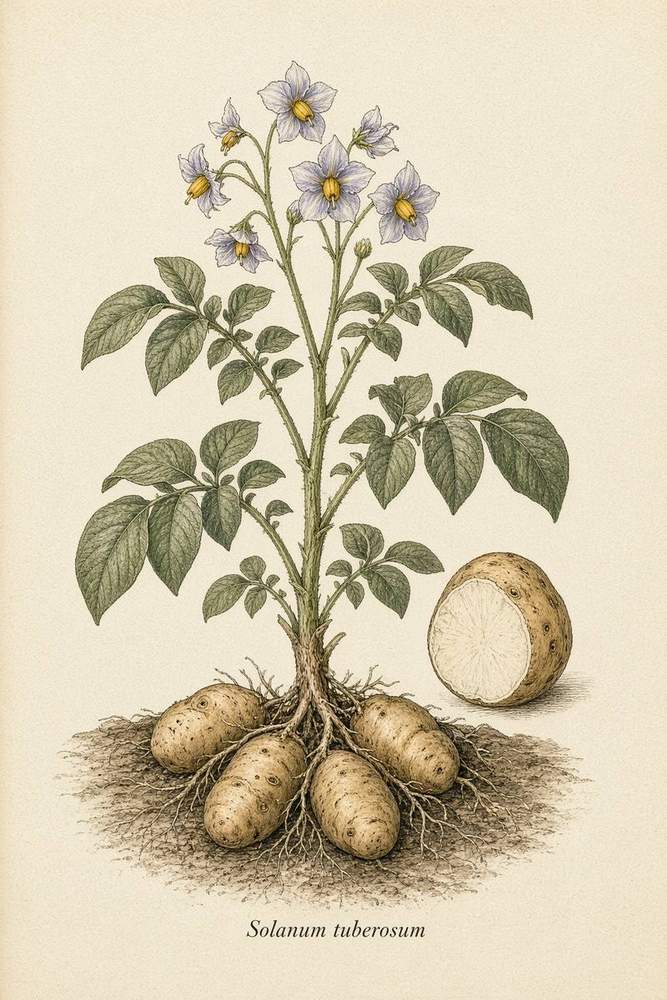 No. 188
Potato
Solanum tuberosum
The Andean tuber that feeds the world — and a nightshade whose green skin and sprouts are not supper.
Earth, cream, a little sweetness when young. Old and green is bitter — listen to that.
Harvest: 70–120 days from planting, variety depending
Quechua papa. The Spanish took it; the Irish made it a fate. The 1840s blight was a pathogen plus a monoculture. Andean farmers already kept hundreds of varieties at altitude. A russet in a bag is one vote. The leaf still tells you it is a nightshade.
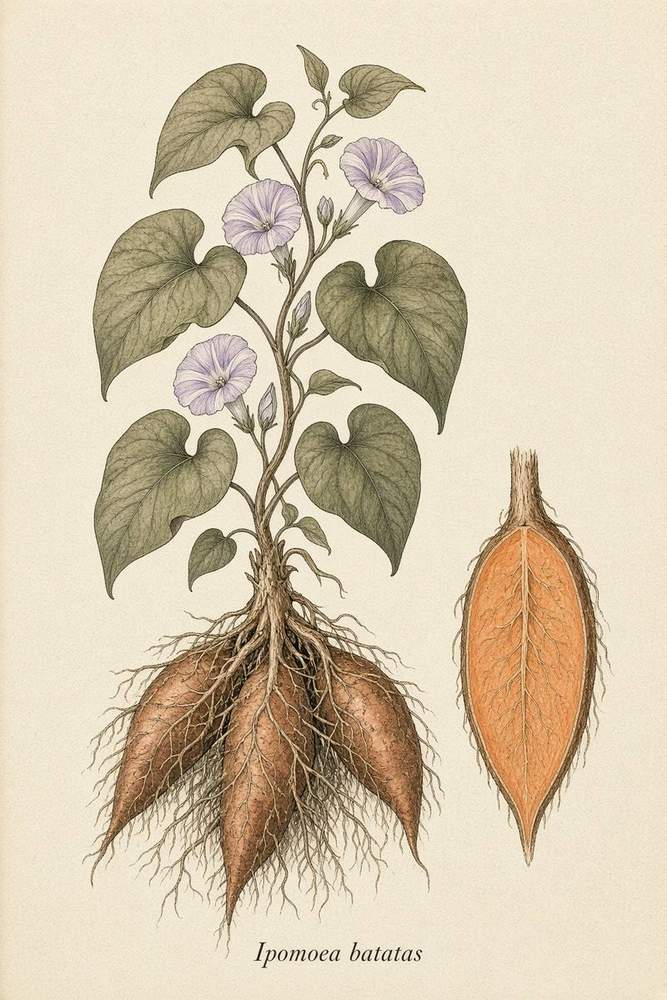 No. 189
Sweet potato
Ipomoea batatas
A tropical morning-glory grown for its sweet orange (or white, or purple) storage root — not a yam, not a potato.
Orange types are pumpkin-honey. White types are drier, chestnut. Purple is a pie.
Harvest: 90–120 days from slips
The word yam on a can in the United States is a marketing error. Enslaved West Africans already knew true yams (Dioscorea); the Ipomoea they were given in the South was a different plant that they made into a cuisine anyway. Polynesians carried it across the Pacific before Columbus. The orange pie is a later, American sweetness.
 No. 190
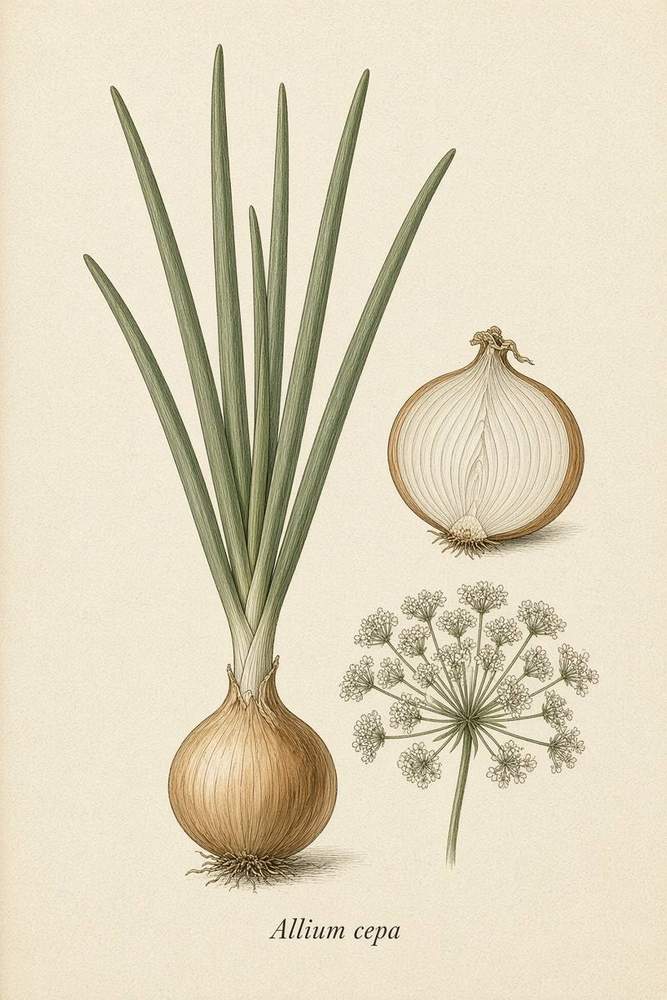
Onion
Allium cepa
The bulb that starts the pan — a kitchen allium with a long folk record as food, not as a syrup protocol.
Sweet when cooked long; sharp and sulfurous raw. A spring onion is a milder, greener cousin.
Harvest: 90–120 days from sets; longer from seed
Egyptian laborers were paid in onions, or so later writers liked to say. The English ‘onion’ is Latin unio, a single pearl. Medieval Europe hung them against plague with the usual success. The kitchen already knew the useful part: start the pan with them.
 No. 191
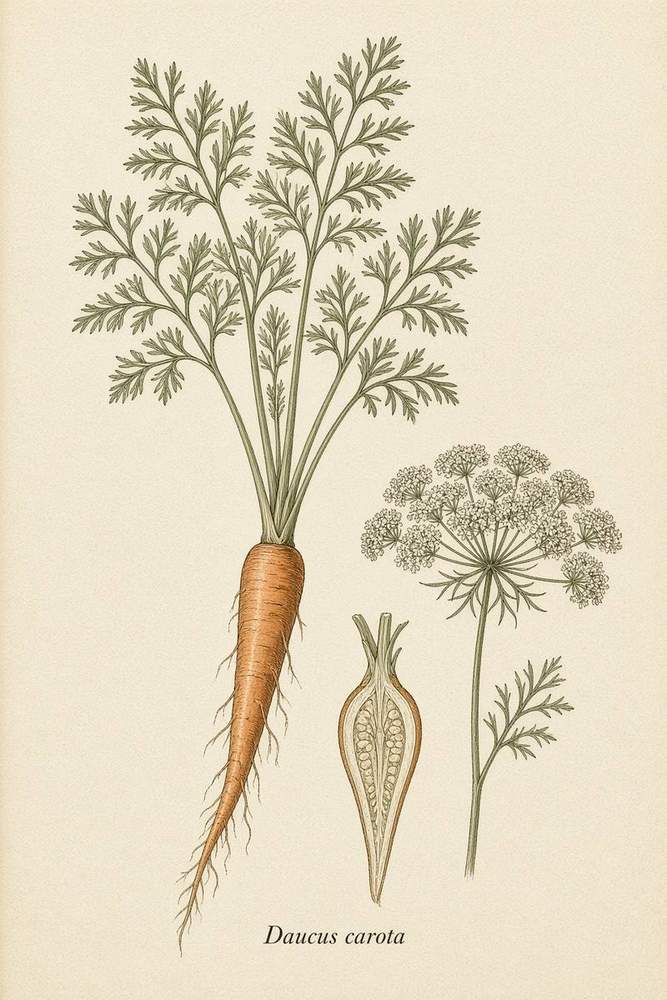
Carrot
Daucus carota subsp. sativus
The orange kitchen root — a biennial you pull in year one, with a folklore about eyesight that outran the soup.
Sweet earth, especially after a frost. Old woody cores taste like the word ‘storage.’
Harvest: 55–80 days for fresh; longer for storage types
The original carrot was purple, yellow, or white. Orange is a 17th-century Dutch patriotism story that may even be true. The Blitz-era tale that carrots gave RAF pilots night vision was a cover for radar. Your grandmother was not entirely wrong about the pigment. She was wrong about the Spitfire.
 No. 192
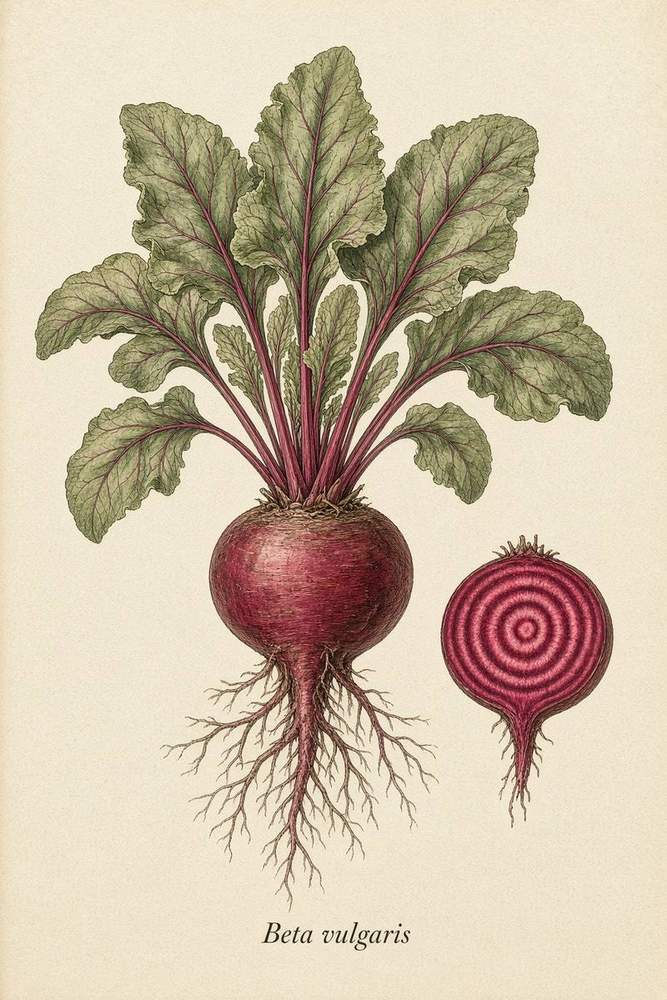
Beet
Beta vulgaris
A magenta kitchen root that stains the board — leaf and globe both food, with a folklore as a blood builder that is mostly the color talking.
Sweet earth, a little iron. Leaf is chard with more spine.
Harvest: 50–70 days to a kitchen globe
Roman beet was mostly leaf. The swollen globe is medieval. Russian borscht and Ashkenazi pickled beet are the same plant arguing in two kitchens. Sugar beet, a 18th-century Silesian selection, ended a rum-and-cane monopoly without tasting like dessert.
 No. 193
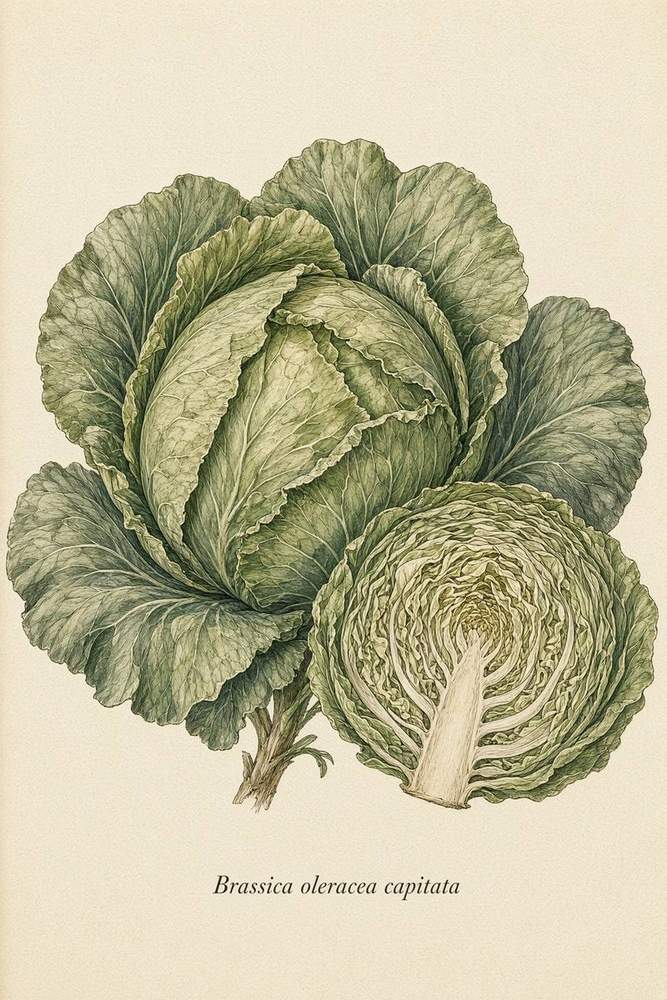
Cabbage
Brassica oleracea var. capitata
The headed brassica of winter tables — a fermented folklore as much as a boiled one.
Sweet when cooked slow or after frost; sulfur if boiled to death. Fermented is another plant entirely.
Harvest: 70–100 days from transplant
Cato the Elder swore cabbage would fix Rome. It did not. Captain Cook carried sauerkraut against scurvy and it actually helped, because fermentation keeps vitamin C when a long boil would not. The Irish bacon-and-cabbage plate and Korean kimchi are the same species in two winters.
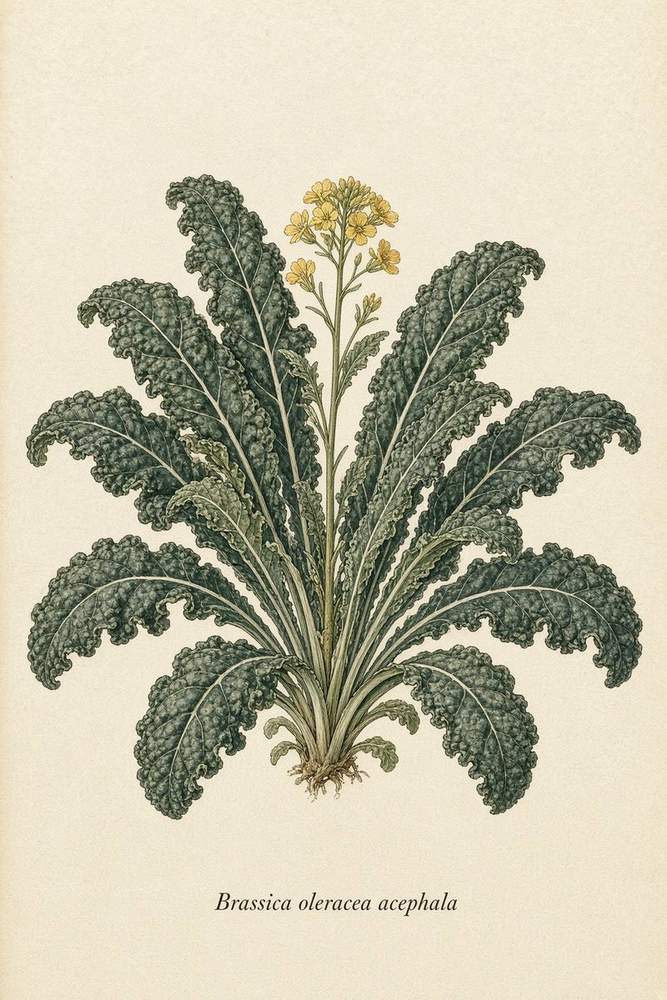 No. 194
Kale
Brassica oleracea var. acephala
The unheaded cabbage — a winter green that smoothie culture rediscovered and cottage gardens never forgot.
Green, a little cabbage-sweet after frost. Tuscan types are deeper; curly types hold dressing.
Harvest: 50–65 days to a first picking
Before heading cabbage, this was just cabbage. Scottish kail was the dinner and the garden. Smoothie shops did not invent it; they put it in a cup with pineapple so you would forgive it. Colcannon still knows the older use.
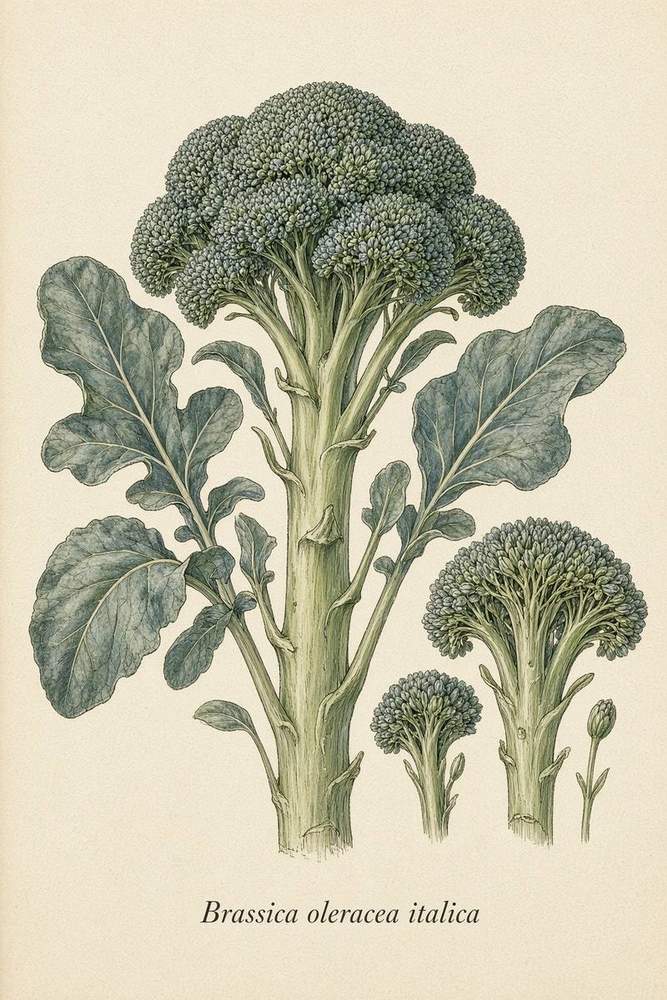 No. 195
Broccoli
Brassica oleracea var. italica
An Italian selection of cabbage grown for its unopened flower — a green you eat before it becomes a yellow bouquet.
Green, faintly cabbage, nutty when roasted. Overboiled is sulfur and surrender.
Harvest: 55–80 days from transplant
The Latin broccolo is a sprout or shoot. Calabrian and Roman kitchens had it before it was an American steam-tray. Thomas Jefferson seeded it at Monticello; it still took the 20th century to make it ordinary. The yellow flower is not a failure. It is a brassica finishing its sentence.
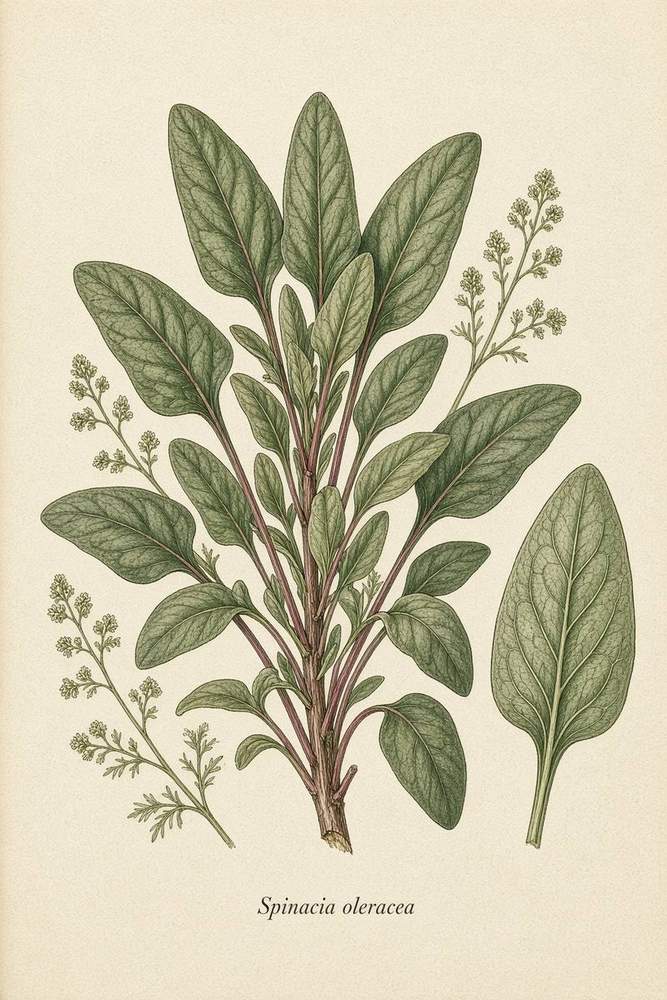 No. 196
Spinach
Spinacia oleracea
A Persian green that bolts when the days lengthen — cook a pile, because it vanishes in the pan.
Green, mineral, a little iron. Young is tender; old is sand and stem.
Harvest: 30–45 days to a first cutting
Persian aspanākh. The Arabs took it west; medieval Spain sent it north. Popeye’s can was a 20th-century cartoon about iron, based on a decimal-point error that nutrition textbooks copied for decades. The kitchen already knew it as a green that disappears when you cook it, which is why you pick a pile.
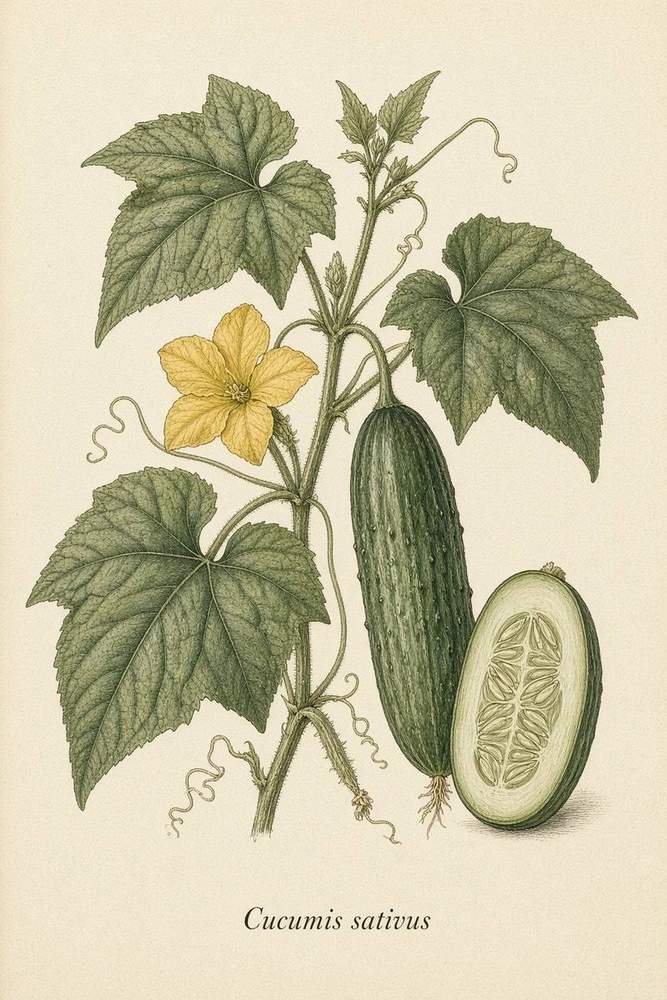 No. 197
Cucumber
Cucumis sativus
A cooling kitchen fruit of the vine — eaten unripe, pickled, or sliced, and a folklore sedative that is mostly water.
Water, a little green melon. A bitter one is a warning, not a variety note.
Harvest: 50–70 days from sow
The Roman emperor Tiberius supposedly ate them out of season from wheeled frames — an early greenhouse story. Indian kitchens pickled and raita’d them long before that. ‘Cool as a cucumber’ is 18th-century English. The water content did the work; the folklore added a nap.
 No. 198
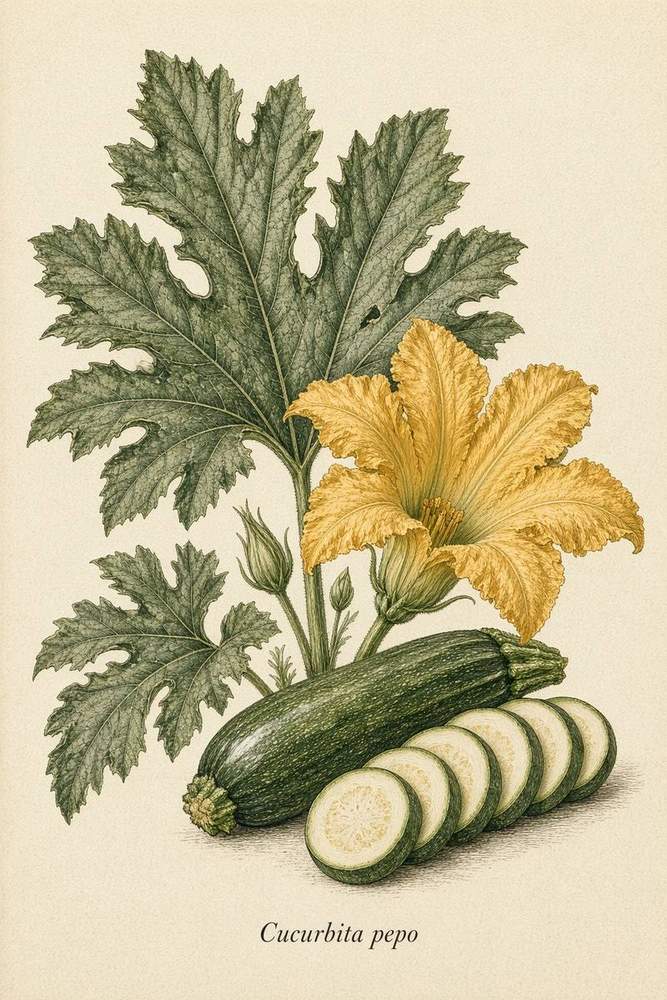
Zucchini
Cucurbita pepo
The summer squash that becomes a club overnight — pick small, cook often, give the rest away.
Mild, green, a little seed when large. Blossoms taste of the plant’s pollen and butter.
Harvest: 45–55 days from sow to a first fruit
The word is Italian zucchino, a little gourd. Mesoamerica had the species first. American gardeners learned to lock the back door in August. A 1970s casserole with a can of soup is not traditional; a blossom in batter is.
 No. 199
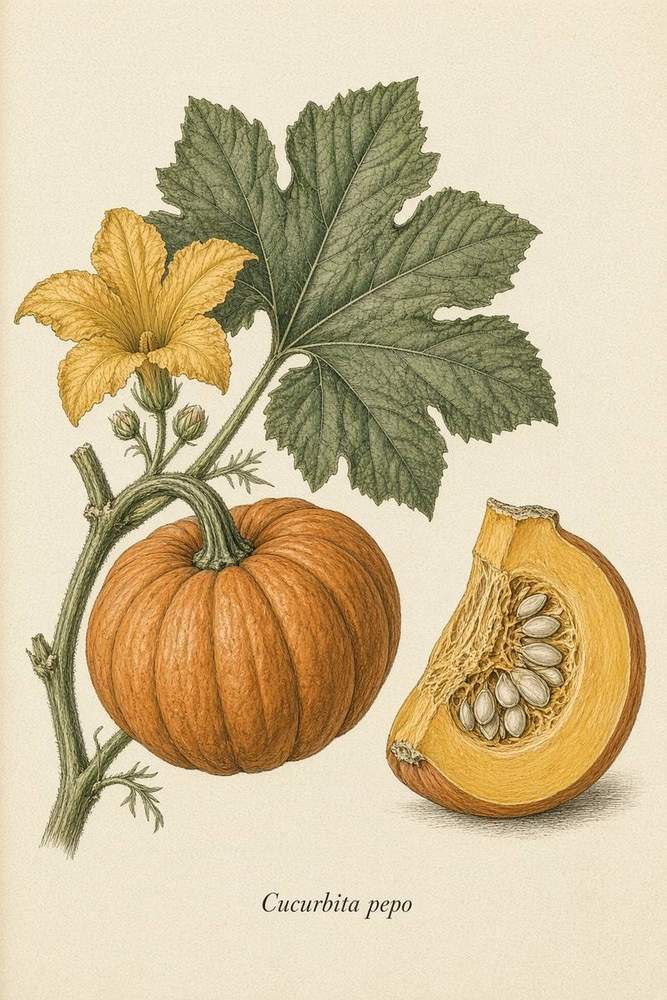
Pumpkin
Cucurbita pepo
A Mesoamerican winter squash we carved into a face — the food is the dry, sweet flesh and the seed.
Sweet, chestnut, a little string. Seed is nutty when roasted.
Harvest: 90–120 days from sow
The Irish carved turnips. America had pumpkins, so the face moved house. Indigenous Three Sisters agriculture already had the squash under the corn. Canned pie filling is Hubbard or a Dickinson moschata more often than the porch pumpkin, which is a useful honesty in November.
 No. 200
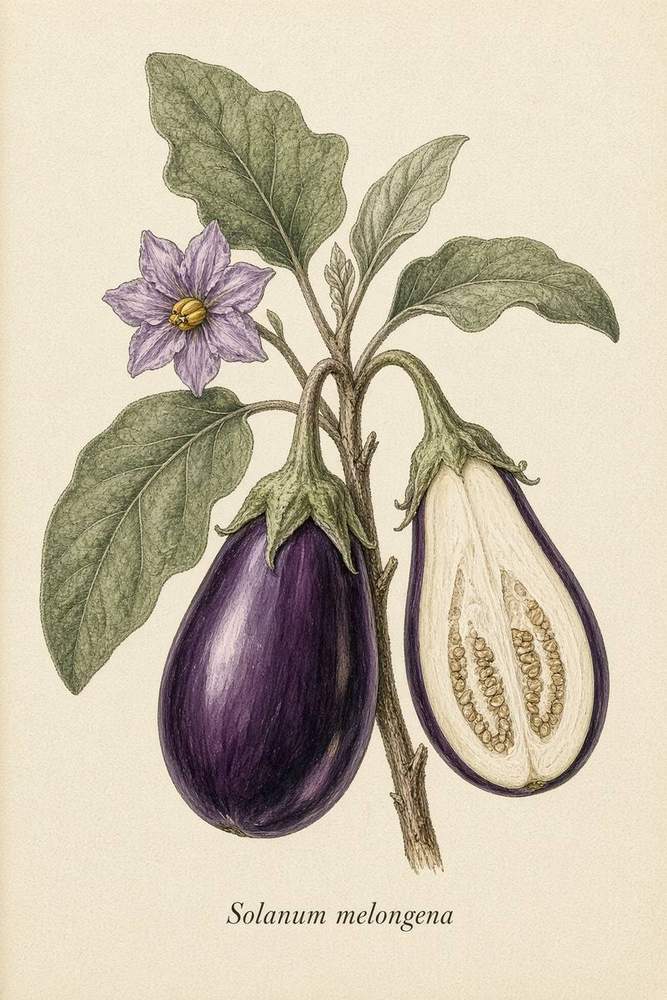
Eggplant
Solanum melongena
The glossy nightshade fruit of Asian and Mediterranean kitchens — bitter if underripe, silk if cooked with oil.
Mild, smoky when fire-roasted, bitter if seedy and underripe. Oil is not optional.
Harvest: 70–85 days from transplant
Sanskrit vatinganah wandered into Persian, Arabic, and then Catalan albergínia — hence aubergine. The English egg-plant is a white cultivar that looked like a hen’s egg on a stall. Imam bayildi, ‘the imam fainted,’ is a Turkish oil story. He did not faint from medicine. He fainted from the olive oil bill.
 No. 201
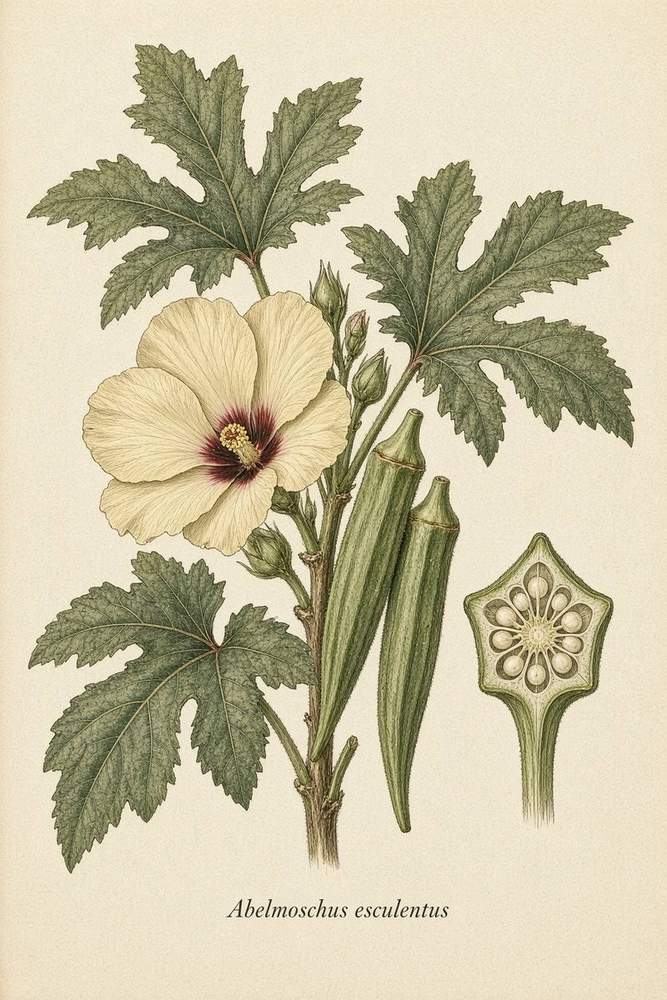
Okra
Abelmoschus esculentus
A West African mallow whose young pods silk a stew — the Southern pot crop that hates the cold.
Green, a little hibiscus, slippery when cooked wet. Roasted, it behaves.
Harvest: 50–65 days from sow in heat
The word okra is from Igbo ọ́kụ̀rụ̀. Enslaved West Africans brought the seed and the pot. Louisiana gumbo is that pot meeting French roux and Choctaw filé. India had bhindi on its own clock. A Victorian English visitor called it lady’s finger and still did not know what to do with the silk.
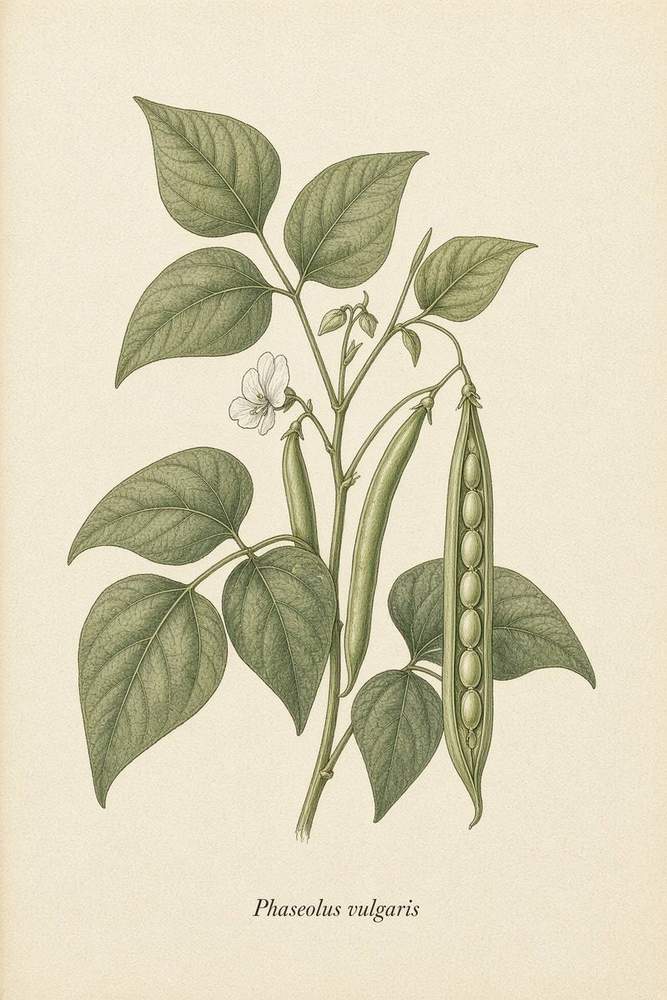 No. 202
Green bean
Phaseolus vulgaris
The snap pod of the common bean — pick young, cook, and do not confuse a tender filet with a raw red kidney.
Green, a little sweetness. A stringy old pod tastes like the word ‘should have picked yesterday.’
Harvest: 50–60 days bush; pole a little longer, then weeks of picking
Phaseolus fed the Americas before wheat did. The French haricot and the Italian fagiolini are the same species in a younger dress. ‘String bean’ is the old fiber along the seam that modern filet types bred out. The lectin story is real for red kidneys, which is why the snap pod and the chili bean are cousins you treat differently.
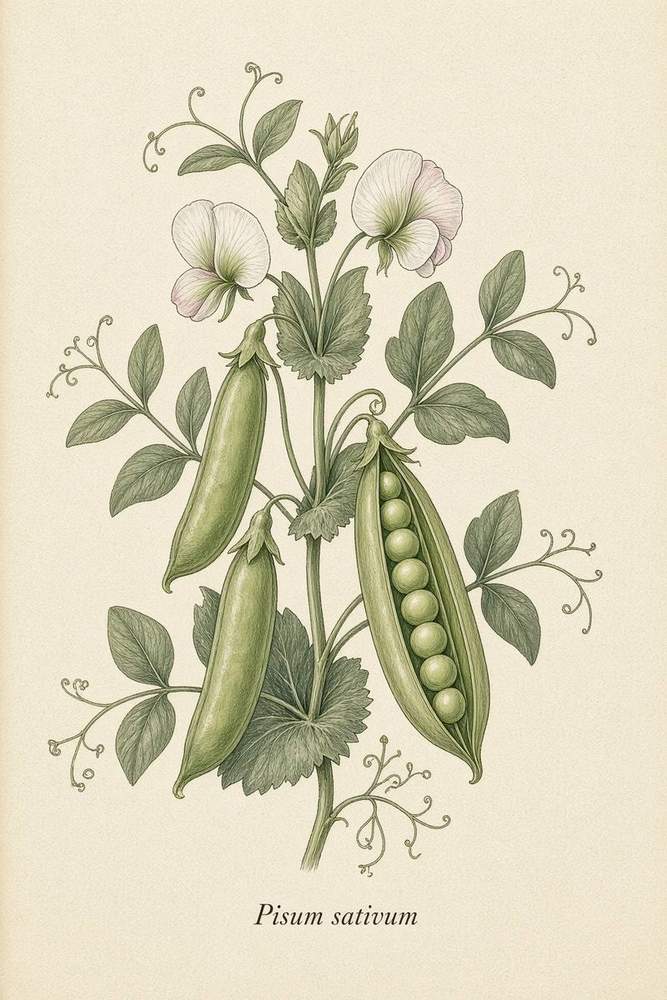 No. 203
Pea
Pisum sativum
A cool-season vine you eat as pod or seed — plant early, pick often, and never confuse it with a sweet pea.
Sweet when young. Starchy when old. Dried split pea is a winter soup, not a salad.
Harvest: 55–70 days from sow
Mendel’s monastery garden was this plant. The English ‘pea’ is older than the vegetable marrow. Split-pea soup is a medieval pottage that never needed a rebrand. The ornamental sweet pea stole the name and none of the supper.
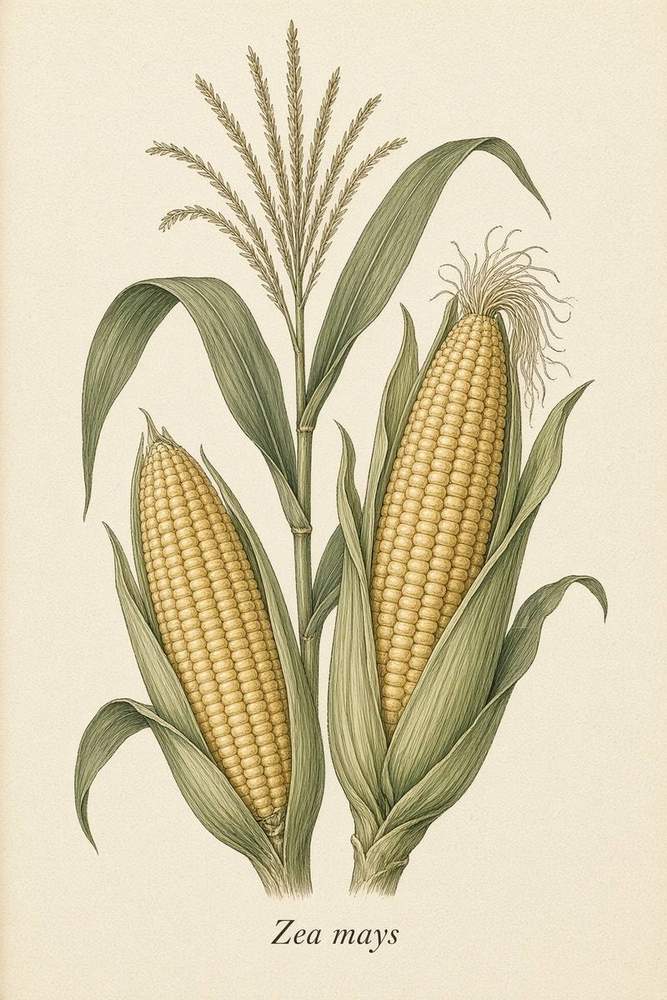 No. 204
Corn
Zea mays
Maize — the American grass that became a continent’s grain, and a sweet summer cob if you pick it the day the silk browns.
Milk and sugar when just picked. A day later it is field corn in a sweet jacket.
Harvest: 65–90 days, variety depending
Teosinte does not look like an ear of corn. That is how long people walked with it. Nixtamal — grain cooked with lime — is why Mesoamerican diets did not invent pellagra; later poverty diets of untreated meal did. The word corn in British English used to mean any grain. In America it means this one.
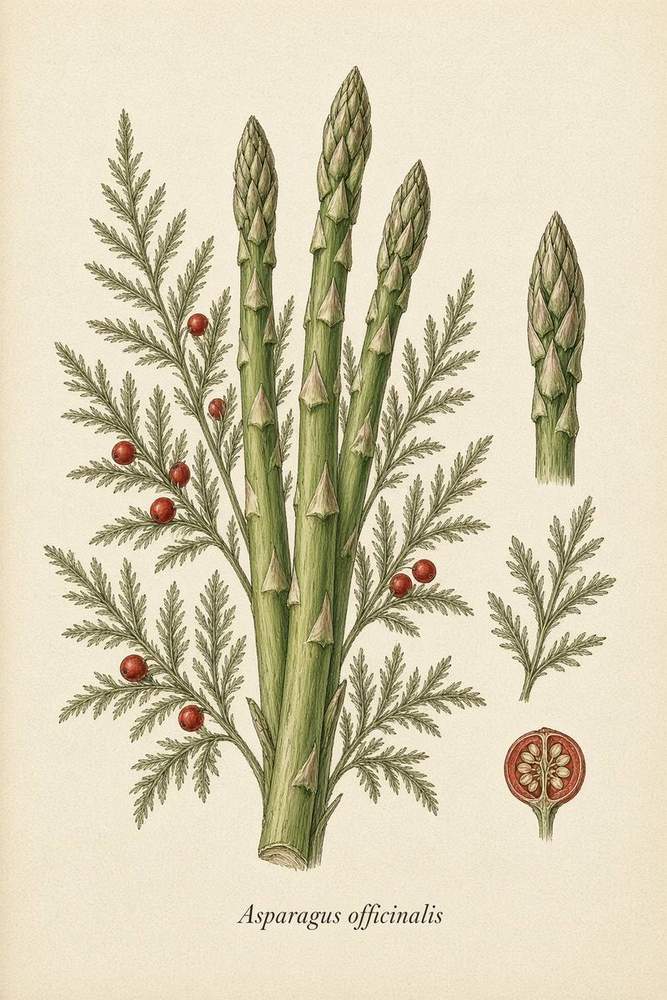 No. 205
Asparagus
Asparagus officinalis
A patient perennial — you wait two years, then eat the spears for a month each spring for twenty more.
Green, a little sulfur, grassy-sweet. White spears are the same plant, blanched under a mound.
Harvest: Two years to a first real cutting; then every spring
Roman writers already fussed over it. The name is Greek asparagos. Medieval Europe forgot it; French gardens brought it back as a luxury. The urine smell is methanethiol in people with the genes to notice it — a party trick, not a diagnosis. White asparagus is a mound of dirt, not a different species.
 No. 206
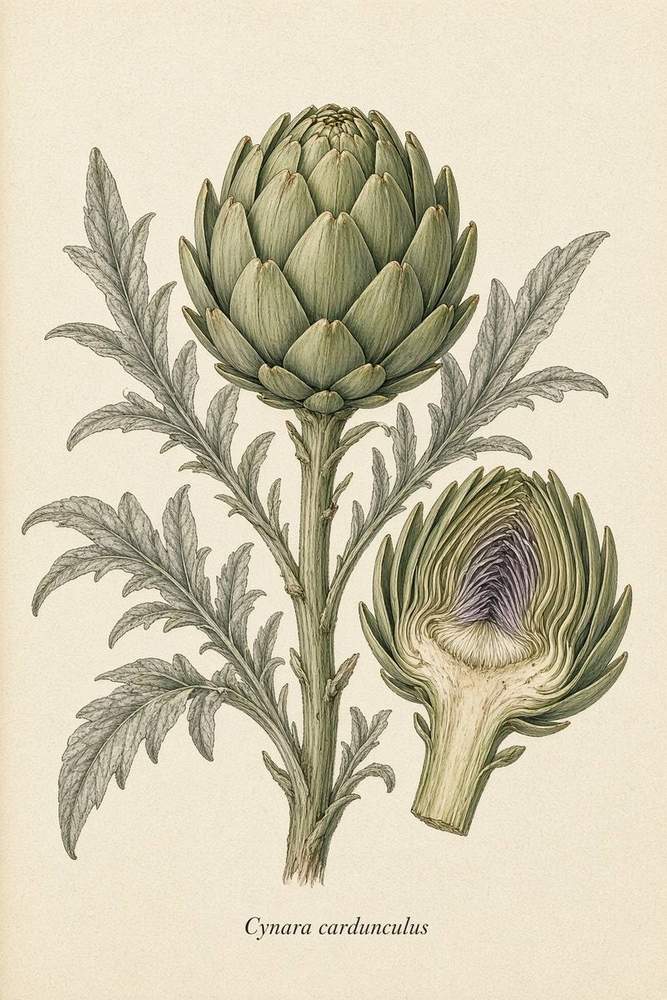
Artichoke
Cynara cardunculus var. scolymus
A giant thistle grown for the flower bud — you eat the bract bases and the heart, and throw away the choke.
Nutty, green, a little sweetness at the heart. Butter or lemon is the usual argument.
Harvest: Year two for a real perennial crop; a long-season annual from an early start
Arabic al-khurshuf became Italian carciofo and English artichoke. Catherine de’ Medici is blamed for bringing it to France, which is how all vegetables seem to travel in the stories. The choke is just the flower, impatient. Cardoon is the same species grown for the bleached stem — a different supper from the same thistle.
 No. 207
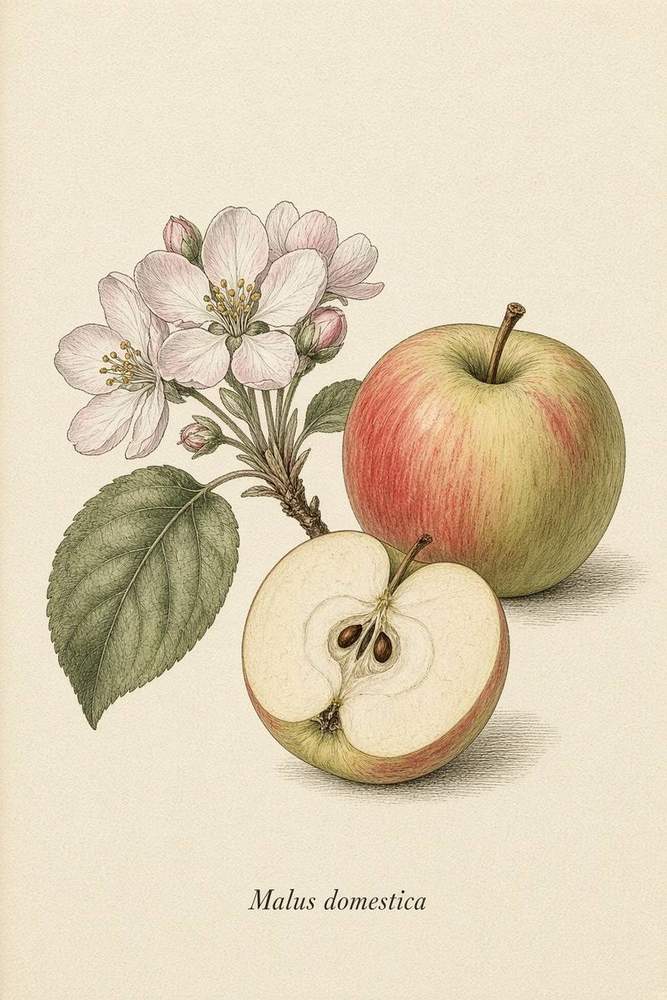
Apple
Malus domestica
The temperate orchard fruit — cider, pie, a pocket, and a folklore about doctors that is older than the clinic.
From honey-floral to cider-tart, depending on the variety. A mealy apple is a storage story.
Harvest: Years to first fruit; then late summer to autumn every year
Kazakh Almaty is ‘father of apples.’ The Silk Road did the rest. English cider is a fermented agriculture, not a juice box. ‘An apple a day’ is 19th-century marketing that outlived the original rhyme about paying the doctor. Newton’s apple is a better story than a better fruit.
 No. 208
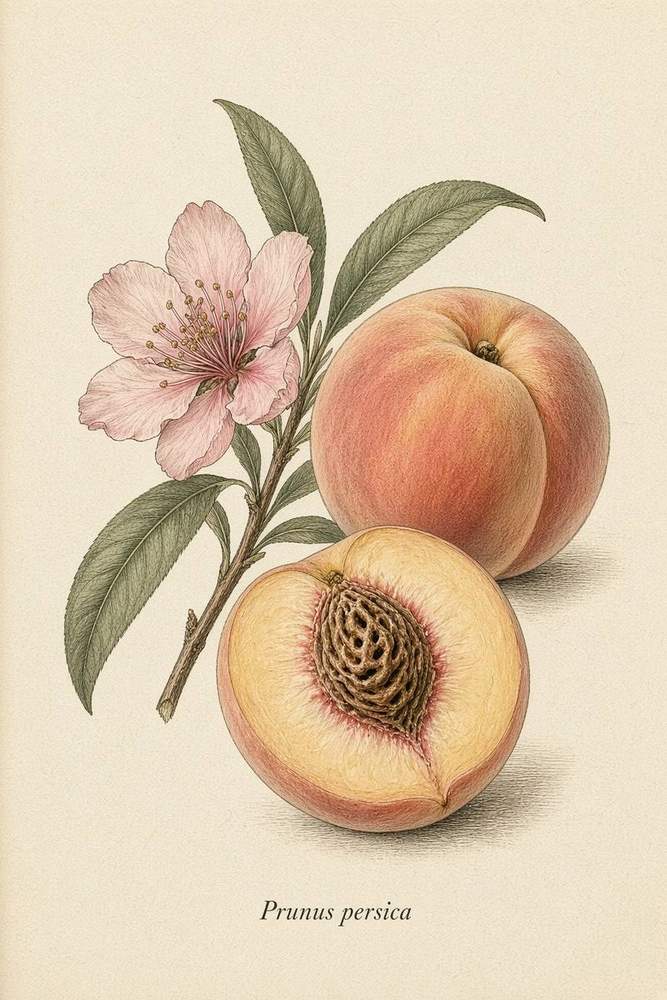
Peach
Prunus persica
A fuzzy Chinese fruit that Persia only forwarded — ripe flesh is the plate, and the pit is not a supplement.
Floral, honey, a little acid. Underripe is cardboard. Overripe is jam in your hand.
Harvest: Years to first fruit; then a short summer window
Chinese literature has the peach as immortality’s fruit. The botanical name still blames Persia. Spanish missions planted it in the American South; Georgia wrote the postcard. Laetrile is a 20th-century pit story with a poison-control ending. Eat the flesh.
 No. 209
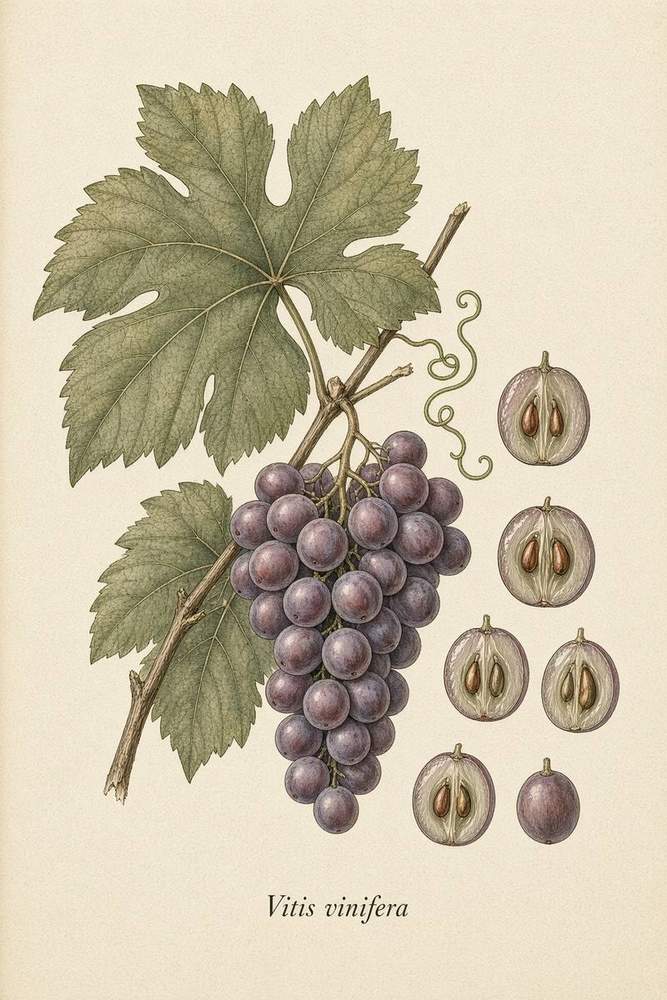
Grape
Vitis vinifera
The vine that made wine, raisins, and a table cluster — food first, and a very old human partnership.
From foxy Concord to tight wine acid. Table grapes are bred for snap and sugar.
Harvest: Years to a full arbor; then late summer to autumn
Georgia (the Caucasus) has the oldest wine jars. Egypt painted the harvest. Islam’s grape is still a table and a raisin. Phylloxera in the 19th century sent Europe to American rootstocks — a quiet graft that saved Bordeaux. The fox grape of the East is a different perfume, and a different jelly.
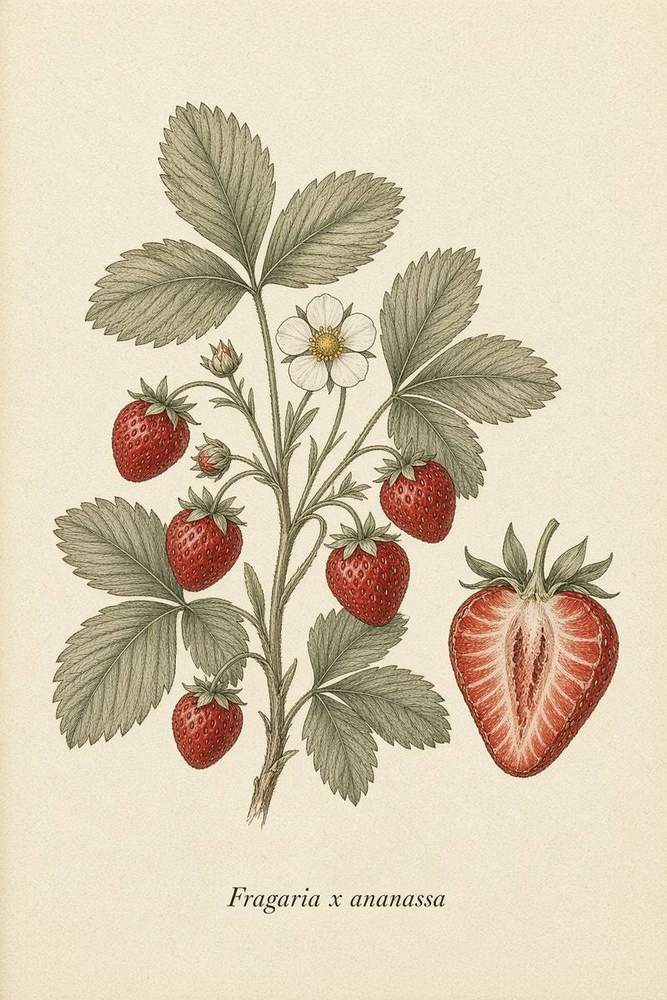 No. 210
Strawberry
Fragaria × ananassa
The garden berry that is not a true berry — a swollen receptacle wearing seeds on the outside, and a June that does not keep.
Perfume, acid, sugar. A hothouse winter berry tastes of the box. A June berry tastes of the field.
Harvest: A first spring from a fall-planted crown; then a season
The garden strawberry is younger than the United States. Breton and Breton-adjacent French gardens crossed the two American species in the 1700s. Medieval Europe had the woodland kind, a pinprick of perfume. The word strawberry may be the straw mulch or the stray runners. Either way, it was never a berry to a botanist.
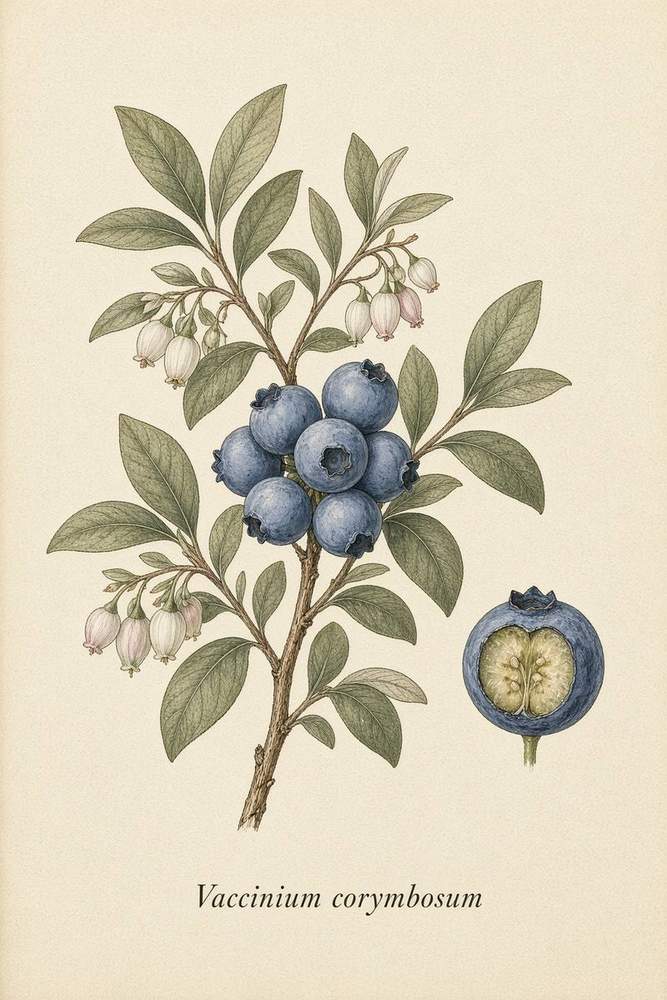 No. 211
Blueberry
Vaccinium corymbosum
An eastern acid-soil berry with a bloom on the skin — a pie fruit that will not grow in lime.
Sweet-tart, a little floral. Wild lowbush is denser and louder.
Harvest: A young bush in 2–3 years; a hedge for decades
Indigenous nations of the east dried them into cakes and winter meat. Elizabeth White and Coville made a farm crop of the highbush in New Jersey in the 1910s. The wild Maine lowbush harvest is a different, older economy. The bloom on the berry is why a washed pint looks duller and why a dusty pint looks like money.
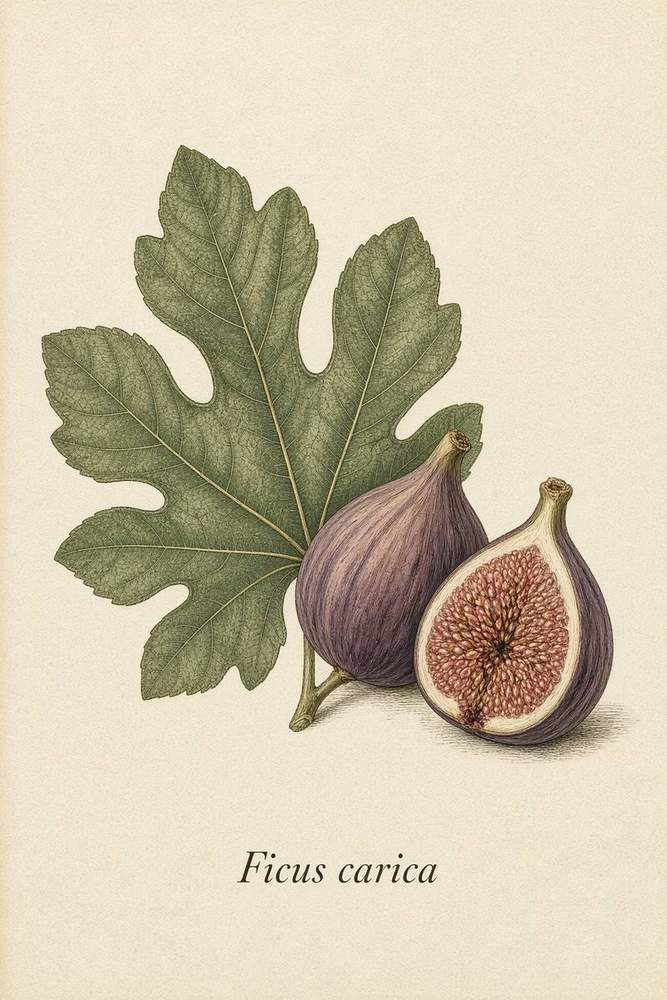 No. 212
Fig
Ficus carica
A Mediterranean hollow fruit that is not a fruit in the usual way — an inside-out flower you eat when it droops.
Honey, berry, a little seed crunch. Dried is a different, louder sweetness.
Harvest: A cutting fruits in a year or two; then two flushes in a long season
Sumer already had it. The Greek and Hebrew canons use it as a household tree. The wasp story is true for some types and irrelevant for the common figs in a backyard. Spanish missions planted it in California. A dried fig in a winter pocket is older than sugar.
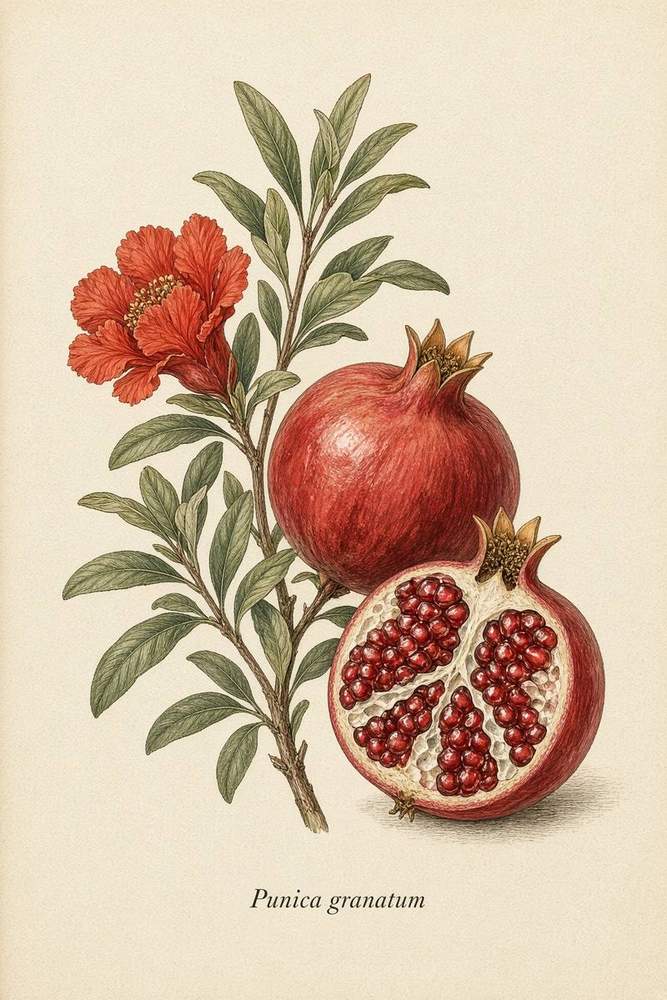 No. 213
Pomegranate
Punica granatum
A leathery fruit of the dry Mediterranean, packed with arils — juice and seed, not a rind tea.
Sweet-tart juice, a little tannin from the pith if you are careless. Seed crunch is the point.
Harvest: A few years to a first crop; then autumn
The Spanish city Granada is the fruit. Greek Persephone ate the seeds and had to stay in the underworld — a seasonal myth that still reads as a harvest. The Hebrew rimmon and the Quranic rumman are household words. Grenadine used to be this juice; now it is often something else. Buy the bottle that admits it.
 No. 214
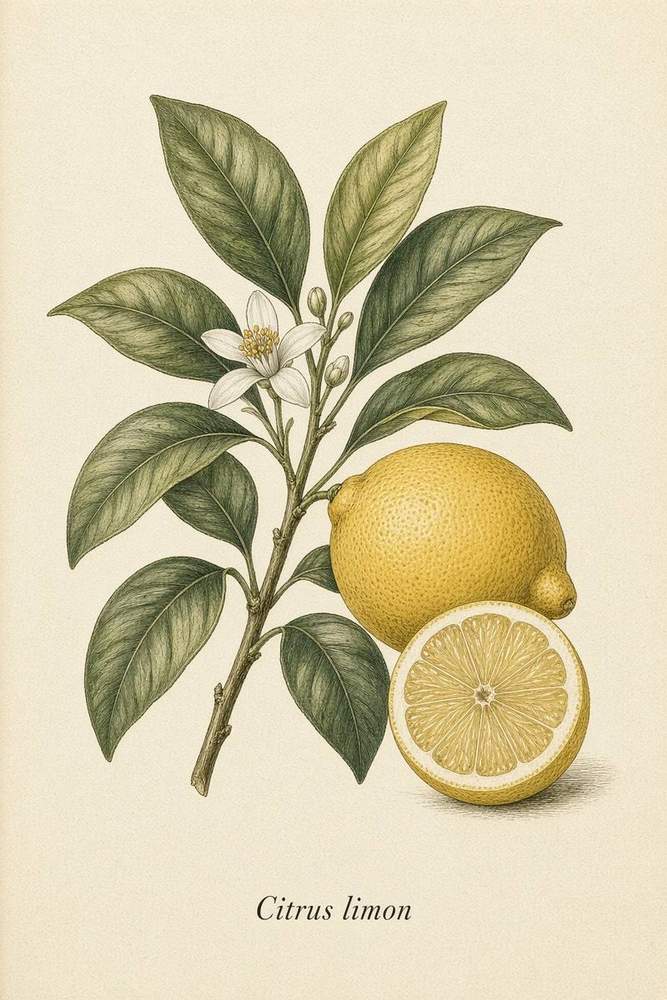
Lemon
Citrus limon
The acid citrus of the pantry — a squeeze, a preserved rind, a folklore cold cup that is mostly vitamin C and hot water.
Sharp acid, floral peel. Meyer is honey-orange at the edge.
Harvest: Years to a first honest crop; then nearly year-round in the right climate
Arab agriculture brought it west; Sicily and Spain made it ordinary. British sailors later got lime and lemon against scurvy — the ‘limey’ is a vitamin C story. Preserved lemon is a North African pantry older than the supermarket bottle. A lemon in tea is hospitality, not a protocol.
 No. 215
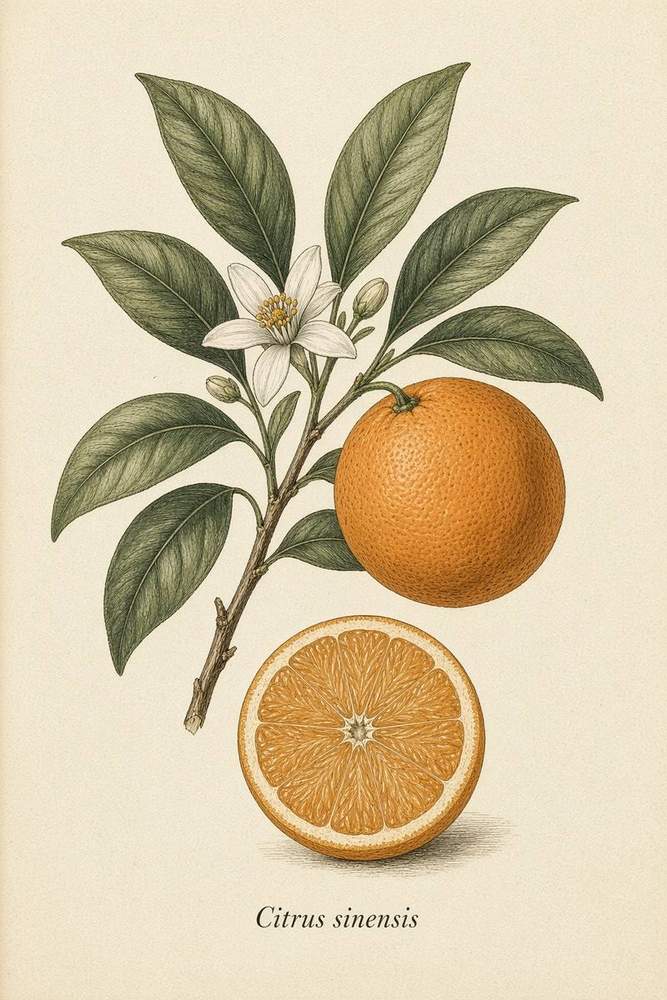
Orange
Citrus × sinensis
The sweet citrus of breakfast — a Chinese hybrid the world named after a color, or the color after the fruit.
Sweet, floral, a little pith bitterness if you go too deep. Blood oranges add raspberry.
Harvest: Years to fruit; then winter into spring, variety depending
The color orange enters English after the fruit, from Sanskrit naranga via Arabic naranj. Dutch royalty and the fruit collided in a flag. Florida’s groves are a 19th-century railroad story. A Christmas orange in a stocking is a northern memory of a time when the fruit was a gift, not a crisper drawer.
 No. 216
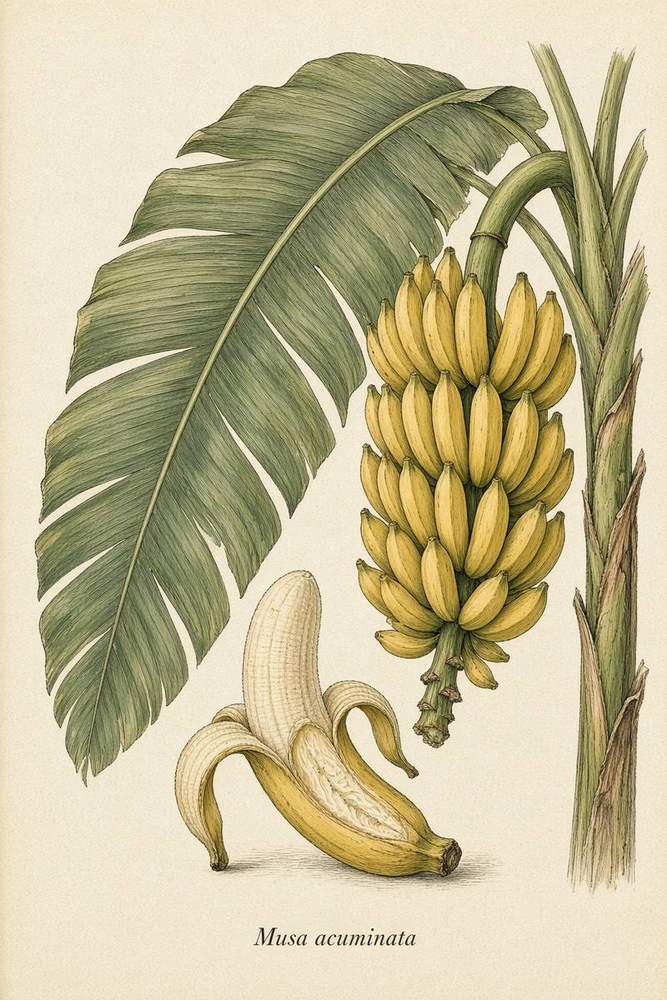
Banana
Musa acuminata
The tropical berry we treat as a fruit — a seedless clone that travels green and ripens in the bowl.
Custard, a little tropical flower. Green is starch; spotted is sugar.
Harvest: A pup may fruit in 12–18 months in heat
The Gros Michel was the banana until a fungus ate it. Cavendish is the understudy that got the job, and the same fungus is now in the wings. Arabic muz and the botanical Musa may share a root. Plantain is not a failure to ripen; it is a cooking banana with a different assignment.
 No. 217
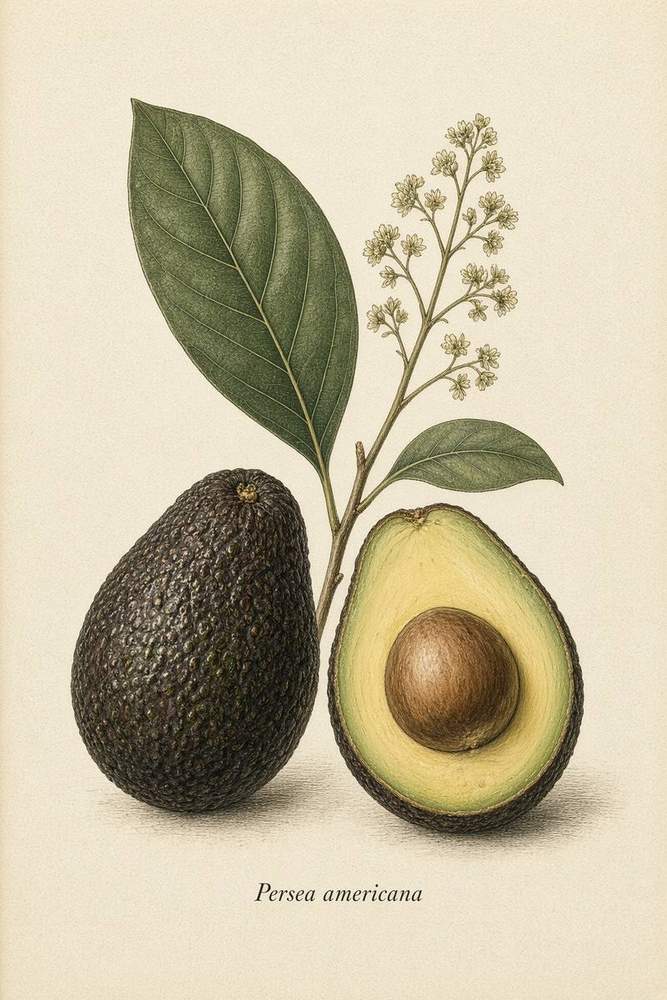
Avocado
Persea americana
A Mesoamerican berry with a giant seed — fat as food, not a toast personality, and not a pit tea.
Butter, green nut, a little sweetness when really ripe. Underripe is water and regret.
Harvest: Years from a graft; a pit is a long, uncertain experiment
Nahuatl āhuacatl. Spanish aguacate. English spent a century calling it alligator pear. The Hass tree was a mail-carrier’s seedling in La Habra, 1926; almost every grocery avocado is its clone. The pit on toothpicks is a science-fair, not an orchard.
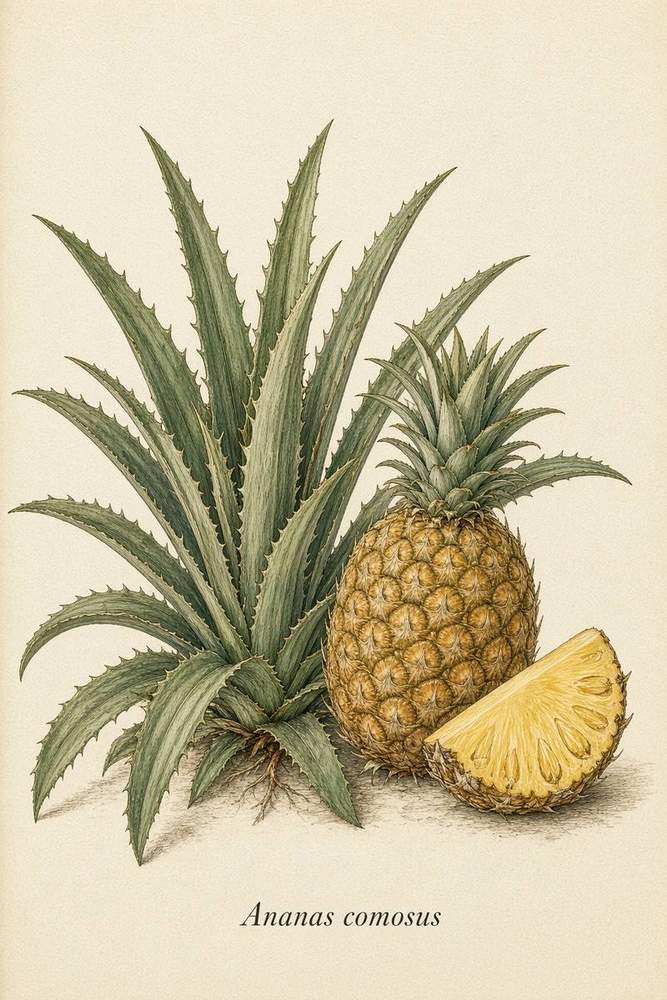 No. 218
Pineapple
Ananas comosus
A South American bromeliad that wears a crown — a ripe yellow flesh, and a core that is fiber, not a cleanse.
Sweet acid, tropical resin. Underripe is a sting. Overripe is vinegar.
Harvest: 18–24 months from a crown in heat; often never indoors
Tupi nanas, excellent fruit. The English pineapple is a pine cone that disappointed a botanist. Caribbean Indigenous people already used it. European hothouses grew it as a status object in the 18th century — a single fruit rented for a party. Hawaii’s canning industry is a later, corporate chapter.
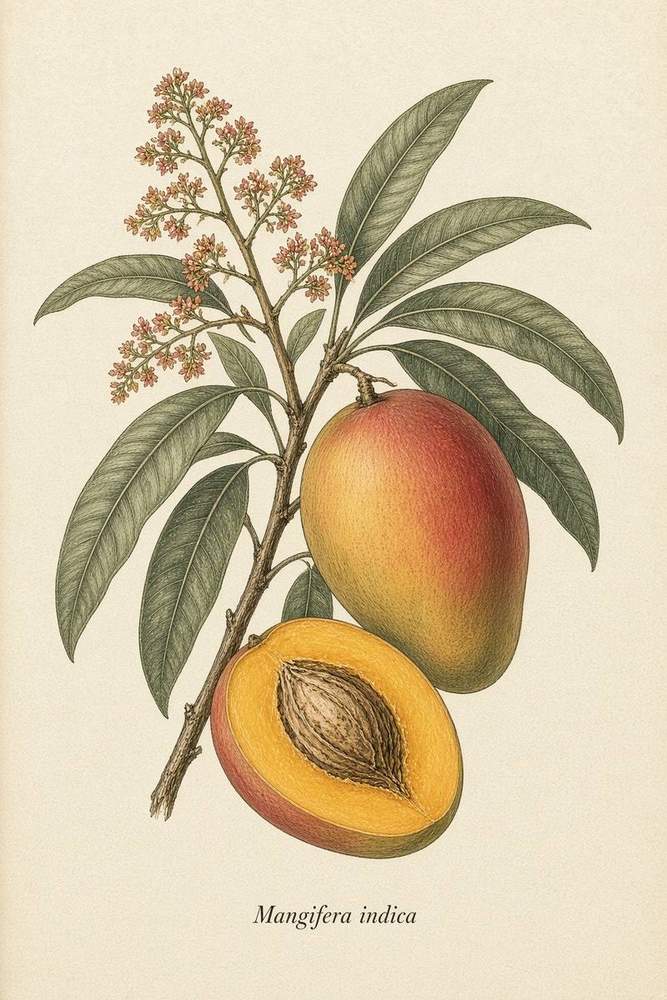 No. 219
Mango
Mangifera indica
The stone fruit of South Asia — a ripe cheek of orange flesh, and a cashew-family sap that some skins refuse.
Resin, peach, turpentine at the edge of some types — that is mango, not a fault. Alphonso is custard. A fibrous type is a string.
Harvest: Years from a graft; a pit is longer
Sanskrit āmra. The Portuguese took manga to Brazil and the world took the word. Mughal gardens already had the named types. A dried mango leather is older than the gummy strip. The cashew-family rash is why some people ‘hate mango’ when they hate the peel.
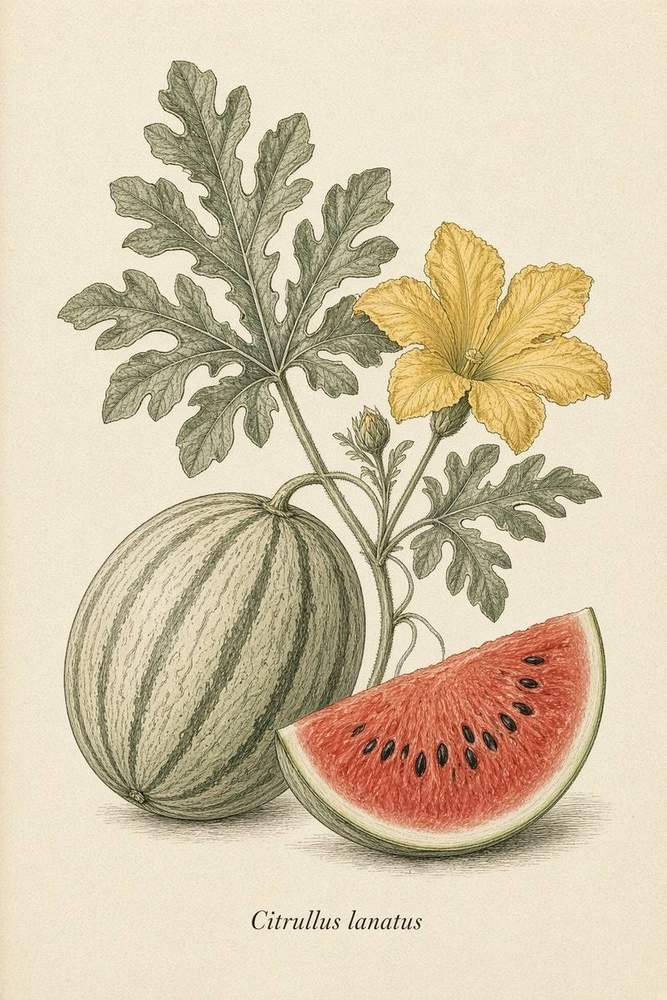 No. 220
Watermelon
Citrullus lanatus
An African melon that is mostly water and a summer argument about who gets the heart.
Sugar water, a little green rind. The heart is the prize. Yellow-fleshed types are honeydew-adjacent.
Harvest: 75–100 days from sow
Egyptian tombs already have the painting. The Arabic battikh and the English melon wandered. Seed-spitting contests are a later, American foolishness. Enslaved African knowledge of the plant met a Southern climate and stayed. The heart of the melon is a hospitality test: who you cut it for.
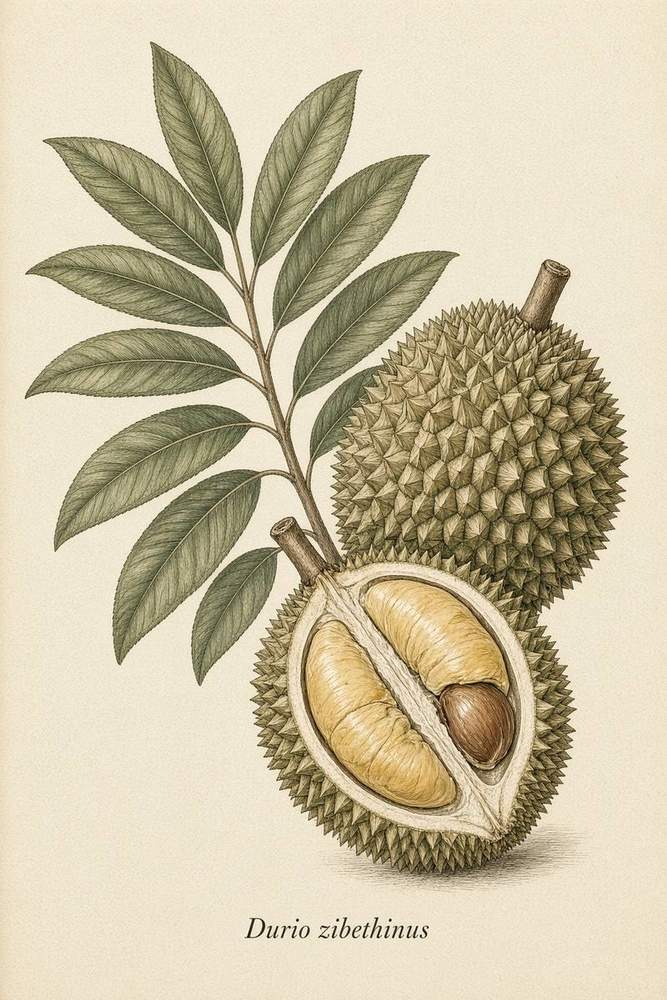 No. 221
Durian
Durio zibethinus
The spiny Southeast Asian fruit people argue about in elevators — custard if you like it, a gas leak if you do not.
Custard, onion, almond, gym sock — honest all at once. Ripe is sweet; off is ferment.
Harvest: Years in the tropics; the kitchen crop is purchased
Malay duri is the thorn. Wallace wrote that it was worth a trip to the East. Singapore still posts the crossed-out husk on the MRT. The English ‘king of fruits’ is marketing that happens to be how some locals talk. The smell is chemistry, not a character test. You can fail it and still be decent.
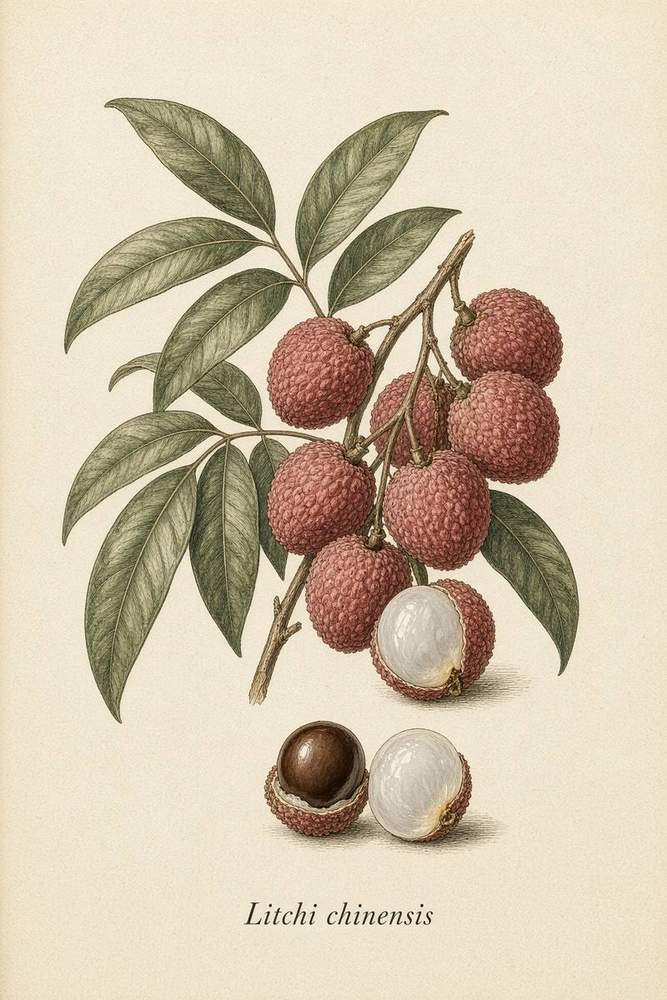 No. 222
Lychee
Litchi chinensis
A Chinese soapberry with a red shell — peel it, eat the glass-white aril, spit the seed, and do not make a meal of unripe fruit.
Floral, grape, a little rose. Canned in syrup is a different, heavier fruit.
Harvest: Years to a crop; the grocery and Chinatown stall are the usual path
Tang dynasty courts already demanded them on ice. The Chinese lízhī is older than the English spelling arguments (lychee, litchi, lichi). A 2010s outbreak in Bihar was unripe fruit, undernourished children, and a toxin that inhibits gluconeogenesis — a public-health story, not a reason to fear a ripe bowl after dinner.
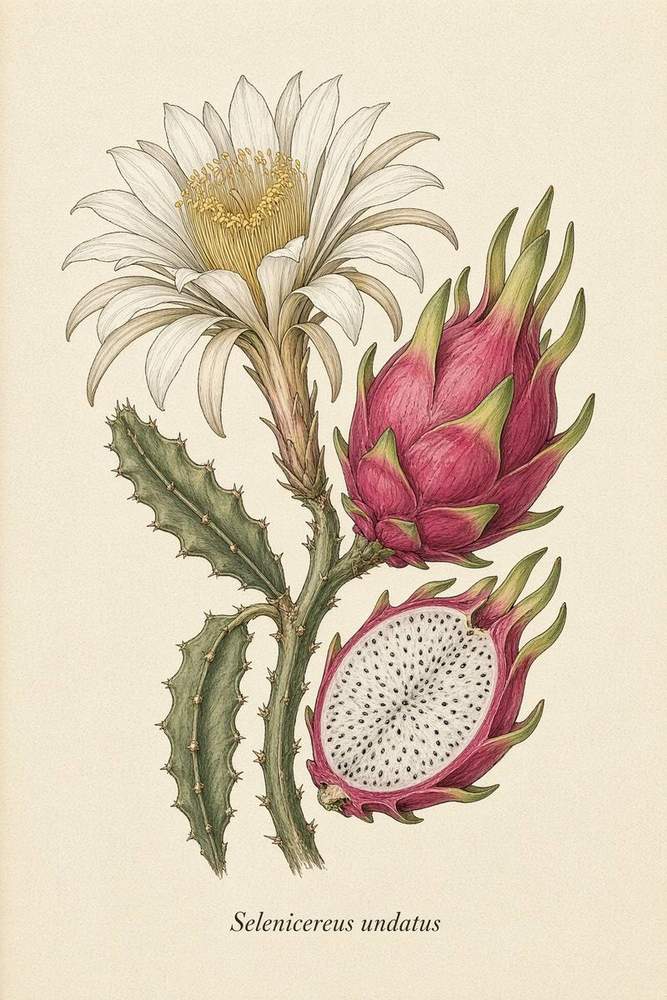 No. 223
Dragon fruit
Selenicereus undatus
A night-blooming cactus that fruits in neon — mild white or red flesh speckled with seed, more show than perfume.
Mild kiwi-pear, lots of seed crunch. Red flesh is berry-adjacent. Underripe is wet cardboard.
Harvest: A cutting may flower in 1–2 years in heat
Spanish pitahaya. Vietnamese thanh long, green dragon. The neon grocery fruit is a 1990s export success more than an ancient palace food. The night flower is the older wonder — a dinner-plate bloom that is gone by breakfast.
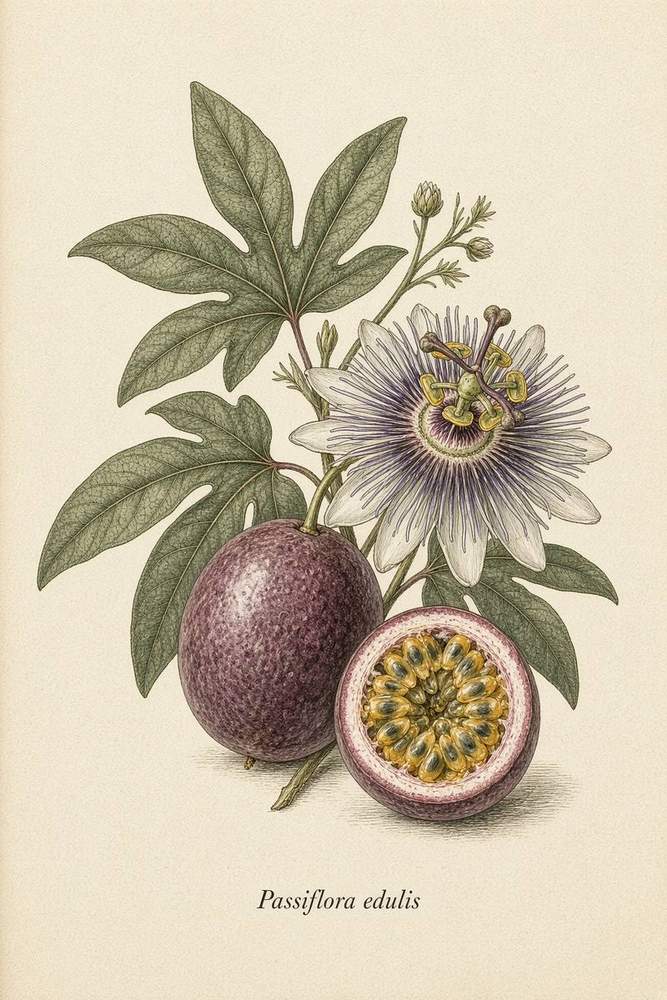 No. 224
Passion fruit
Passiflora edulis
A wrinkled purple shell full of seedy pulp — perfume in a spoon, and a different species from the maypop leaf tea.
Tropical perfume, acid, seedy crunch. A ripe one smells through the shell.
Harvest: A warm-season vine may fruit the first or second year
Spanish priests saw the Passion in the corona of the flower — hence the name, not a romance. Granadilla is the little pomegranate of the same fruit. The grocery pulp cup is often yellow and frozen. The maypop of the American Southeast is a cousin you do not juice the same way.
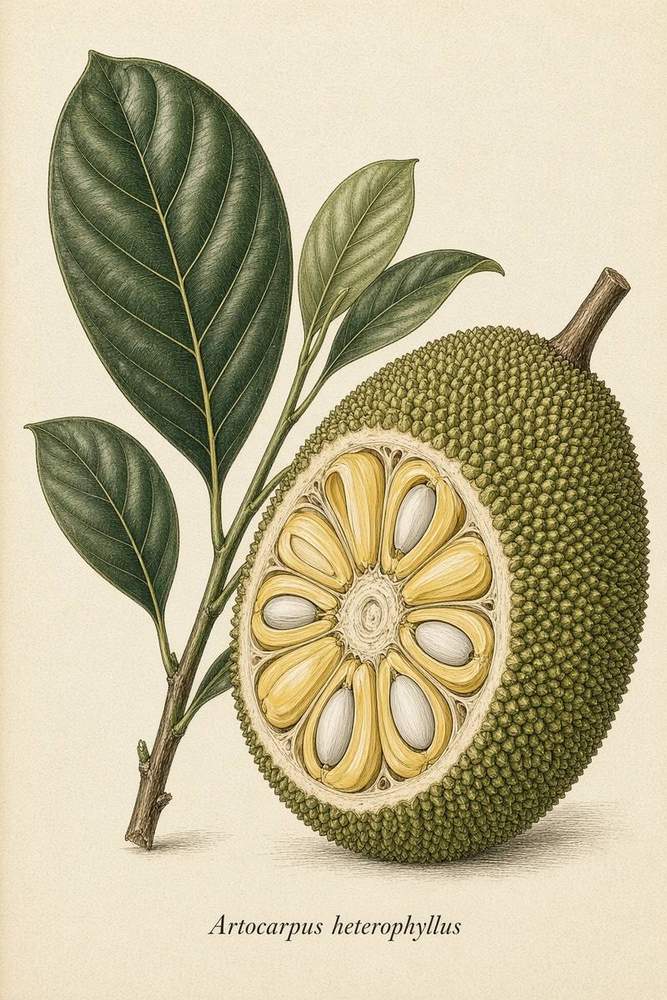 No. 225
Jackfruit
Artocarpus heterophyllus
The giant mulberry-family fruit of South Asia — a ripe dessert of yellow bulbs, or an unripe savory that happens to shred.
Ripe: banana-mango-gum. Unripe cooked: mild, meaty with the sauce you give it.
Harvest: Years in the tropics; canned young fruit is the usual northern savory
Portuguese jaca from Malayalam chakka. The English jack is not a nickname for John. A single fruit can weigh as much as a toddler. The vegan shredded-meat era found a canned green form that South Indian kitchens already cooked as a vegetable, without the barbecue sauce.
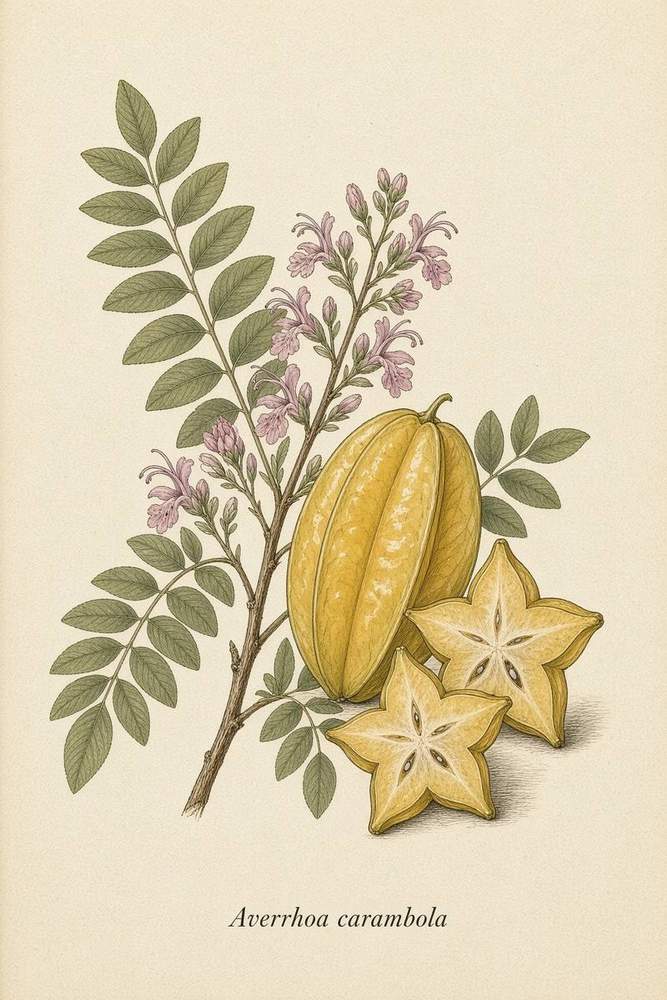 No. 226
Starfruit
Averrhoa carambola
A five-pointed oxalis fruit — pretty in a salad, and a documented problem if the kidneys are already in trouble.
Green-apple, oxalis sour, a little floral. Ripe yellow is milder. Green is a pickle.
Harvest: A few years in the tropics
The Portuguese carambola stuck. Chinese yángtáo is sheep peach. The star is a party trick that made it a garnish in 1980s hotel fruit plates. The kidney caution is later, clinical, and not optional. A fruit can be both beautiful and the wrong fruit for someone.
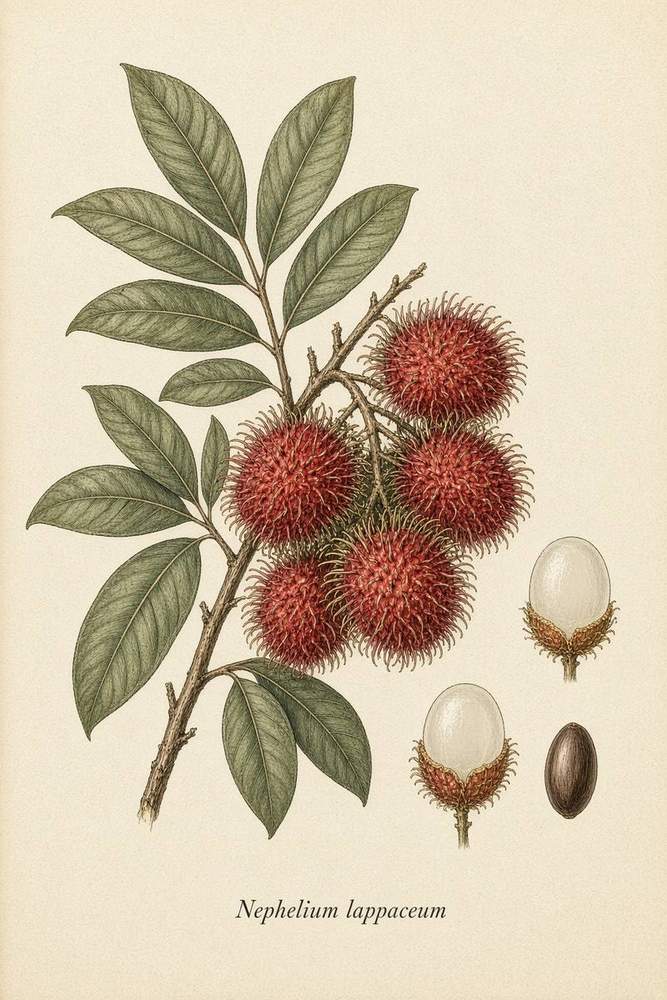 No. 227
Rambutan
Nephelium lappaceum
A hairy red soapberry of the Malay world — peel the soft spines, eat the glass aril, spit the seed.
Lychee’s cousin: floral, a little acid, sometimes a faint strawberry. Fresh beats canned.
Harvest: Years in the tropics; Chinatown and the tropical market otherwise
Malay rambut is hair. The Portuguese met it and still preferred the lychee in writing. A rambutan stall in season is a pile of sea urchins that learned to be fruit. The canned version kept the name and lost the point.
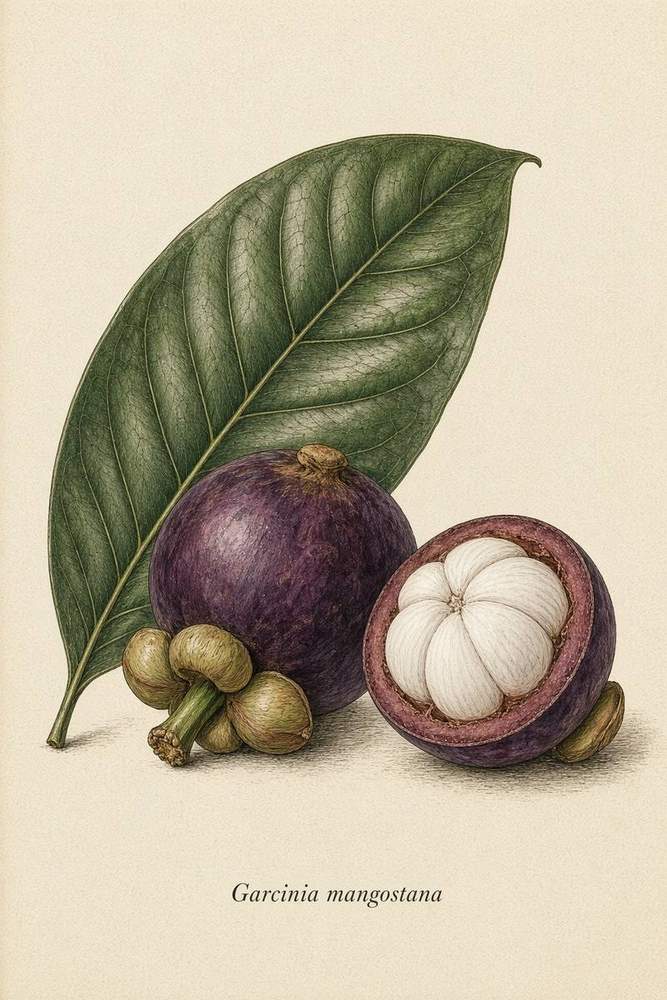 No. 228
Mangosteen
Garcinia mangostana
The white-segmented fruit under a purple shell — a Malay dessert, not a bottled ‘superfruit’ rind.
Lychee-peach, clean, a little floral acid. A spoiled one is fermented and sad.
Harvest: Often 8–10 years to fruit in the tropics; the imported fruit is the usual path
Queen Victoria is supposed to have offered a reward for a fresh one. The story is better than the paperwork. Malay manggis. The 2000s supplement boom sold the rind to people who had never tasted the fruit. That is a branding tragedy, not a kitchen.
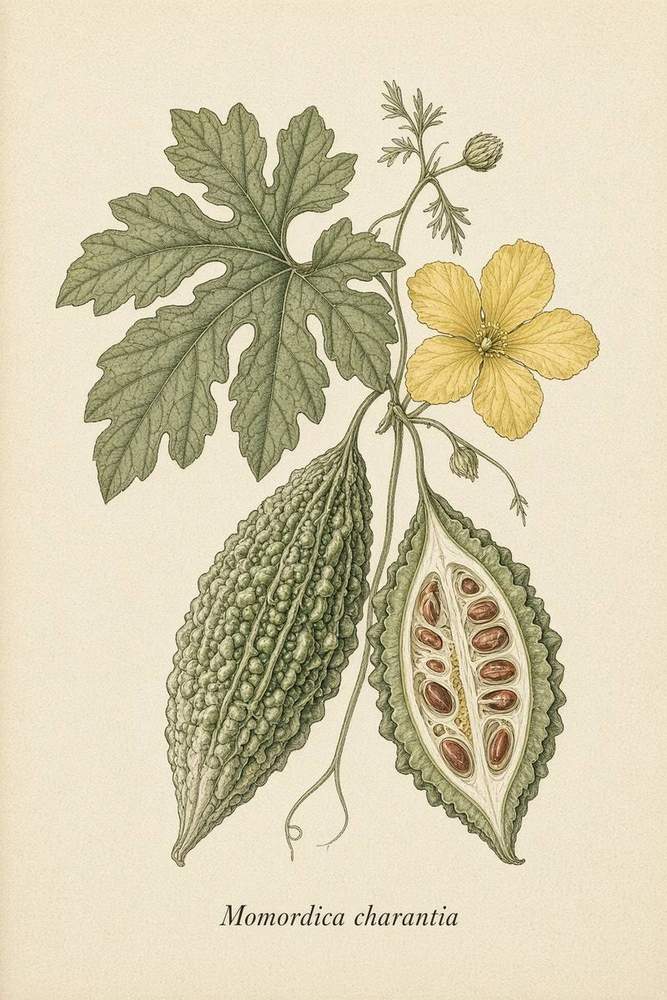 No. 229
Bitter melon
Momordica charantia
A warty tropical cucurbit that tastes like a dare — a cooked vegetable with a blood-sugar folklore that is not a prescription.
Bitter, green, a little cucumber if you tame it. Ripe orange arils around the seeds are sweet and a different snack in some kitchens.
Harvest: 50–70 days from sow in heat
Hindi karela, Chinese kǔguā — bitter gourd. Filipino ampalaya. The glucose papers are real enough to respect and not real enough to replace a clinician. A stuffed karela with spice is the older honesty. The red arils of a split ripe fruit are a children’s nibble in some yards, while the pulp stays bitter.
 No. 230
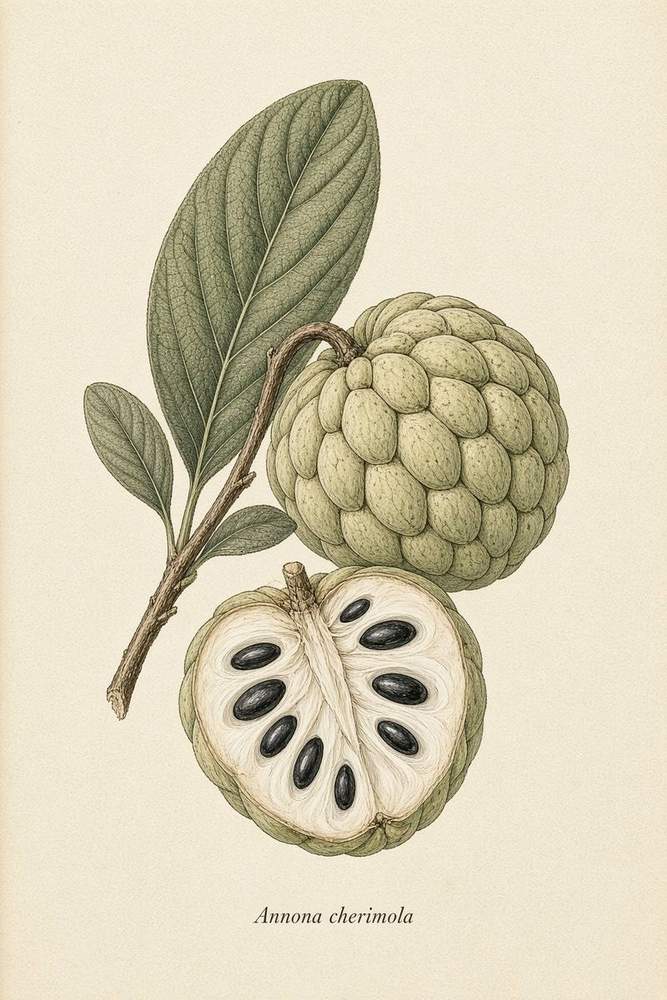
Cherimoya
Annona cherimola
An Andean custard apple — spoon the ripe white flesh, spit every black seed, and leave the leaf off the kettle.
Banana, pineapple, custard, a little mango. Underripe is hard and pointless. Overripe is ferment.
Harvest: Years from a graft; imported fruit otherwise
Quechua chirimuya, cold seeds — the highlands. Spanish took it to the Mediterranean. Mark Twain said it was the most delicious fruit known; he had not been forced to eat a shipped, underripe one. Atemoya is a hybrid with sugar apple. Soursop (guanabana) is a hotter-climate cousin with its own leaf folklore, not this plate.
 No. 231
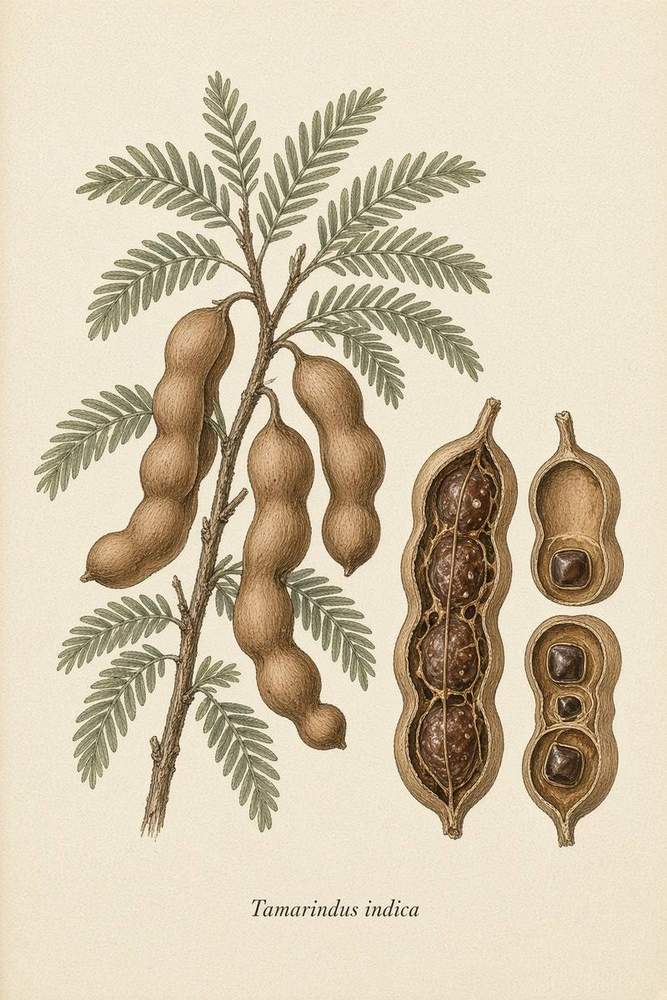
Tamarind
Tamarindus indica
A brittle brown pod of sour-sweet pulp — the acid in a chutney, a agua fresca, and a pad thai, from a tree that looks like a mimosa.
Sour date, brown sugar, a little smoke. Sweet tamarind is dessert; sour is a seasoning.
Harvest: Years to a crop; the grocery block is the usual kitchen path
Arabic tamar hindi, Indian date — they named it for the wrong fruit in the right direction. Sanskrit chincha. Mexican agua de tamarindo and Tamil rasam share the sour. Worcestershire sauce is, among other secrets, this pulp in an English bottle.
 No. 232
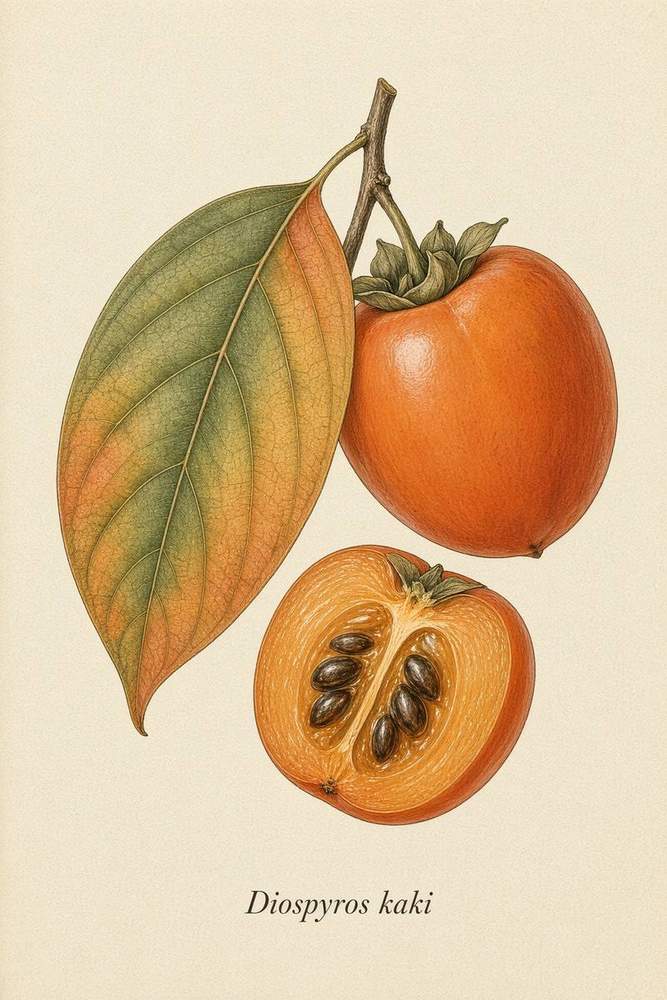
Persimmon
Diospyros kaki
An East Asian ebony fruit — jelly when an astringent type is truly ripe, or crisp if it is a Fuyu, and a mistake if you guess wrong.
Ripe Hachiya is honey-apricot jelly. Fuyu is crisp and mild. Unripe astringent is a cotton ball of regret.
Harvest: A few years to fruit; then autumn
Japanese kaki, Chinese shì. Hoshigaki is a hand-massaged dried fruit that looks like a sugar-dusted jewel. The American ‘simmon’ of the South is a different species that the possum harvests on schedule. Diospyros is ‘fruit of the gods,’ which is a lot of Greek for a tree that will still trick you if you eat it early.
 No. 233
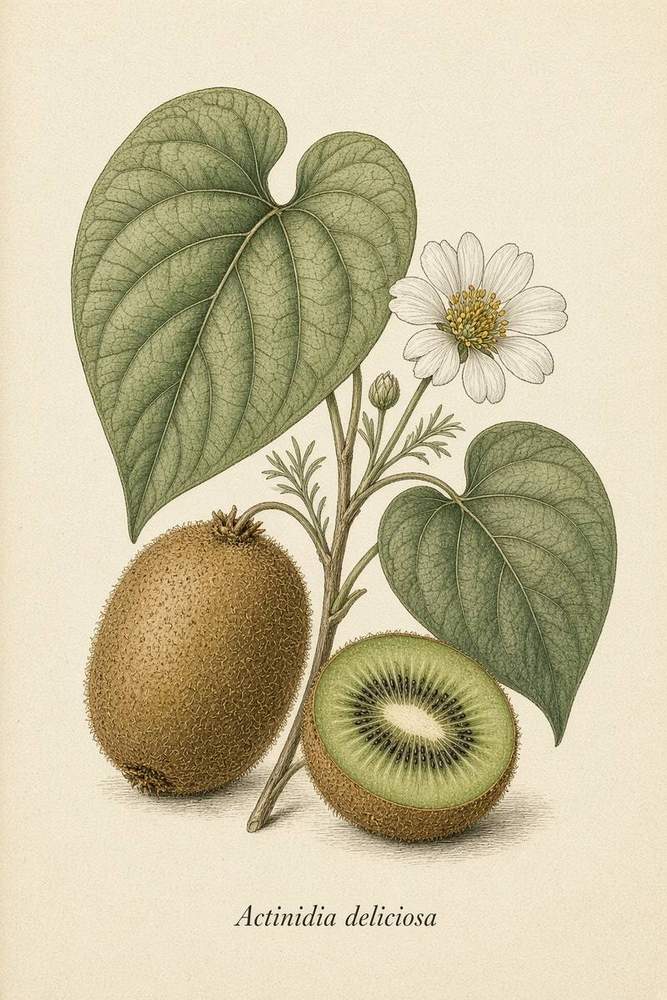
Kiwi
Actinidia deliciosa
A Chinese vine fruit that New Zealand renamed — emerald flesh, black seeds, and a fuzzy coat you can eat or not.
Green-strawberry, tropical acid. Gold is tropical-honey. Underripe is starch and sour.
Harvest: A few years to a crop; then autumn, heavily
Chinese gooseberry in the old catalogs. Exporters needed a name that did not include China in a Cold War market, and a bird that already lived on the label. The fruit did not mind. Hardy kiwi is what a zone-6 gardener can actually finish — a grape that remembers it is an Actinidia.
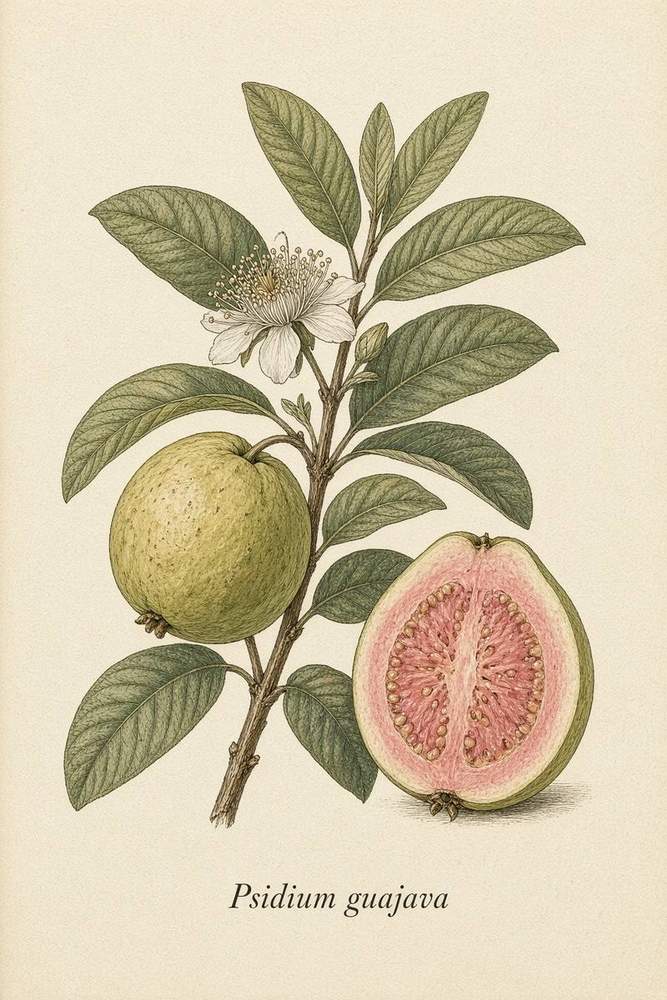 No. 234
Guava
Psidium guajava
A tropical myrtle fruit that smells like someone opened a perfume in a fruit stand — pink or white flesh, seedy, and a jelly classic.
Strawberry-tropical, musk, lots of hard seeds. Pink is louder; white is milder.
Harvest: A seedling may fruit in 2–4 years in heat
Arawak guayabo. Spanish took the word and the tree. Guava paste with cheese is a Latin pantry marriage. Hawaiian guava is often a wild roadside thicket more than an orchard. The perfume in a closed car is how you know the bag was ripe.
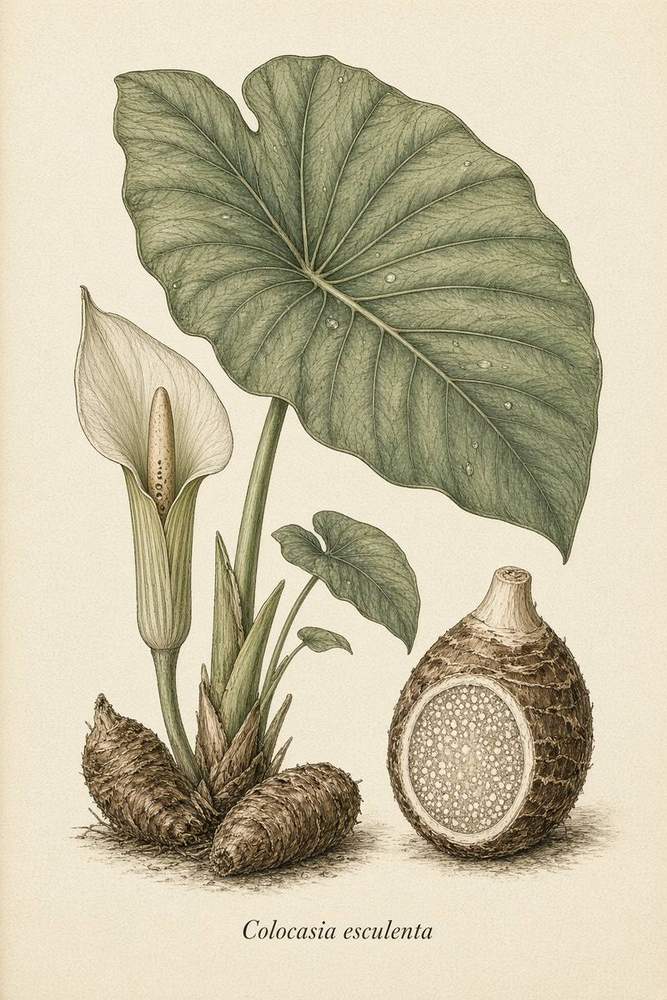 No. 235
Taro
Colocasia esculenta
The elephant-ear starch of the wet tropics — a cooked corm and a cooked green, and a mouthful of needles if you skip the heat.
Cooked corm is mild, nutty, a little sticky. Leaf is spinach with more spine, once cooked enough.
Harvest: 7–12 months in heat for a staple corm
Hawaiian kalo is a genealogy as much as a crop — the elder sibling of the people in the old stories. Poi is that corm, fermented. West Africa and the Caribbean took other aroids (malanga, dasheen) in the same pot-logic. The itch taught every kitchen the same rule without a lab: heat, or do not eat.
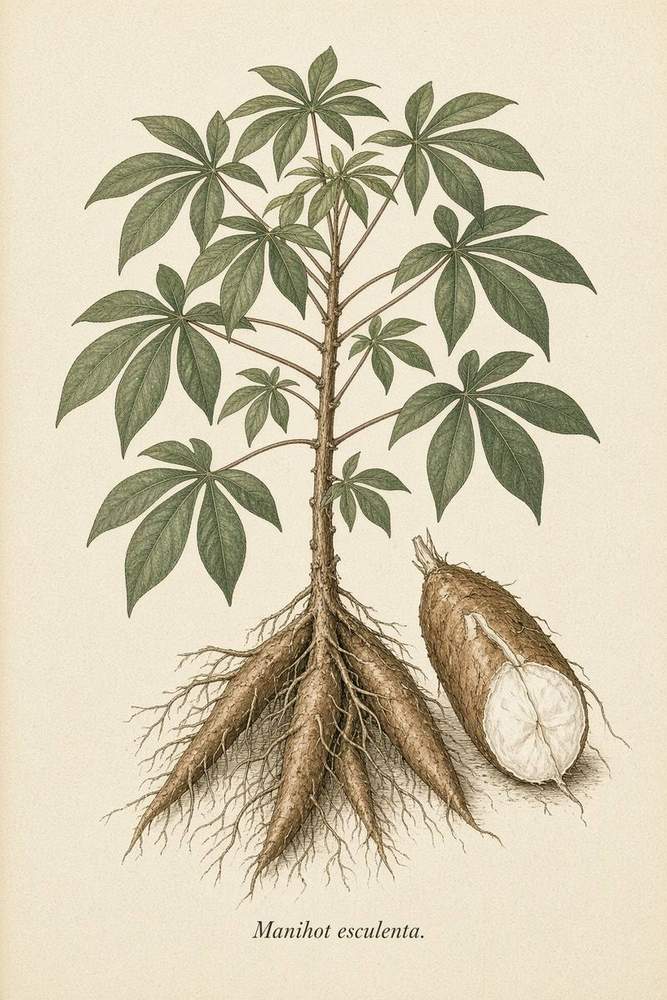 No. 236
Cassava
Manihot esculenta
Yuca — a tropical spurge whose root feeds hundreds of millions once it is peeled and cooked, and a poison if you treat it like an apple.
Cooked: mild, slightly sweet starch, a little latex at the edge. Fried is the best argument.
Harvest: 8–12 months for a kitchen root in heat
Tupi manióca. Spanish yuca (not yucca, the desert lily). Portuguese mandioca. The Portuguese carried it to Africa, where it outyielded many local starches on poor ground. Konzo is a village-neurology story of bitter cassava processed in haste during hunger — a reason this plate is caution, not a reason to fear a boiled grocery yuca fry.