Part VII
Toxic
Poison-garden teaching plates, named clearly so they are never mistaken for tea.
18 plates in this section
 No. 027
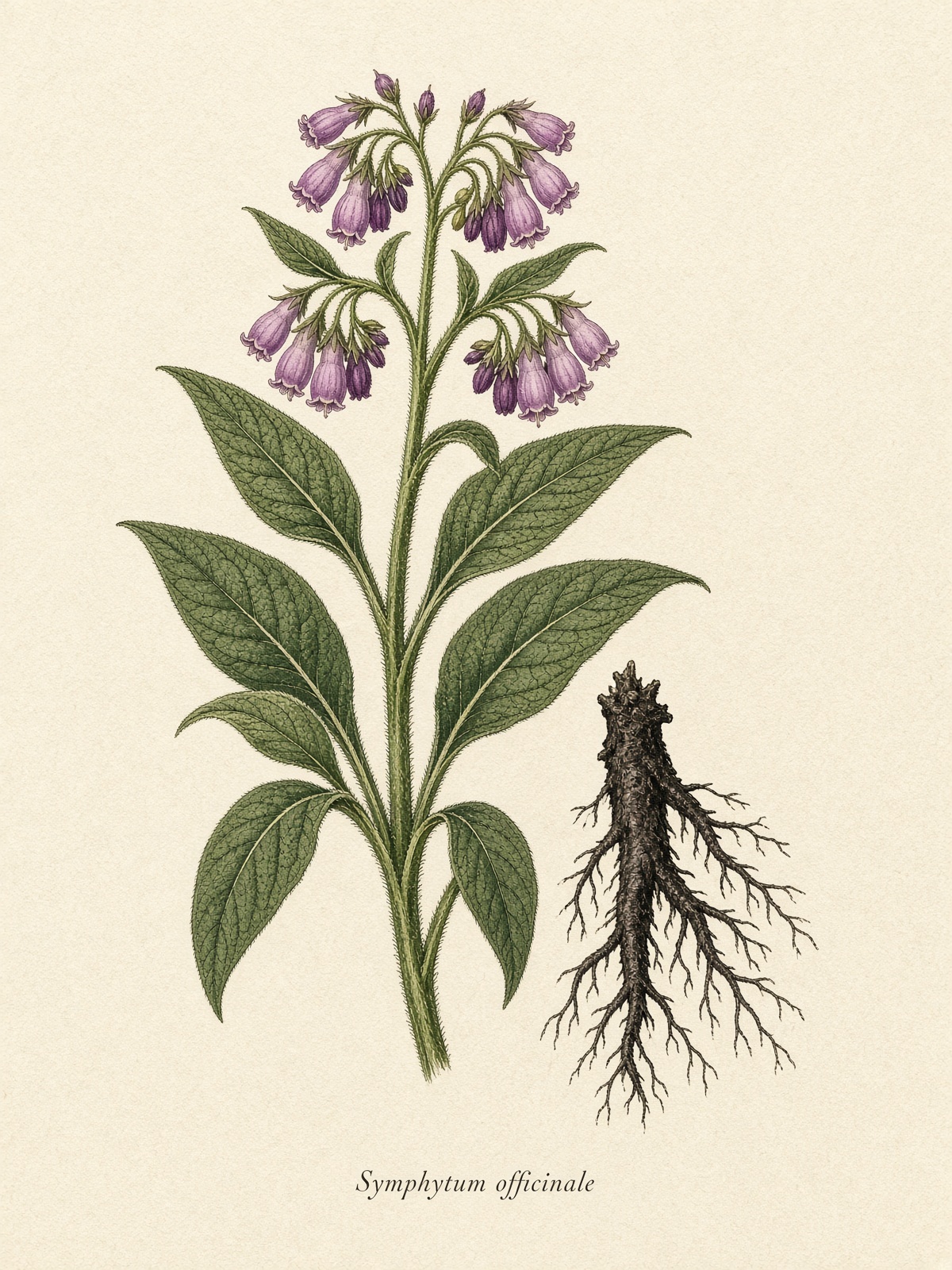
Comfrey
Symphytum officinale
Knitbone — a legendary wound-and-bone poultice whose internal use is no longer defensible.
Cucumber-green and mucilaginous. Not a tea flavor to chase.
Harvest: 60–90 days to a leaf cut (external / compost only)
Knitbone. The old poultice plant for a closed sprain, and a liver lesson when people drank it. Allantoin made the cell-growth reputation; pyrrolizidine alkaloids made the internal use a poison-garden topic. The leaf is for the outside of you.
 No. 028
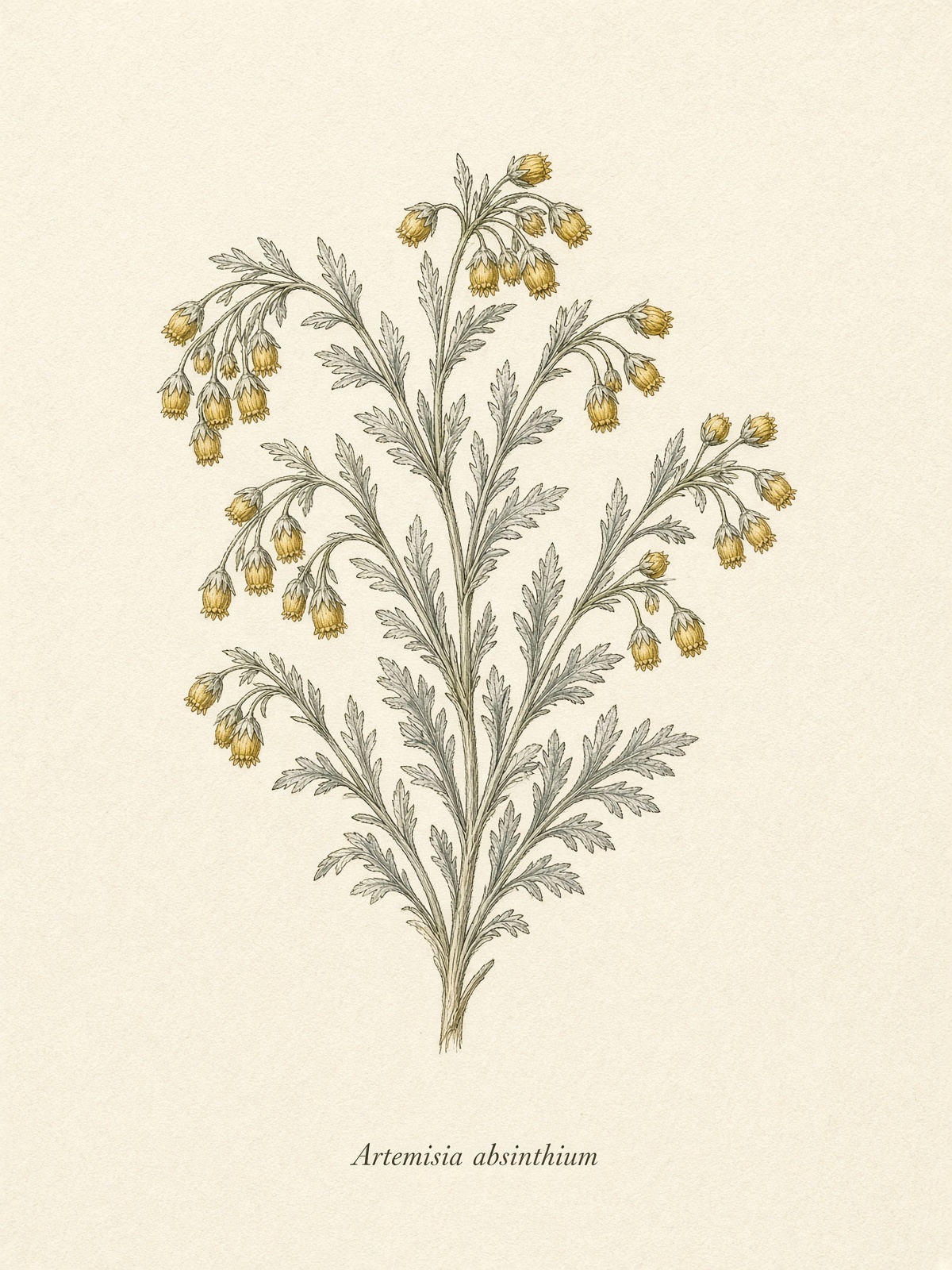
Wormwood
Artemisia absinthium
The bitter of absinthe — a powerful digestive bitter whose essential oil is a neurotoxin in excess.
Silver, resinous, and punishingly bitter. A sip, not a cup.
Harvest: 90–120 days to a silvery harvest
Absinthium. The bitterness that defined absinthe, and the plant that made temperance leagues see green fairies. Thujone is the controversial molecule; the larger truth is that a silver Artemisia is a stomach bitter, not a personality.
 No. 039
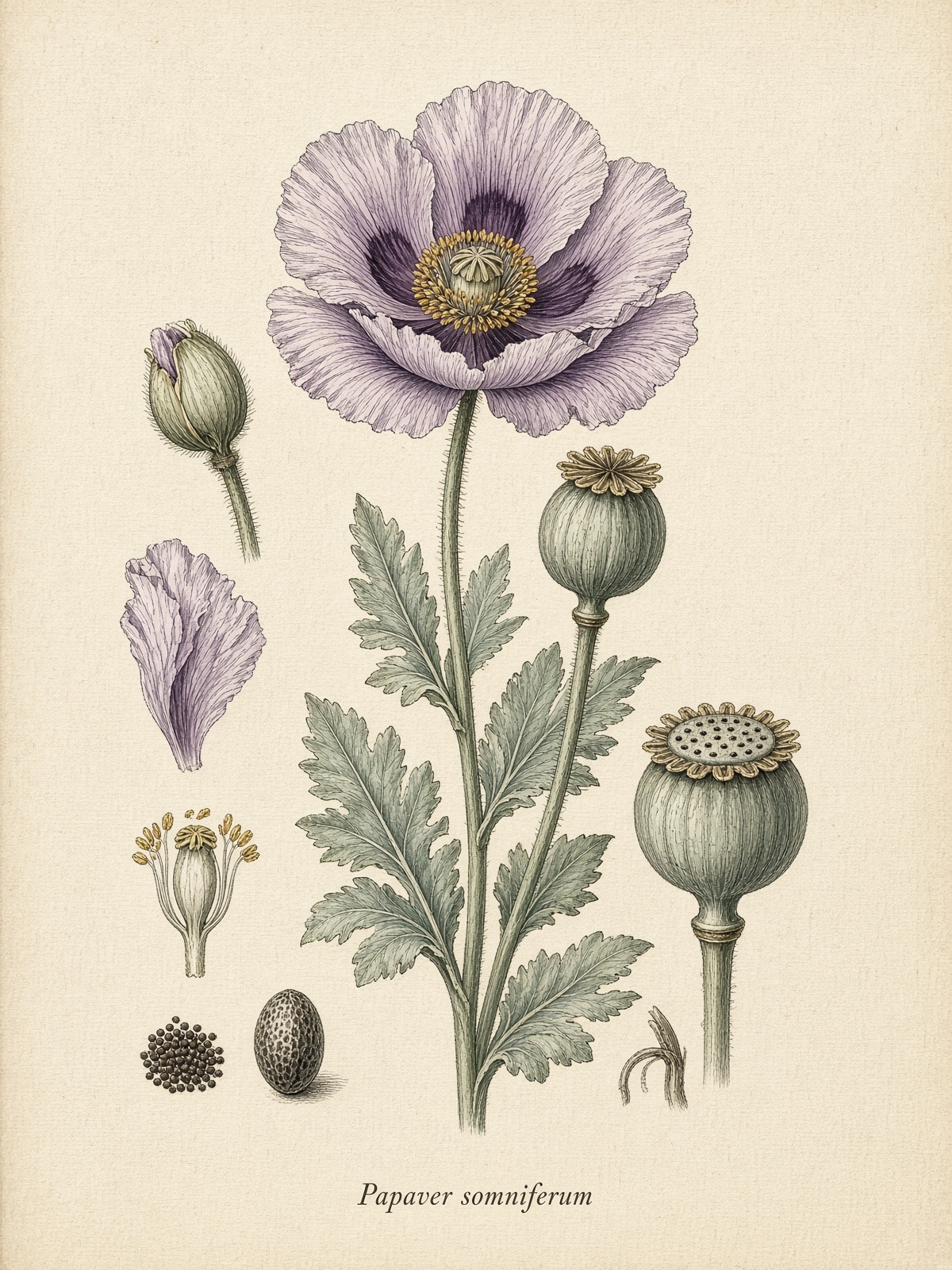
Opium poppy
Papaver somniferum
The garden poppy that also yields opium — a beautiful annual whose latex is the source of morphine, codeine, and a century of addiction medicine.
Culinary seed is nutty and bakery-sweet. Latex is not a flavor to seek.
The same annual as the bakery seed. Scoring a green capsule is an old agricultural act and a modern crime. Morphine was isolated in 1804 and named for Morpheus; the plant is older than the word.
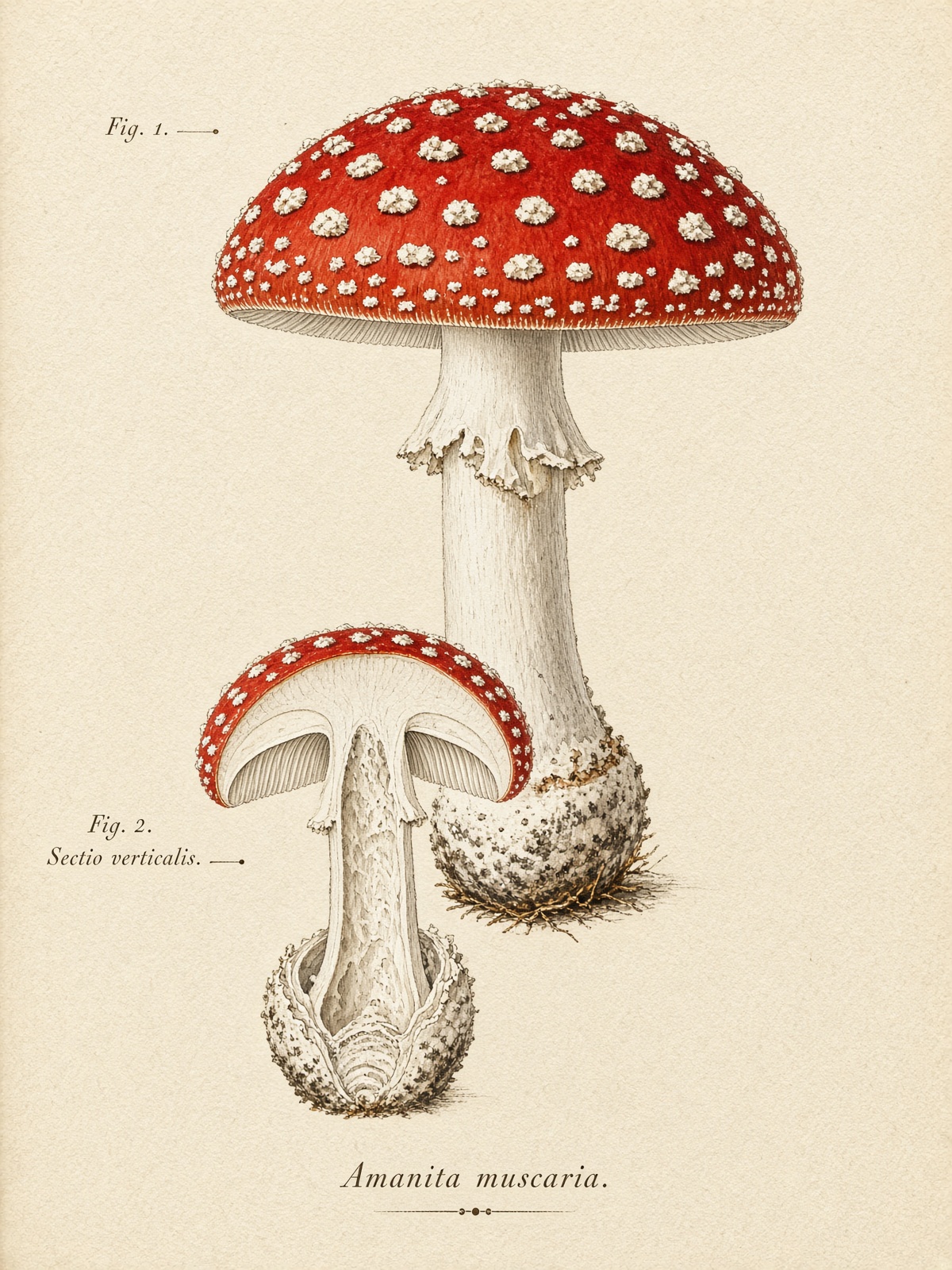 No. 043
Fly agaric
Amanita muscaria
The red fairy-tale mushroom — a deliriant poison with a folk-intoxicant history, not a gentle psychedelic.
Do not taste. Literature describes it as unpleasant and nauseating.
Fly agaric — the red toadstool of fairy illustrations and a Siberian shamanic record. Muscimol is not psilocybin, and the vomiting is not optional folklore. Poison-garden, not a tea.
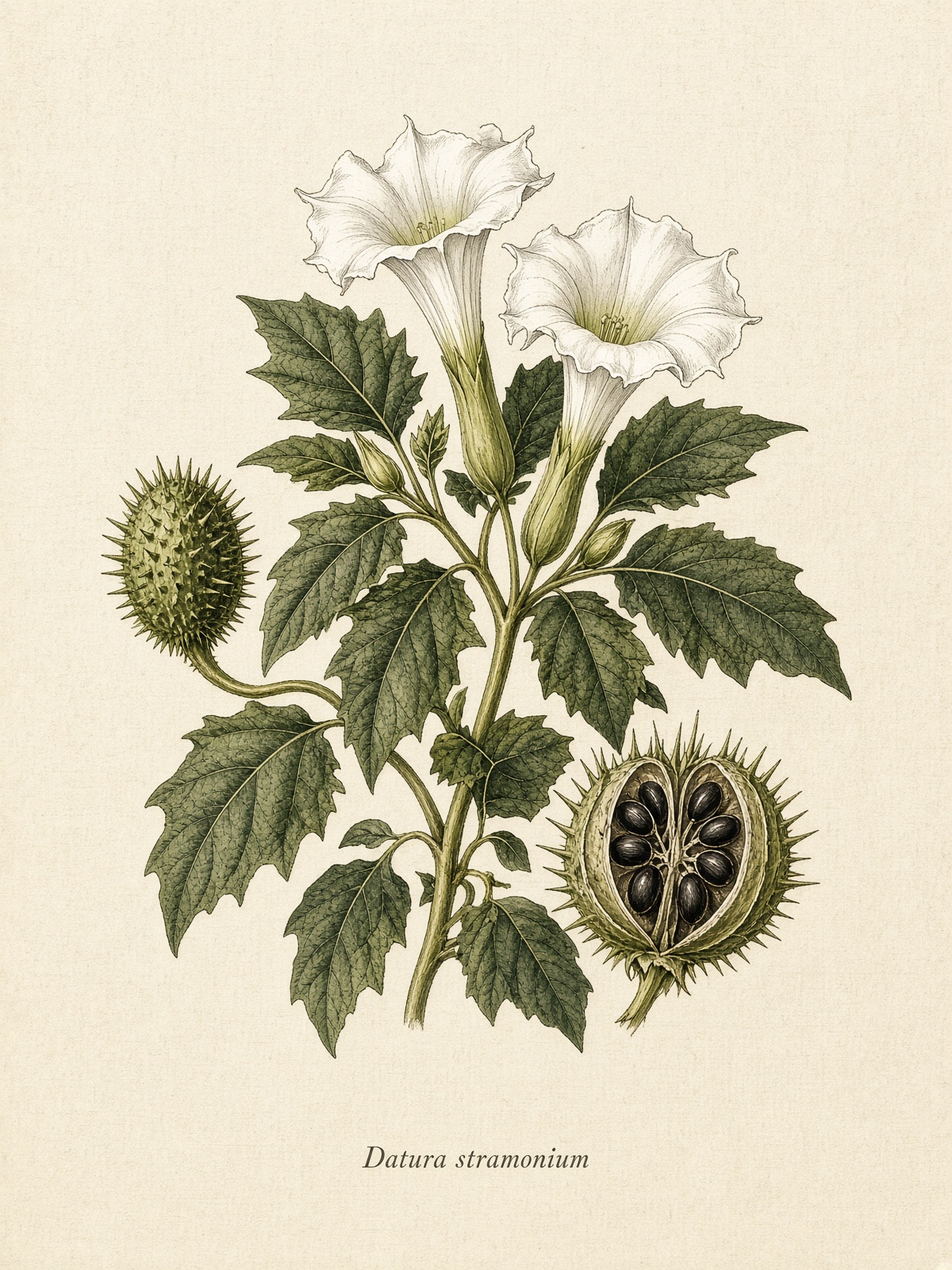 No. 044
Datura
Datura stramonium
Jimsonweed — a roadside nightshade whose tropane alkaloids cause blind, hot, mad, dry delirium. Not a medicine for home use.
Do not taste. Tropane nightshades are bitter and burning.
Harvest: 70–90 days as an ornamental — do not harvest for medicine
Jimsonweed, named for Jamestown soldiers who ate it and lost a week. Tropane alkaloids: atropine, scopolamine. Witchcraft herbals and emergency rooms share the plant. Do not experiment.
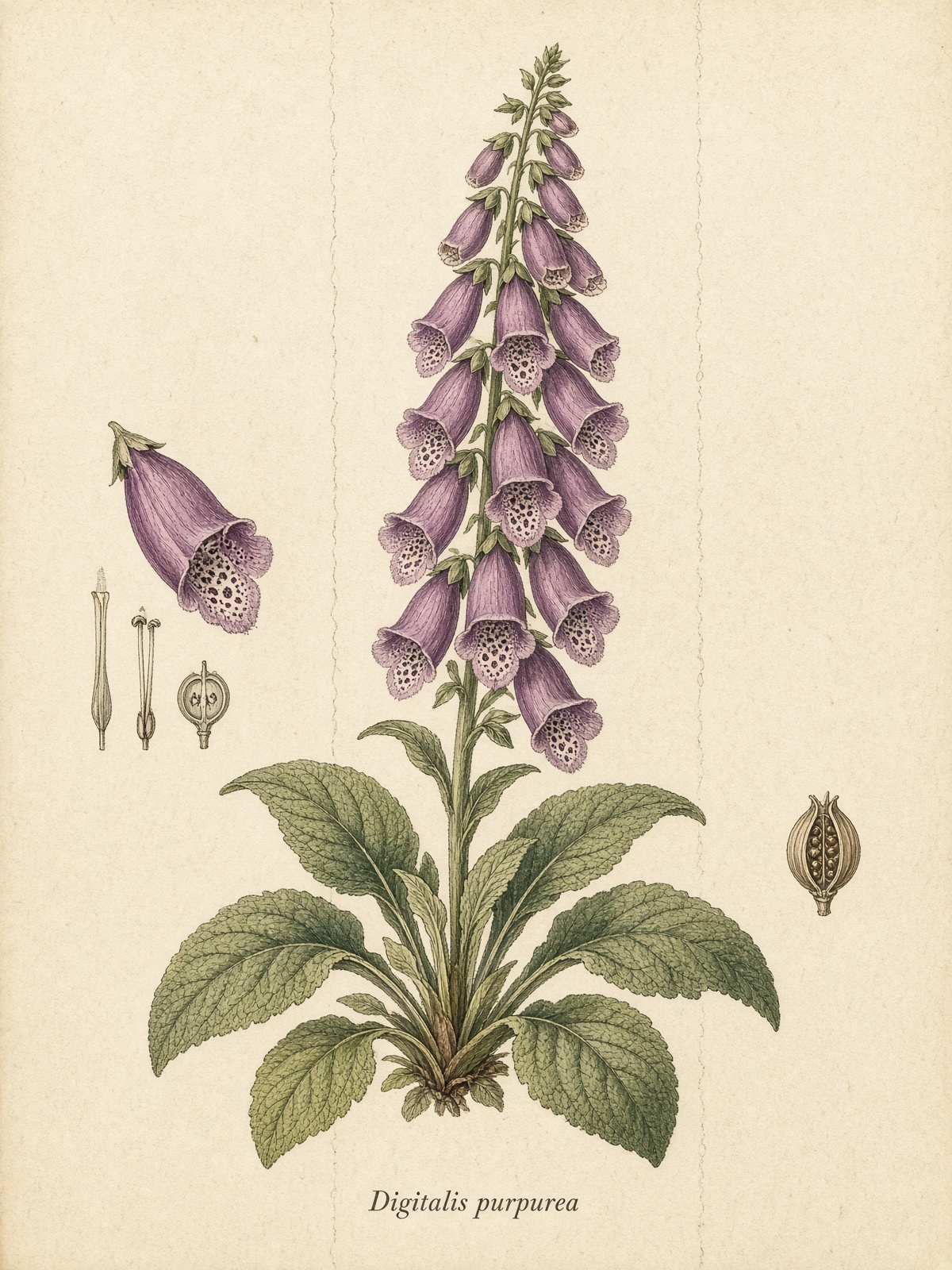
No. 060Foxglove
Digitalis purpurea
The spotted thimble that became digoxin — a poison-garden teaching plant, not a homegrown heart tonic.
Do not taste. Bitter cardiac glycosides.
Harvest: Bloom in year 2 (~400 days) as an ornamental — never as a drug
Folksglove, fairy thimble. William Withering put Digitalis into the clinic in 1785 for dropsy, which is how a cottage poison became a heart drug. The therapeutic dose and the lethal dose are neighbors. Teaching plate only.
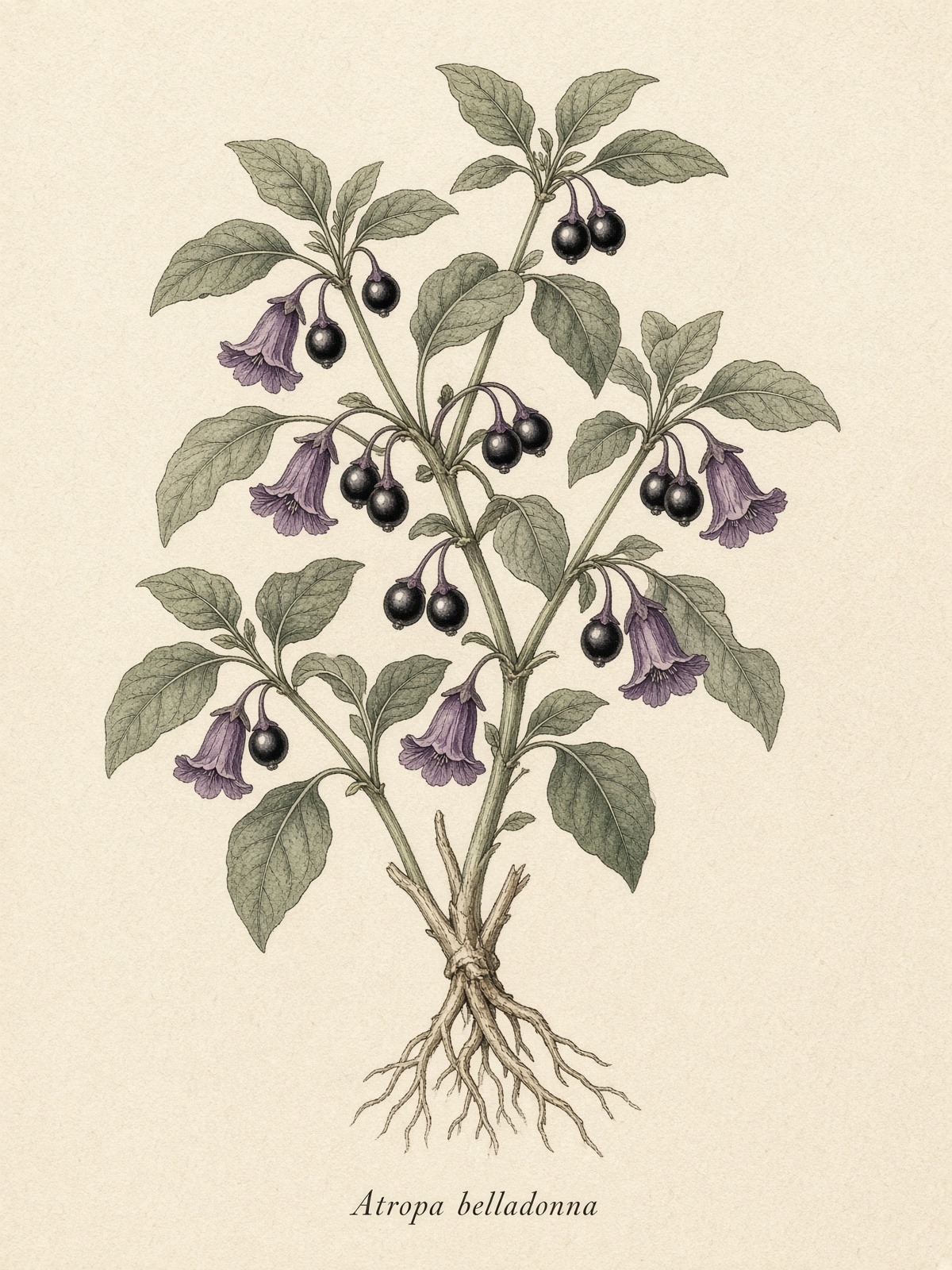 No. 061
Deadly nightshade
Atropa belladonna
Shiny black cherries on a dull purple bell — atropine in botanical form. Not a home medicine.
Do not taste. Sweetish berries are part of why children eat them.
Harvest: Fruit in year 2 as a poison-garden show — never as a drug
Beautiful lady: Renaissance eyedrops to dilate pupils. Atropine is still in the crash cart. Every part of the plant is a poison-garden lesson, including the shiny black berries children reach for.
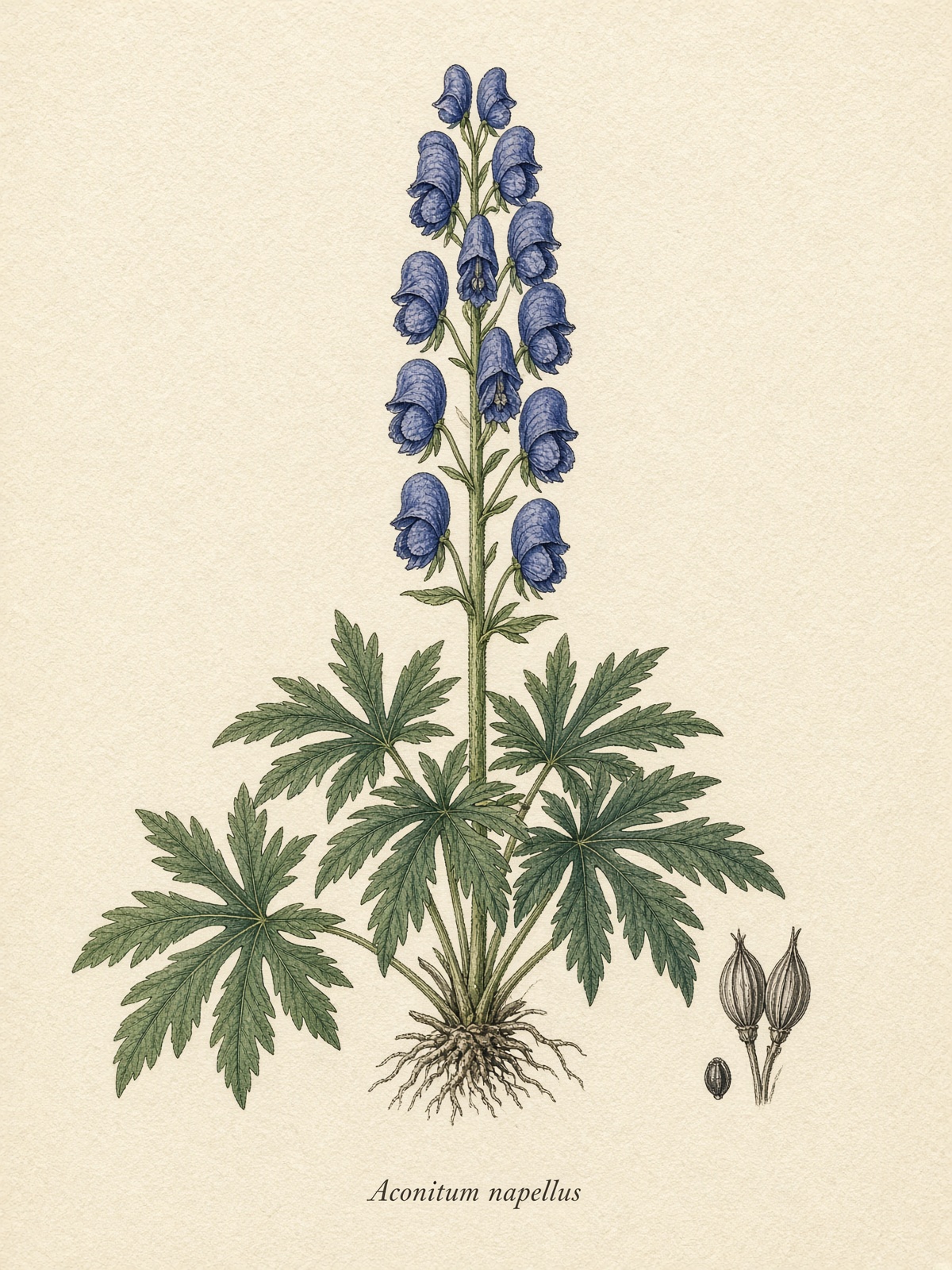 No. 062
Monkshood
Aconitum napellus
Hooded indigo flowers — beautiful, and poisonous to the touch in sap, let alone as a tea.
Do not taste. Immediate tingling is a warning, not a spice.
Harvest: Bloom in year 2 as an ornamental — never as a drug
Aconite, wolfsbane, the hooded blue flower of alpine meadows. Hunters tipped arrows with it. Touching the sap can be enough. Look, do not pick, do not boil, do not dare.
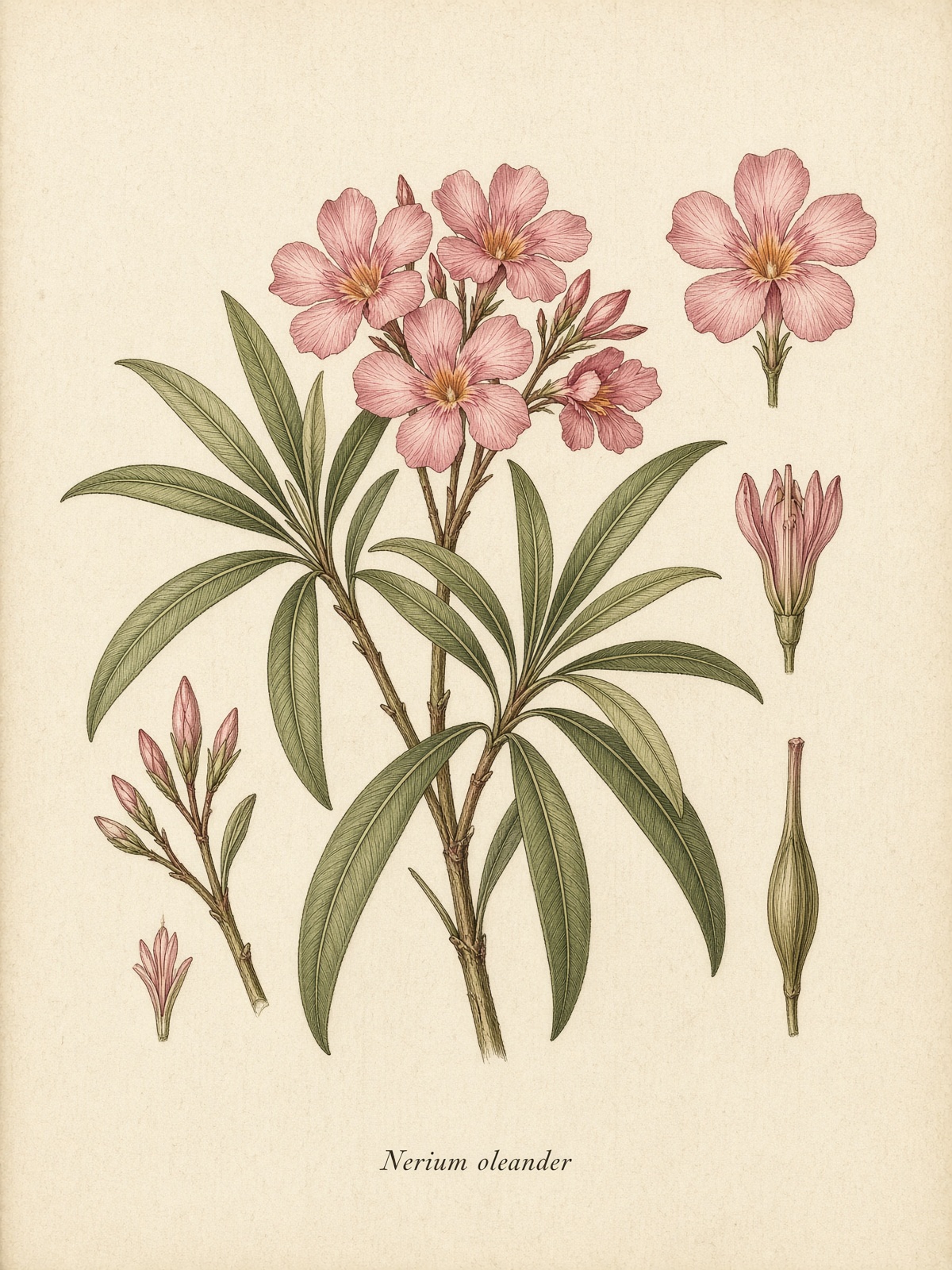 No. 063
Oleander
Nerium oleander
A freeway-median flower whose leaves can stop a heart — including as a 'tea' in folklore that should have died.
Do not taste.
Harvest: Ornamental bloom in 1–2 years — never as a drug
The freeway shrub of the warm world, and one of the most planted deadly ornamentals. A single leaf has killed. It does not belong in a tea, a stick for a marshmallow, or a vase on a low table.
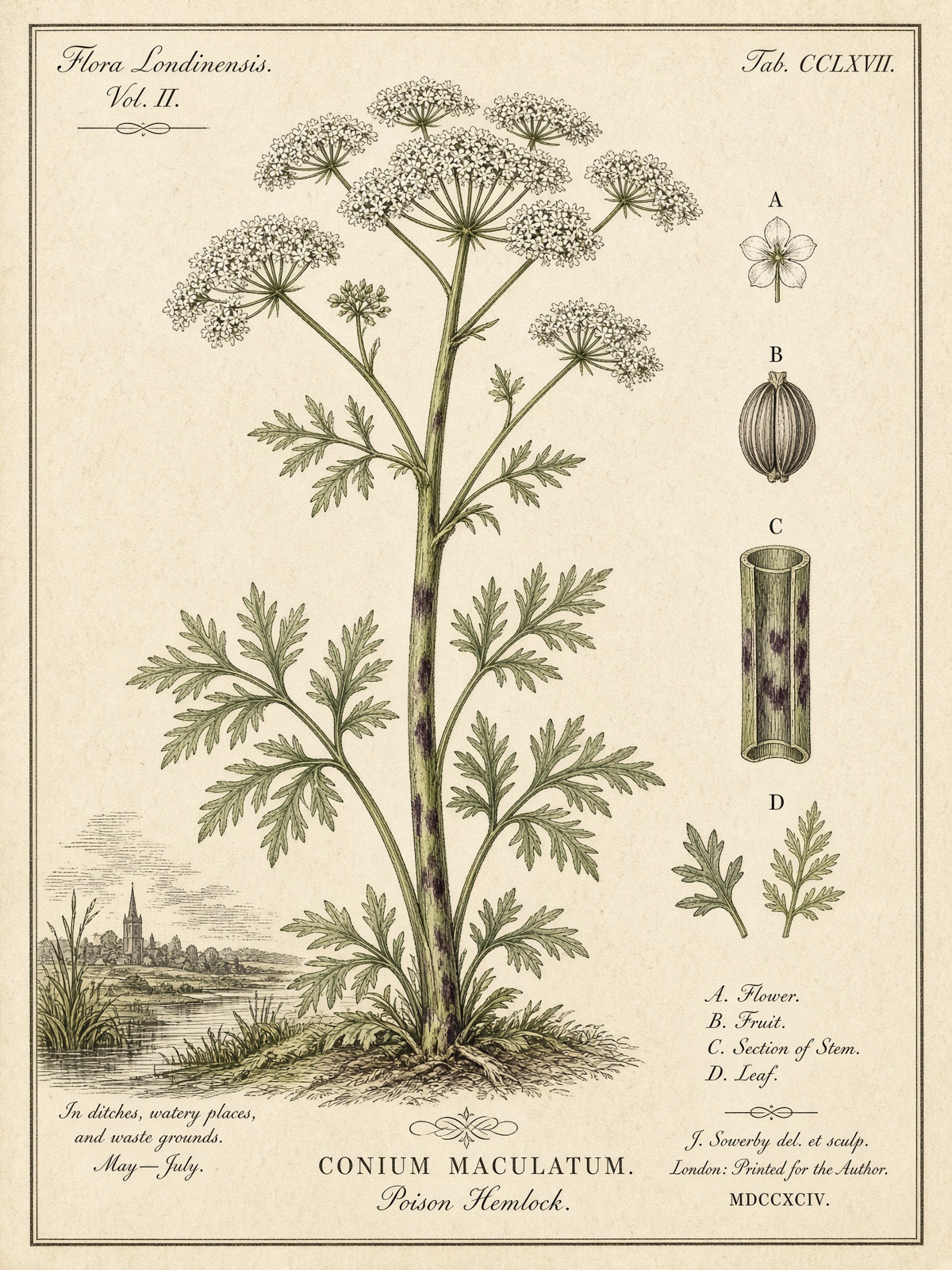 No. 076
Poison hemlock
Conium maculatum
Socrates' cup — a purple-spotted parsley that is still mistaken for fennel, carrot, and Queen Anne's lace.
Do not taste. Literature describes a mouse-urine, parsley rankness.
Harvest: Not a crop. Learn the purple-spotted stem in year 2 bloom.
Socrates’ cup. Conium maculatum, purple-spotted stem, mousy smell, an umbel that looks like parsley if you are a fool. This plate exists so fennel and dill have a named opposite.
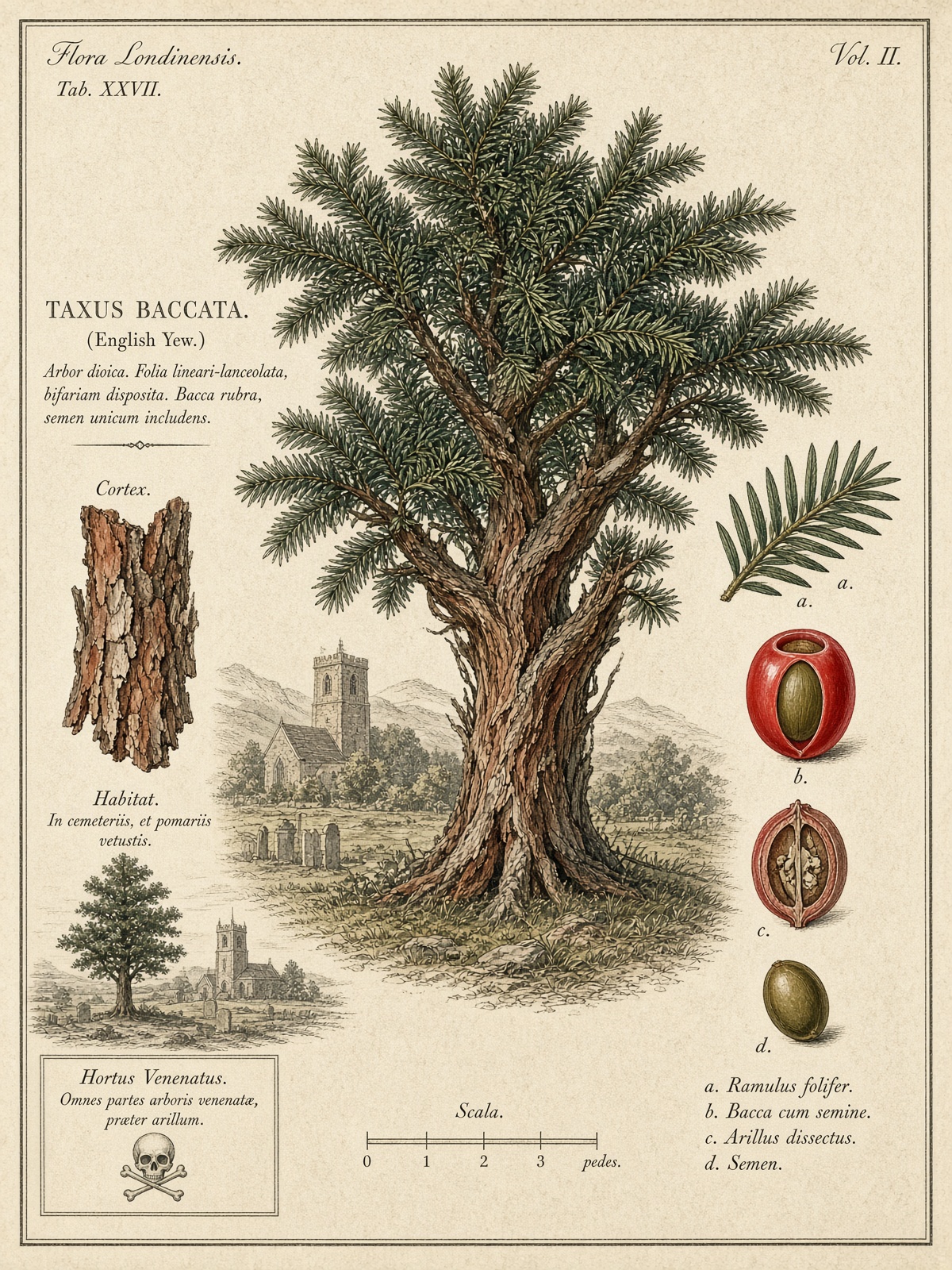 No. 077
English yew
Taxus baccata
The churchyard evergreen — a beautiful hedge whose seeds and foliage stop a heart.
Do not taste.
Harvest: A hedge in 3–5 years as an ornamental — never as a drug
Taxus, the churchyard tree of Europe, longbow wood, and paclitaxel’s cousin. Every part but the red aril flesh is deadly. Do not make tea from hedges.
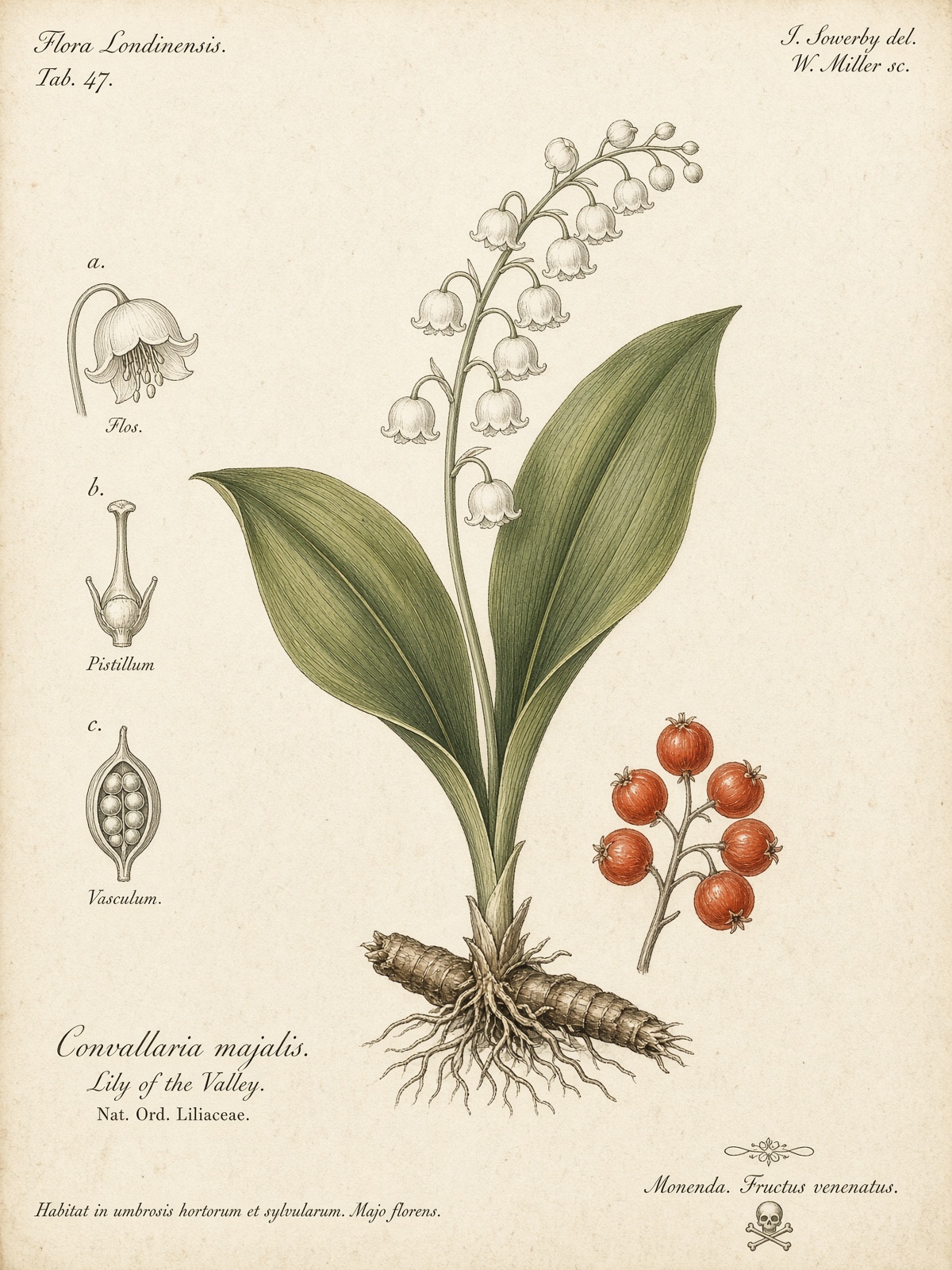 No. 078
Lily of the valley
Convallaria majalis
A sweet May bell that is a foxglove cousin — perfume, not a homemade heart drop.
Do not taste. The flowers smell of sweetness; that is not an invitation.
Harvest: Bloom in spring from established pips — ornamental only
Convallaria, May bells. A cardiac glycoside cousin of foxglove in a plant people plant beside front walks. The scent is famous; the berries are a poison-garden teaching tool.
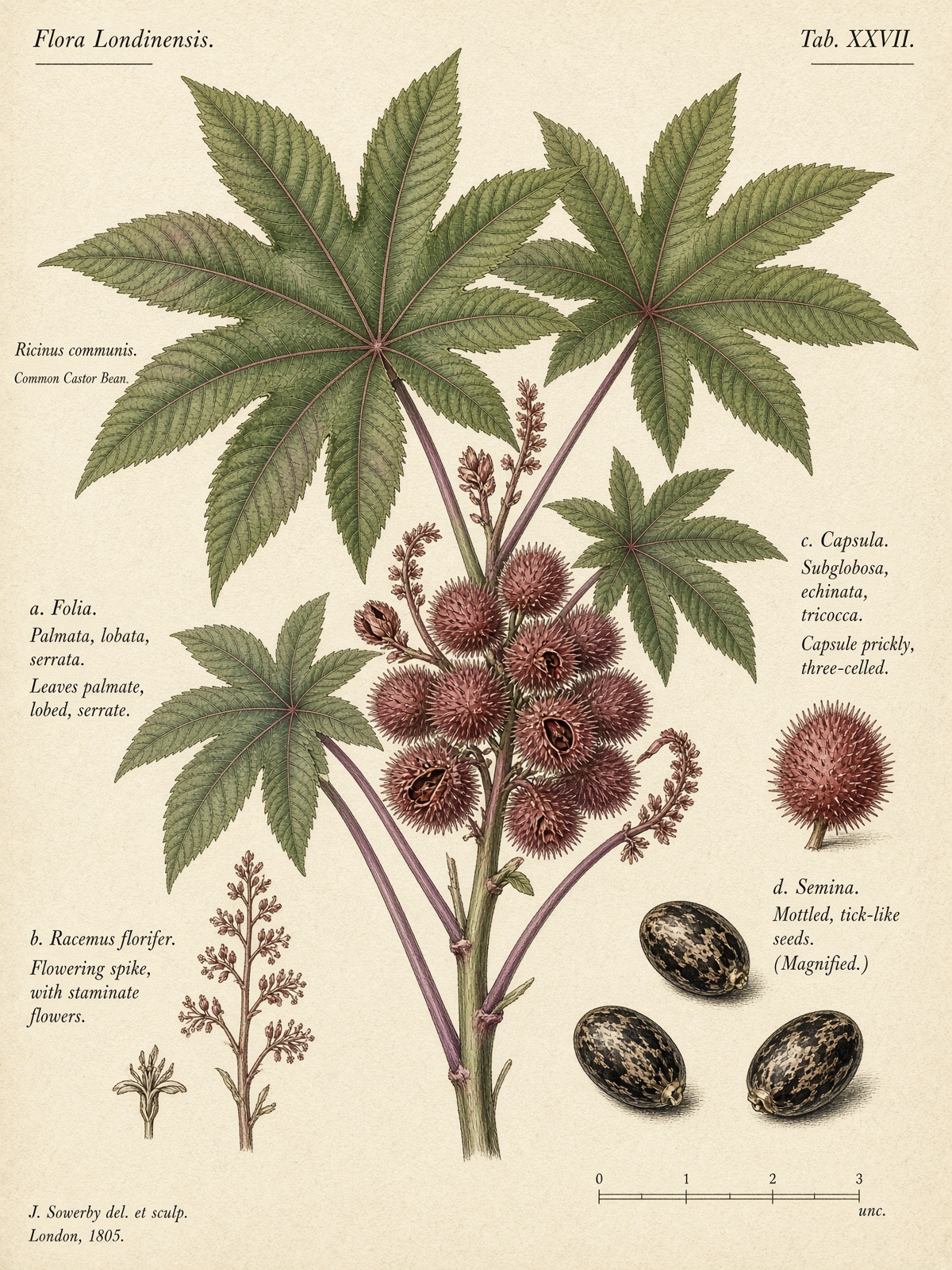 No. 079
Castor bean
Ricinus communis
A tropical star-leaf with beautiful poisonous seeds — oil is a laxative, the mash is a biotoxin.
Do not chew the seeds. Castor oil is oily, bland, and notoriously unpleasant as a purge.
Harvest: Ornamental foliage in 40–60 days; seed is not a home crop
The seed yields a useful oil and, in the press-cake, ricin. The plant is a handsome tropical that does not belong in a child’s garden as a snack. Castor oil’s reputation as a punishment is deserved.
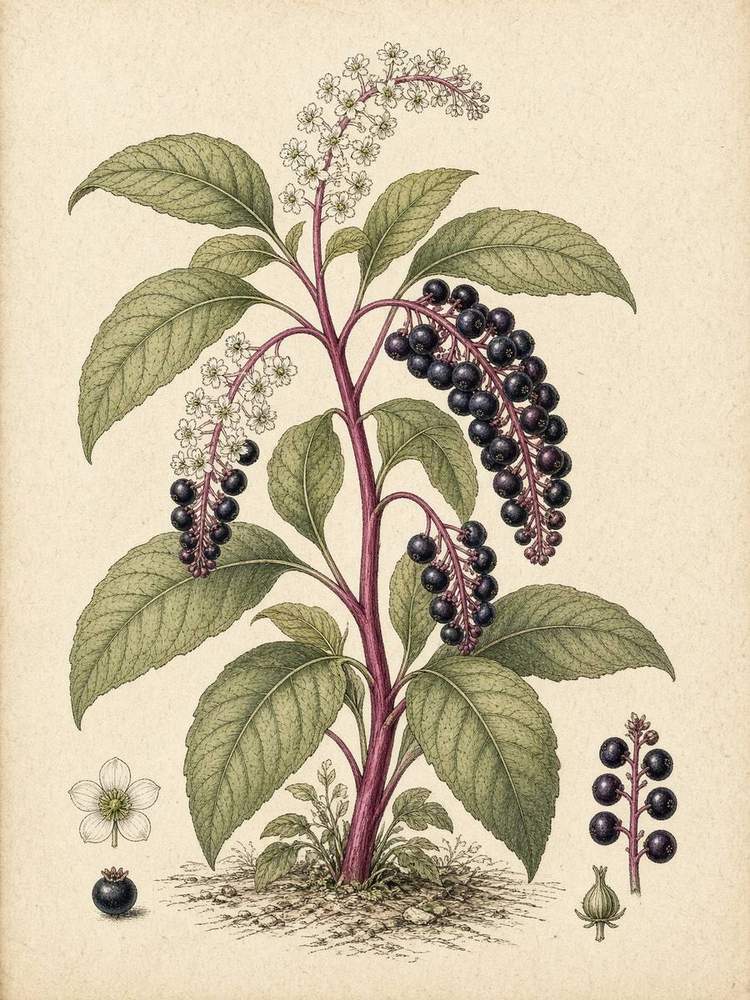 No. 177
Pokeweed
Phytolacca americana
Magenta stems and ink-dark berries — an American roadside that looks like food and is a poison-garden lesson.
Do not taste. Sweetish berries are part of why children eat them.
Harvest: Ornamental/teaching fruit in the first or second year — never as a crop
Pokeberry ink wrote letters in the American 19th century and stained a thousand white shirts. ‘Poke sallet’ is a spring hunger food with a ritual of boiling that folklore treated as a spell and toxicology treats as incomplete. The root was an old emetic, which is to say a poisoning with a job. Leave it to the birds.
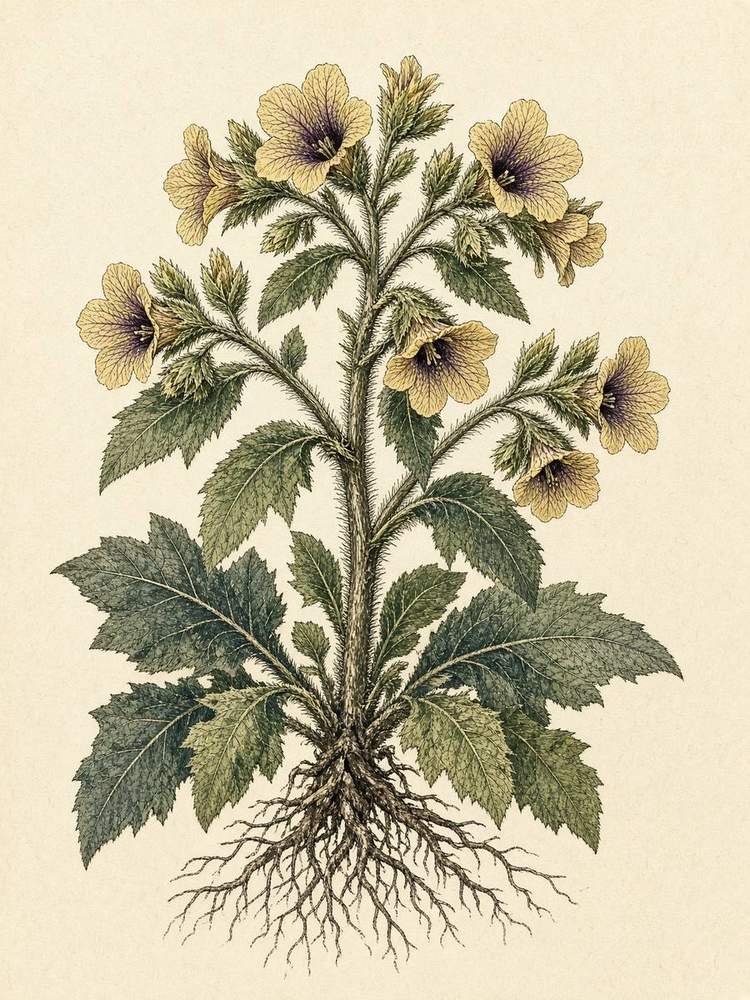 No. 178
Henbane
Hyoscyamus niger
Sticky, dingy-yellow bells with purple veins — the witches’-herb and medieval beer-plant that is now a labeled poison-garden specimen only.
Do not taste. Heavy, narcotic green if you crush a leaf — that is the warning.
Harvest: Bloom in 80–120 days as a poison-garden show — never as a drug
The oracle of Delphi is sometimes accused of henbane smoke, which is a rumor with good scenery. Anglo-Saxon hennbana is ‘hen killer.’ Medieval gruit beers used it; hops were, among other things, a safety upgrade. Hamlet’s ‘hebenon’ may be this plant. Do not recreate the scene.
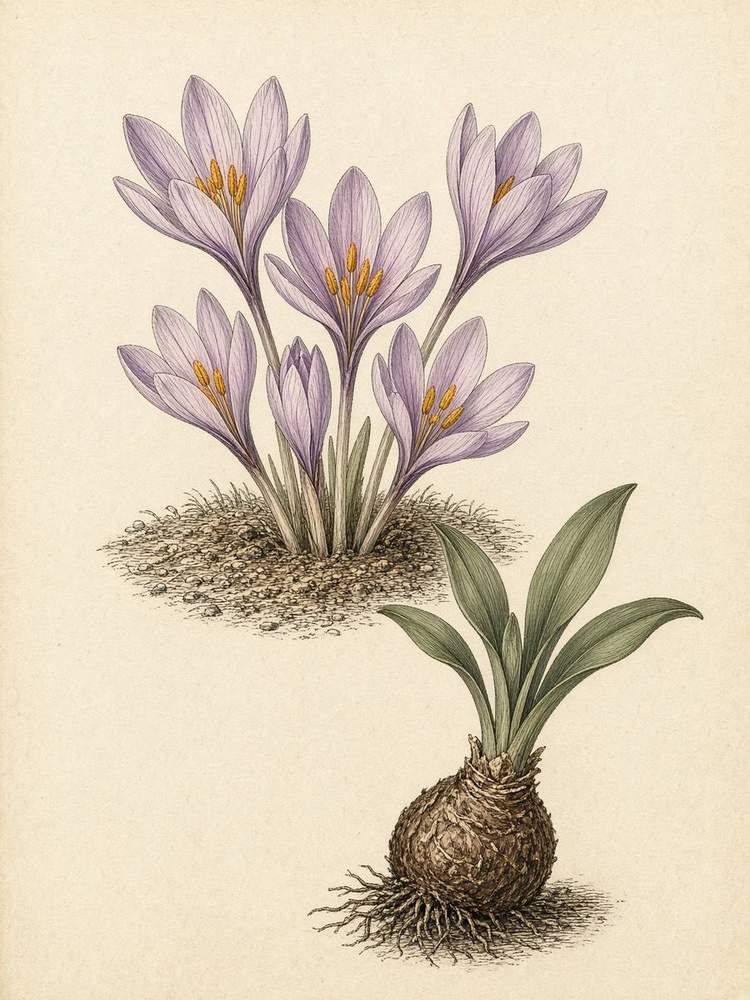 No. 179
Autumn crocus
Colchicum autumnale
Naked ladies — a lilac autumn flower without leaves, deadly, and the saffron lookalike this folio exists to name.
Do not taste. Bitter colchicine.
Harvest: Bloom from a planted corm in autumn — never as a crop
Colchis, Medea’s country, named it. The Greeks already knew it as a poison. Modern gout clinics use colchicine in micrograms; the corm contains a lottery. Medieval ‘hermodactyl’ was this plant in the pharmacy. The saffron confusion is newer and worse, because it happens in a kitchen.
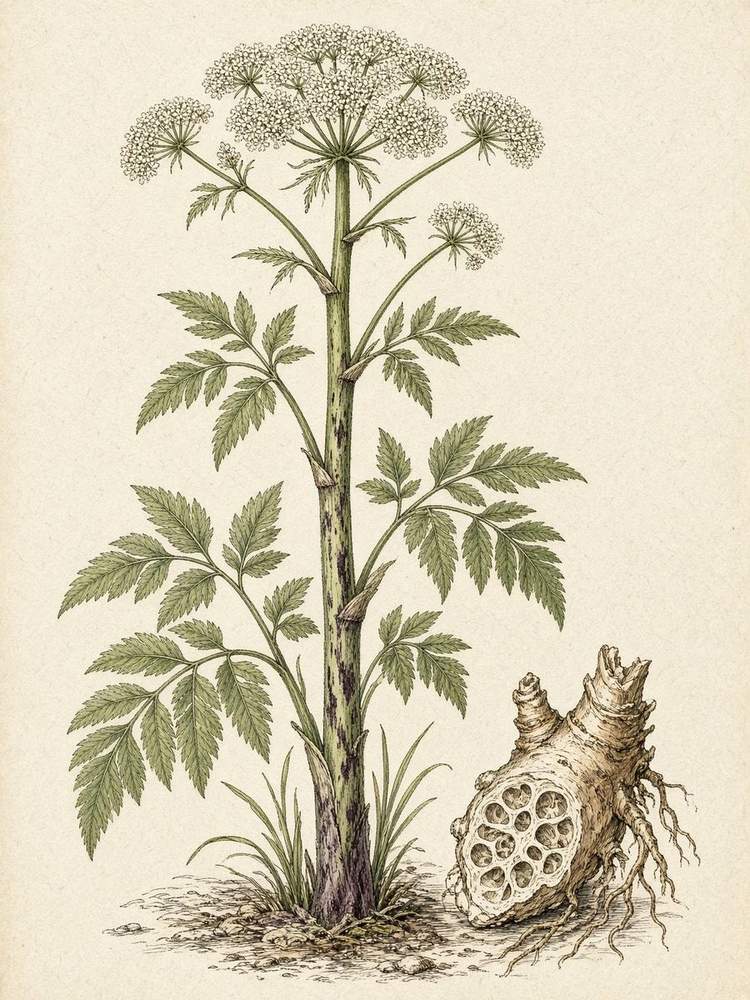 No. 180
Water hemlock
Cicuta maculata
The wetland umbel that looks like parsley and kills like a seizure — a teaching plate so fennel, dill, and watercress have a named opposite.
Do not taste. A parsley-carrot smell is the trap.
Cicuta is the plant Socrates is sometimes mis-credited with; his cup was Conium. Water hemlock is worse in a hurry. American foraging deaths still cluster on this genus. The old joke about wild carrot — ‘Queen Anne’s lace has a hairy stem’ — is not enough here. If it stands in standing water and you are not a botanist, it is not lunch.
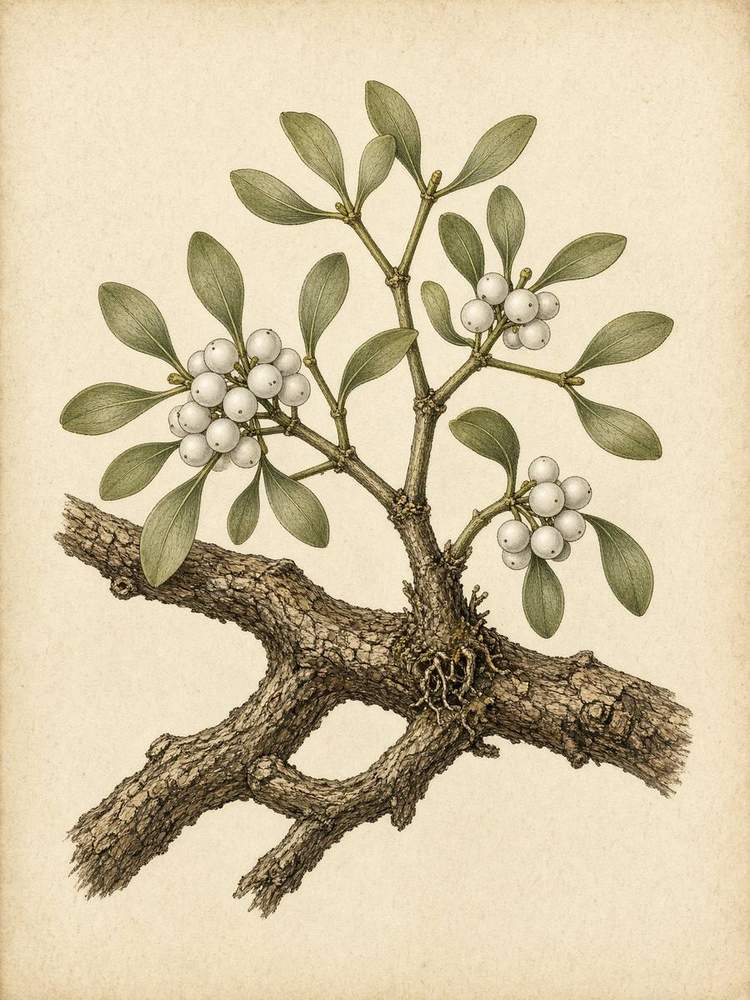 No. 181
Mistletoe
Viscum album
The kissing parasite — white berries on a host branch, a solstice prop, and a teaching plate so it is not boiled as a winter tonic.
Do not taste. Sticky, sweetish berries are why children eat them.
Pliny has the Druids cutting it with a golden sickle from oak, which may never have happened as written. Baldr died of a mistletoe dart in the Norse story. Victorian England hung it in the hall and forgot the dart. A lectin does not care about either story. The berry is a bird’s glue, not a child’s candy.