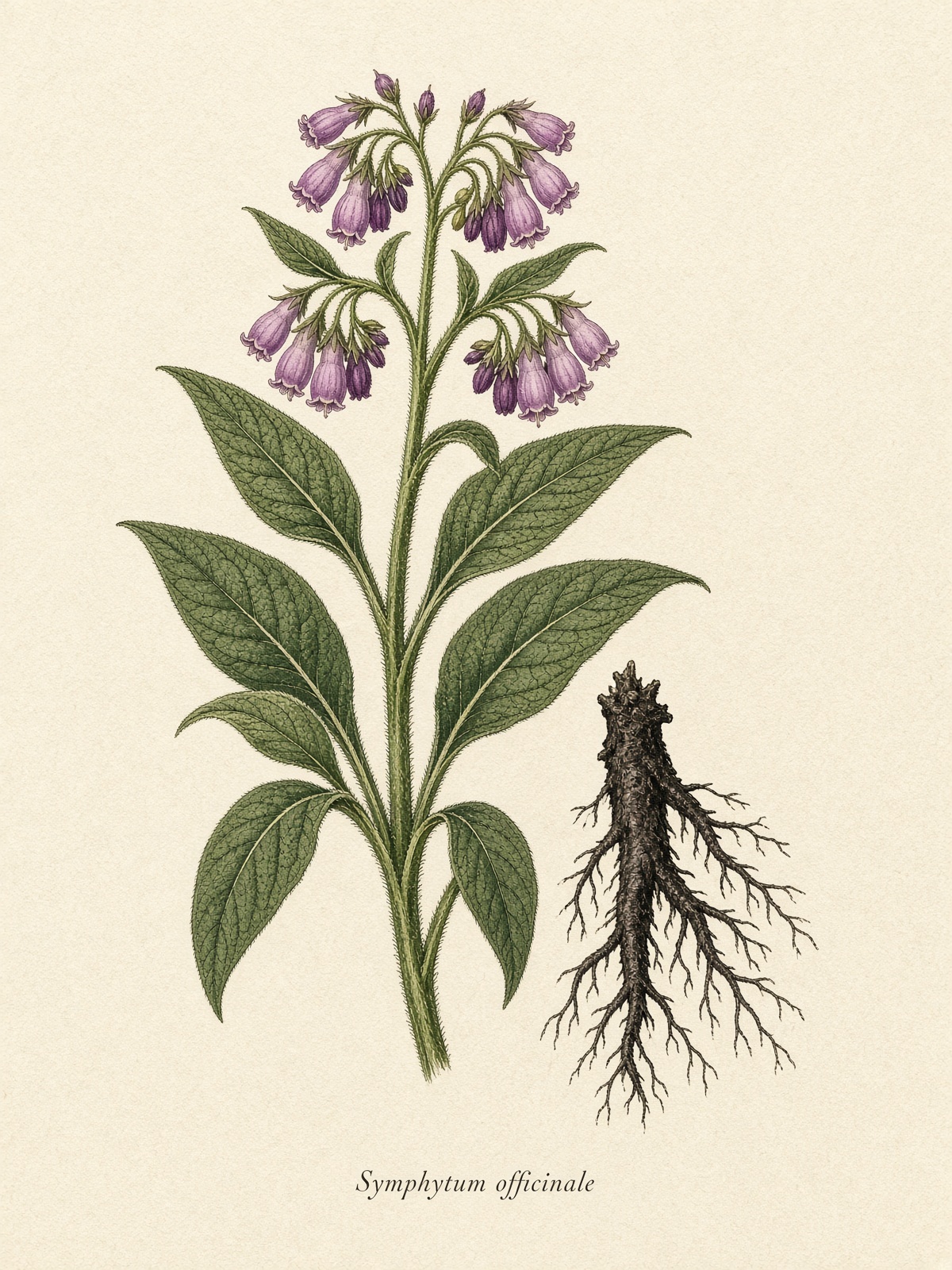
Herb. No. 027 · Boraginaceae
European damp-ground perennial, now a compost-plant worldwide.
Native · Europe
Native Also grownNow a garden plant worldwide
LegalToxicplant
Comfrey
Symphytum officinale
Knitbone — a legendary wound-and-bone poultice whose internal use is no longer defensible.
Treat this as a poison-garden specimen. Read Safety before any use.
Allantoin-rich leaf and root really do encourage cell proliferation, which is why folk healers loved it and why you must not put it on dirty or deep wounds (it can close the surface over an infection). Unsaturated pyrrolizidine alkaloids damage the liver with internal use. Grow it as a compost plant and an external poultice only.
Flavor
Cucumber-green and mucilaginous. Not a tea flavor to chase.
Parts used
Leaf (topical) · Root (topical)
Helpful
- Exceptional compost and mulch plant
- Soothing external poultice
Cautions
- Hepatotoxic internally
- Can seal in infection
- Bocking 14 is sterile — prefer it so it does not seed