The Herbarium
Part VII · Toxic
Herb. No. 027
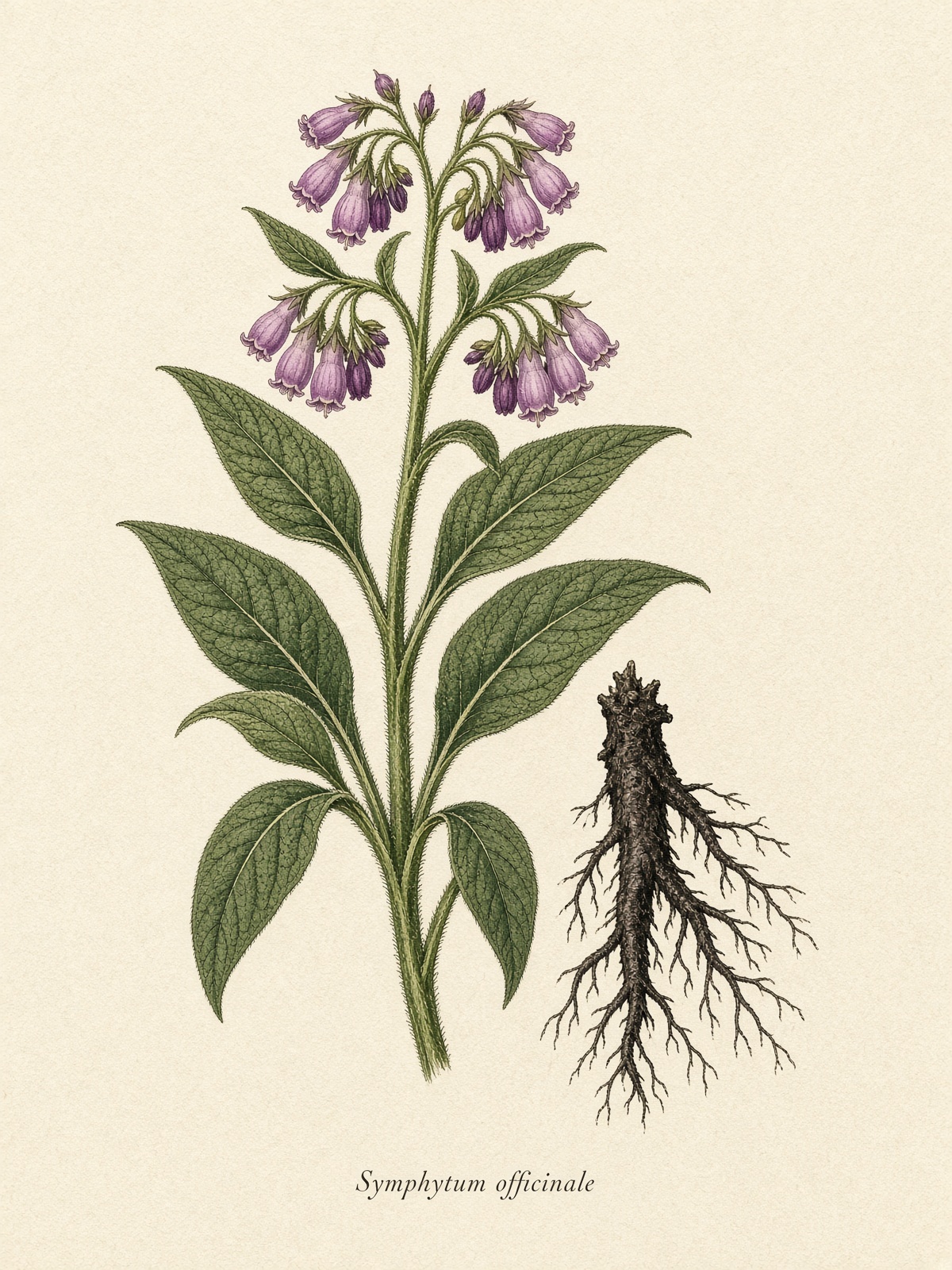
Comfrey
Symphytum officinale
Boraginaceae
Knitbone — a legendary wound-and-bone poultice whose internal use is no longer defensible.
Internal use is discouraged or banned in many places because of pyrrolizidine alkaloids. Topical on unbroken skin is the remaining folk use.
- Parts used
- Leaf (topical) · Root (topical)
- Traditional notes
- Bruises and sprains (poultice) · Closed, clean minor wounds · Garden compost activator
- Grow · USDA 6b
- Perennial, USDA 4–9. Almost immortal. Plant Bocking 14 root cuttings so it cannot seed. It will still never leave. In work: Apr · May · Jun · Jul · Aug · Sep
- Harvest
- Leaf several times a summer for compost or poultice. Root in autumn if needed externally.
- Bocking 14 is sterile and stays put; seed-true comfrey will wander.
- Leaves for compost and oil — not a daily tea.
- It will outlive you. Site it once.
Safety
Any internal use Broken skin that is deep or dirty Pregnancy Children internally
Companions
Plant with Apple, Chives, Garlic, Nasturtium, Peach, Yarrow.
Lookalikes
- Foxglove — The worst garden story in this folio: Digitalis in a kettle meant for Symphytum. Cardiac glycosides are not a wound tea.
- Borage — Bristly borages. Internal comfrey is a pyrrolizidine problem. Borage leaf is a cucumber nibble — and still not a daily tea.
Lore
Knitbone. The old poultice plant for a closed sprain, and a liver lesson when people drank it. Allantoin made the cell-growth reputation; pyrrolizidine alkaloids made the internal use a poison-garden topic. The leaf is for the outside of you.
The Herbarium — a teaching catalog, not a clinic. Traditional use is history, not a prescription. USDA 6b dates are a week either way, not a promise. Do not eat, drink, or harvest a plant you cannot name.