Part II
Medicinal fungi
Culinary and tonic mushrooms you can legally grow or cook at home.
23 plates in this section
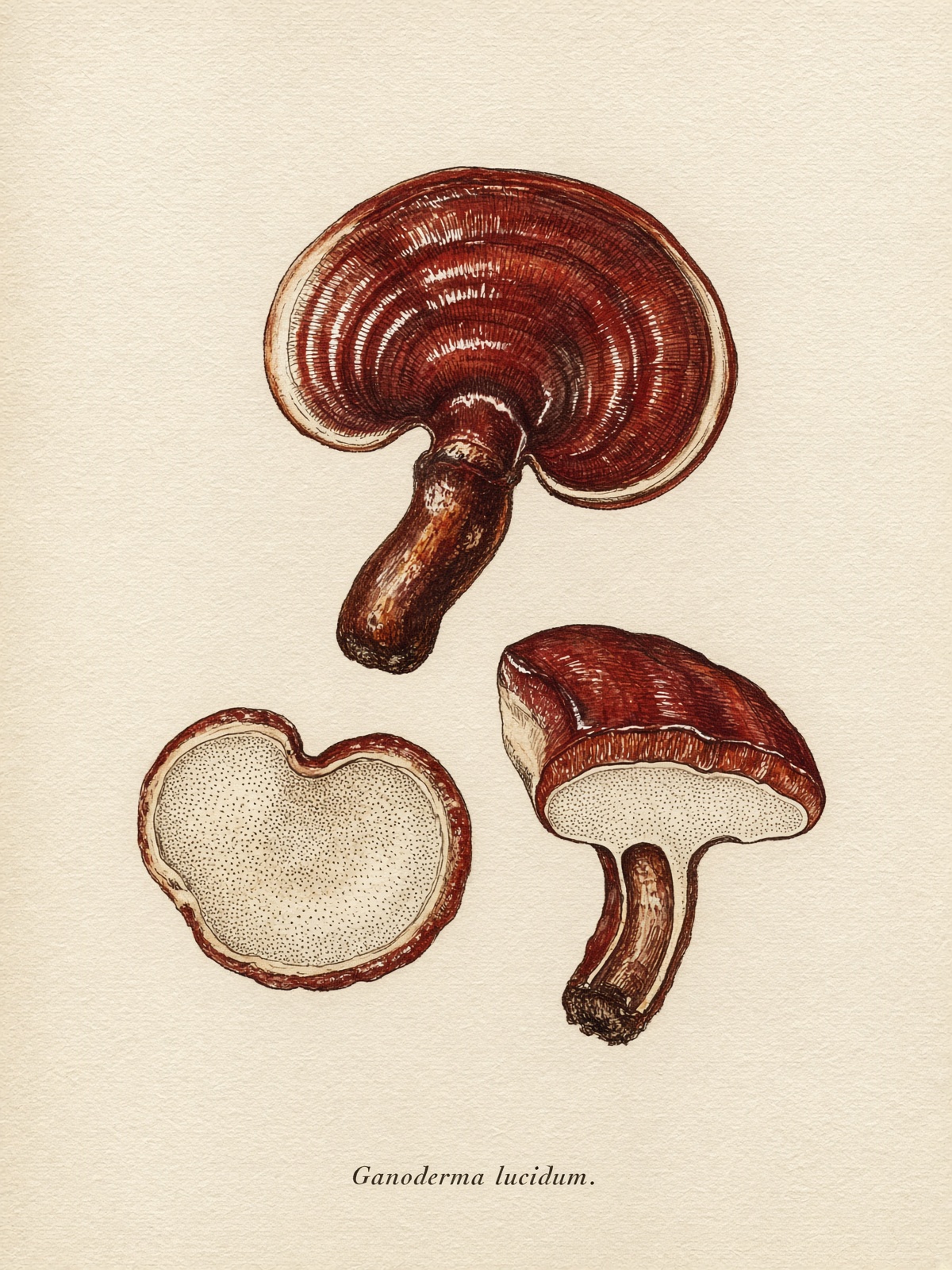 No. 029
Reishi
Ganoderma lucidum
The lacquered 'mushroom of immortality' — a bitter decoction for recovery, sleep, and immune tone.
Bitter varnish and dark wood. A decoction, not a sauté.
Harvest: 60–90 days on a fruiting block; 12–24 months on logs
Língzhī, the mushroom of immortality in Chinese painting — a varnished conk you simmer for hours and never enjoy as a steak. Daoist texts treat it as a spirit plant. The grocery slice is a farmed log crop, which is how immortality learned to scale.
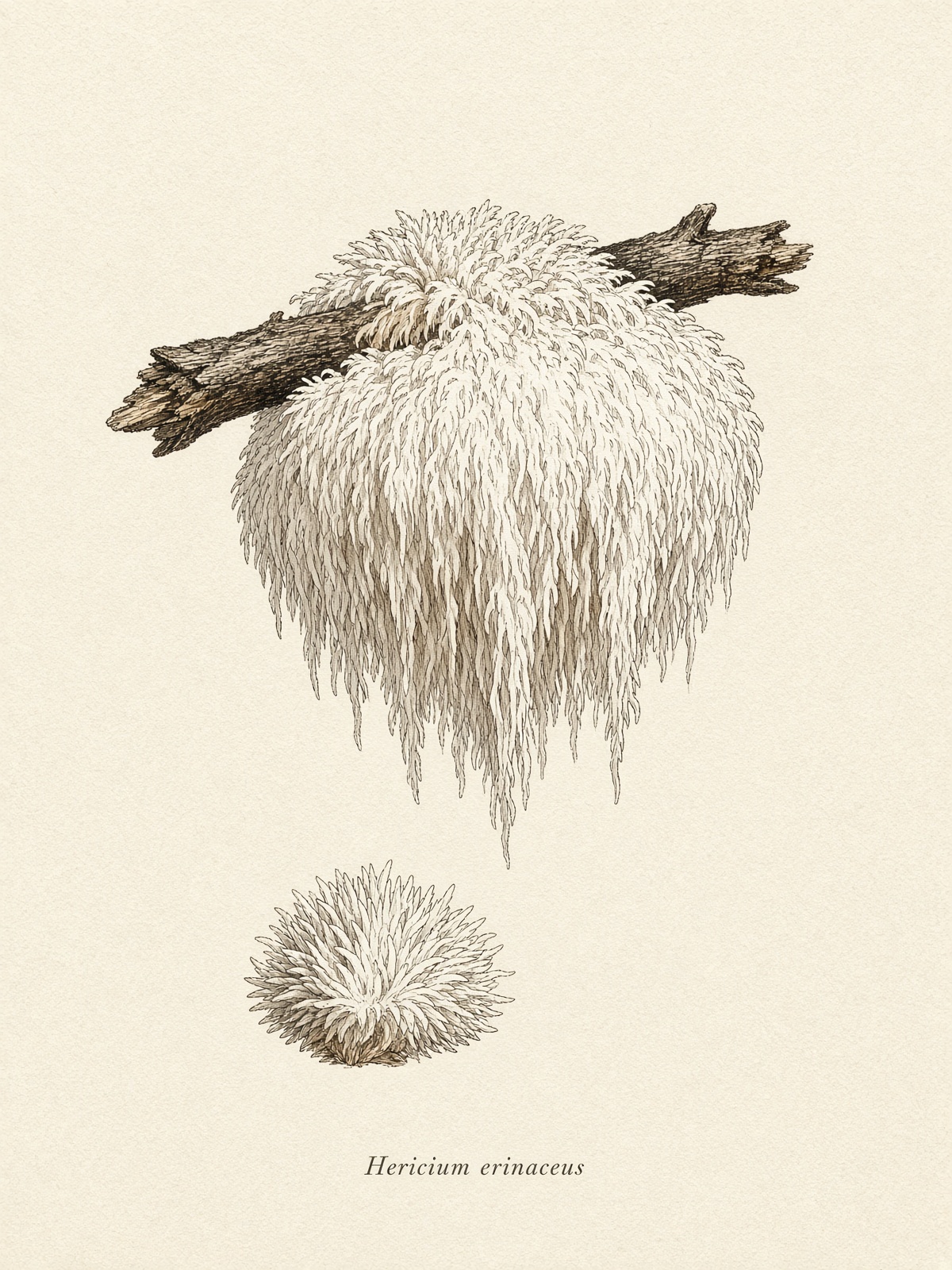
No. 030Lion's mane
Hericium erinaceus
The pom-pom fungus eaten as crab-like food and taken for focus and nerve support.
Mild, seafood-sweet when seared; dried powder is mushroom-bread.
Harvest: 14–21 days from a ready block
The pom-pom on the oak. Japanese cooks knew it as yamabushitake, named for the shaggy mountain monks. Modern nootropic marketing found it later. The seafood taste when seared is not a metaphor.
 No. 031
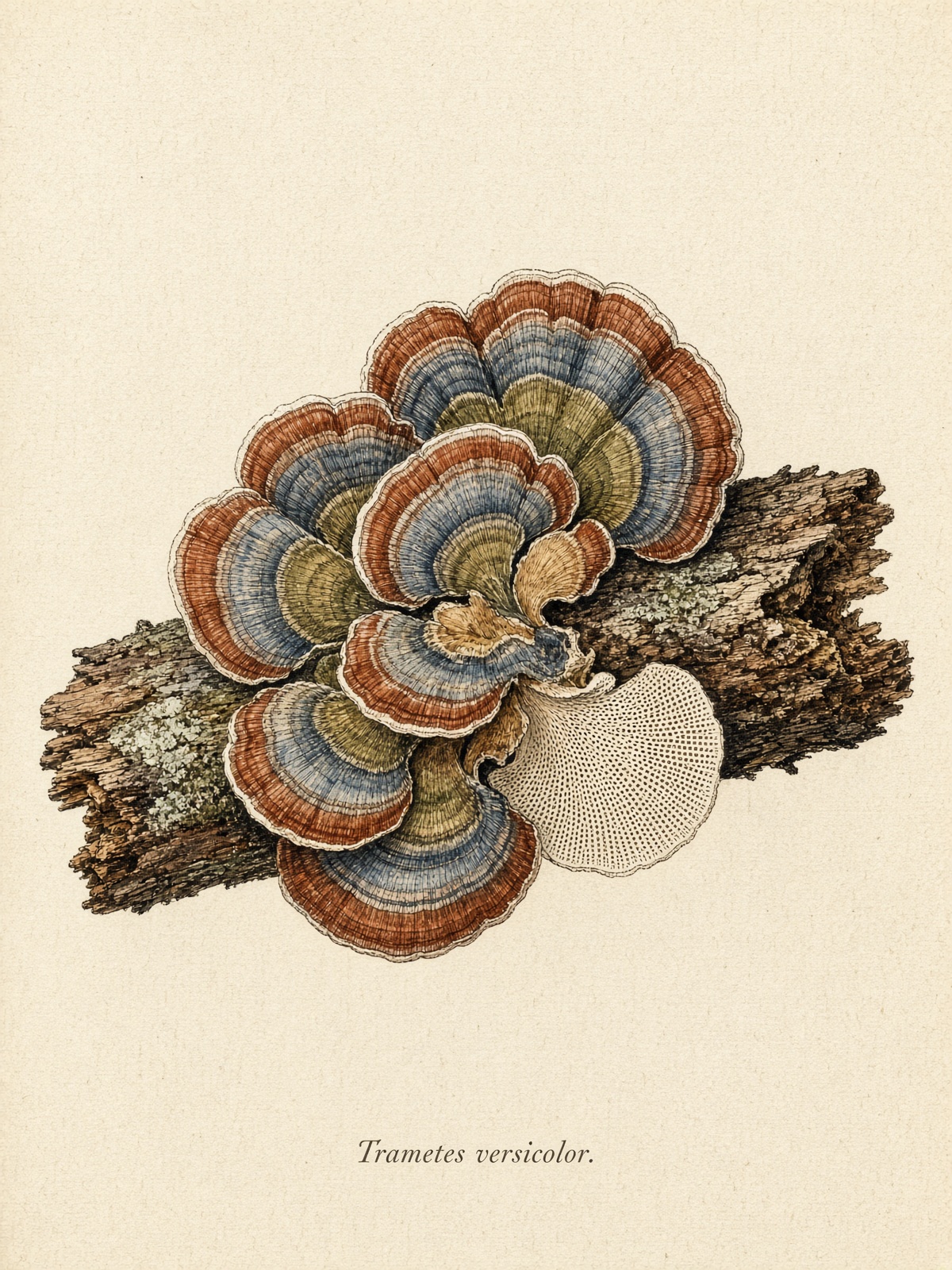
Turkey tail
Trametes versicolor
Zoned fans on dead wood — the best-studied medicinal polypore for immune support beside treatment, not instead of it.
Woodsy, thin, and faintly bitter after a long simmer.
Harvest: 12–18 months on inoculated logs
Trametes on every dead hardwood, zoned like a turkey’s tail. Japanese PSK extracts from it are actual hospital adjuvants in some countries. The backyard conk is a decoction, not those capsules, and identification still matters.
 No. 032
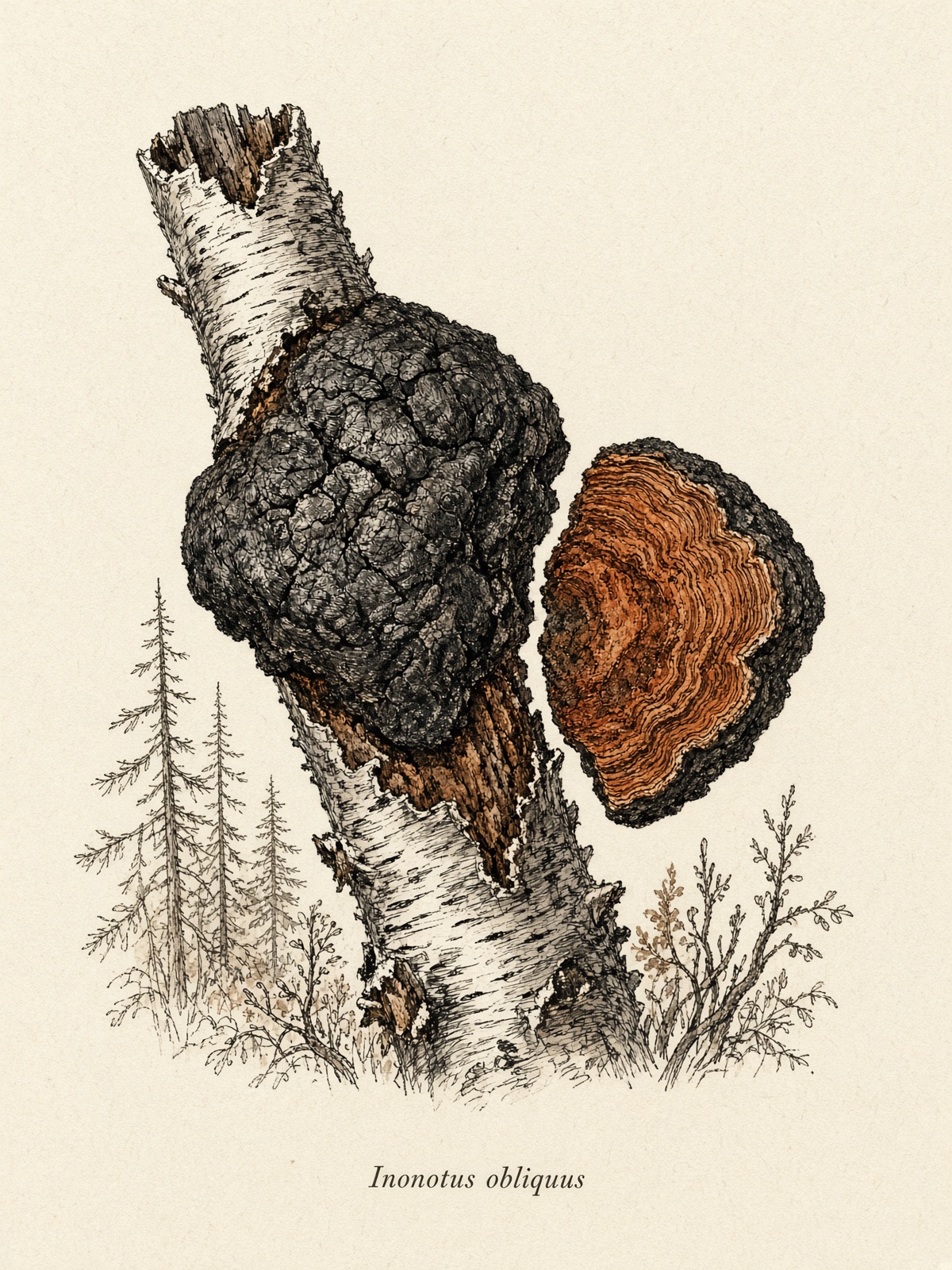
Chaga
Inonotus obliquus
A charcoal-like birch canker simmered as a deep, vanilla-earth tonic — harvest with restraint.
Vanilla-earth, birch bark, and faint smoke.
A black clinker on living birch, looking like burnt charcoal until you nick it and see rust. Siberian tea, not a log-grown kit. Overharvest of slow wild cankers is the conservation problem hiding in a wellness aisle.
 No. 033
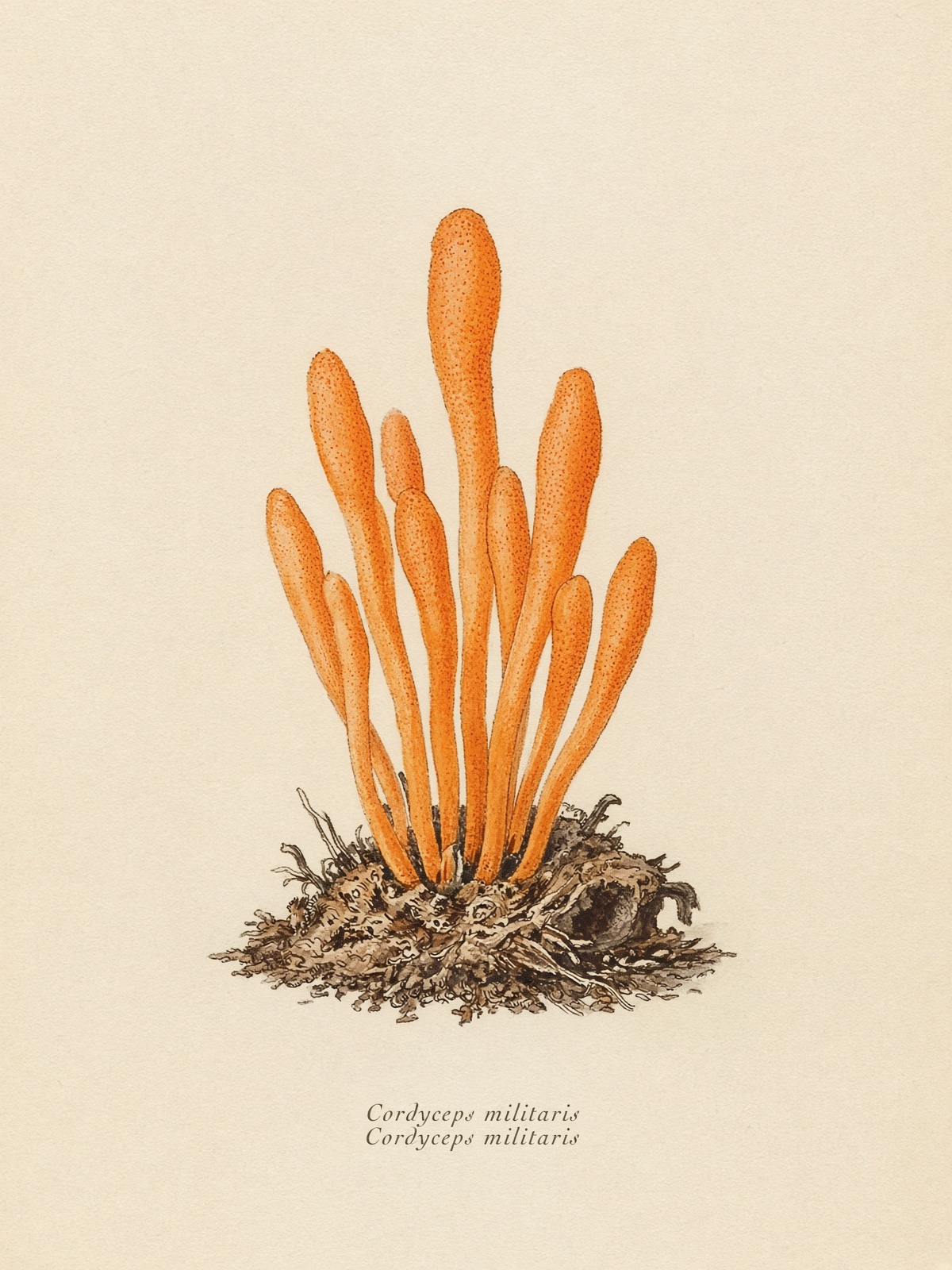
Cordyceps
Cordyceps militaris
Orange cultivated cordyceps used for stamina and lung Qi — buy militaris, not mystery 'Himalayan gold'.
Savory, mild umami, a little marine.
Harvest: 45–60 days from a militaris kit
The wild Tibetan caterpillar fungus made headlines and scarcity. What you can grow is Cordyceps militaris, orange and honest, on rice or insect substrate. The story of the worm is not the story of the jar.
 No. 034
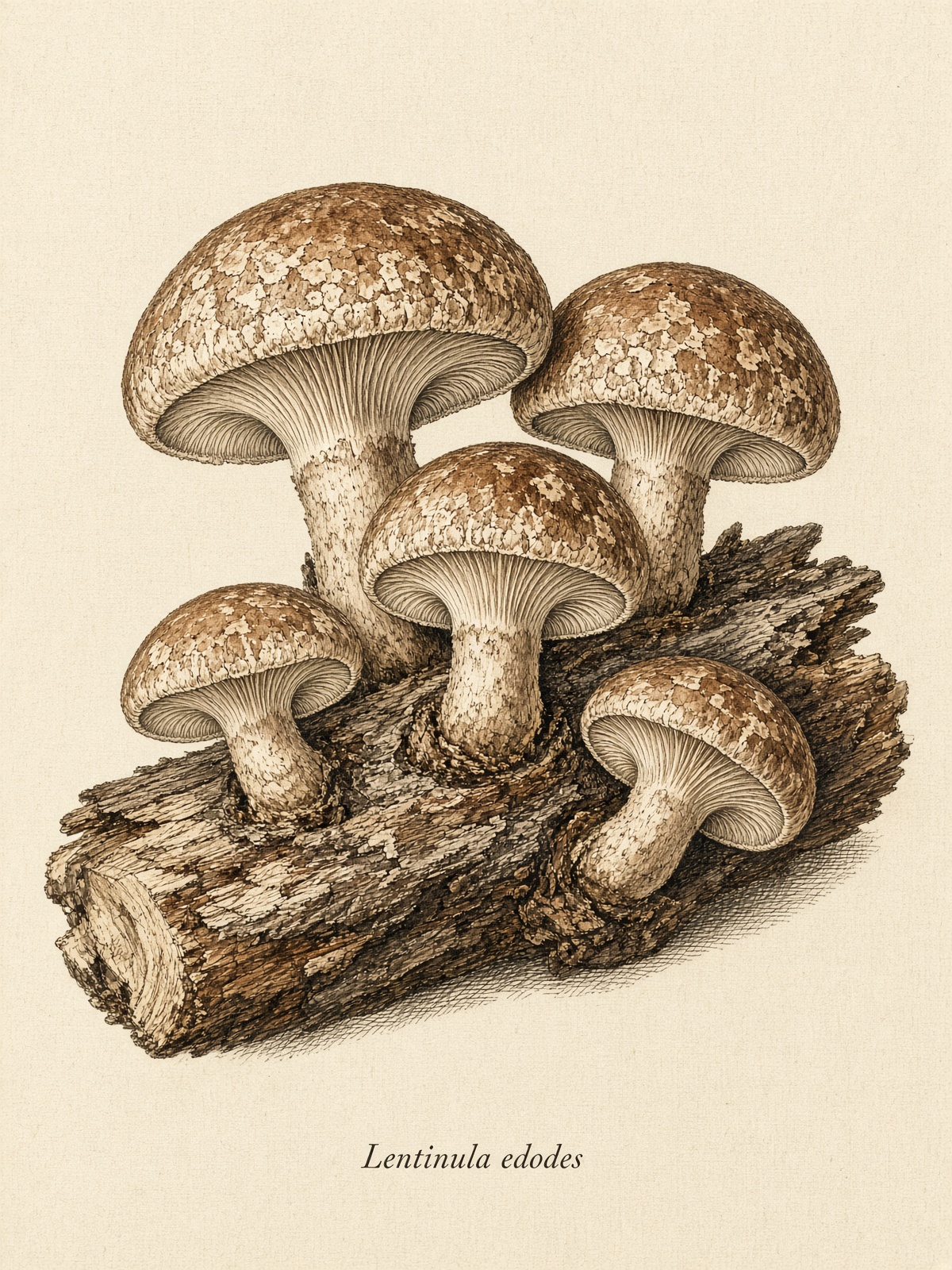
Shiitake
Lentinula edodes
The farmable forest mushroom — food first, immune-modulating lentinan as a bonus.
Deep forest umami, garlic-wood when dried.
Shii is the Castanopsis tree it fruited on in Japan; take is mushroom. A thousand years of log culture before the sawdust block. Dried, it makes the kitchen smell of the woods you wish you owned.
 No. 057
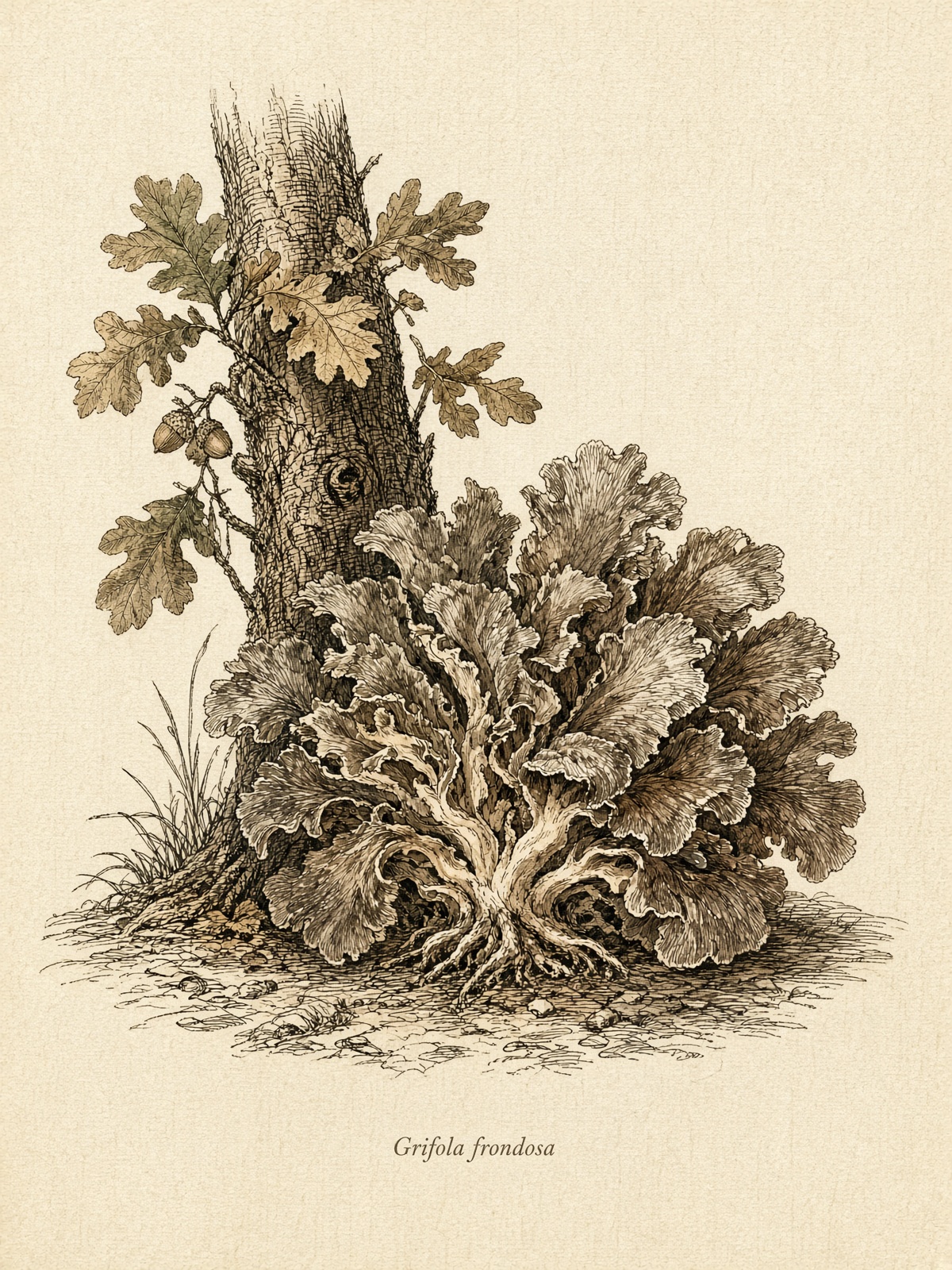
Maitake
Grifola frondosa
Hen-of-the-woods — a clustered oak fungus eaten for flavor and immune tone.
Rich, woodsy, a little pepper when seared — one of the best edible polypores.
Harvest: 30–45 days from a ready block; 12–24 months on buried wood
Hen-of-the-woods, dancing mushroom — maitake — at the base of old oaks. Japanese foragers still treat a find as a small fortune. It is farmable now, which is how a woodland prize became a grocery cluster.
 No. 058
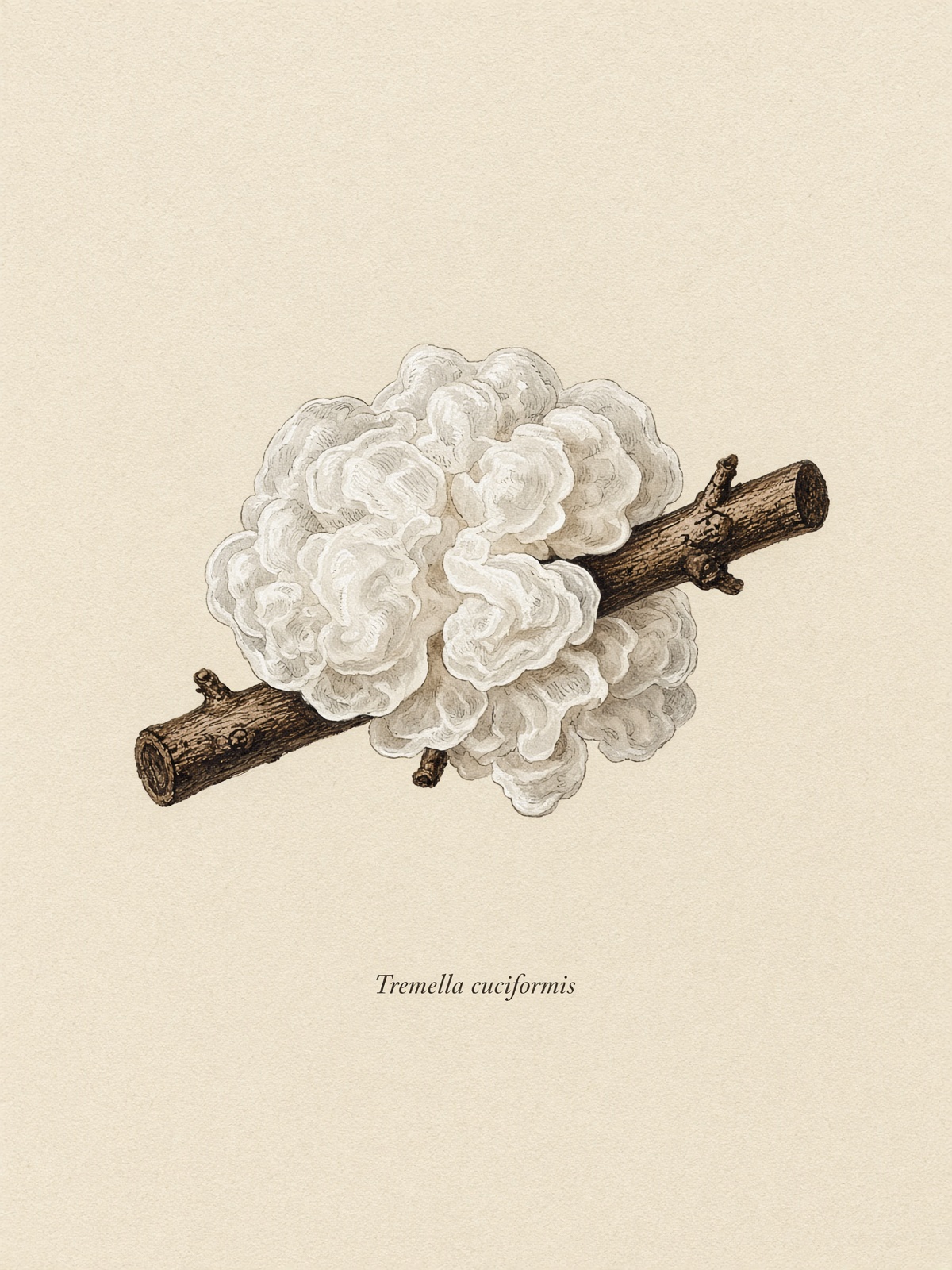
Snow fungus
Tremella fuciformis
A translucent white jelly used in Chinese kitchens for skin, lung Yin, and a silky soup.
Almost none — a clean, crunchy jelly that carries the syrup or broth you cook it in.
Harvest: 20–35 days from a colonized bag
Silver ear, snow fungus. Chinese banquet soup and a Qing-dynasty beauty recipe. It is a parasite on other fungi, grown now on blocks, and it has almost no flavor of its own on purpose.
 No. 059
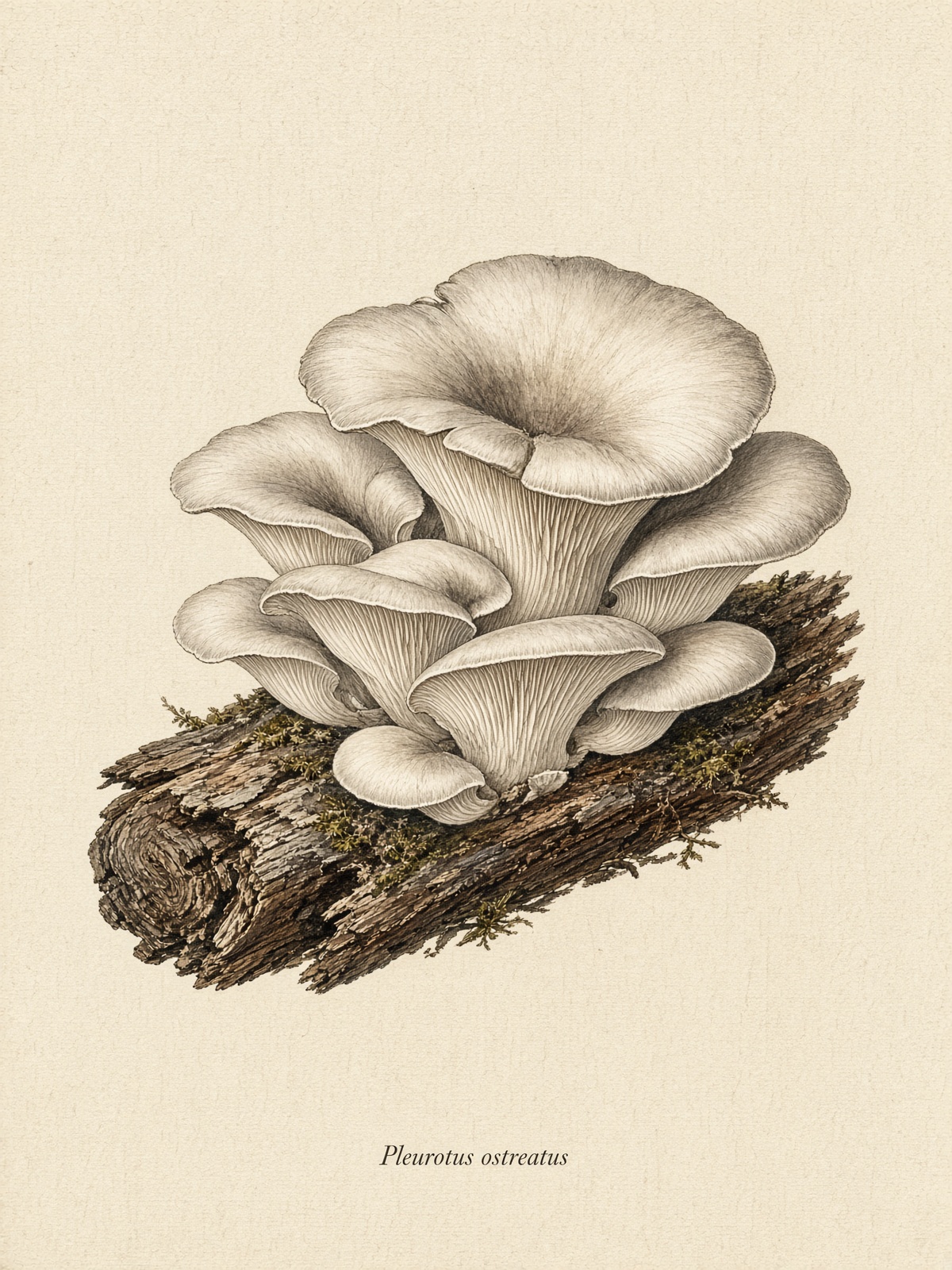
Oyster mushroom
Pleurotus ostreatus
The easiest gourmet mushroom — food first, with a modest immune-supporting glucan bonus.
Delicate, anise-seafood when fresh, deeper when browned.
Harvest: 10–21 days from a ready kit
Pleurotus, the mushroom that eats coffee grounds and old books. It is the gateway crop for anyone with a damp closet. The shelf of caps is named for the sea, not the taste.
 No. 072
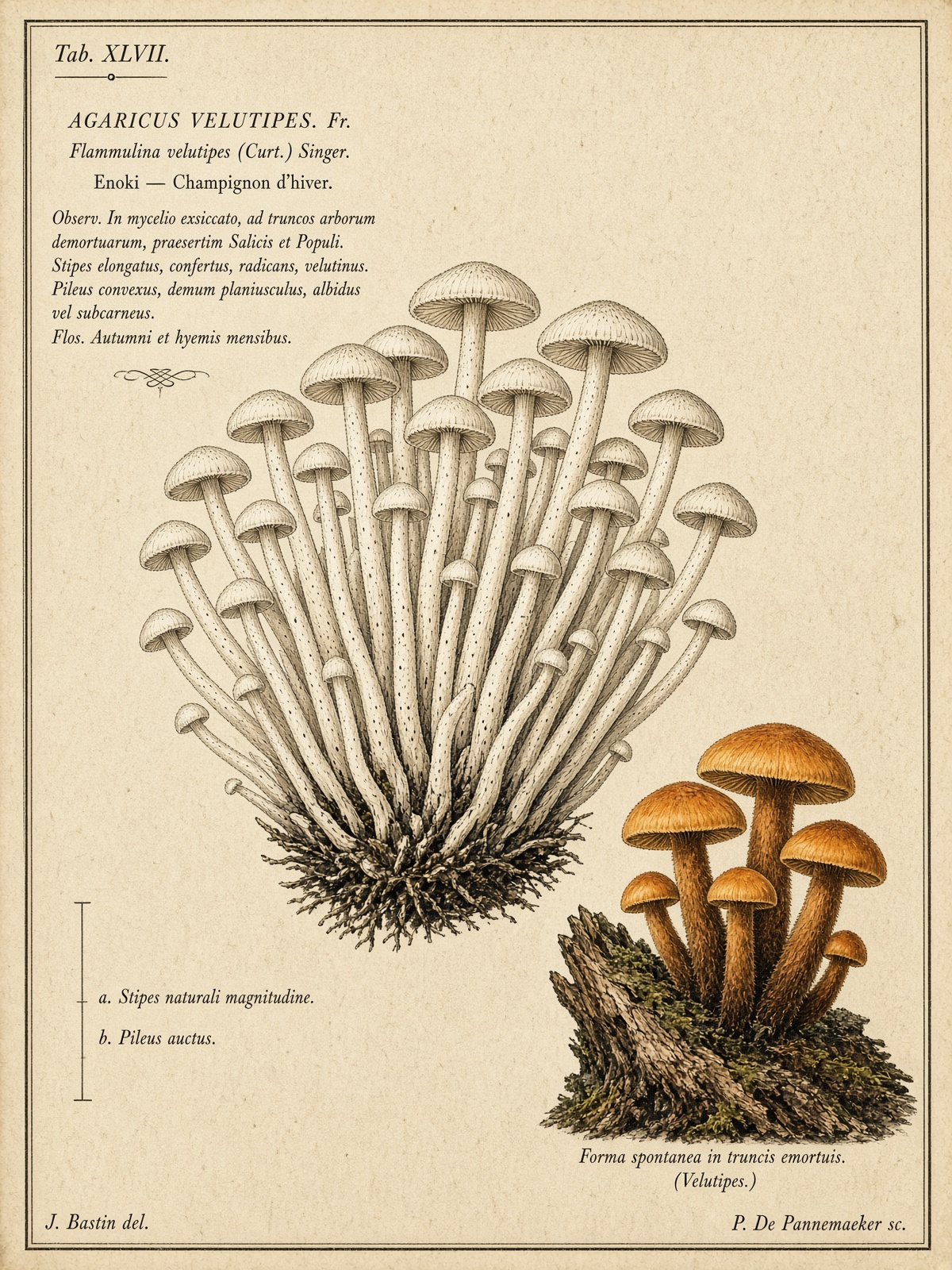
Enoki
Flammulina velutipes
The needle mushroom of hot-pot — food first, with a modest winter immune tradition in East Asia.
Mild, a little sweet and crunchy; broth-friendly rather than seared.
Harvest: 20–30 days from a ready bottle kit
The wild winter mushroom is a tawny cap on a short stem; the supermarket needle is the same species grown in the dark and bottled like a bouquet. Japanese farmers learned that trick. The Latin Flammulina means little flame, which the wild one still is.
 No. 073
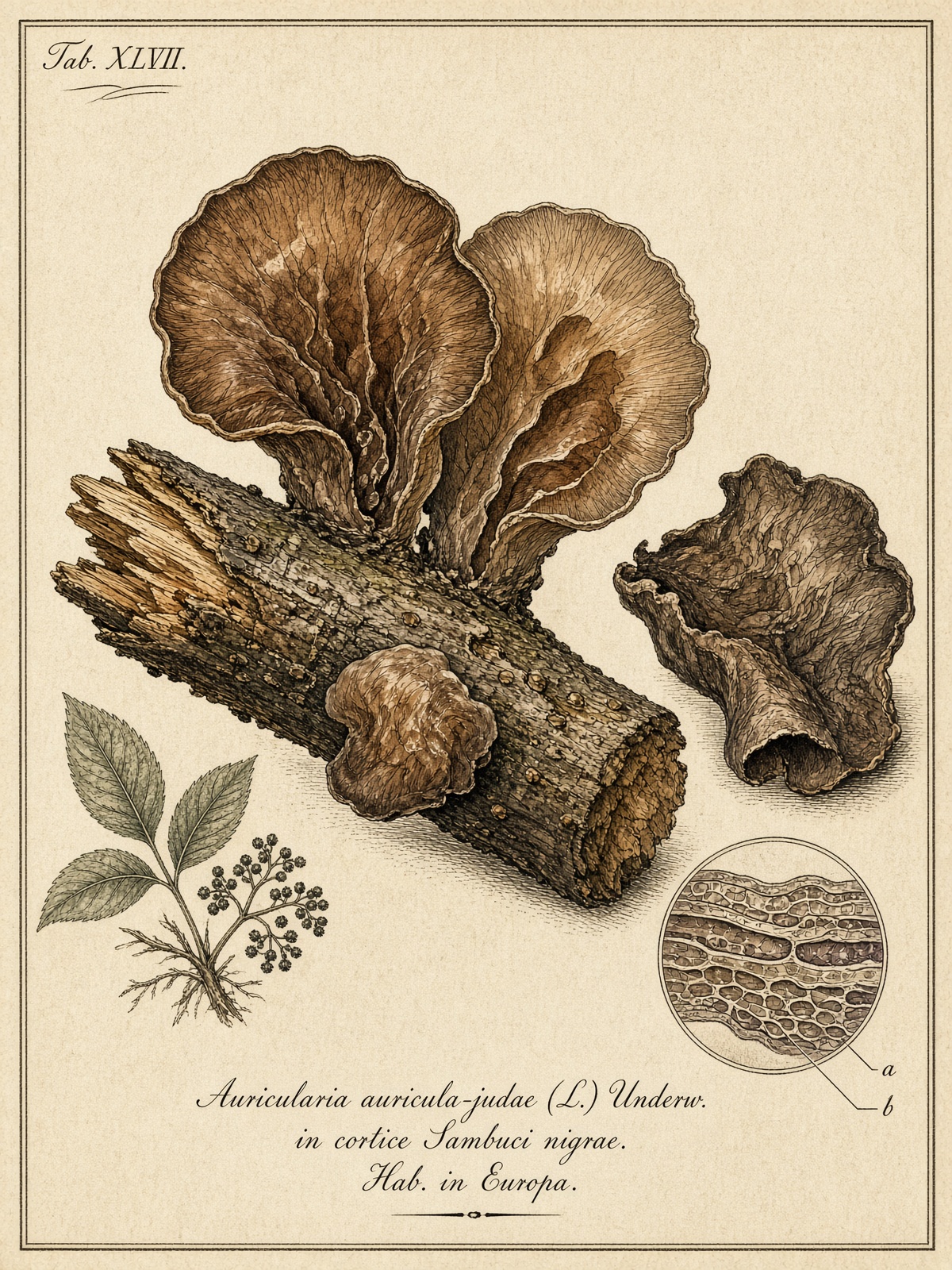
Wood ear
Auricularia auricula-judae
A rubbery ear on elder wood — crunch in soup, and a traditional blood-moving food in Chinese cooking.
Almost none — a clean, cartilaginous crunch that takes on the broth.
Harvest: 6–12 months on inoculated logs
Mu er, wood ear — a jelly fungus that has been in Chinese kitchens since at least the Tang. It has almost no flavor and all the crunch, which is the point of a hot-and-sour soup. It drinks the sauce you give it.
 No. 096
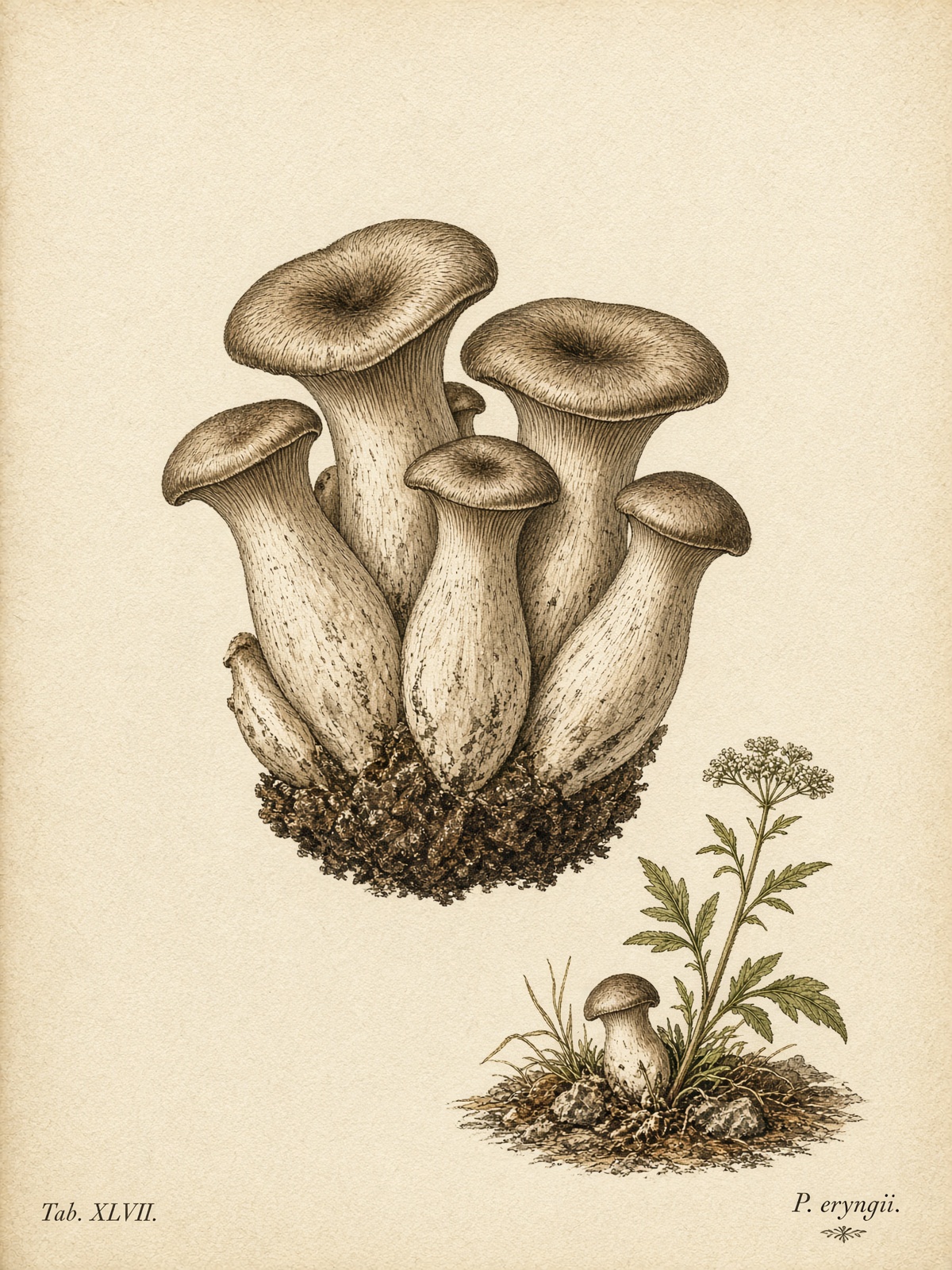
King oyster
Pleurotus eryngii
The steak of the oyster clan — a fat stem you sear, with the same gentle glucan bonus as its cousins.
Meaty, umami, faintly seafood-anise when browned — a pan mushroom, not a tea.
Harvest: 14–24 days from a ready block
Pleurotus eryngii, the trumpet that sears like scallop. It is a Mediterranean and West Asian mushroom that East Asian farms made ordinary. The stem is the prize, not the cap.
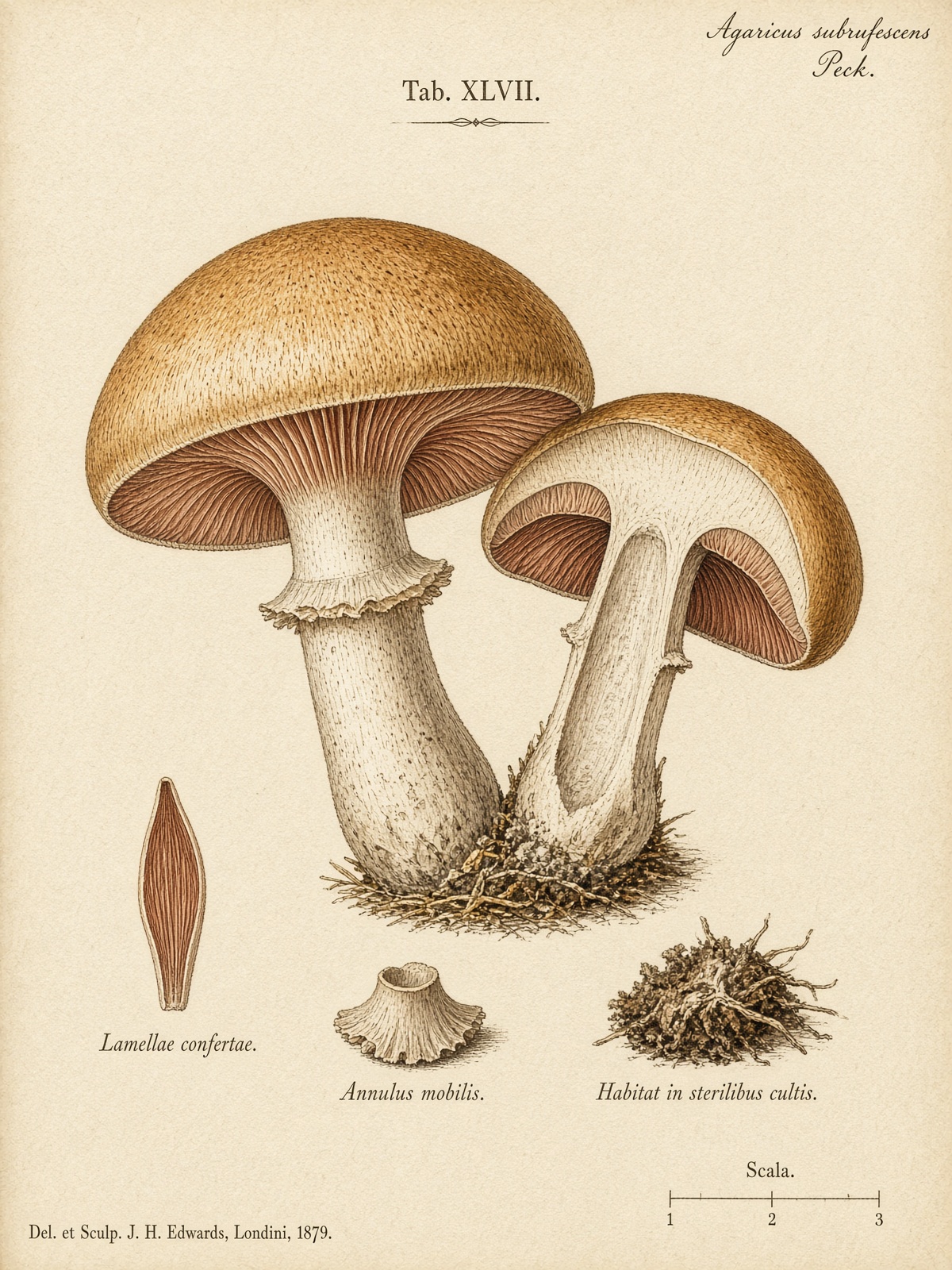 No. 097
Almond mushroom
Agaricus subrufescens
A Brazilian button mushroom that smells of almond — food first, immune-glucan folklore second.
Sweet almond, mushroom, a little anise when fresh — unusual and pleasant.
Harvest: 20–35 days from a ready kit
Agaricus subrufescens, the almond-scented Brazilian cousin of the button mushroom. It smells of marzipan when fresh. Japanese and Brazilian farms grow it as himematsutake.
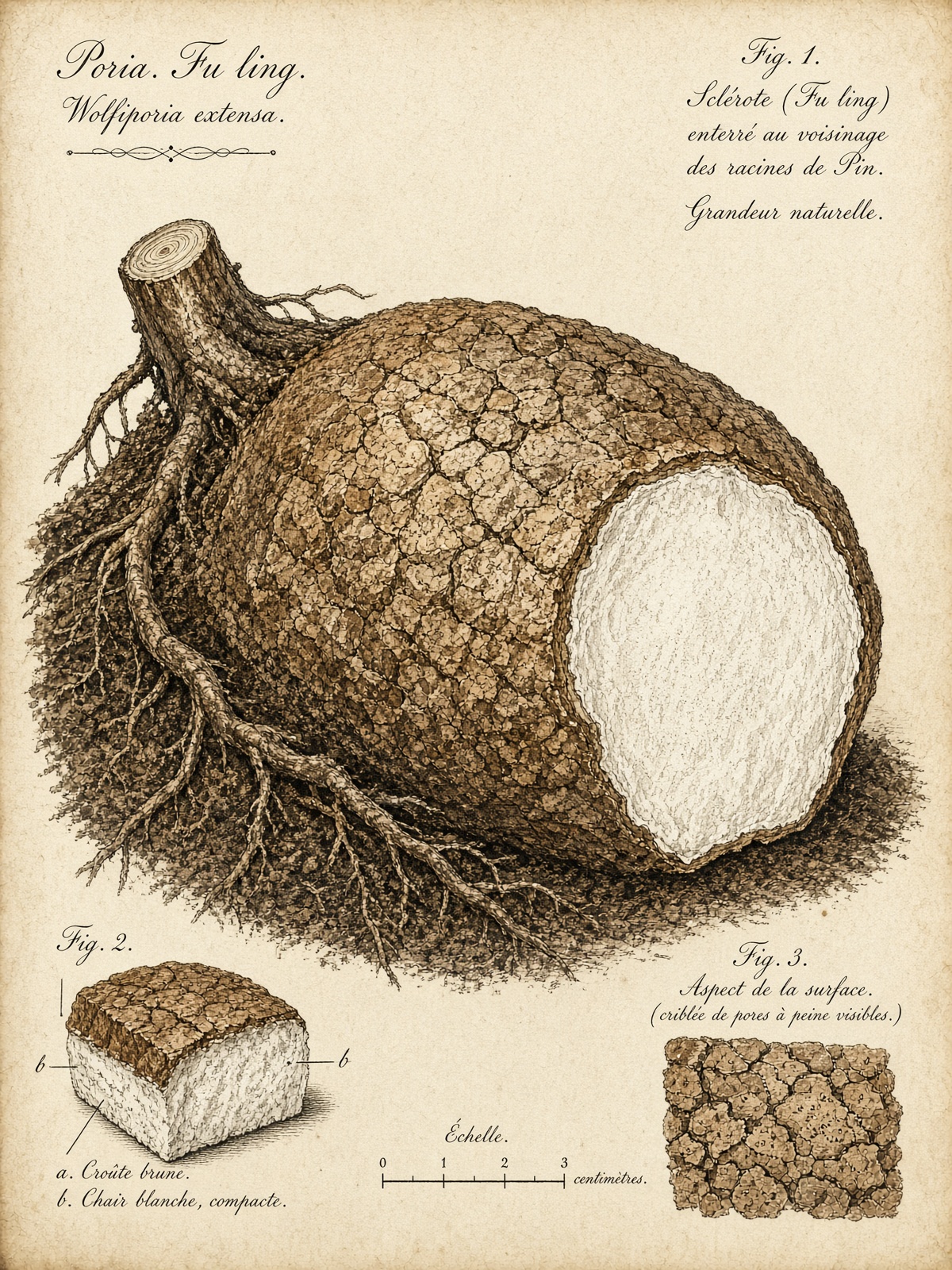 No. 098
Poria
Wolfiporia extensa
A buried pine fungus used in Chinese soups for dampness, gut, and calm — a sclerotium, not a mushroom cap.
Almost none — a clean, faintly sweet wood. It carries the soup.
Harvest: 365–730 days in specialist pine culture; kitchen use is purchased dried cubes
Fú líng, the sclerotium in pine roots, looking like a dusty coconut when dug. Chinese formulas treat it as a quiet drain-and-calm fungus. You buy slices, you do not stumble on it walking the dog.
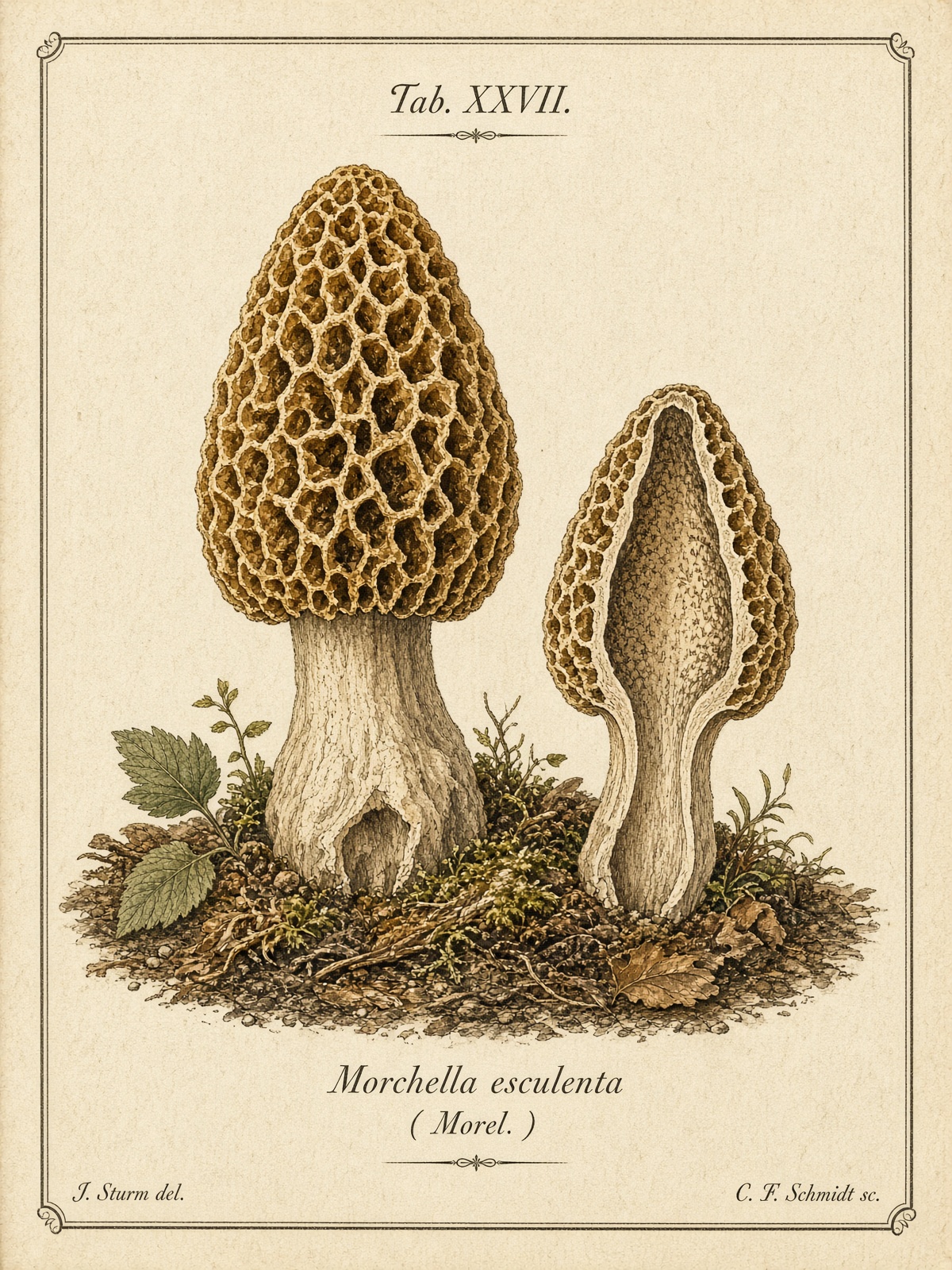 No. 099
Morel
Morchella esculenta
The honeycomb cap of spring woods — a culinary prize whose lookalikes hospitalize people.
Deep, nutty, almost meat-stock when cooked in butter. Raw is not a flavor to seek.
Harvest: Outdoor beds: months to years, if at all. Wild flushes are a weather window, not a calendar crop
Morchella, the honeycomb that sends people into woods with a religion. False morels (Gyromitra) have killed foragers who were almost sure. The spring flush is a weather rumor, not a calendar date.
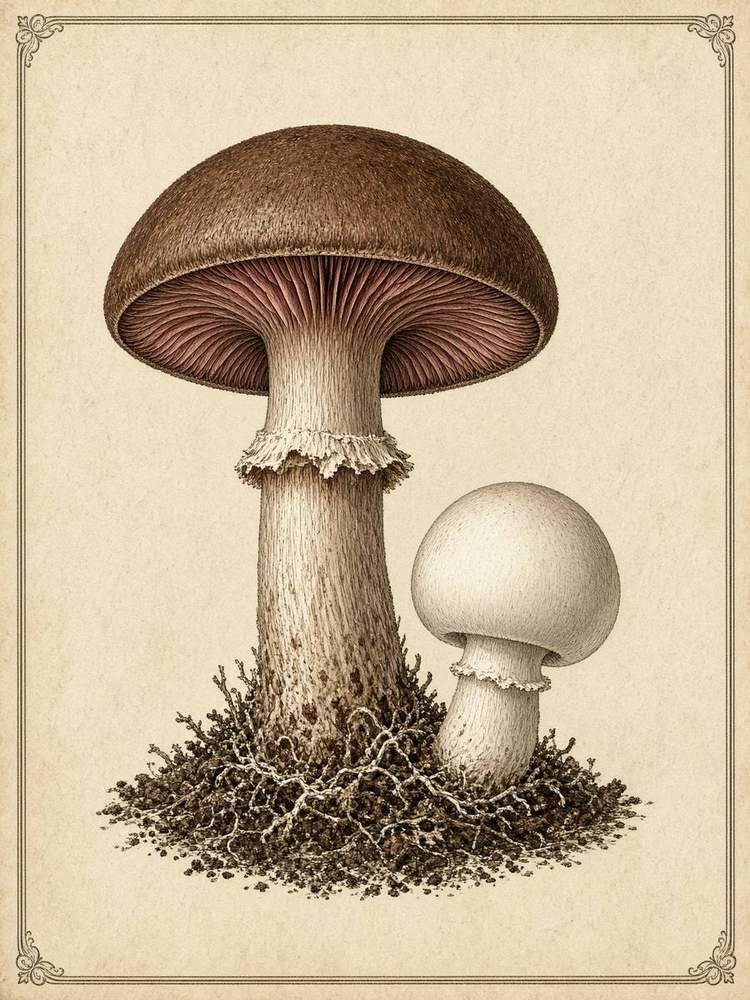 No. 118
Button mushroom
Agaricus bisporus
The same fungus three times — button, cremini, portobello — a kitchen mushroom you can grow on a block.
Mild, earthy; browns are deeper; portobello is steak-mushroom when roasted.
Harvest: 16–25 days from a spawned block to first buttons
Paris grew this fungus in abandoned limestone quarries until ‘champignon de Paris’ was a trade. The white button is a 1926 sport from a brown line; portobello is just the same mushroom allowed to grow up. One species, three grocery names, a century of marketing.
 No. 119
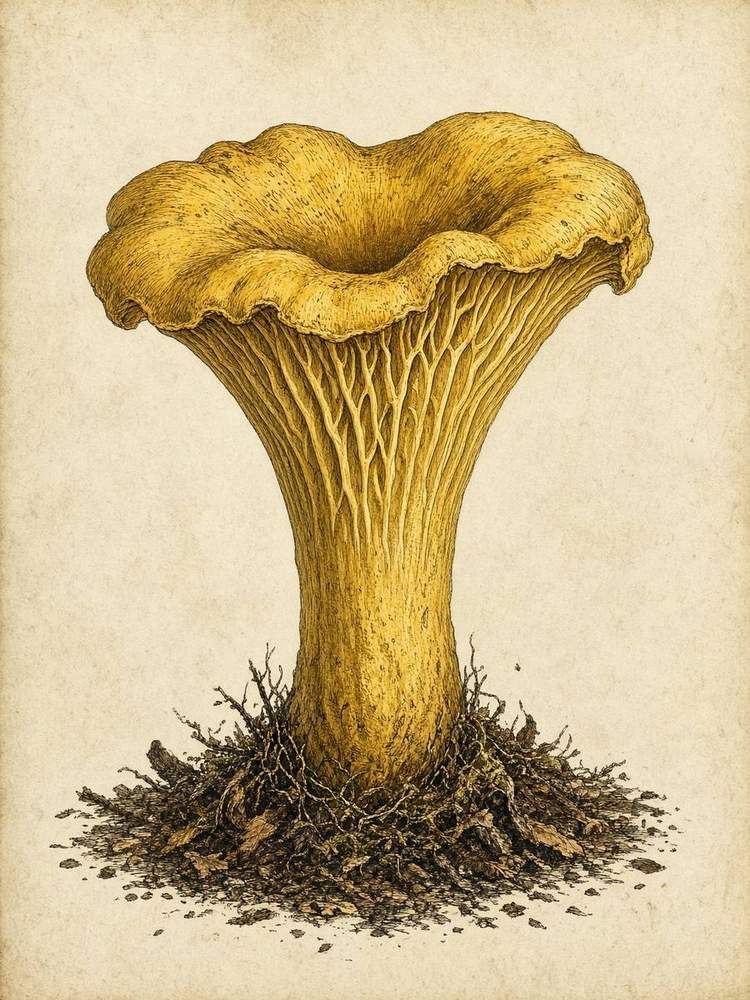
Chanterelle
Cantharellus cibarius
The golden forest vase — a prized edible whose blunt false gills separate it from lookalikes that cramp.
Apricot, pepper, egg-yolk. Dry-sauté first or they water themselves into a stew.
Linnaeus listed it among the few mushrooms he trusted. The French called it girolle; the Germans Pfifferling. It has never really been farmed, which is why a basket still feels like luck. The apricot smell is the field test the old books keep repeating because it works.
 No. 131
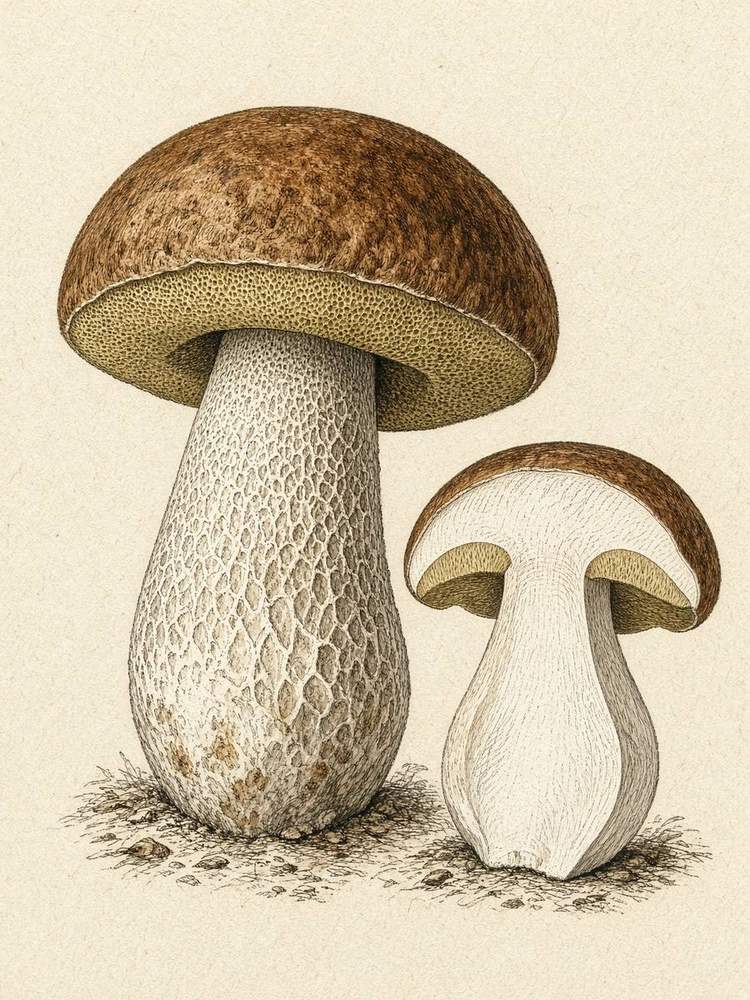
Porcini
Boletus edulis
The king bolete — a bun-capped woodland mushroom whose sponge pores, not gills, are the first ID lesson.
Deep nutty umami, a little meat. Dried is louder than fresh. Worms vote early.
Italians named it porcino, little pig, for the fat stem. The French cépe and the German Steinpilz are the same hunger. It has never been farmed in any honest kitchen sense, which is why a dry kilo still costs like a small celebration. Old men with sticks still beat the blogs to the flush.
 No. 172
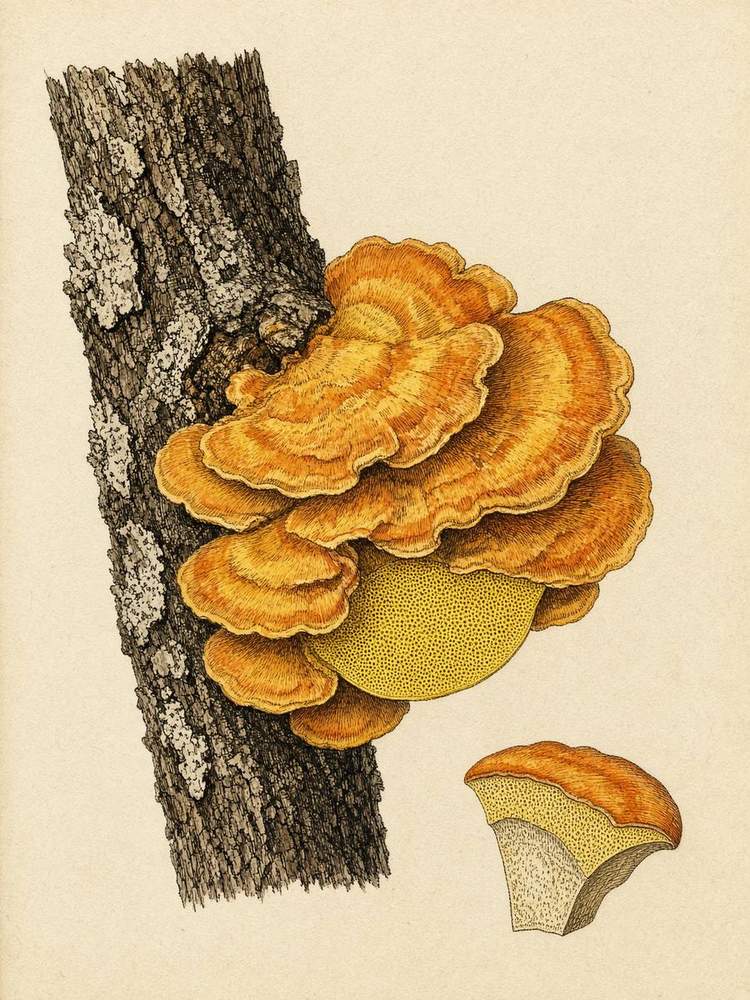
Chicken of the woods
Laetiporus sulphureus
The sulfur shelf — a bright orange bracket that fries like chicken when young, and cramps when old, on the wrong tree, or in the wrong belly.
Young: lemon-chicken, savory. Old: sour cardboard and regret.
The English name is a cook’s hope. Italian pollo di bosco is the same joke. It has never really been farmed, which is why a shelf still feels like luck. The sulfur color is the field test the old books keep repeating because, for once, a mushroom is wearing a flag.
 No. 173
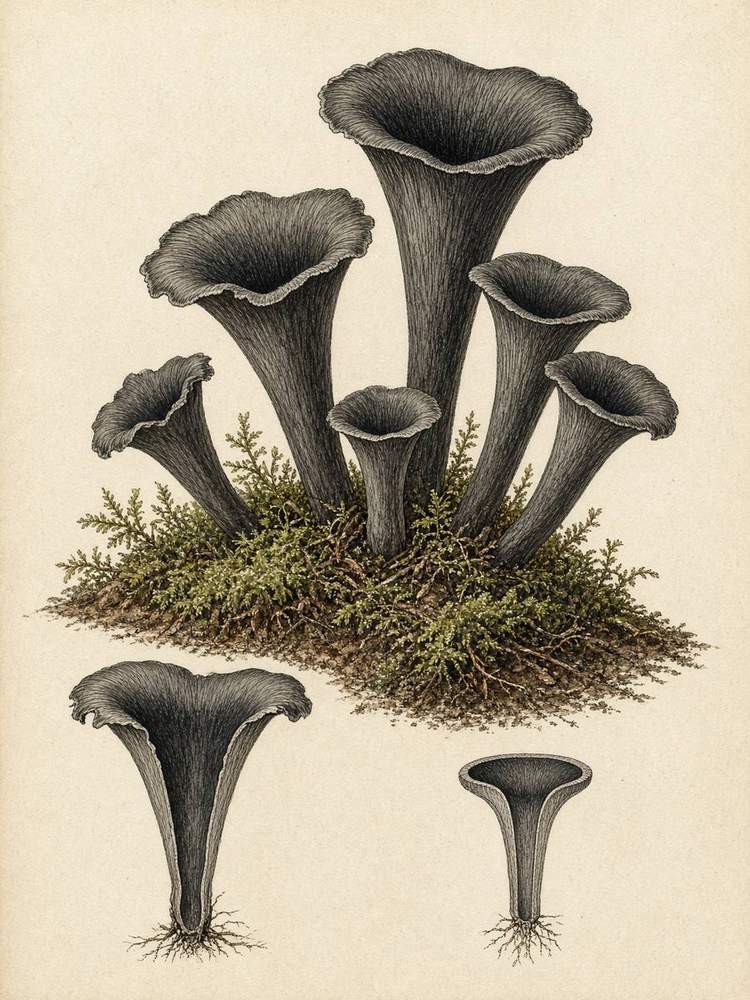
Black trumpet
Craterellus cornucopioides
The horn of plenty — a hollow gray-black chanterelle relative that smells of truffle and hides in the leaf litter on purpose.
Smoke, dried fruit, truffle, black tea. Dry-sauté; they are thin and can scorch.
Cornucopioides is the horn of plenty, which is a mycologist’s optimism — they hide like holes in the forest floor. The French trompette de la mort is a darker joke; they are not the death cap. Dried, they perfume a risotto like a poor man’s truffle, which is still a rich man’s lunch.
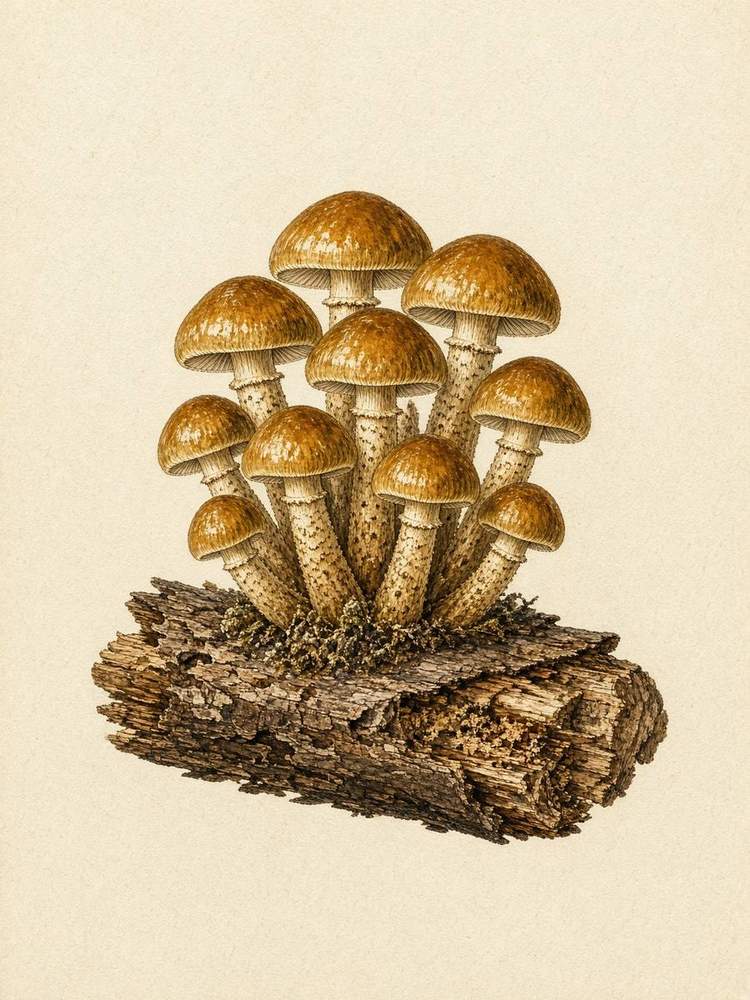 No. 174
Nameko
Pholiota nameko
The amber, glossy soup mushroom of Japanese kitchens — a cultivated cluster whose slime is the point of the miso.
Mild, nutty, slightly sweet; the slime is silk in a broth.
Harvest: 20–40 days from a spawned block to first clusters
Nameko means slimy mushroom, which is advertising of a sort. Japanese farms made it ordinary; the wild mountain log is older. The gel that Western cooks want to rinse is the reason it belongs in a bowl, not on a grill.
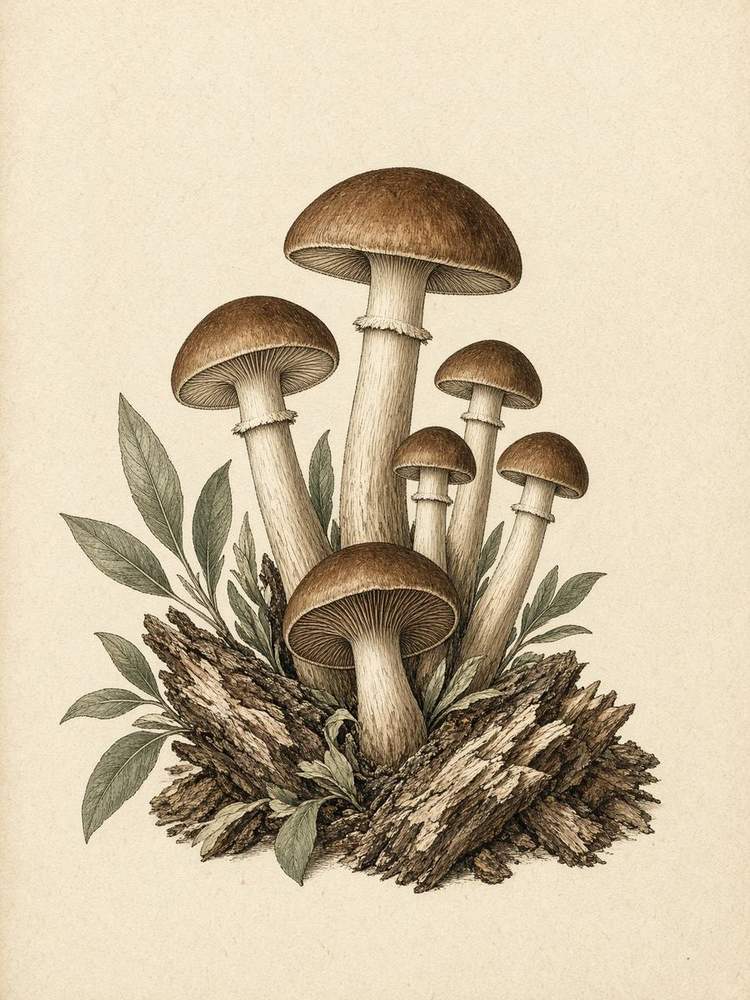 No. 175
Pioppino
Cyclocybe aegerita
The poplar mushroom of Italian kitchens — a cultivated brown-capped cluster with a stem worth eating.
Nutty, mildly farinaceous, a firmer bite than oyster. Stems are the point.
Harvest: 20–35 days from a spawned block
Pioppo is poplar; the mushroom followed the tree through Italian river groves. Romans already ate a poplar fungus. Modern blocks made a riverside prize a grocery cluster. The velvet on the young cap is why some labels say velvet pioppini.
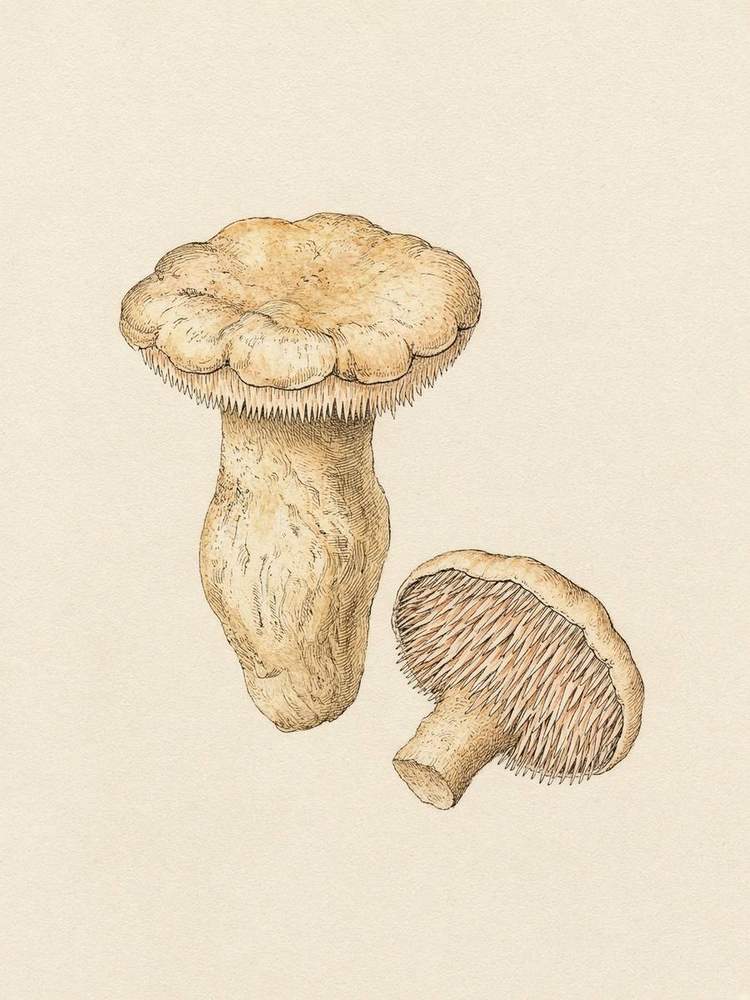 No. 176
Hedgehog mushroom
Hydnum repandum
The sweet tooth — a pale woodland mushroom that wears spines instead of gills, and one of the kinder wild edibles once you have seen the underside.
Nutty, slightly peppery, seafood-sweet. Older specimens want a parboil.
The French pied-de-mouton is a sheep’s foot; the English hedgehog is the underside. Linnaeus listed it among the mushrooms he trusted. It has never really been farmed. A basket of them is still a quiet kind of luck — less famous than chanterelles, often better in the pan.