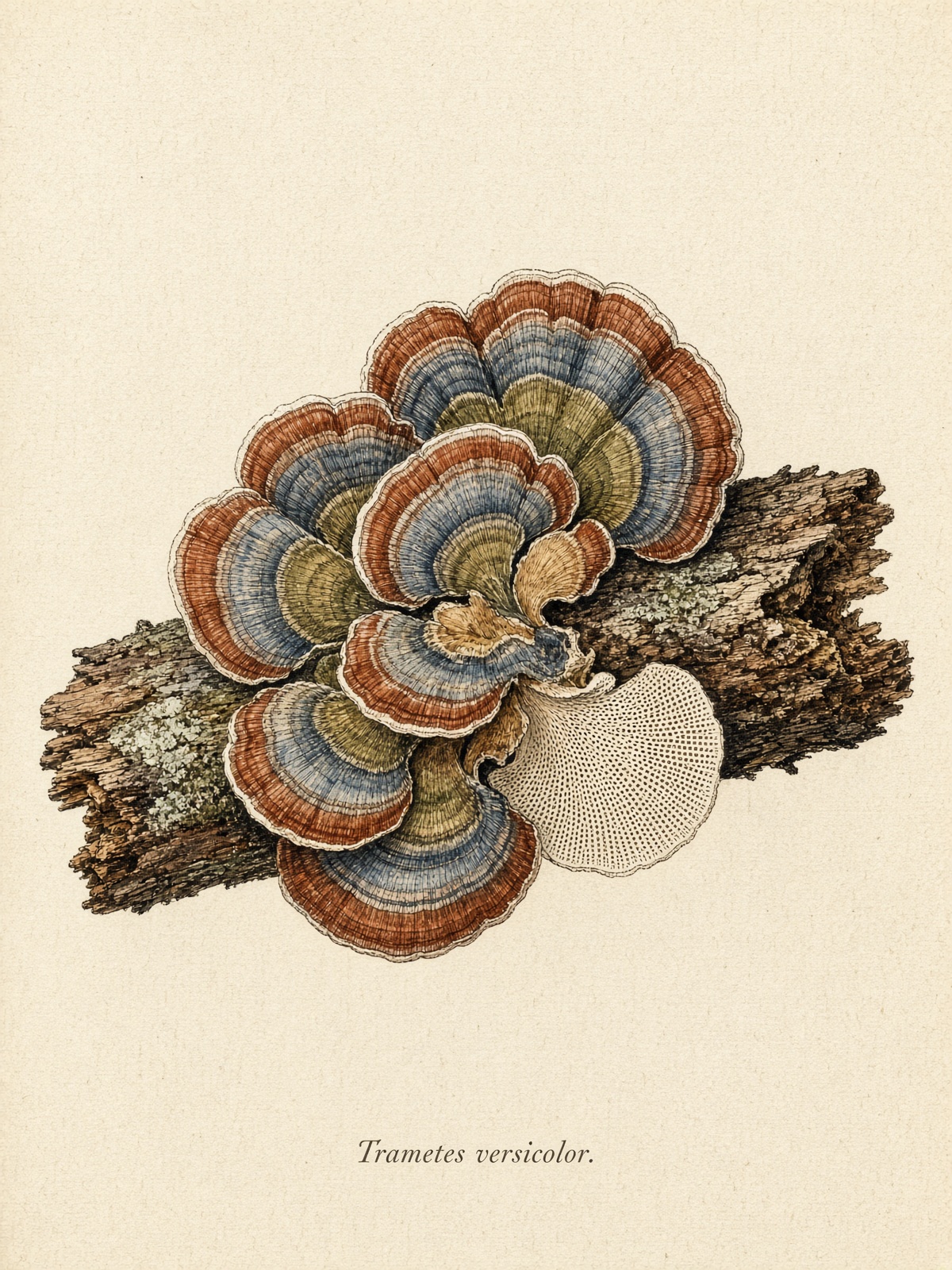
Herb. No. 031 · Polyporaceae
One of the most cosmopolitan woodland polypores — almost wherever there is dead hardwood.
Native · North America · Europe · East Asia · Southeast Asia
Native Also grown
LegalGentlefungus
Turkey tail
Trametes versicolor
Zoned fans on dead wood — the best-studied medicinal polypore for immune support beside treatment, not instead of it.
PSK and PSP, protein-bound polysaccharides from T. versicolor, have been used as oncology adjuncts in Japan and China. That is clinician-territory. As a home decoction it is a mild, woodsy immune tonic. Identification matters: true turkey tail has a white pore surface, thin flesh, and no gills. Lookalikes are common.
Flavor
Woodsy, thin, and faintly bitter after a long simmer.
Parts used
Fruiting body
Helpful
- Abundant if correctly identified
- Well-studied extracts
- Grows on inoculated logs
Cautions
- Lookalikes
- Not a cancer cure
- Must be simmered — too tough to eat