Part VI
Regulated or restricted
Law, licensing, and conservation. Habitat notes only — no grow or dose protocols.
11 plates in this section
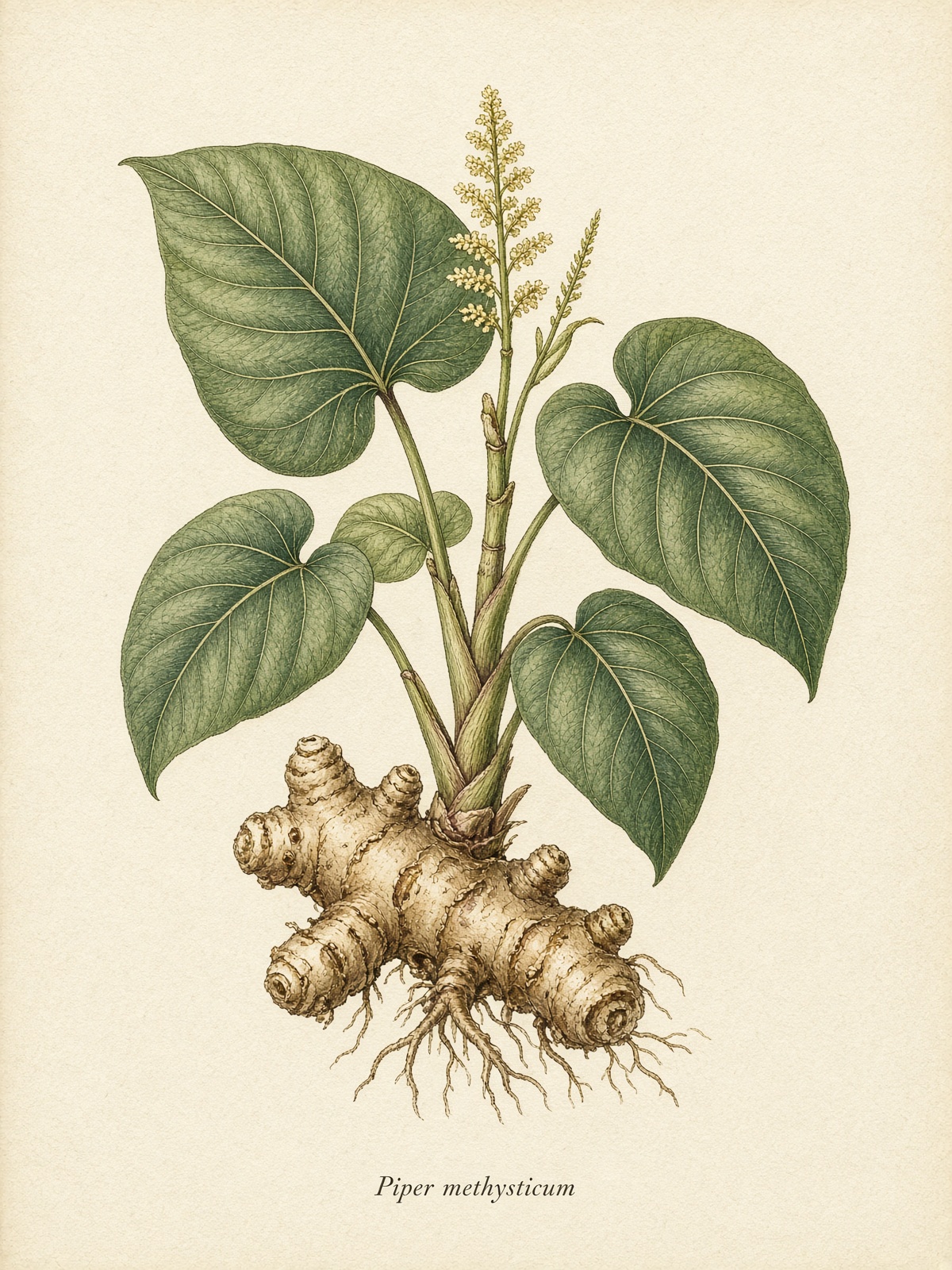 No. 025
Kava
Piper methysticum
Pacific ceremonial root for social ease and muscle quiet — liver-safe only as traditional aqueous preparations.
Peppery, muddy, and numbing. Traditional water extract is earth, not dessert.
Harvest: 3–5 years in the tropics
Pacific hospitality in a muddy bowl. The root is pounded, not boiled like a European tea, and the mouth goes numb on purpose. Several countries restrict it for liver worry; the plant remains a village crop where it is the welcome.
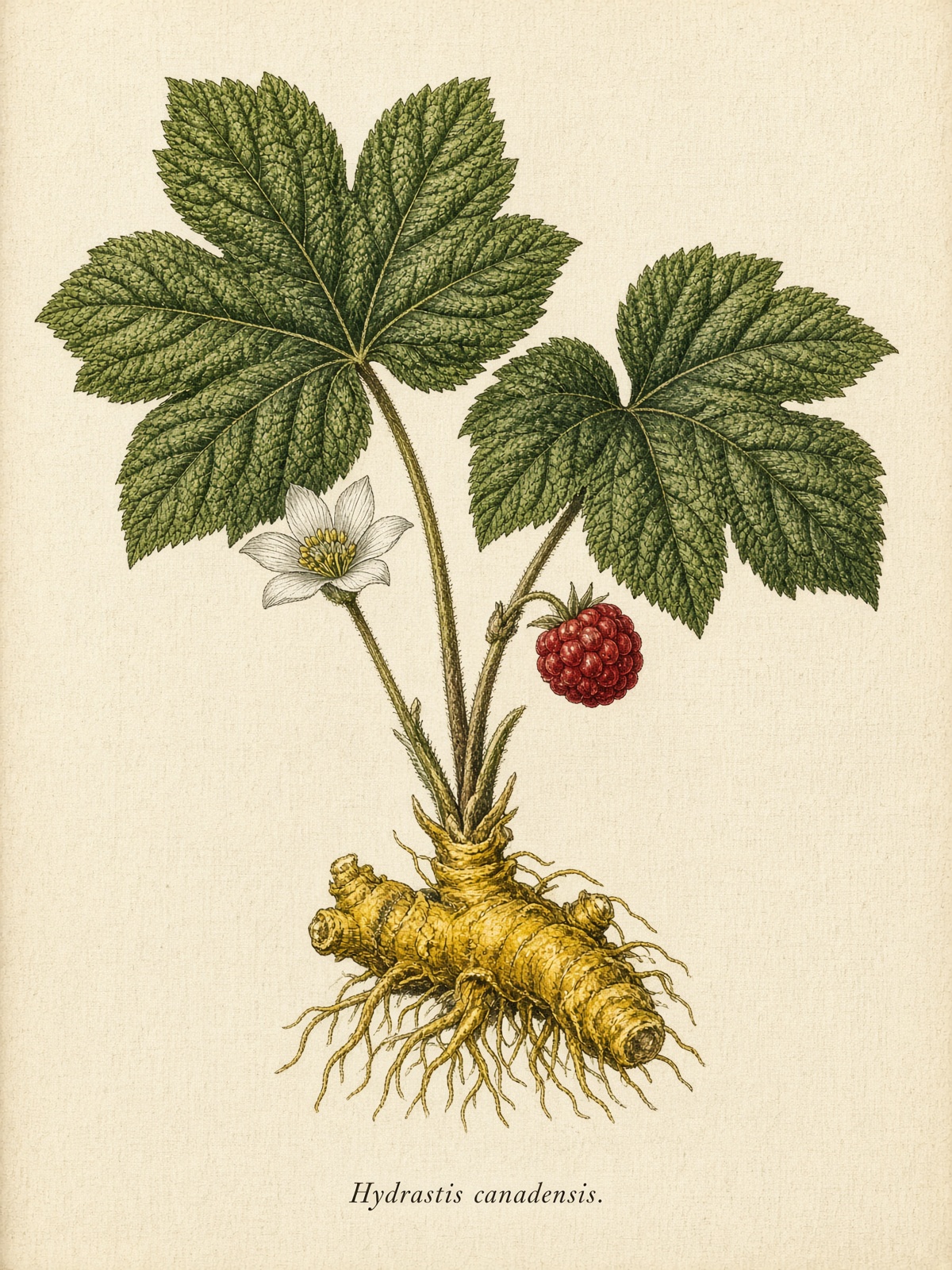 No. 026
Goldenseal
Hydrastis canadensis
A threatened woodland root, bitter and berberine-yellow — not an everyday immune tonic.
Shockingly bitter and yellowing — berberine on the tongue.
Harvest: 5–7 years in a woodland bed
The Iroquois and neighboring nations used the yellow rhizome as dye and bitter. Settlers turned it into a cure-all and nearly collected it out of the woods. Most of what is honest now is cultivated — wild stands are a conservation problem in a bottle.
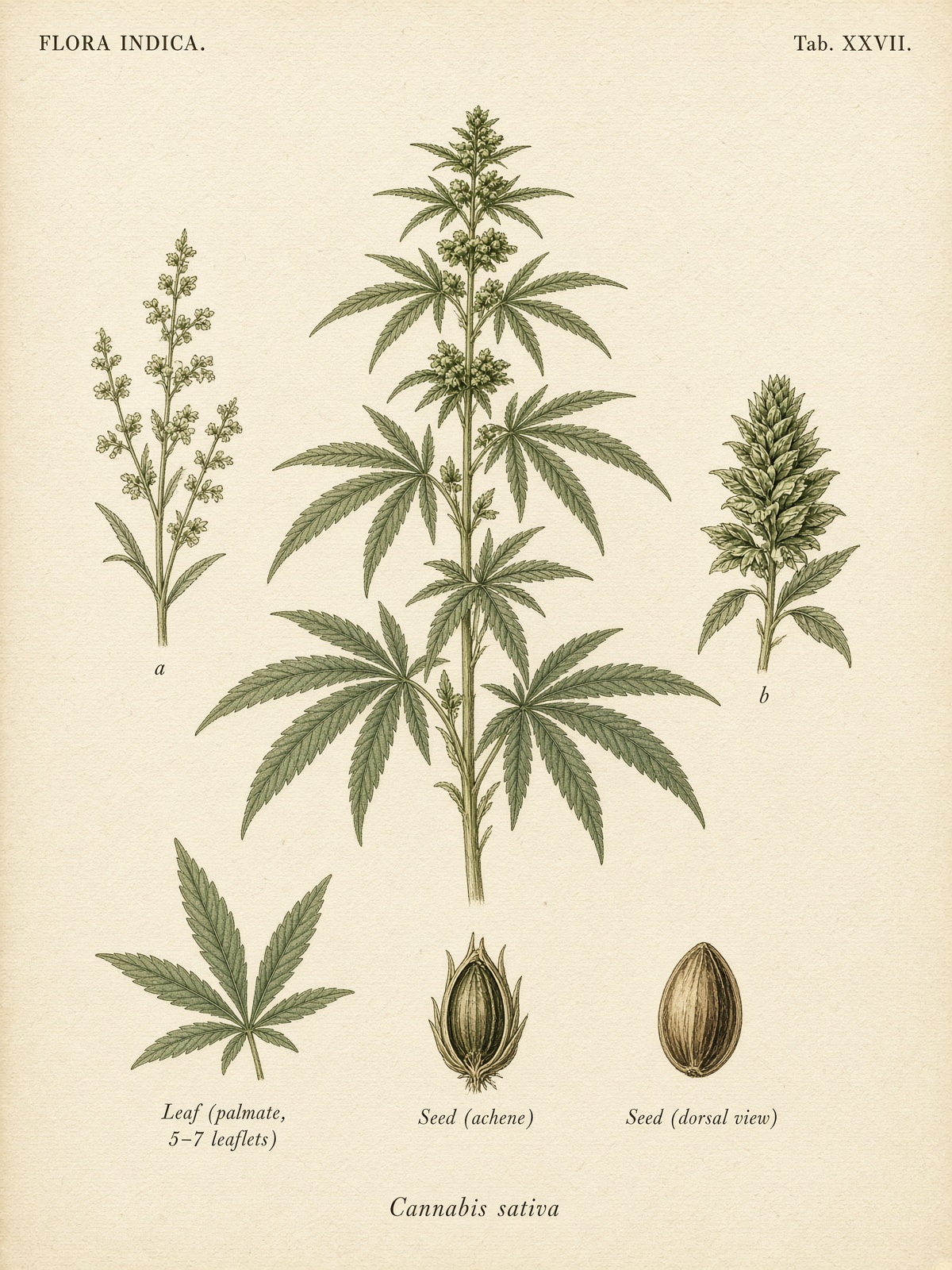 No. 035
Cannabis (hemp & marijuana)
Cannabis sativa
A dioecious annual used as fiber, seed food, and — where legal — as a medicine for pain, nausea, and spasticity.
Where legal: resin, citrus, pine, or spice depending on chemotype. Hemp seed is nutty.
Hemp rope and marijuana flower are the same species arguing with the law. Scythians were already throwing the seeds on hot stones for the smoke, according to Herodotus. This plate is botany and statute, not a grow room.
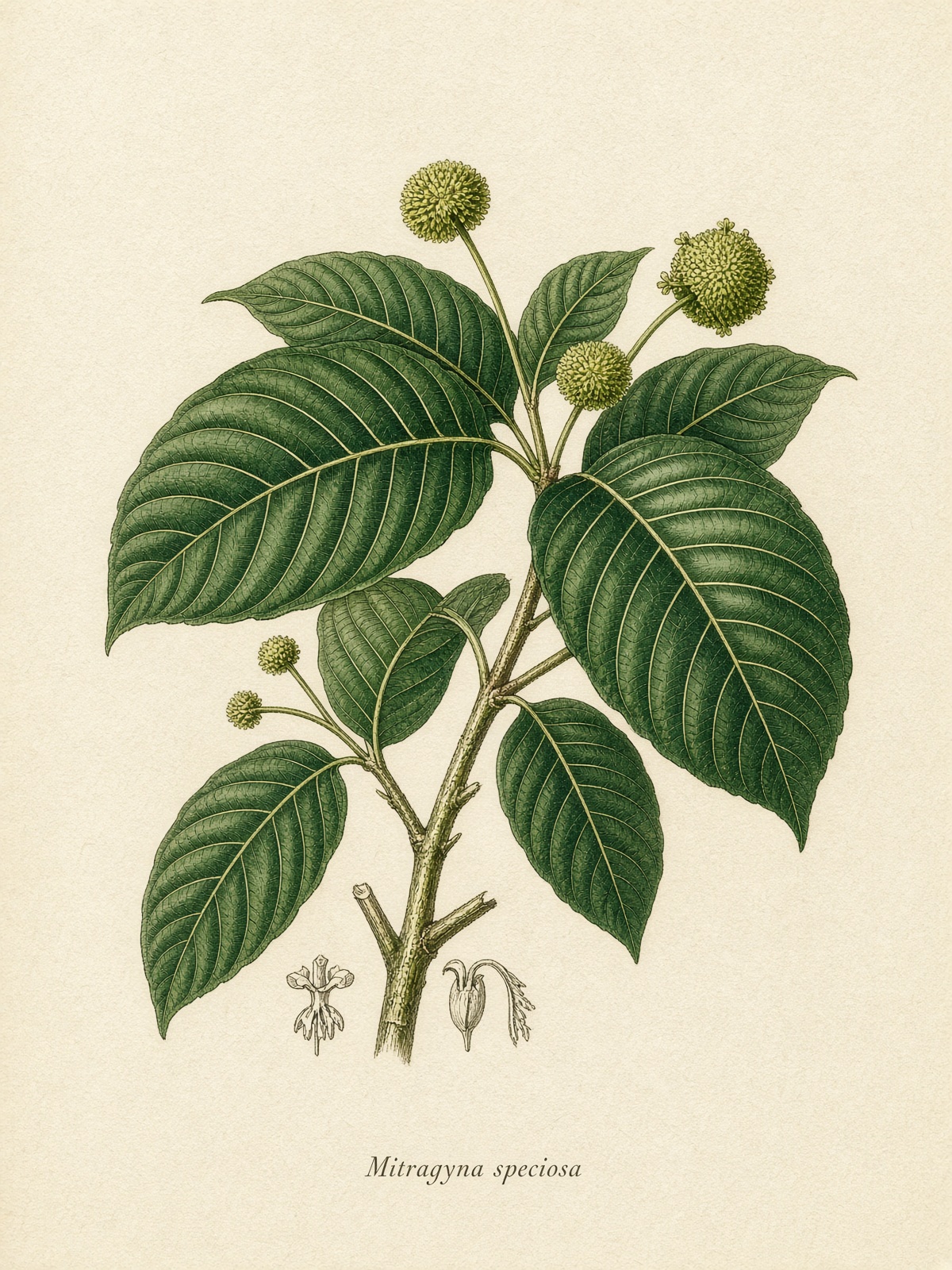 No. 036
Kratom
Mitragyna speciosa
A Southeast Asian coffee-family tree whose leaves act on opioid receptors — used for pain and withdrawal, and capable of dependence.
Bitter green leaf, tea-like and astringent. Extracts taste of chemistry.
A Southeast Asian coffee-family tree whose leaves villagers chewed for field work. The Western extract boom is a different, louder drug, and jurisdictions keep changing their minds. The plate is the tree, not a shot glass.
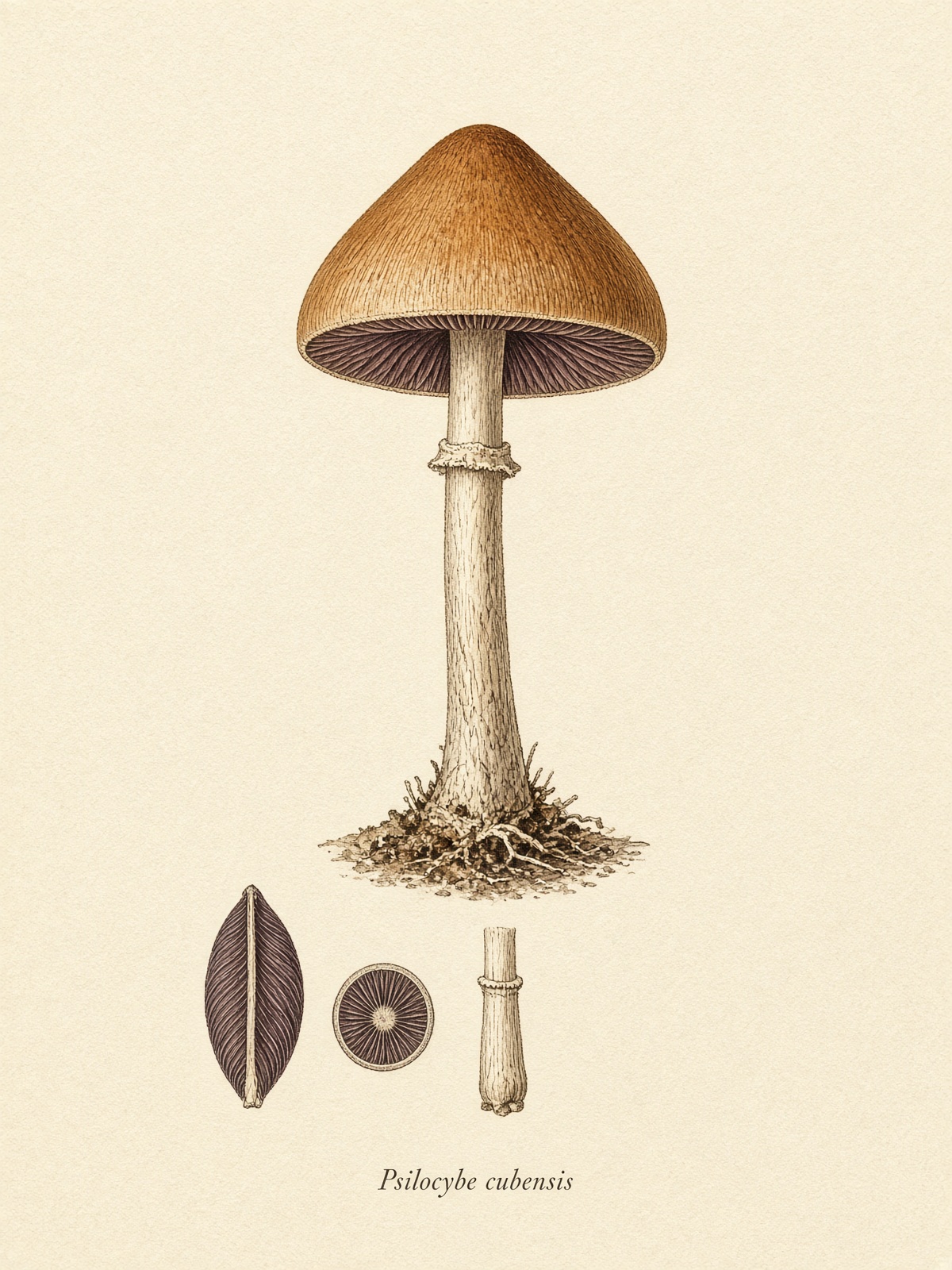 No. 037
Psilocybe mushrooms
Psilocybe cubensis
A well-known psychoactive woodland and pasture genus, now in clinical trials for depression — still illegal to grow or possess in most places.
Fresh mushrooms are farinaceous (raw-dough); dried are dusty and bitter. Not a culinary species.
Mazatec and other Mesoamerican traditions used Psilocybe in ceremony long before a New York banker coined ‘magic mushroom’ in 1957. The species is a legal object in most of the US. The plate names it so the law and the lookalike can be seen together.
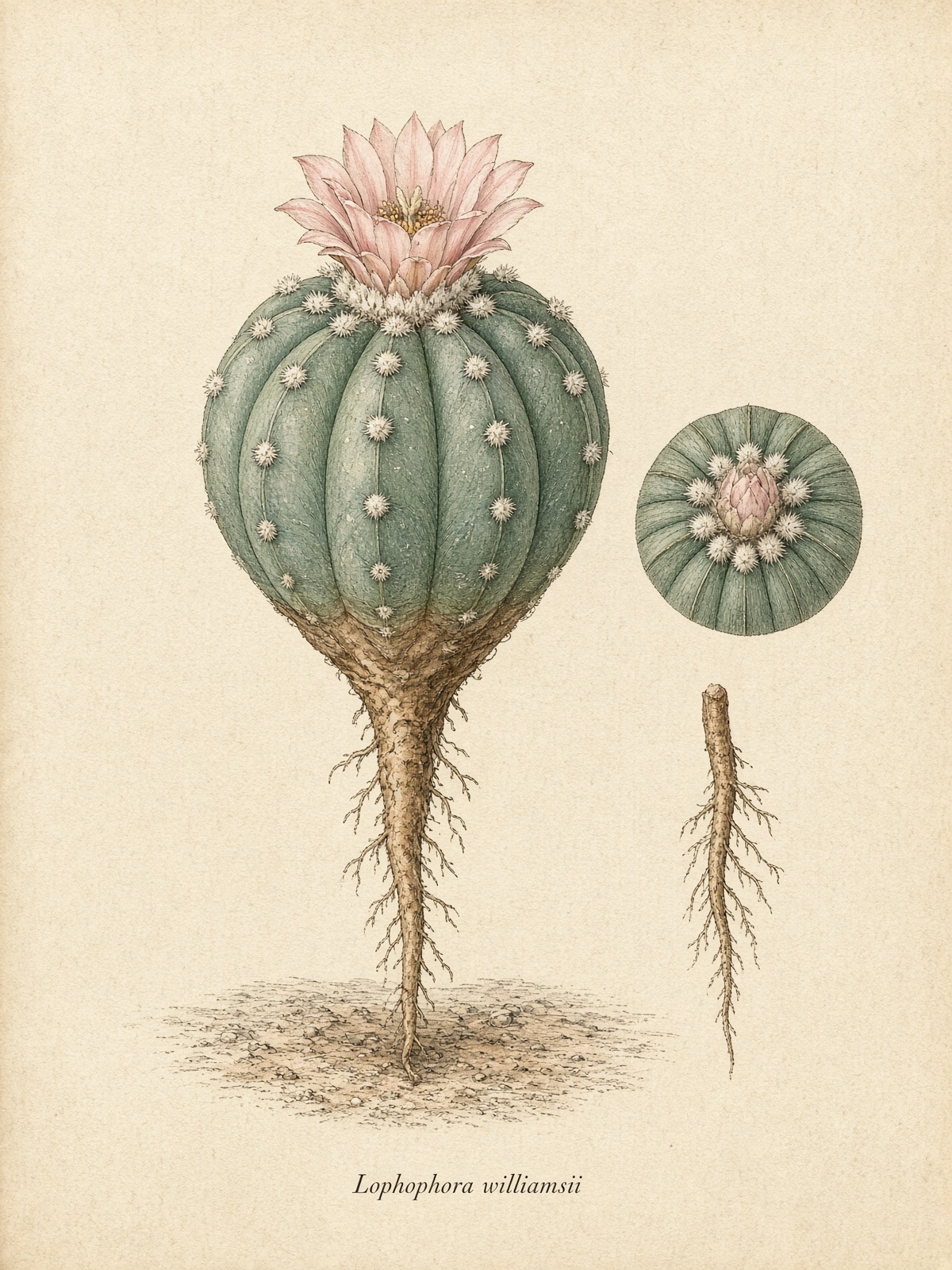
No. 038Peyote
Lophophora williamsii
A small, spineless desert cactus, sacred in Native American Church ceremony and illegal to possess for almost everyone else.
Intensely bitter, alkaline cactus. Ceremony, not cuisine.
Lophophora, a slow desert button, sacramental in the Native American Church and Schedule I outside that context. It takes a decade to replace a harvested crown. The map is the Chihuahuan, not a garden.
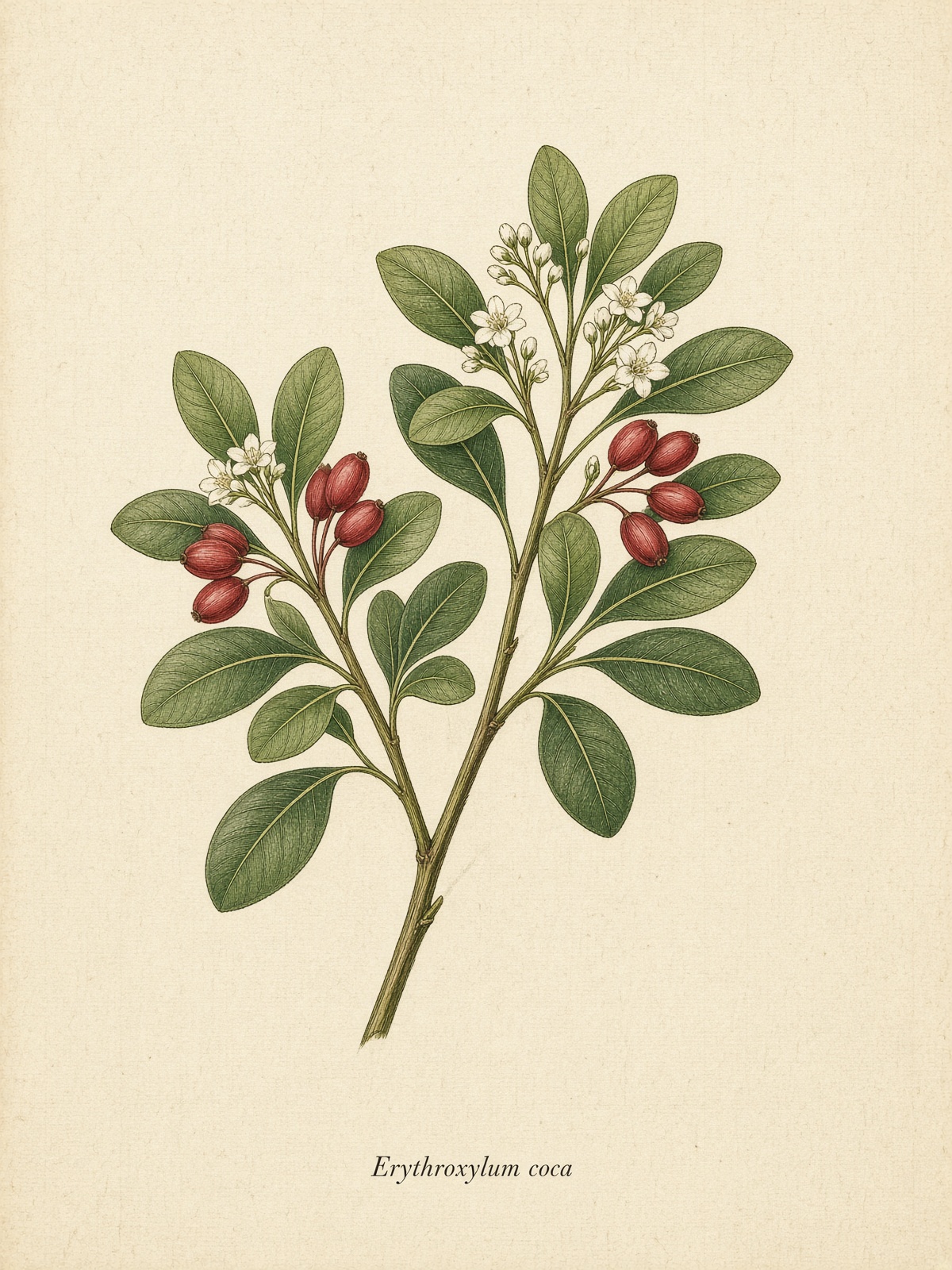 No. 040
Coca
Erythroxylum coca
An Andean shrub whose leaf is a traditional altitude chew — and the agricultural source of cocaine.
Traditional leaf is green, tea-like, and slightly numbing. Isolated cocaine is not a food.
Andean leaf, chewed with lime, is not cocaine. The isolate of 1859 made a pharmacy, a ban, and a century of geopolitics. The plate is the shrub’s habitat, not a kitchen.
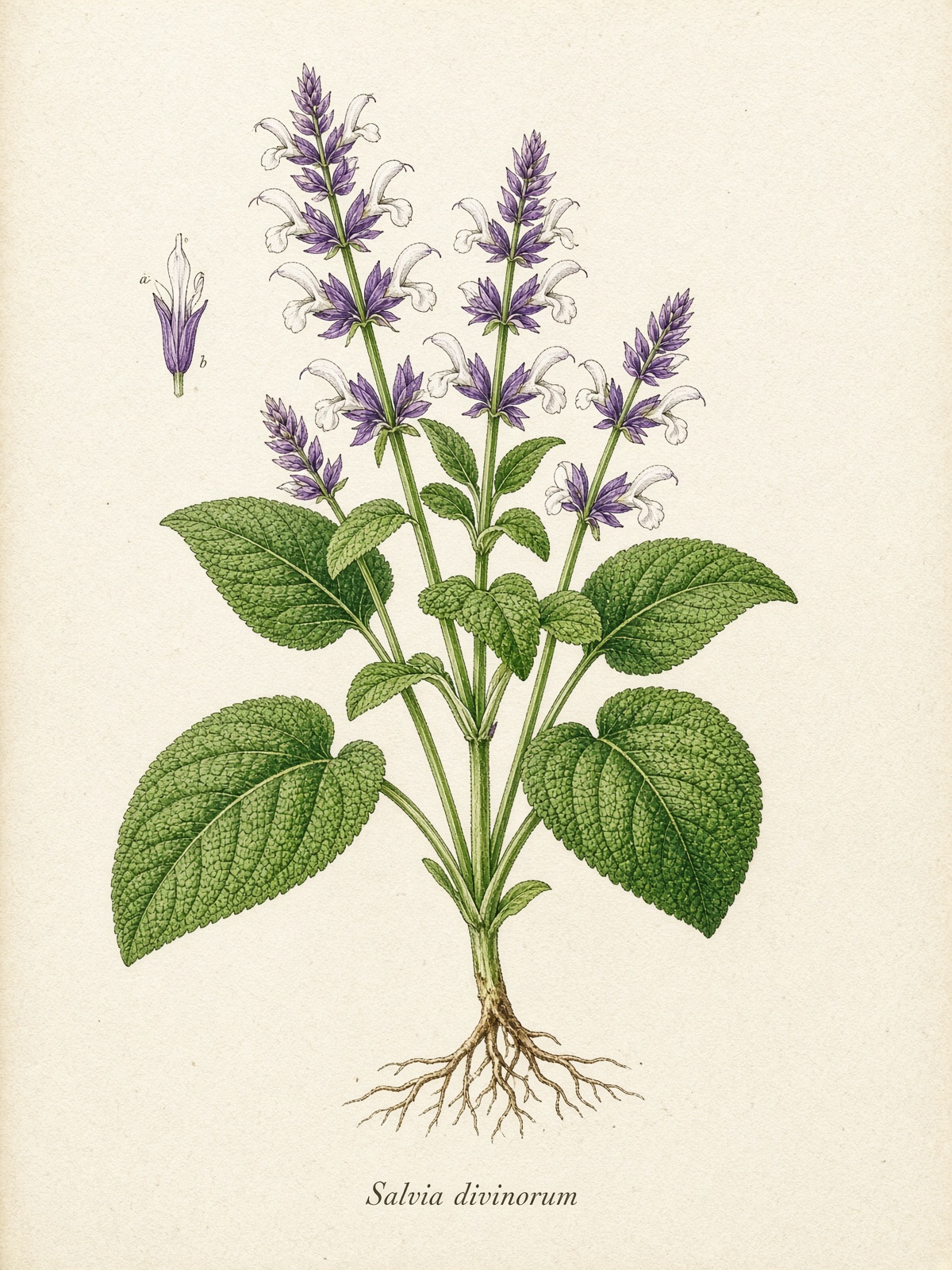 No. 041
Salvia divinorum
Salvia divinorum
A Mazatec ceremonial sage whose diterpene salvinorin A is a brief, intense kappa-opioid hallucinogen — not a recreational party leaf.
Green sage, then a heavy chemical bitterness on the extract.
S. divinorum, the Mazatec ska pastora, a cloud-forest sage. The leaves are chewed in ceremony; extracts on the internet are a different, uglier story. Garden sage is a cousin on another plate.
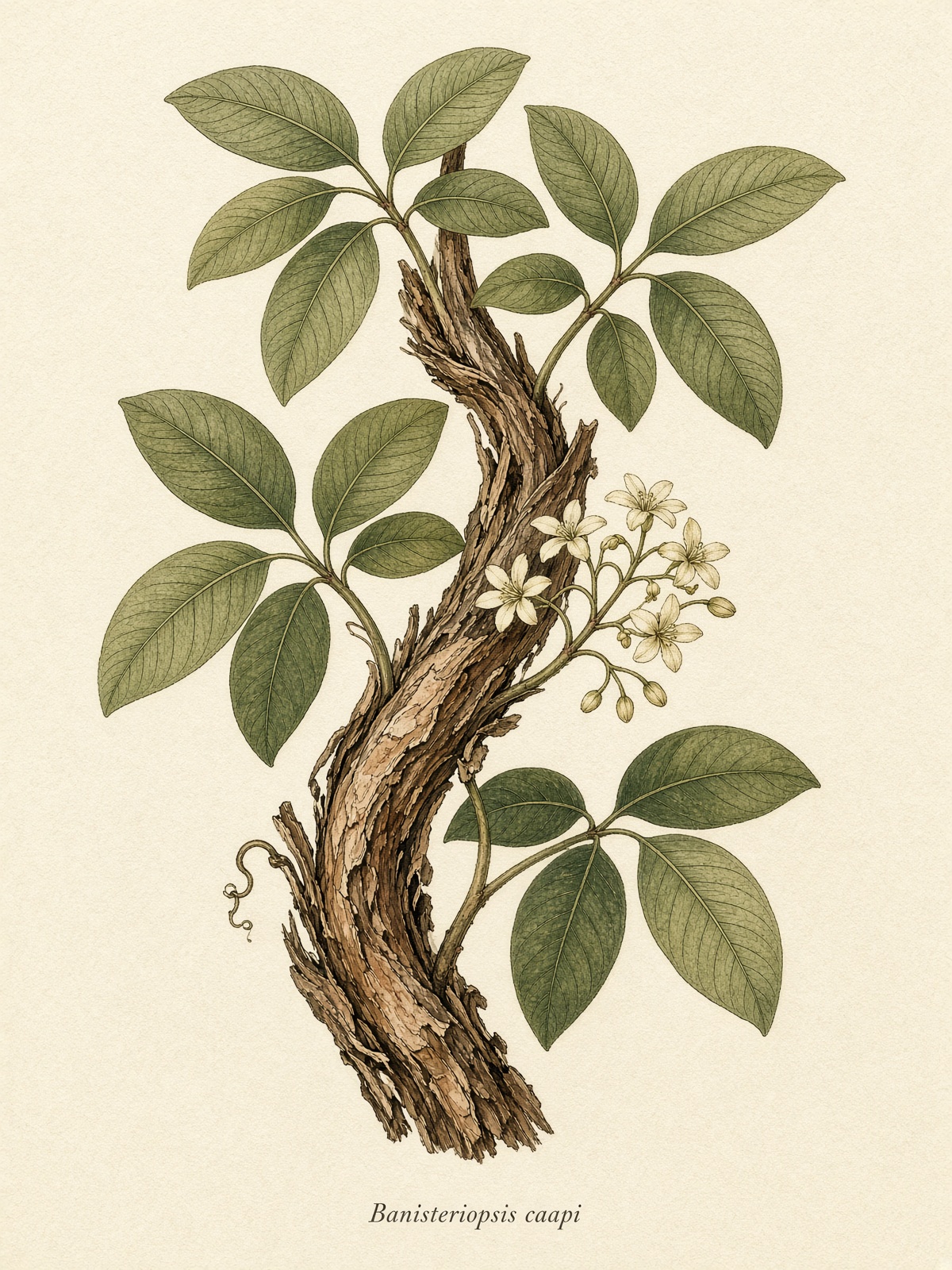 No. 042
Ayahuasca vines
Banisteriopsis caapi
An Amazonian liana, the MAOI half of a ceremonial brew — listed here so the legal and medical stakes are visible.
The vine decoction is famously bitter, woody, and hard to keep down.
Banisteriopsis caapi is the vine. The brew that made it famous is a combination and, in the US, a controlled preparation. The plate is the liana’s forest, not a recipe.
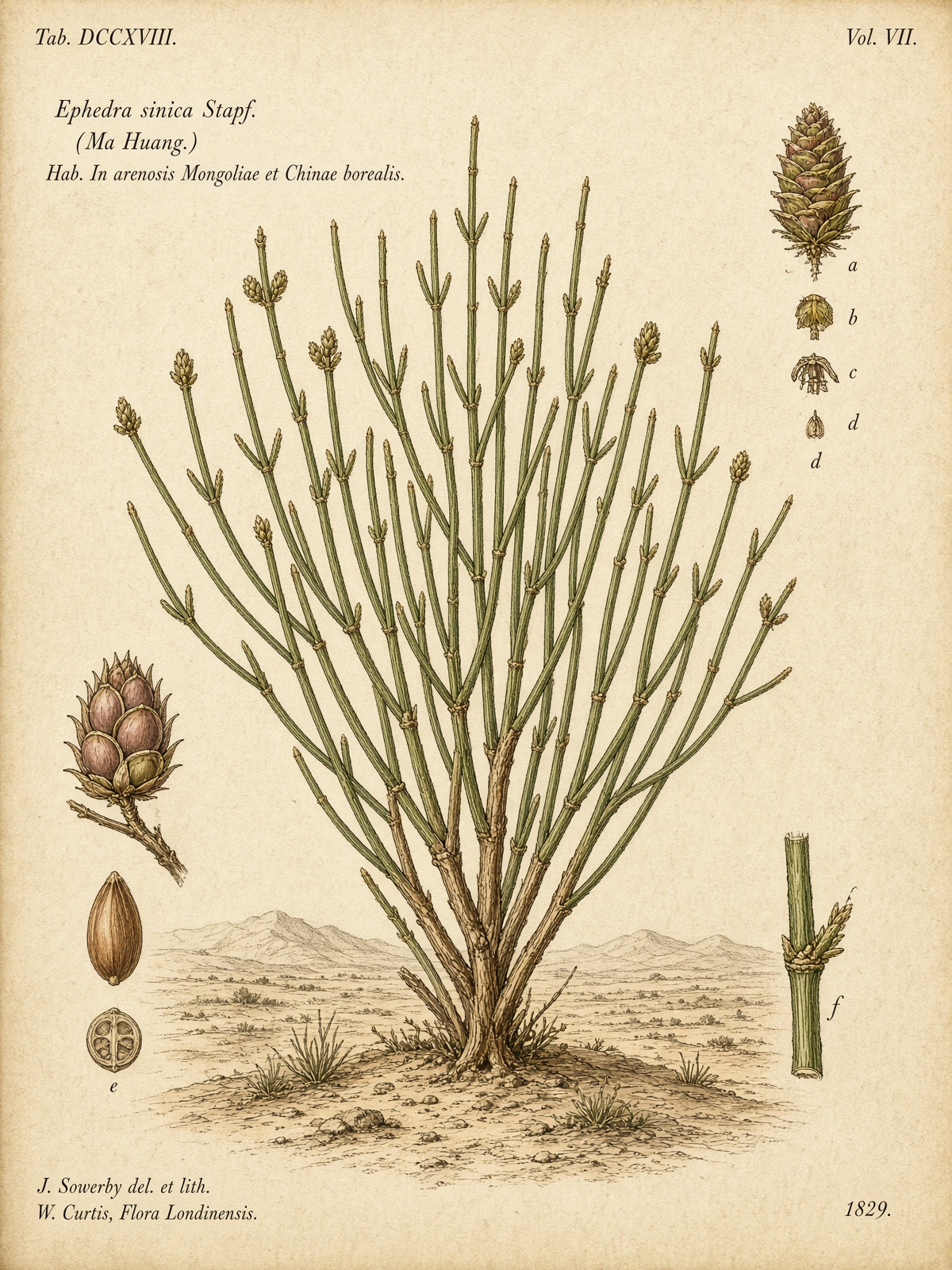 No. 074
Ephedra
Ephedra sinica
Ma huang — the desert shrub behind ephedrine. A regulated stimulant, not a kitchen tea.
Astringent, pine-desert, and sharply bitter. Not a pleasant cup.
Ma huang. Chinese medicine used the stem for wheeze; Western industry used it for speed, then banned the extract. The desert shrub is not a kitchen tea.
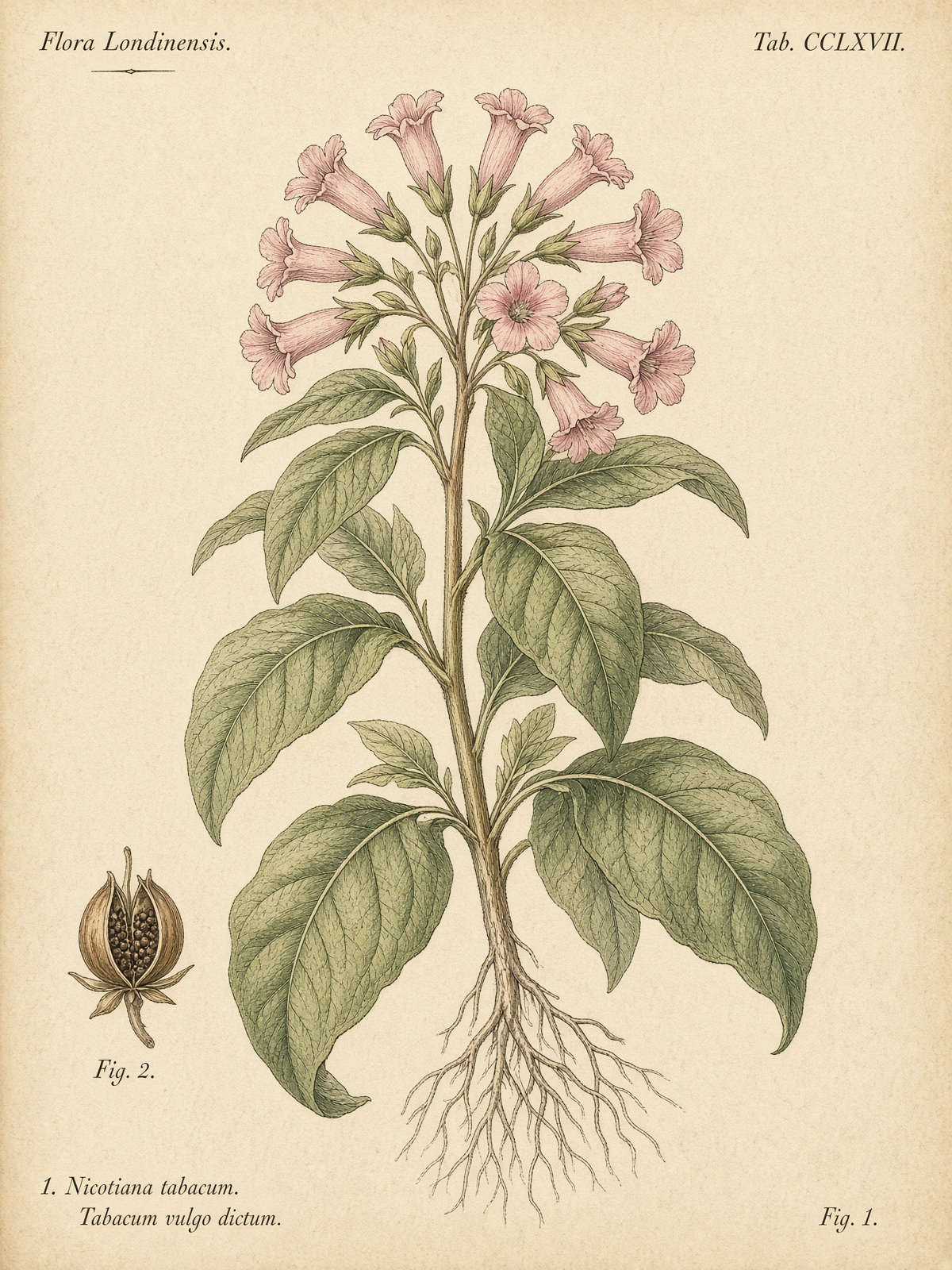 No. 075
Tobacco
Nicotiana tabacum
The nightshade that built an industry — a teaching plate for nicotine, addiction, and why 'natural' is not safer.
Cured leaf is sweet-hay, leather, and bitterness. Green leaf is rank and should not be tasted as a curiosity.
Nicotiana, from Jean Nicot, who sent it to the French court. Sacred in many Native American contexts, industrial in everyone else’s. This plate is the plant and the harm, together.