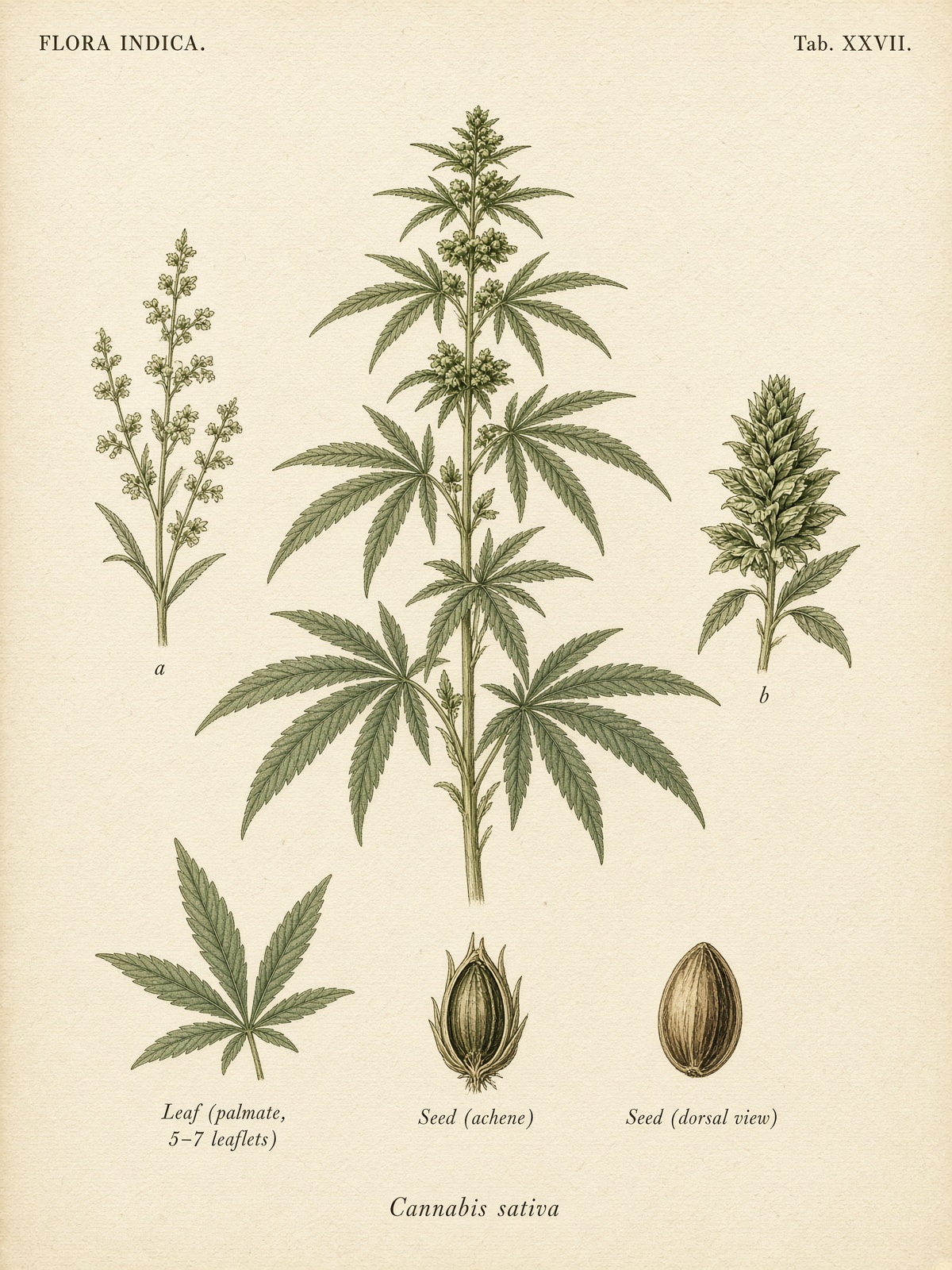
Herb. No. 035 · Cannabaceae
Wild origin in Central Asia. A legal crop only where licensed — this map is botany, not permission.
Native · Central Asia
Cannabis (hemp & marijuana)
Cannabis sativa
A dioecious annual used as fiber, seed food, and — where legal — as a medicine for pain, nausea, and spasticity.
US federal law still lists marijuana as a controlled substance. Licensed hemp (very low THC) is a legal crop in many states. Medical and adult-use marijuana rules vary by state and country. Tennessee does not allow adult-use marijuana. Always check local law.
Hemp and marijuana are the same species, separated by chemistry and law. CBD-rich hemp and THC-rich marijuana have overlapping but not identical effects. Evidence is strongest for chemotherapy nausea, some forms of pain, and MS spasticity (usually as licensed products). Smoke is still smoke. Adolescent brains, psychosis risk, and pregnancy are hard stop-and-talk-to-a-clinician topics. This plate is a botanical entry, not a grow guide.
Flavor
Where legal: resin, citrus, pine, or spice depending on chemotype. Hemp seed is nutty.
Parts used
Flowering tops (where legal) · Seed (food) · Stalk fiber
Helpful
- Licensed products have real indications
- Hemp seed is a nutritious food
- Non-smoked routes exist where legal
Cautions
- Illegal to possess or grow without the right license in many places
- Impairs driving
- Can worsen anxiety or trigger psychosis in the vulnerable
- Habit-forming for some people
- Contaminated illicit market