Part V
Garden flowers
Edible petals, useful companions, and decorative cottage blooms — filed as flowers first, with the cautions that belong on a plate you might eat.
18 plates in this section
Edible petals are food only from unsprayed plants you can name. Sweet pea is not garden pea. Daylily is Hemerocallis, never a true lily. French marigold is Tagetes, not the calendula of the salve drawer.
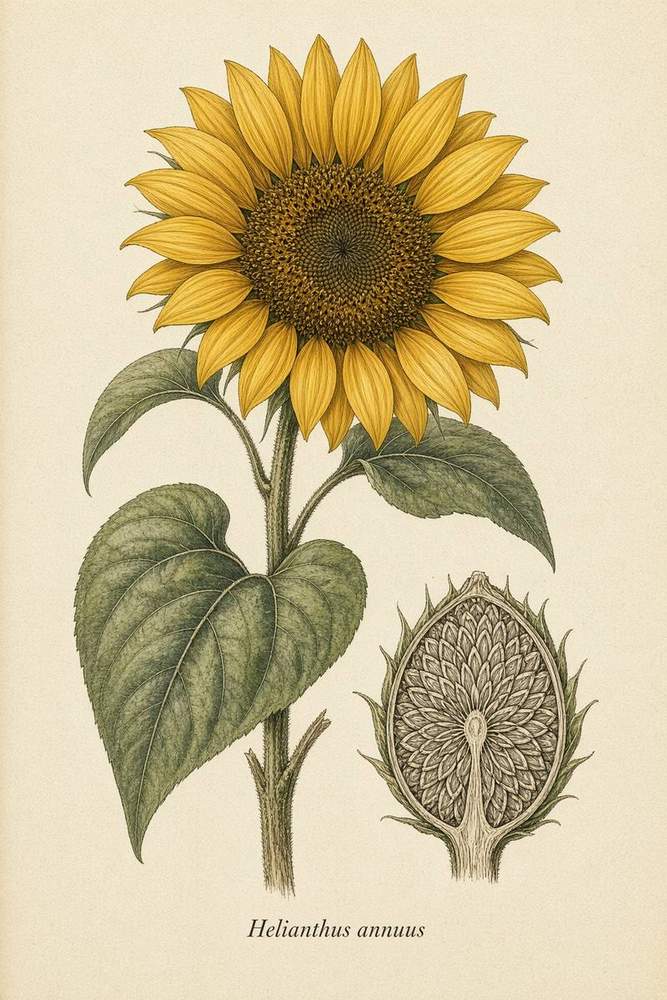 No. 237
Sunflower
Helianthus annuus
A tall disk for seed, oil, and bees — and a living stake that shades a cucumber in July.
Petals are mild and grassy. Seed is nutty, the hull a chore.
Harvest: 70–100 days to a seed head
The Hopi and other Pueblo peoples bred the plant long before Russian millers made it an oil crop. Van Gogh’s vases are the European afterimage. The disk is a Fibonacci classroom: spirals you can count with a child.
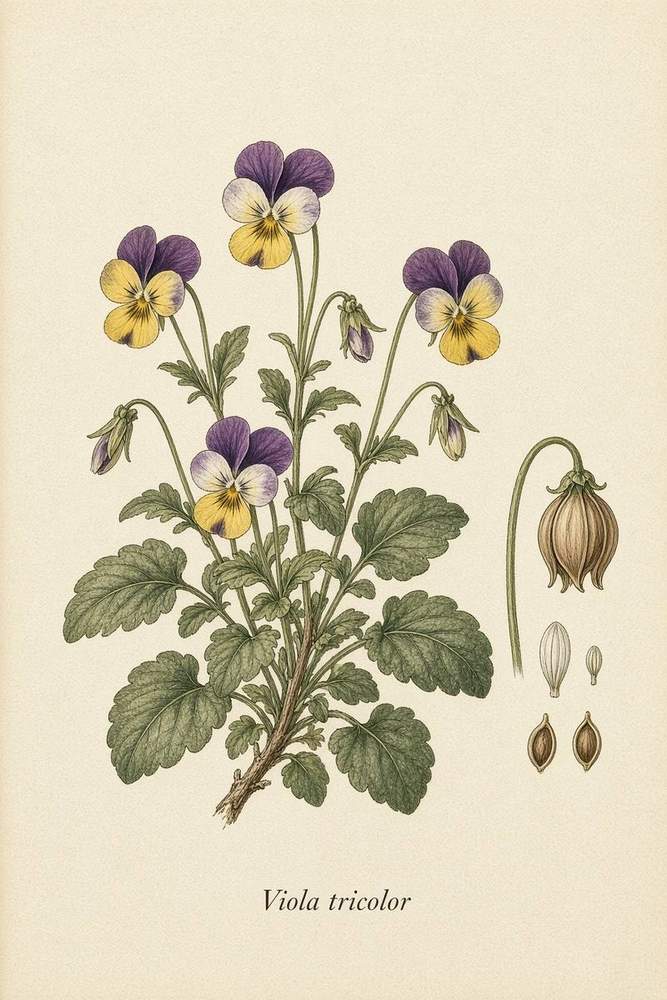 No. 238
Heartsease
Viola tricolor
A small three-colored face for salad, sugar, and a cool-season edge that does not mind sitting with lettuce.
Mild, lettuce-green, a faint wintergreen in some types.
Harvest: 60–70 days from seed; sooner from starts
Shakespeare’s love-in-idleness is this flower — the juice Oberon drops on sleeping eyelids. Medieval herbals filed it under heartsease, a name that outlived the dose. The garden pansy is a nineteenth-century enlargement of the same face.
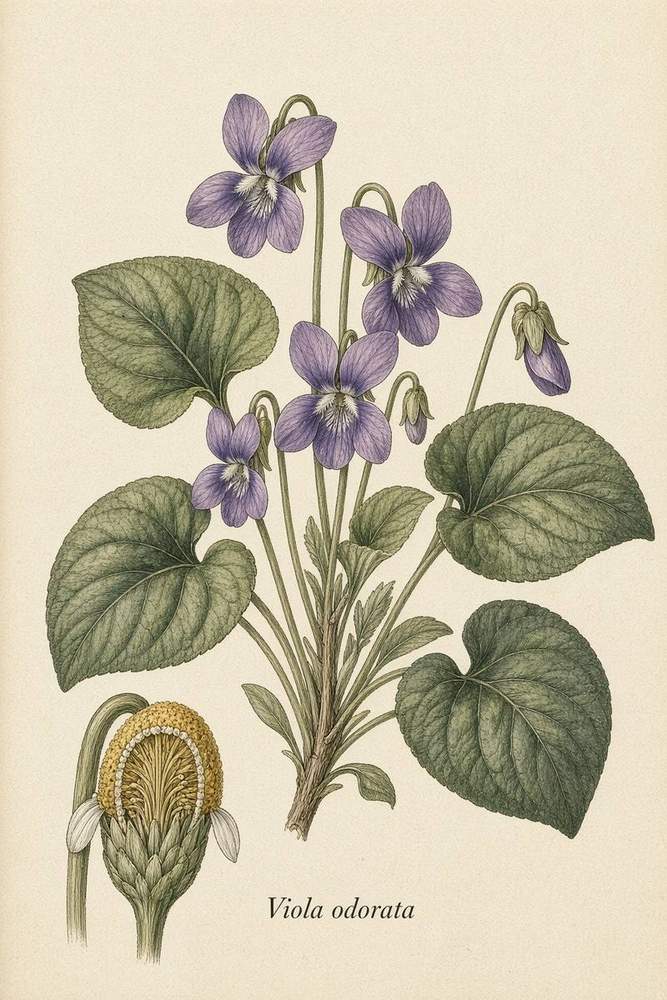 No. 239
Sweet violet
Viola odorata
The April violet of scent, sugar, and a syrup the color of dusk — a woodland edge plant, not a summer bed.
Perfume, then nothing, then perfume again. Sugar holds it.
Harvest: Established clumps flower the first spring
Napoleon and Josephine both used violet as a signature scent. Toulouse and Parma grew the double forms for the perfume trade. Ionone is why the smell vanishes mid-sniff — the molecule tires the receptor, then lets go.
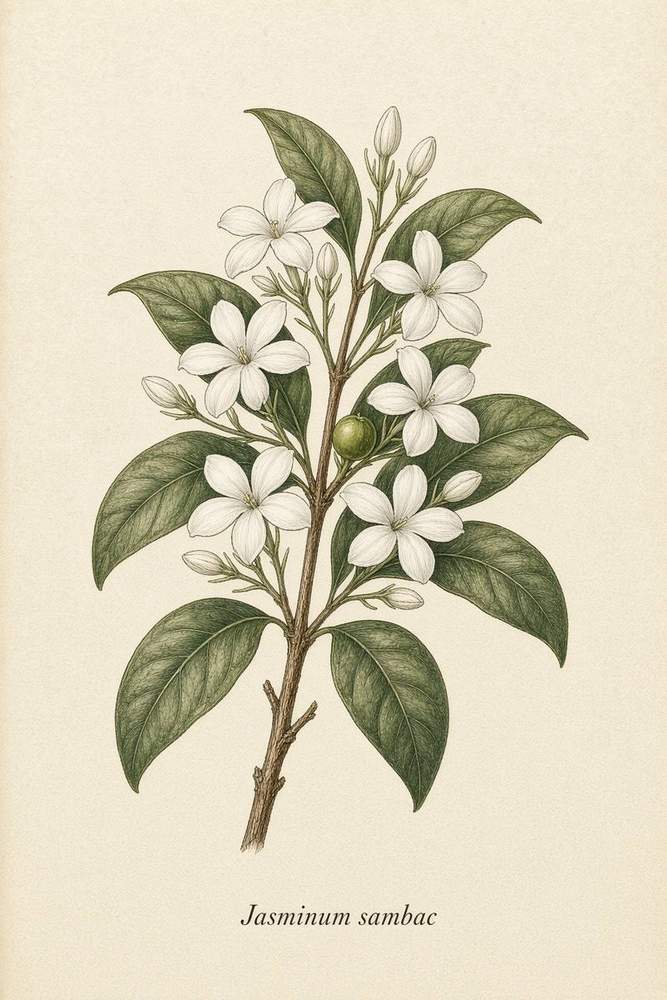 No. 240
Arabian jasmine
Jasminum sambac
Waxy night-scented flowers for scenting tea — a pot plant in zone 6b, a hedge where frost is a rumor.
Night-blooming perfume. Tea holds it better than the fresh flower in a cup.
Harvest: A cutting flowers the first warm season
Sampaguita is the national flower of the Philippines. In Fuzhou the tea is a craft of timing: flowers layered, removed, layered again, until the leaf smells like a night garden and the flowers have given everything.
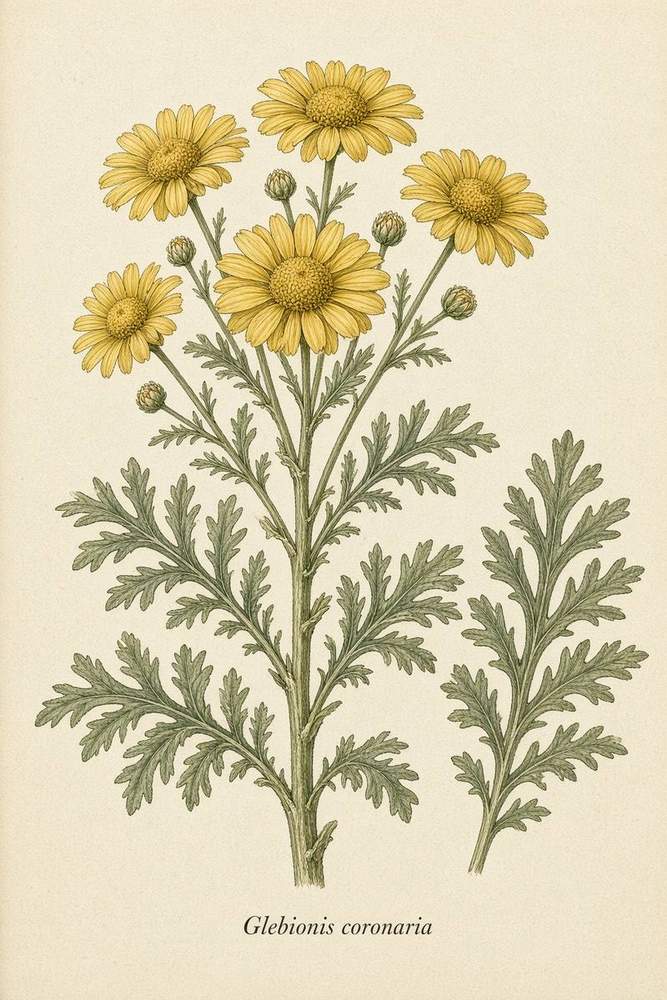 No. 241
Garland chrysanthemum
Glebionis coronaria
The edible chrysanthemum of East Asian pots — leaf first, yellow daisy second, a cool-season green that is not a florist mum.
Green, camphor-adjacent, a clean bitterness that butter and broth like.
Harvest: 30–45 days to leaf
The Japanese name shungiku is spring chrysanthemum. The Chinese name tong hao is the same plant in a different pot. Ju hua tea is usually a different chrysanthemum, dried as a flower, not this leafy green — two plates that share a family and confuse grocers.
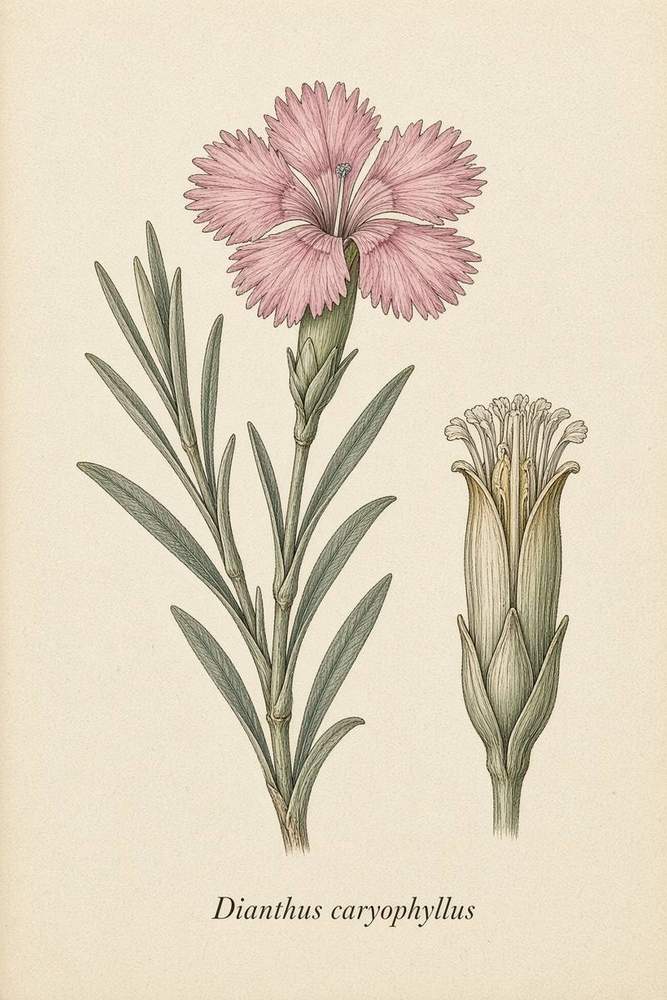 No. 242
Clove pink
Dianthus caryophyllus
The clove-scented pink of old knot gardens — petals for syrup and vinegar, a grey-green edge that likes it lean.
Clove, then a faint bitterness if you leave the white base on.
Harvest: First good flush the second summer from seed; sooner from plants
Caryophyllus is the clove tree; Linnaeus smelled the same spice in the flower. Tudor cooks candied it. The florist carnation is a later, larger, often scentless enlargement — the cottage form still smells like a spice drawer.
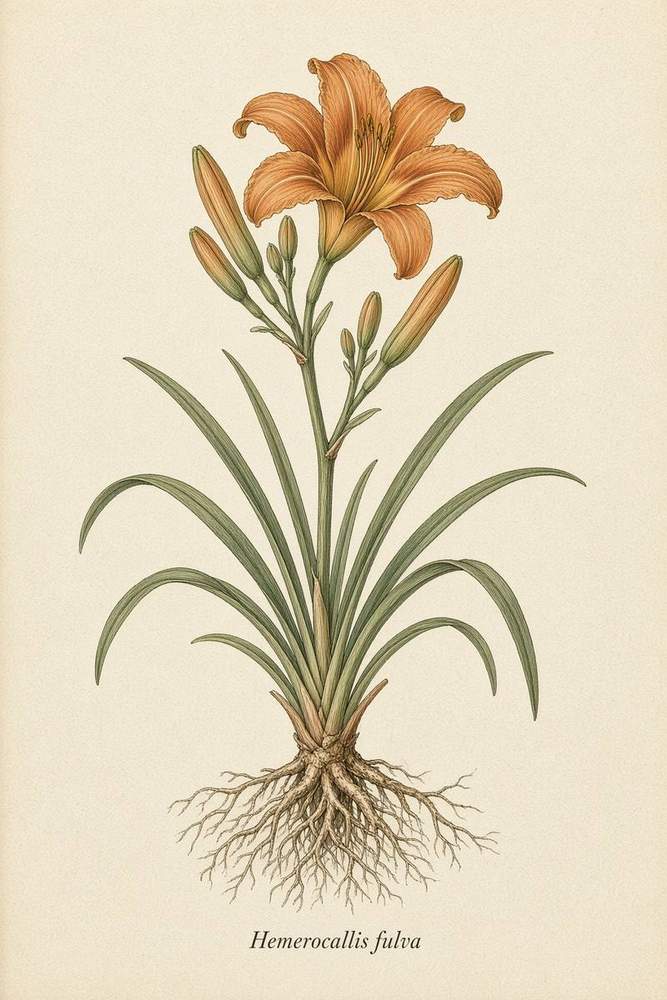 No. 243
Orange daylily
Hemerocallis fulva
The ditch lily whose buds go in a wok — edible Hemerocallis, never a true lily, never a cat’s flower water.
Green bean, mild onion, a mucilage that stir-fry likes. Older flowers go limp and soapy.
Harvest: Established clumps, every June
Hemerocallis is Greek for beauty-for-a-day. Chinese jin zhen, golden needles, are the dried buds of daylily, not a florist lily. The American ditch is full of fulva because it is hard to kill, which is also why a bank gardener keeps it.
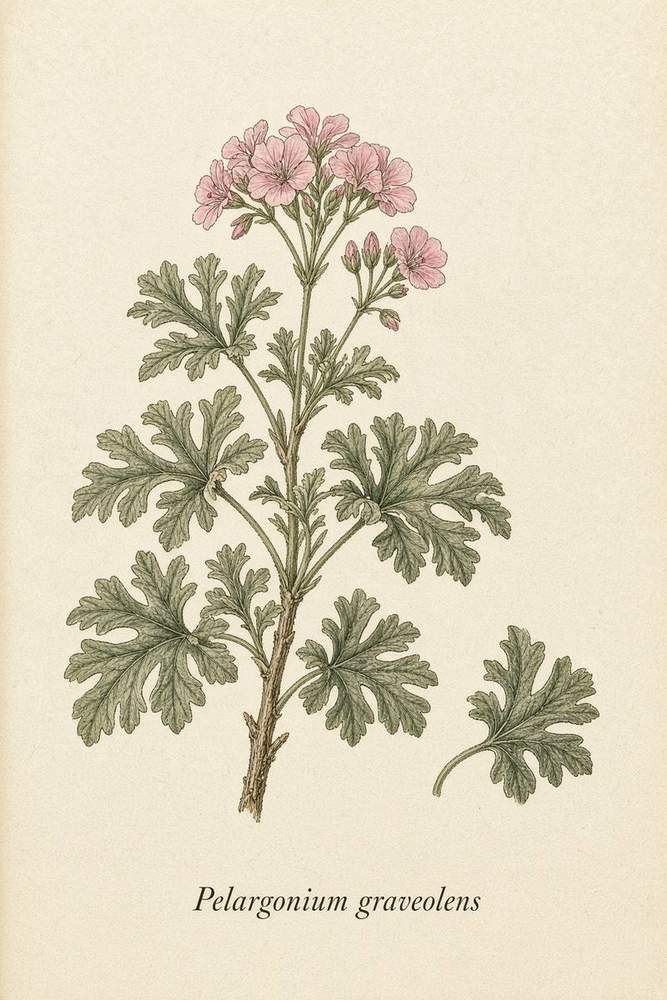 No. 244
Rose geranium
Pelargonium graveolens
A rose-scented leaf for sugar, cake, and a finger bowl — the windowsill pelargonium, not the hardy cranesbill.
Rose-candy leaf. The flower is pretty and lesser.
Harvest: A cutting is usable in weeks
French perfumers used rose geranium as a cheaper rose extender. Victorian greenhouses were full of named scents — nutmeg, apple, peppermint — a library of leaves. The cake-tin trick is older than boxed mix and still works.
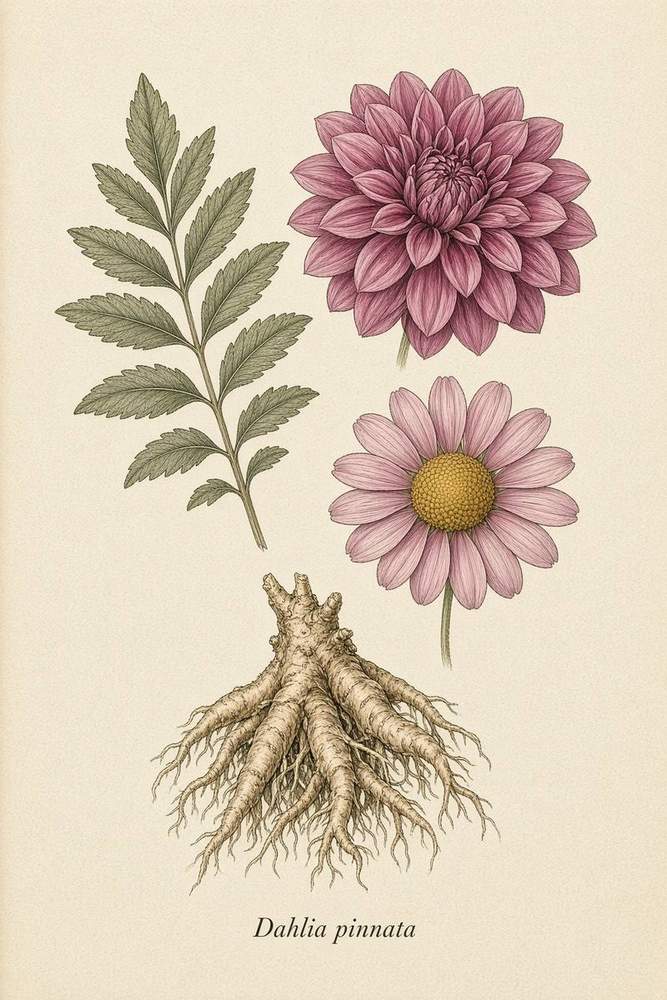 No. 245
Dahlia
Dahlia × pinnata
Mexico’s original food tuber that Europe turned into a show bloom — petals for a salad, tubers for a dry-winter cellar.
Petals are mild lettuce. Tuber is water-chestnut adjacent, slightly sweet, best roasted or sautéed.
Harvest: 80–100 days to a good bloom; tubers at season’s end
The Aztec acocotli was a food and a water pipe (the hollow stem). Europeans ignored the tuber and bred the flower until the plate was all show. Food types are being bred back now, quietly, for people who like a root with a history.
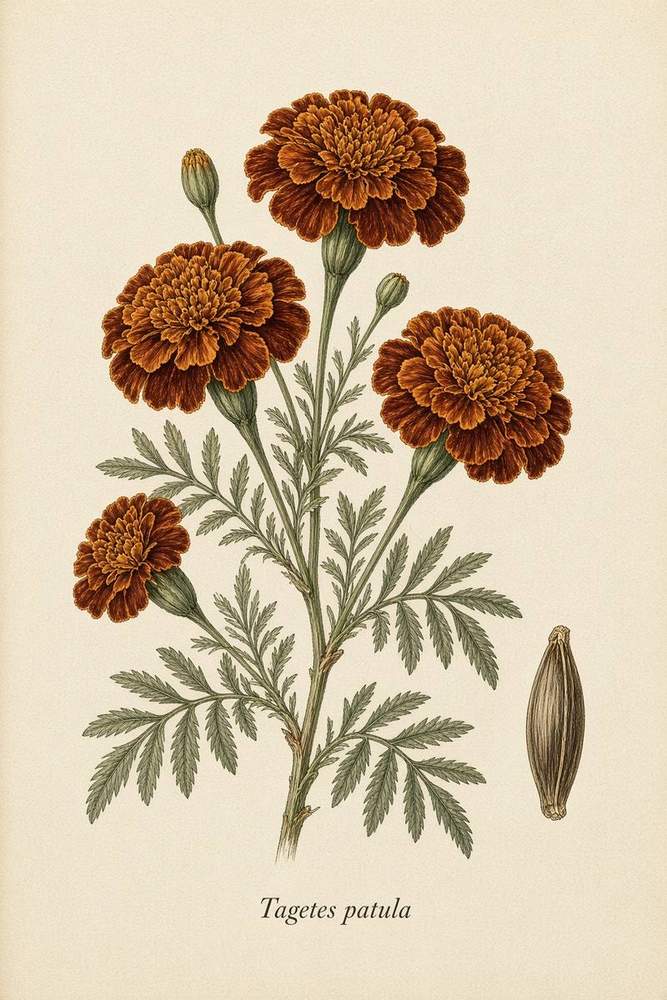 No. 246
French marigold
Tagetes patula
The scent that nematodes are said to hate — a ruffled Tagetes for the tomato edge, not the pot-marigold of the salve.
Pungent, dye-works, not a salad flower. Lemon gem is the edible cousin.
Harvest: 45–60 days to bloom
The French in the name is a nursery habit, not a French wildflower. Mexicans used Tagetes for ceremony and dye long before European parterres. The nematode paper trail is mixed; the hoverflies are not an argument.
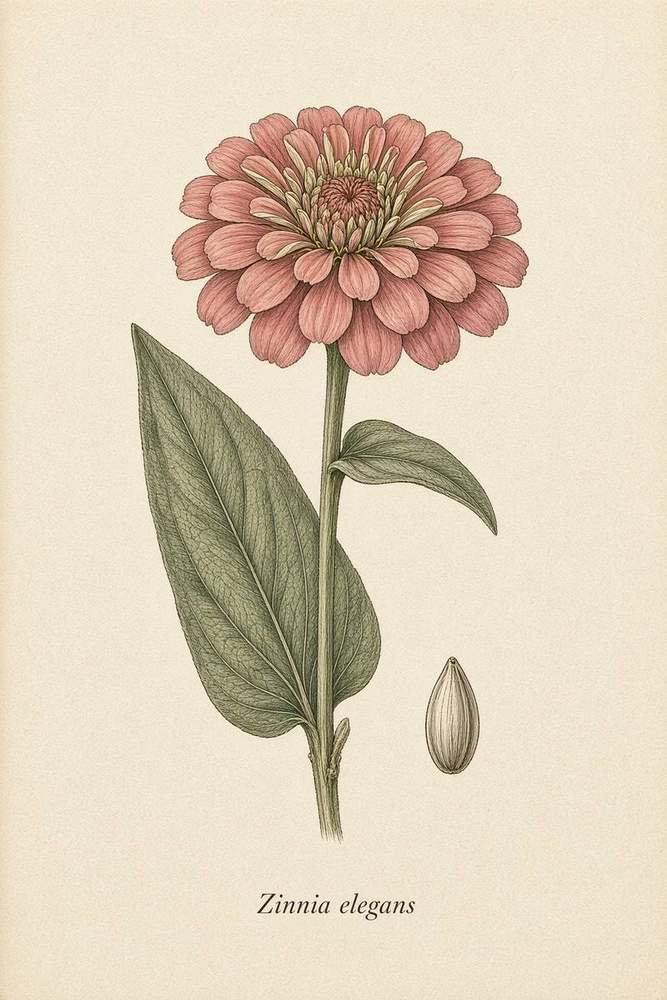 No. 247
Zinnia
Zinnia elegans
A stiff, honest cut flower that keeps blooming if you keep cutting — the pollinator tower of a hot vegetable row.
Not a food flower.
Harvest: 60–70 days
Named for the German botanist Johann Zinn, who did not live to see the county fair. The Aztec gardens already had it. Modern bedding dwarfs are a joke compared to a five-foot cut-flower row in August.
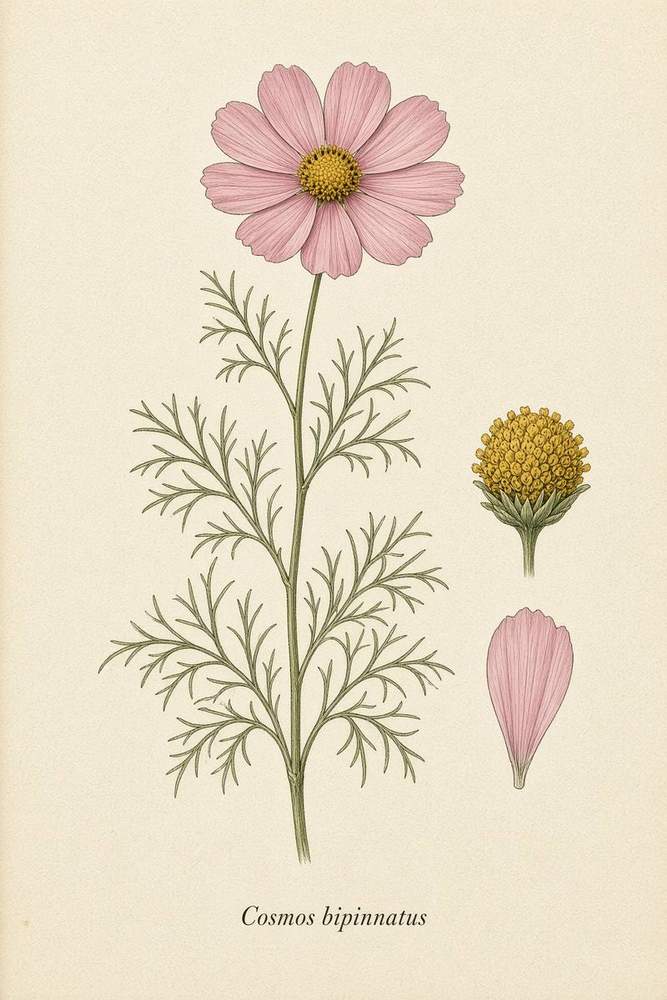 No. 248
Cosmos
Cosmos bipinnatus
Feathery foliage and a simple daisy on a tall stem — the airy insectary that does not shade a vegetable the way sunflower can.
Not a food flower.
Harvest: 70–90 days
Kosmos is Greek for order — the petals are so regular the name is a joke at nature’s expense. Spanish-Mexican gardens had it before European catalogs did. The chocolate cosmos is a different species, a tuber, and a conservatory plant.
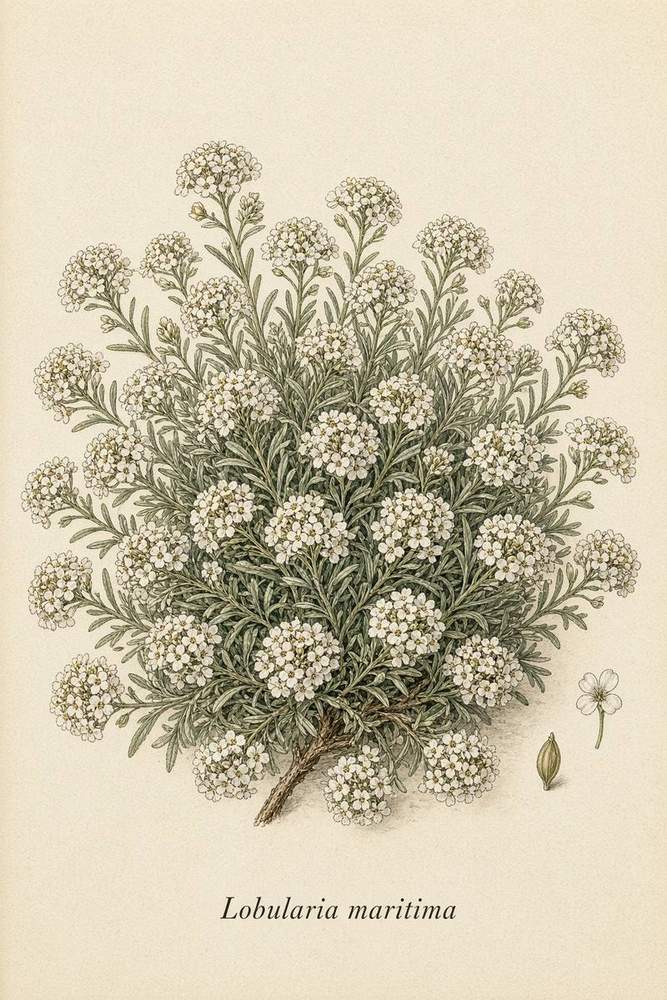 No. 249
Sweet alyssum
Lobularia maritima
A honey-scented white mat that feeds hoverflies — the living mulch at the feet of cabbage and kale.
A faint mustard honey. Not worth a bowl.
Harvest: 40–50 days to bloom
Lobularia is a little lobe, the seed. Gardeners still say alyssum out of habit. The hoverfly work is the modern reason to keep it; the honey scent on stone steps is the old one.
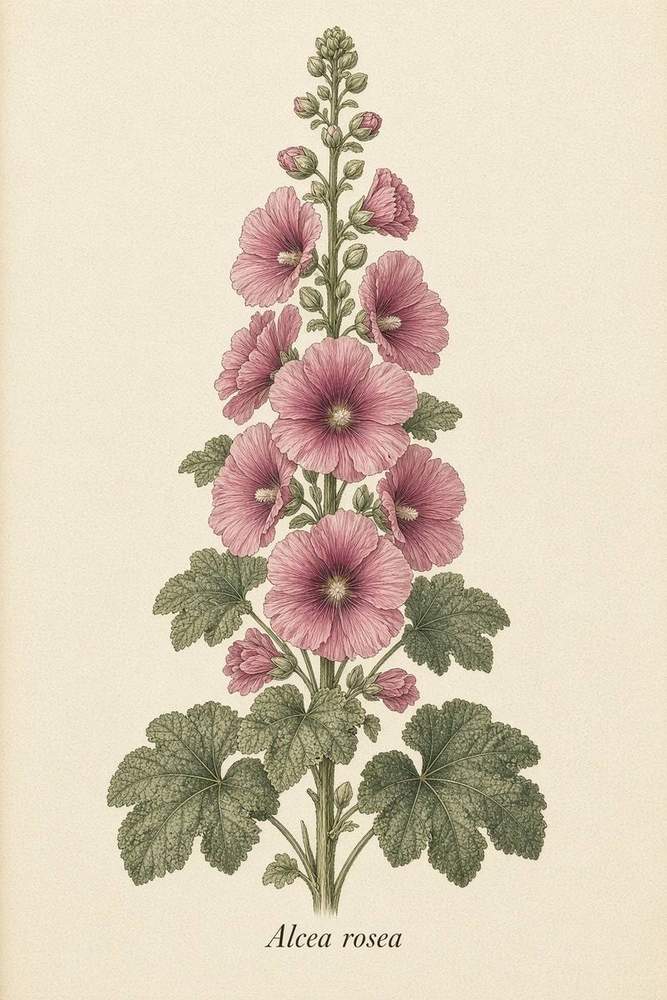 No. 250
Hollyhock
Alcea rosea
The tall spire against a wall — a biennial or short-lived perennial that makes a cottage look settled in one season of waiting.
Mild mallow, if you use a clean petal. Not a reason to grow it.
Harvest: Flowers the second summer from seed
Holy hoc in Middle English — a mallow associated with the Crusades in the usual unreliable way. Japanese horticulture bred the dark forms. American alleys still have the pink ones no one planted on purpose.
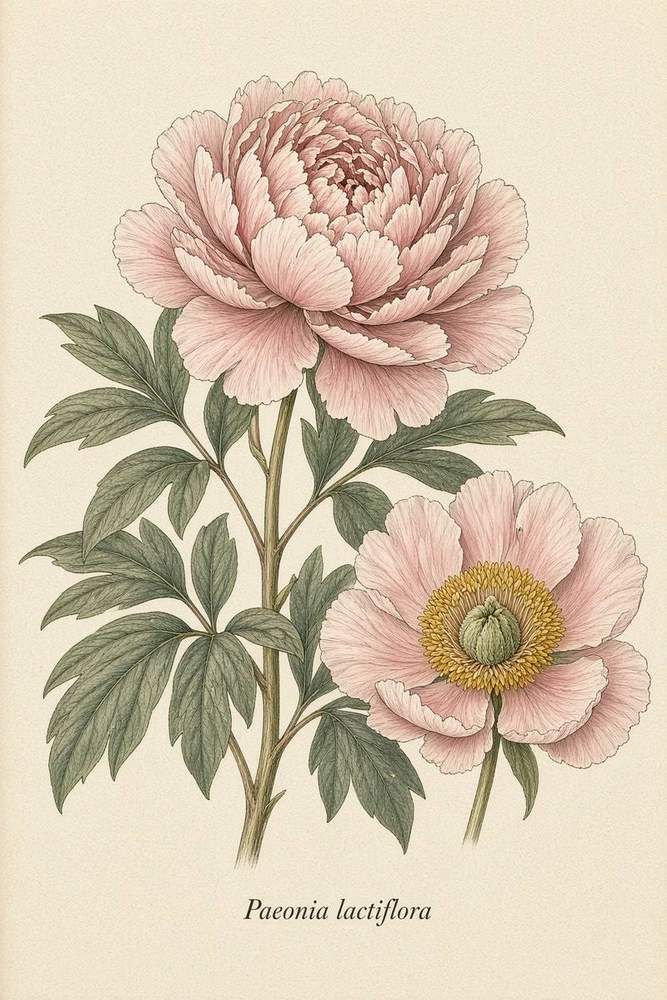 No. 251
Garden peony
Paeonia lactiflora
The late-spring shrub of buds that ants tend — a long-lived perennial whose petals, not its root, are the only kitchen note here.
Petals are mild, slightly bitter-perfumed. A garnish, not a vegetable.
Harvest: A new plant may sulk a year; the third spring is the real show
Named for Paeon, physician to the gods. Chinese painting treated the flower as rank and summer. American farmyards treated it as the one plant you take when you move house — and then it refuses to bloom for three years, which is how you learn to leave it.
 No. 252
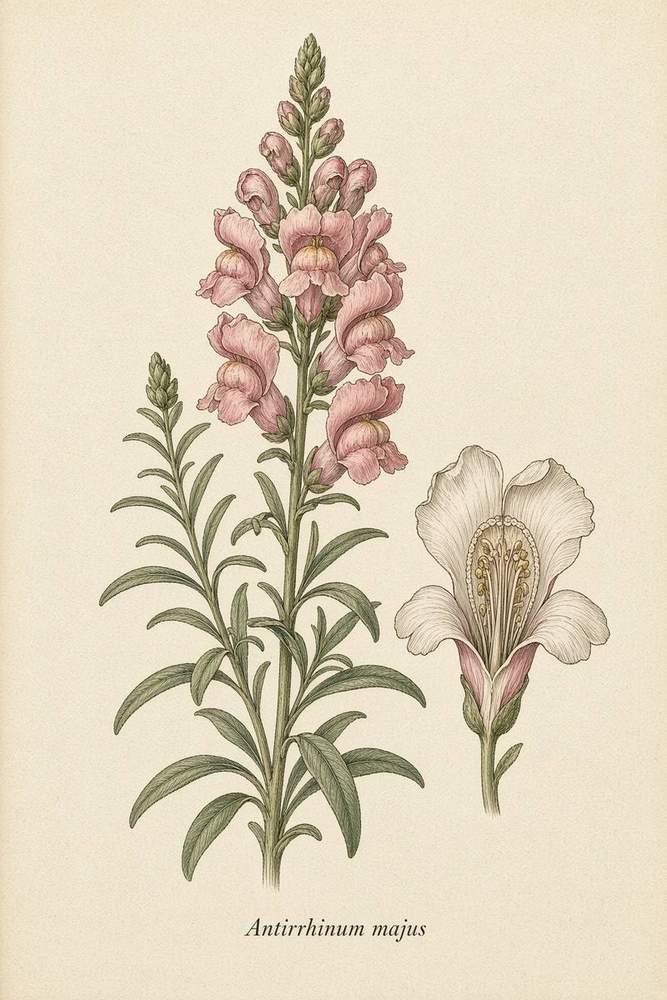
Snapdragon
Antirrhinum majus
The dragon mouth you pinch for a child — a cool-season spire that makes a cut-flower row before the zinnias take the heat.
Not a food flower.
Harvest: 70–90 days from seed
Antirrhinum is snout. The dragon is a later, better name. Victorian children pinched them; Victorian gardeners rust-dusted them. The mechanics of the flower are a pollination lock for strong bees — a bumblebee, not a hoverfly, is the proper key.
 No. 253
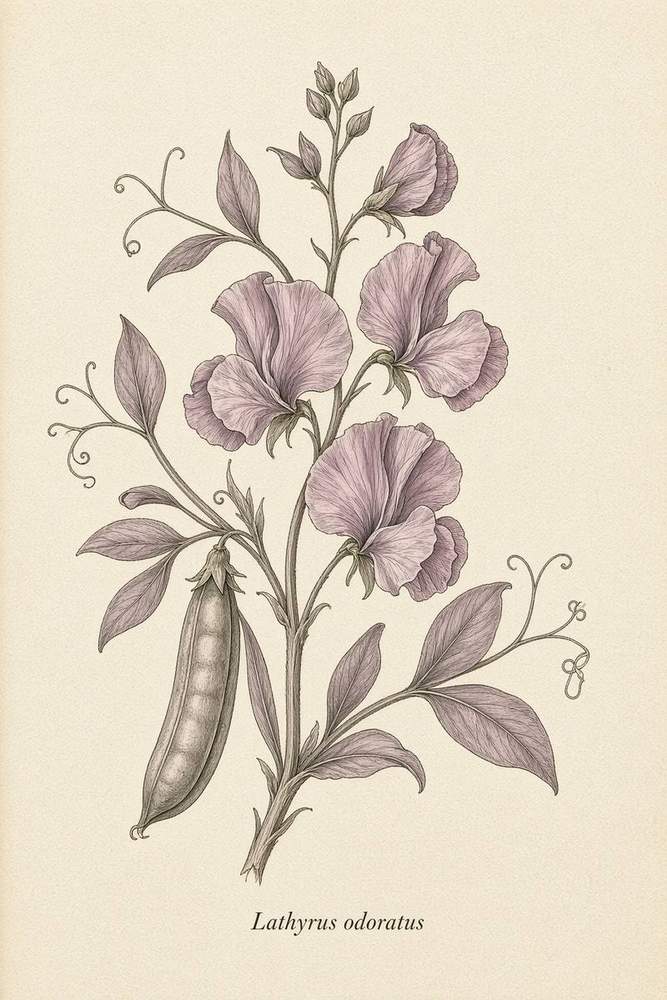
Sweet pea
Lathyrus odoratus
The perfume pea that is not a pea — a cool-season climber whose flowers are a vase, and whose seeds are a caution.
Perfume in the nose, not on the tongue. Do not taste the seed.
Harvest: 90–120 days from a cold sowing
Henry Eckford and the Spencer family turned a modest wildling into the Edwardian boutonniere. Lathyrism is the famine disease of grass pea (Lathyrus sativus), a cousin — enough kinship to keep odoratus off the plate. Smell it. Do not eat it.
 No. 254
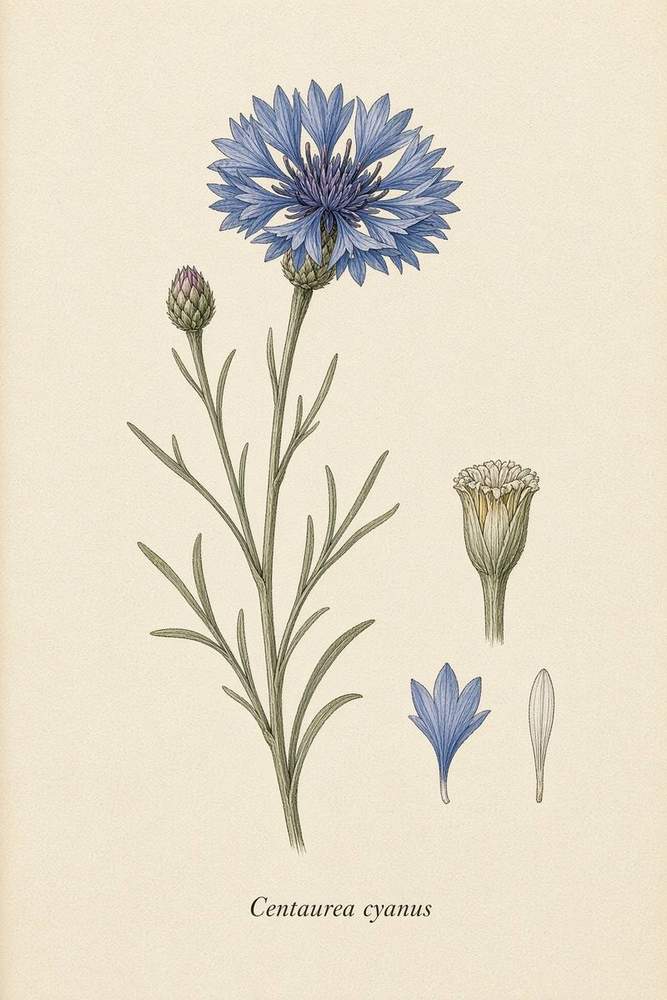
Cornflower
Centaurea cyanus
The true-blue field flower of old grain — edible petals, a cut stem, and an insectary that does not mind poor soil.
Faintly spicy, faintly grassy. A color more than a taste.
Harvest: 70–90 days
Cyanus is the blue. It was a Prussian emblem and a weed of wheat. Cleaner agriculture made it rare in fields and common in seed packets — the usual modern path for a once-ordinary flower.