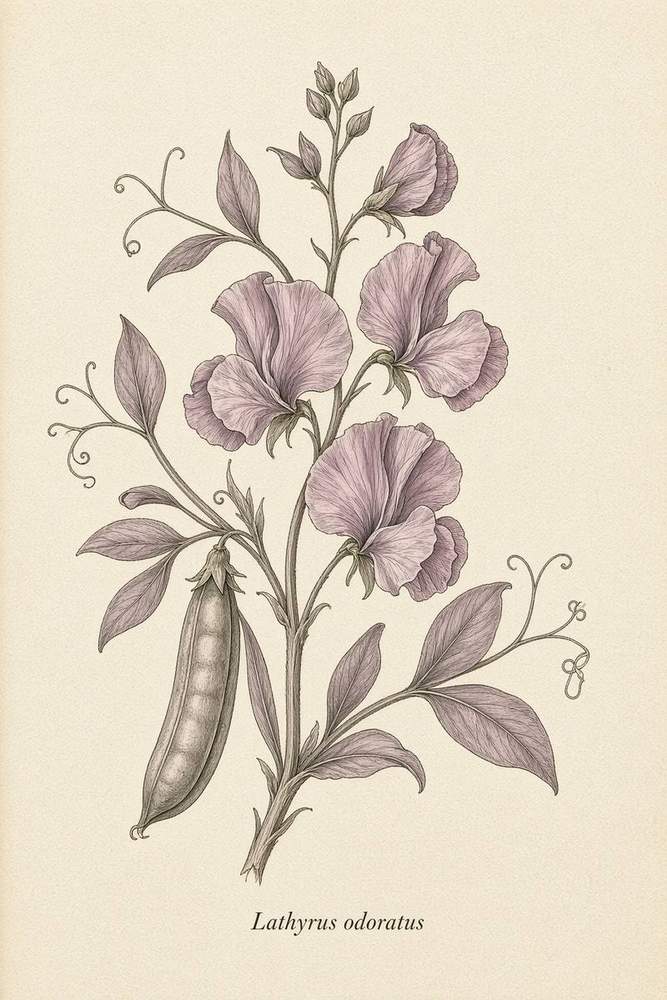
Herb. No. 253 · Fabaceae
Sicilian and southern Italian annual; an English cut-flower obsession by 1900.
Native · Mediterranean
Sweet pea
Lathyrus odoratus
Garden flowersFlowersHarvestCompanionsLookalikes
The perfume pea that is not a pea — a cool-season climber whose flowers are a vase, and whose seeds are a caution.
Sweet pea is an old Mediterranean annual grown for scent. Spencer and grandiflora types are the cut-flower vines; dwarf types stay in a pot. The seed contains lathyrogens; eating the seeds or using the plant as a famine pea is how lathyrism enters the medical record in related Lathyrus species. This is not Pisum. Do not let a child snack the pods. In the garden it wants a cool start, a rich trench, and to be cut every day. Heat ends it. Keep it off the vegetable-pea trellis so no one harvests the wrong vine.
Flavor
Perfume in the nose, not on the tongue. Do not taste the seed.
Parts used
Flower (cut only)
Helpful
- True perfume
- A cool-season vine before the beans
- Cut-and-come-again
Cautions
- Not edible — confusion with garden pea is the whole risk
- Heat stops it
- Needs a daily cut or it sets seed and quits