The Herbarium
Part V · Garden flowers
Herb. No. 253
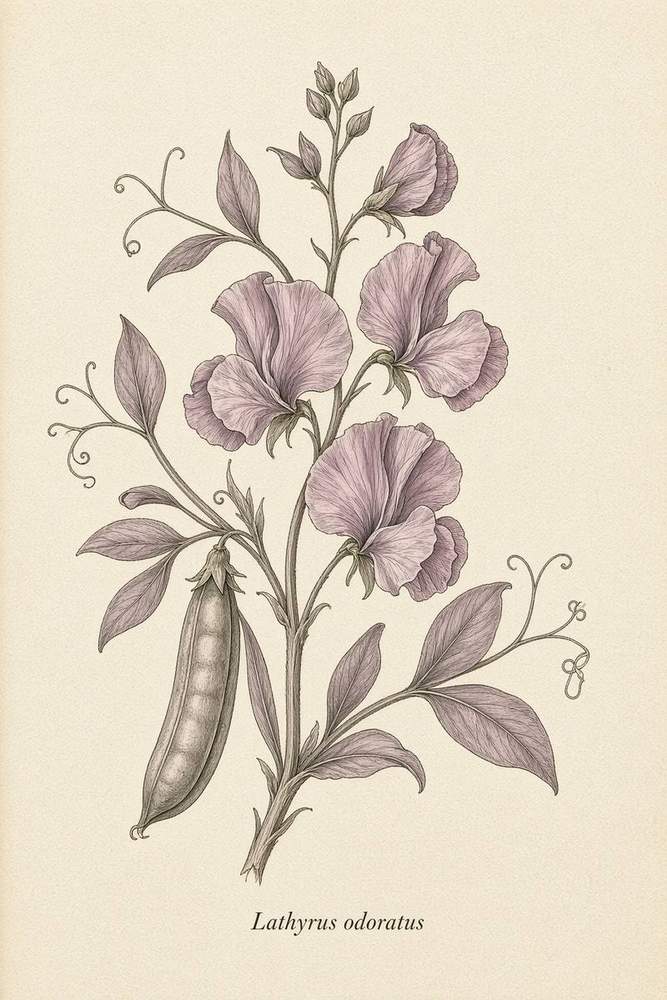
Sweet pea
Lathyrus odoratus
Fabaceae
The perfume pea that is not a pea — a cool-season climber whose flowers are a vase, and whose seeds are a caution.
Lathyrus odoratus is a scented ornamental. Seeds and pods are not food. Garden pea is Pisum sativum — a different genus. Do not eat this vine.
- Parts used
- Flower (cut only)
- Traditional notes
- Scented cut flower · Cottage screen
- Grow · USDA 6b
- Hardy annual. Sow cold. As soon as the soil can be worked, or in late fall in a mild year. Nick or soak seed. In work: Feb · Mar · Apr · May · Jun
- Harvest
- Every day, stems of just-open flowers. Leaving pods ends the bloom.
- A different trellis from the soup peas.
- Soak seed overnight. The coat is tough.
- When June heat arrives, compost the vine. It is done.
Safety
Not food. Not garden pea. Seeds and pods are not edible Do not plant on the same trellis as Pisum if children pick pods
Companions
Keep apart from Green bean, Pea.
Lookalikes
- Pea — Lathyrus odoratus is a perfume screen. The seed is not food. Garden pea and sweet pea on one trellis is how someone eats the wrong pod.
Lore
Henry Eckford and the Spencer family turned a modest wildling into the Edwardian boutonniere. Lathyrism is the famine disease of grass pea (Lathyrus sativus), a cousin — enough kinship to keep odoratus off the plate. Smell it. Do not eat it.
The Herbarium — a teaching catalog, not a clinic. Traditional use is history, not a prescription. USDA 6b dates are a week either way, not a promise. Do not eat, drink, or harvest a plant you cannot name.