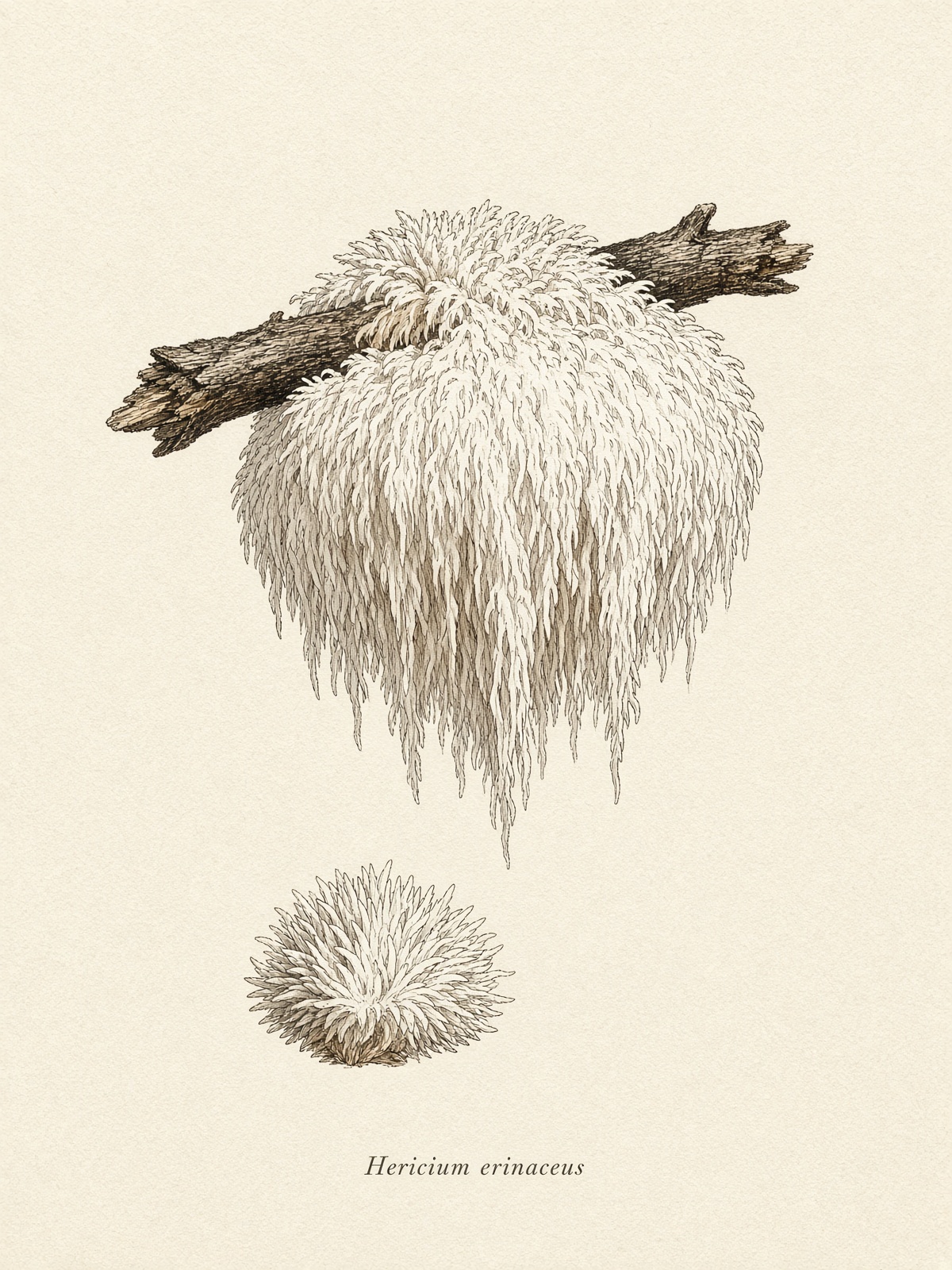
Herb. No. 030 · Hericiaceae
Temperate hardwoods of the northern hemisphere.
Native · North America · Europe · East Asia
Native Also grown
LegalGentlefungus
Lion's mane
Hericium erinaceus
The pom-pom fungus eaten as crab-like food and taken for focus and nerve support.
Hericenones (fruiting body) and erinacines (mycelium) have been studied for nerve-growth-factor pathways. The culinary mushroom is delicious when seared; that is the most defensible daily form. Supplements vary — prefer fruiting-body powders with a real mushroom smell, not malted grain.
Flavor
Mild, seafood-sweet when seared; dried powder is mushroom-bread.
Parts used
Fruiting body
Helpful
- Excellent food
- Easy indoor blocks
- Gentle safety record as food
Cautions
- Rare hedgehog-mushroom allergy
- Supplement market is noisy
- Not a dementia treatment