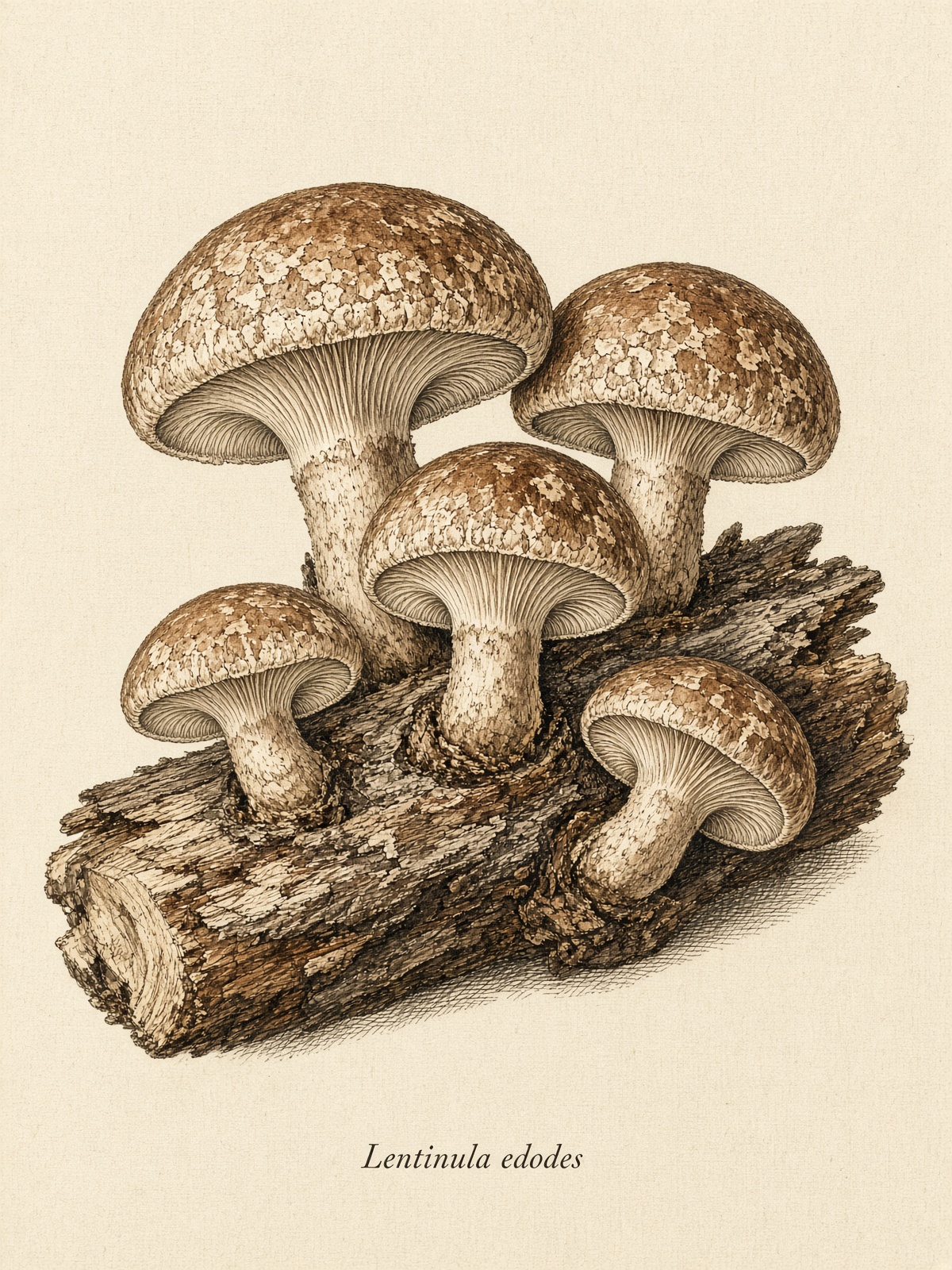
Shiitake botanical plate

Herb. No. 034 · Omphalotaceae

RangeFig. atlas
Approximate native range — a teaching atlas, not a survey

East Asian oak-log fungus, now the world’s most grown gourmet mushroom.

Native · East Asia

Native Also grownNow a garden plant worldwide
LegalGentlefungus

Shiitake

Lentinula edodes

Medicinal fungiKitchenHarvest

The farmable forest mushroom — food first, immune-modulating lentinan as a bonus.

Shiitake is both supper and medicine. Lentinan (a beta-glucan) has been used as an injected adjunct in Japan; that is not a home soup. As food, regularly eaten shiitake is a reasonable immune-supporting habit. A minority of people get a flagellate rash from undercooked specimens.

Flavor

Deep forest umami, garlic-wood when dried.

Parts used

Fruiting body

Helpful

  • Delicious
  • Log or block culture is a classic homestead skill
  • Meat of the evidence is as food

Cautions

  • Shiitake dermatitis from raw/undercooked
  • Log culture takes a year

Field assistant

Ask about traditional use, safety, or the law. The assistant will not teach illegal cultivation or give medical orders.

Teas with this plant

Remedies with this plant

  • Lion’s mane and tulsi week

    Adult: a culinary portion of lion’s mane (about a cup cooked) several times a week. Tulsi: one 8 oz cup in the afternoon. Rosemary: kitchen leaf, not the bottle of oil.

  • Winter mushroom pot

    Adult: one 8–12 oz mug of the strained decoction, 3–5 days a week in winter, or a weekly pot used over two days. Culinary garlic in the same soup.

Harvest this plant

When to cut, how to dry, and how to store it — garden and kitchen crops only.

Open harvest notes