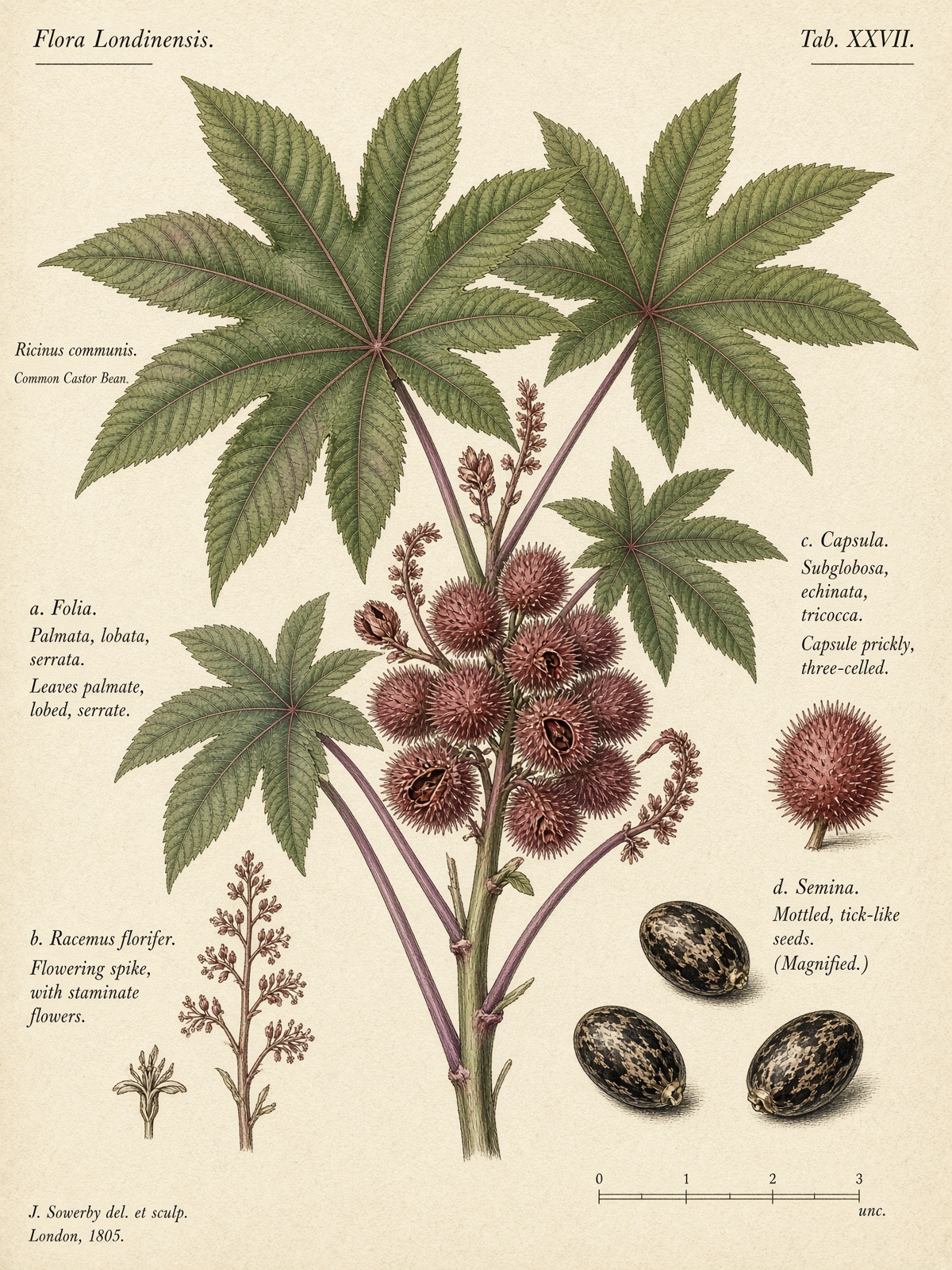
Herb. No. 079 · Euphorbiaceae
Northeastern African origin; a tropical ornamental and oilseed worldwide.
Native · Africa
Castor bean
Ricinus communis
A tropical star-leaf with beautiful poisonous seeds — oil is a laxative, the mash is a biotoxin.
Treat this as a poison-garden specimen. Read Safety before any use.
Pressed castor oil is a different material from the seed. Ricin stays in the cake after the oil is expressed. A few chewed seeds have killed. This plate exists so the garden plant is not a science-fair extraction project. Admire the foliage; buy oil at a pharmacy if a clinician wants you to use it.
Flavor
Do not chew the seeds. Castor oil is oily, bland, and notoriously unpleasant as a purge.
Parts used
Pharmacy-pressed oil only, if a clinician directs. Never the raw seed.
Helpful
- Teaches the difference between a pressed oil and a seed toxin
Cautions
- Ricin in the seed
- Castor oil is a harsh purge
- Attractive seeds look like ticks or beads