The Herbarium
Part VII · Toxic
Herb. No. 079
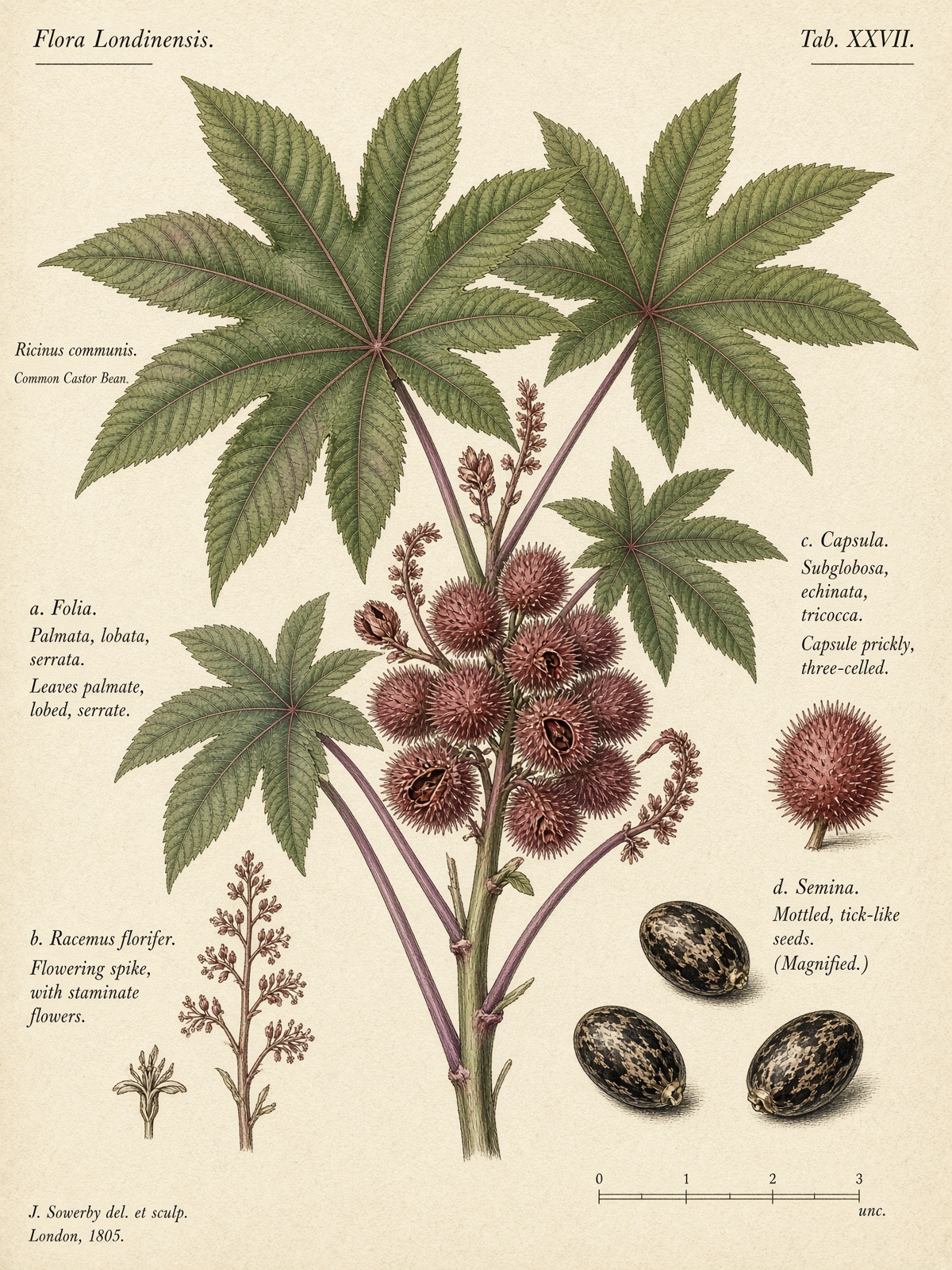
Castor bean
Ricinus communis
Euphorbiaceae
A tropical star-leaf with beautiful poisonous seeds — oil is a laxative, the mash is a biotoxin.
Common ornamental and oilseed crop. Castor oil (pressed, ricin-free) is a pharmacy laxative. The seed mash contains ricin. Growing the plant is legal; extracting ricin is a serious crime.
- Parts used
- Pharmacy-pressed oil only, if a clinician directs. Never the raw seed.
- Traditional notes
- Pharmacy laxative (oil) · Labor-induction folklore (oil — not a home experiment) · Lamp oil historically
- Grow · USDA 6b
- Tender annual / shrub, USDA 9–11 as a perennial; grown as an annual north If you grow it for the foliage, deadhead before seed if children visit. Gloves for sap. In work: May · Jun · Jul · Aug · Sep
- Harvest
- Do not harvest seed for any homemade product.
- Grow it for the star leaf if you must. Deadhead before seed if children visit.
- Never press seed at home. The oil in a pharmacy is not the mash.
- Extracting ricin is a federal crime. This folio stops at the leaf.
Safety
Pregnancy (oil can stimulate the uterus) Any handling of mashed seeds Children and the pretty mottled beans
Lookalikes
- Green bean — Ricinus seeds look like ticks, not snap beans. One chewed seed is a ricin problem. This is a poison-garden plant, not a pot crop.
Lore
The seed yields a useful oil and, in the press-cake, ricin. The plant is a handsome tropical that does not belong in a child’s garden as a snack. Castor oil’s reputation as a punishment is deserved.
The Herbarium — a teaching catalog, not a clinic. Traditional use is history, not a prescription. USDA 6b dates are a week either way, not a promise. Do not eat, drink, or harvest a plant you cannot name.