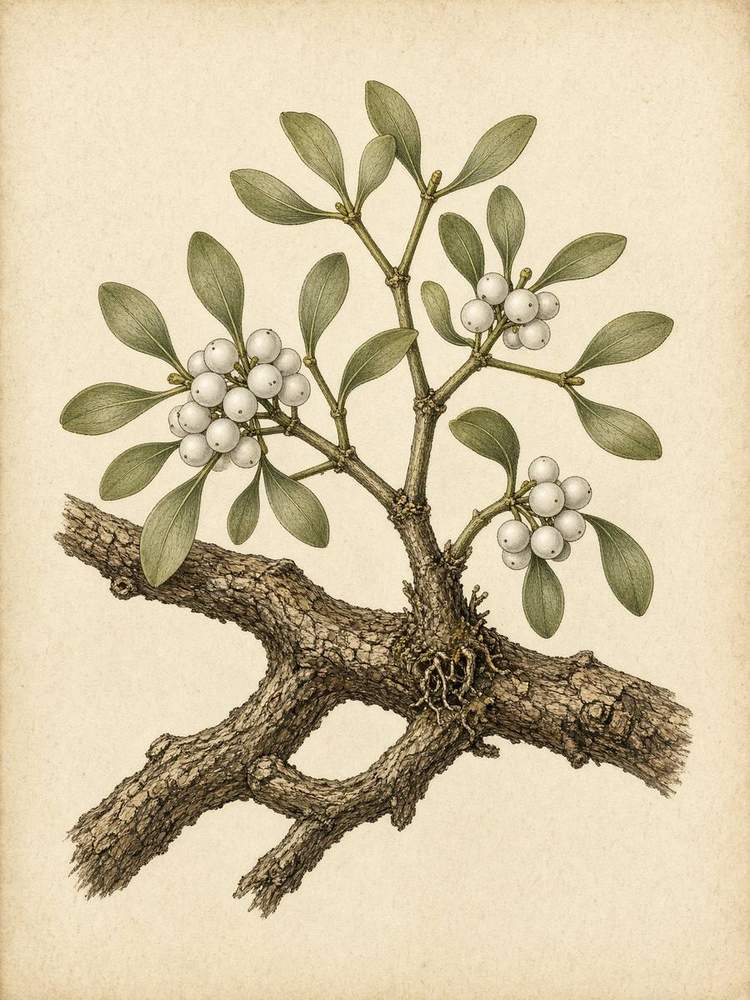
Herb. No. 181 · Santalaceae
European hemiparasite on apple, poplar, and other temperate trees. American Phoradendron is a cousin.
Native · Europe
Mistletoe
Viscum album
The kissing parasite — white berries on a host branch, a solstice prop, and a teaching plate so it is not boiled as a winter tonic.
Treat this as a poison-garden specimen. Read Safety before any use.
European mistletoe is a hemiparasite on apple, poplar, and other trees. Traditional solstice and Druid rumor outran the chemistry. Lectins and viscotoxins make the berry and leaf a poison-garden topic. Specialized extracts exist in some clinics; they are not a simmered sprig from a kissing ball. American mistletoe is a different genus with the same warning.
Flavor
Do not taste. Sticky, sweetish berries are why children eat them.
Parts used
None for self-care.
Helpful
- Teaches a holiday toxic
- A biologically interesting parasite
Cautions
- Berry poisonings in children
- Not a tea
- Clinic extracts are not this sprig