Herb. No. 076 · Apiaceae
European umbellifer, now a toxic roadside plant across North America.
Native · Europe
Native Also grown
LegalDeadlyplant
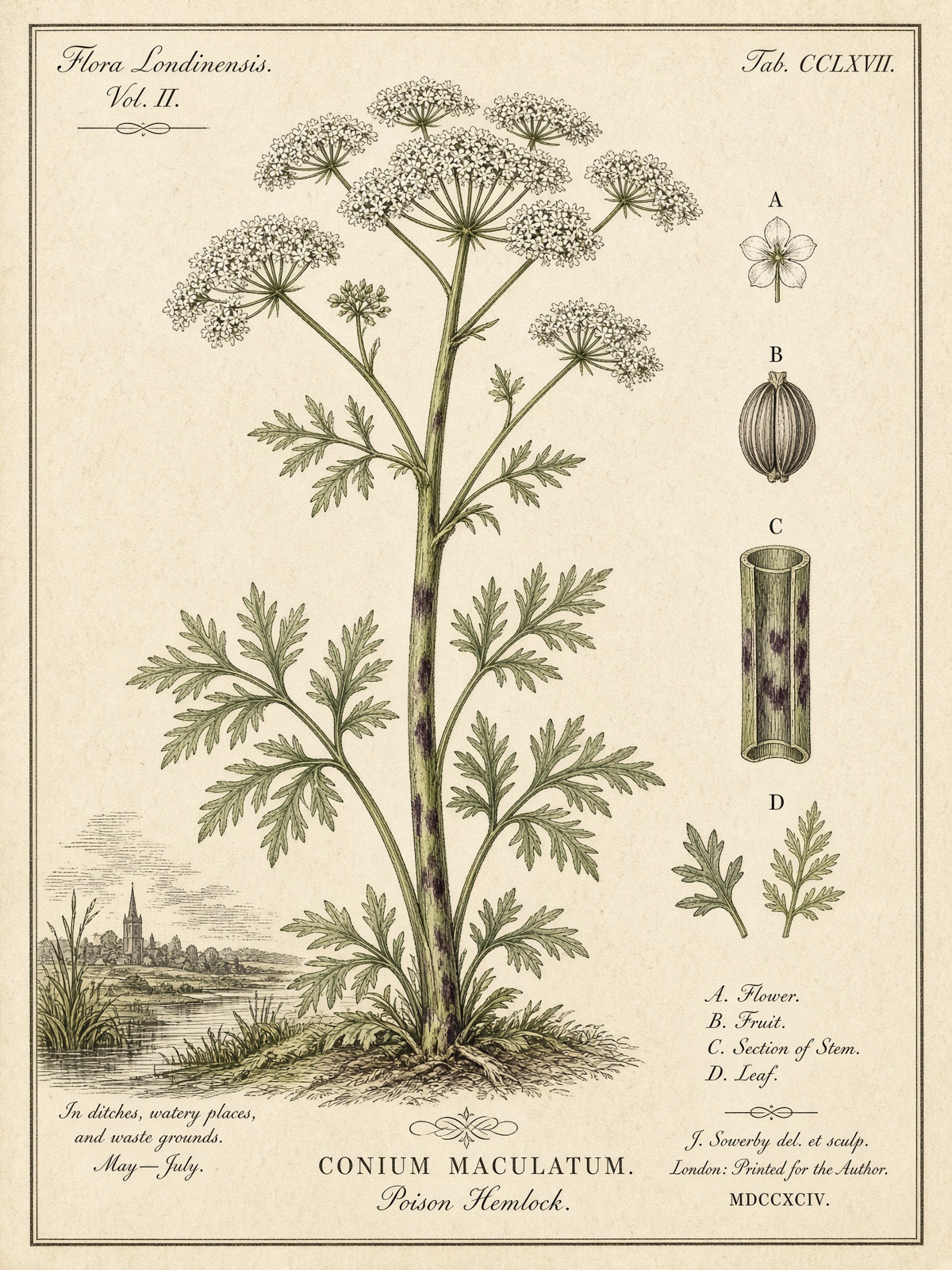
Poison hemlock
Conium maculatum
Socrates' cup — a purple-spotted parsley that is still mistaken for fennel, carrot, and Queen Anne's lace.
Treat this as a poison-garden specimen. Read Safety before any use.
Coniine paralyzes from the legs up. A forkful of mistaken 'wild carrot' has killed foragers in the last decade. Purple blotches on the hollow stem, a mousy smell when crushed, and hairless stems are the field marks — but this plate is here so you leave every unknown white umbel alone. There is no home medicine.
Flavor
Do not taste. Literature describes a mouse-urine, parsley rankness.
Parts used
None.
Helpful
- The most important lookalike lesson in this folio
Cautions
- Fatal in small amounts
- Looks like food plants
Do not confuse
- ParsleyPoison hemlock is still pulled as ‘wild parsley.’ A purple-spotted stem is the difference between supper and Socrates’ cup.
- CarrotQueen Anne’s lace and poison hemlock share a white umbrella. One is a taproot. The other shuts the nerves down.
- FennelAnise-scented foliage is not a field test. Poison hemlock has been called ‘wild fennel’ by people who then got very still.
- DillA feathery roadside weed is not a pickle herb. Dill is annual and yellow; hemlock is a biennial tower with white umbels.
- YarrowAchillea is a flat, ferny aster, not an umbel. People still call any white roadside head ‘yarrow’ — and some of those heads are hemlock.