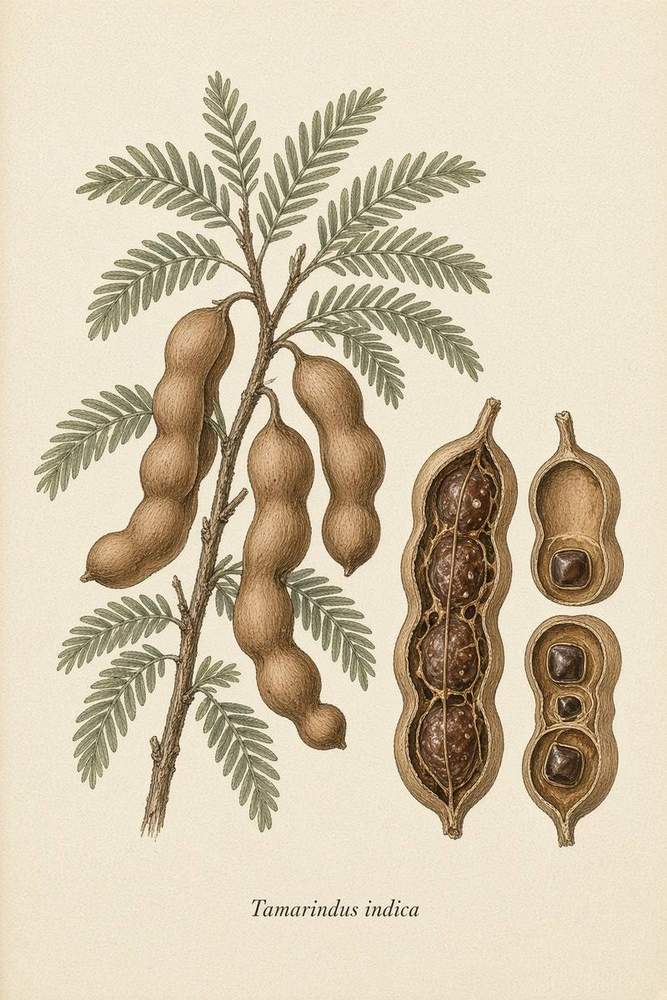
Herb. No. 231 · Fabaceae
East African origin; an Indian and Latin American pantry tree.
Native · Africa
Native Also grown
LegalGentleplant
Tamarind
Tamarindus indica
A brittle brown pod of sour-sweet pulp — the acid in a chutney, a agua fresca, and a pad thai, from a tree that looks like a mimosa.
Tamarind is an African tree that India made indispensable. Traditional use is as the sticky sour pulp around the seeds. Culinary amounts are the path. Sweet types exist; most pantry blocks are sour. A large amount is a traditional laxative — a candy binge is a bathroom story. The leaves are a sour green in some kitchens; this plate is the pulp.
Flavor
Sour date, brown sugar, a little smoke. Sweet tamarind is dessert; sour is a seasoning.
Parts used
Ripe pulp
Helpful
- A pantry block that keeps
- The sour in a hundred kitchens
Cautions
- A tropical tree
- Too much pulp is a laxative
- Seeds are not a snack unless roasted as a separate food