The Herbarium
Part IV · Fruit & vegetable
Herb. No. 231
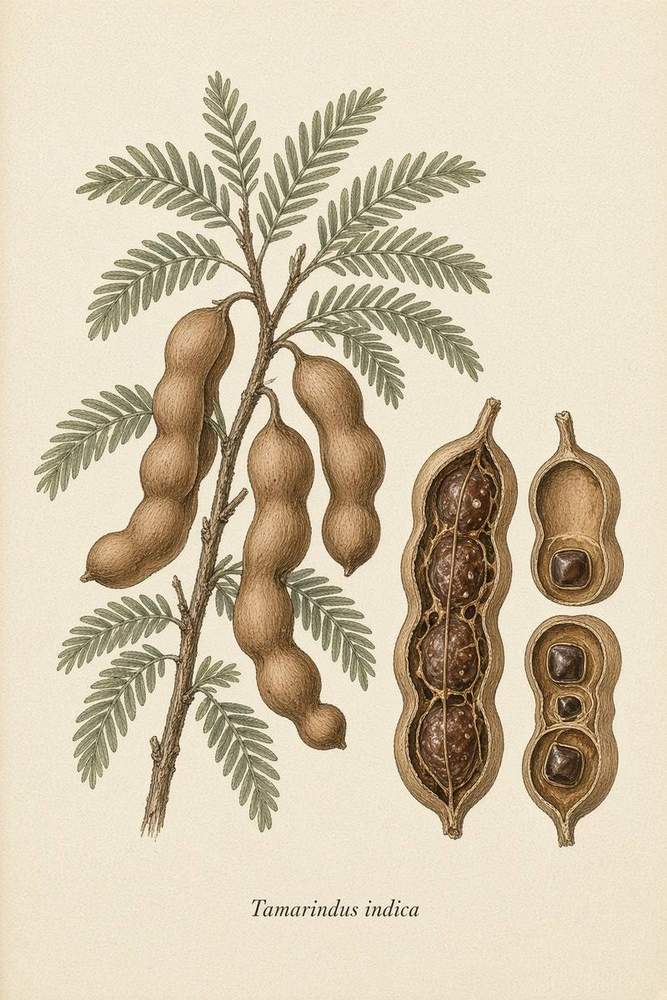
Tamarind
Tamarindus indica
Fabaceae
A brittle brown pod of sour-sweet pulp — the acid in a chutney, a agua fresca, and a pad thai, from a tree that looks like a mimosa.
Ripe pulp is food. The name is Arabic tamar hindi, Indian date — a sour pantry block, not a date and not a laxative candy in quantity.
- Parts used
- Ripe pulp
- Traditional notes
- Kitchen acid · Chutney, agua, stew · Traditional souring agent
- Grow · USDA 6b
- Tropical tree, USDA 10–11. Drought-tolerant once established. Seed or a nursery tree in frost-free ground. A slow, large shade tree. In work: Jan · Feb · Mar · Apr
- Harvest
- When pods brown and brittle and the pulp is sticky-dark, not green.
- Sour and sweet types are different shopping.
- A block in the pantry beats hoping for a pod.
Safety
A tamarind binge if you did not want a laxative Known tamarind allergy (rare)
Lore
Arabic tamar hindi, Indian date — they named it for the wrong fruit in the right direction. Sanskrit chincha. Mexican agua de tamarindo and Tamil rasam share the sour. Worcestershire sauce is, among other secrets, this pulp in an English bottle.
The Herbarium — a teaching catalog, not a clinic. Traditional use is history, not a prescription. USDA 6b dates are a week either way, not a promise. Do not eat, drink, or harvest a plant you cannot name.