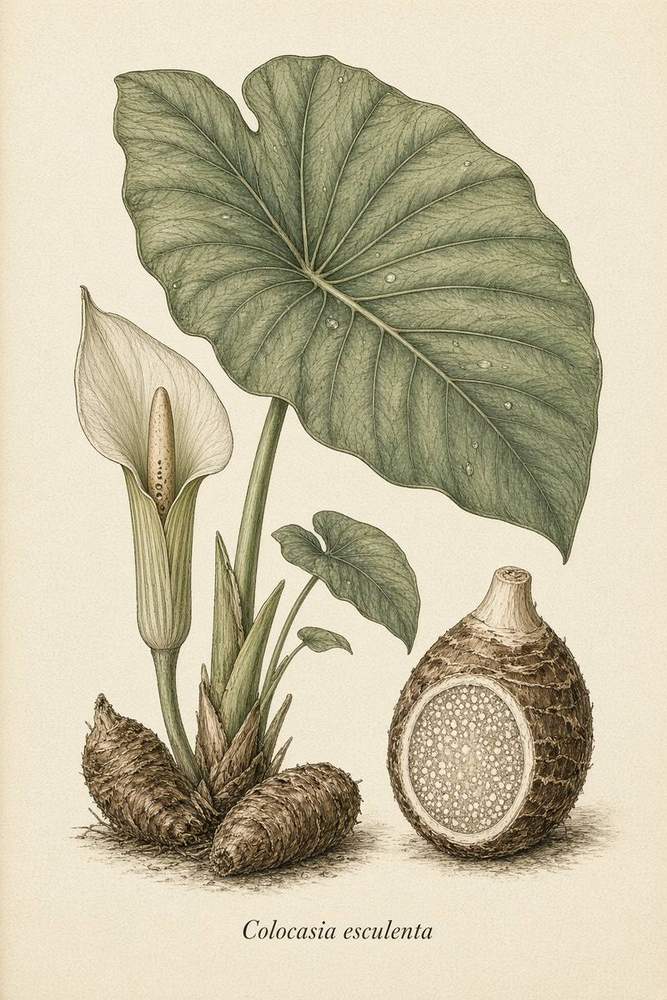
Herb. No. 235 · Araceae
Southeast Asian wetlands; a canoe plant of Polynesia and a staple of wet tropical kitchens.
Native · Southeast Asia · South Asia
Taro
Colocasia esculenta
The elephant-ear starch of the wet tropics — a cooked corm and a cooked green, and a mouthful of needles if you skip the heat.
Taro is an aroid of Southeast Asian wetlands, a staple from poi to West African fufu-adjacent pots to Japanese satoimo. Traditional use is as thoroughly cooked corm and cooked leaf (luau, callaloo in some kitchens — know the species). Culinary cooked amounts are the path. Raw raphides of calcium oxalate will make the mouth burn. Ornamental ‘elephant ear’ may be a different, less edible Colocasia or Alocasia — cook only a named food type.
Flavor
Cooked corm is mild, nutty, a little sticky. Leaf is spinach with more spine, once cooked enough.
Parts used
Corm, cooked · Leaf, cooked
Helpful
- A true wet-bed calorie crop in heat
- Leaf is a second food if named and cooked
Cautions
- Raw is misery
- Ornamental lookalikes
- Needs wet heat