The Herbarium
Part IV · Fruit & vegetable
Herb. No. 235
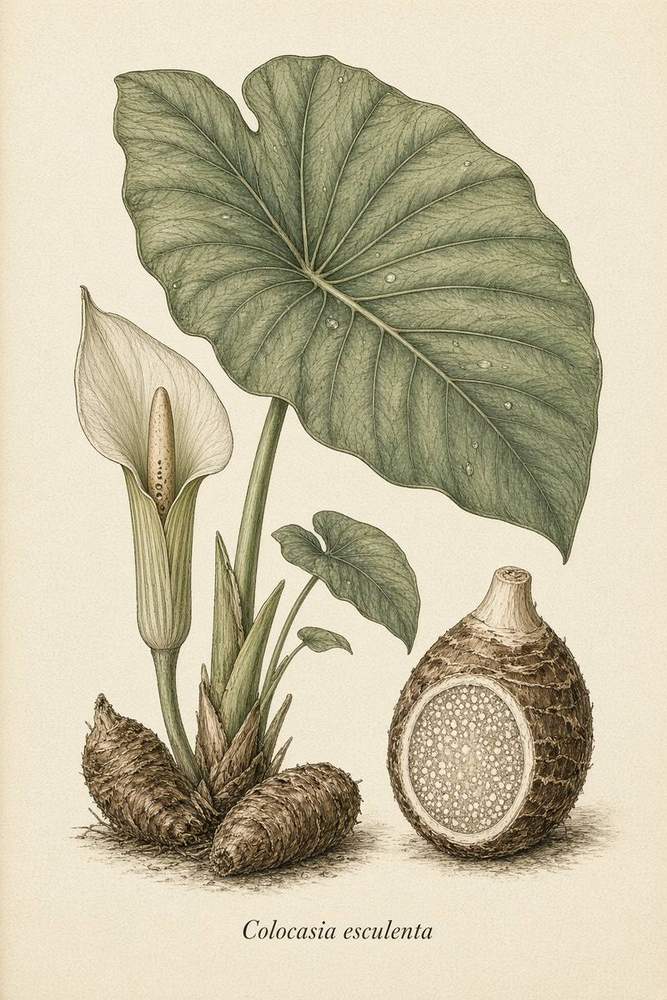
Taro
Colocasia esculenta
Araceae
The elephant-ear starch of the wet tropics — a cooked corm and a cooked green, and a mouthful of needles if you skip the heat.
Cooked corm and cooked leaf are food. Raw is an oxalate needle — itch, not a salad. This is not elephant-ear ornamental you cannot name.
- Parts used
- Corm, cooked · Leaf, cooked
- Traditional notes
- Staple starch · Cooked green · Traditional poi and stew
- Grow · USDA 6b
- Tropical perennial, USDA 8–11 with wet soil; a pot in a pond north, lifted before frost A named food corm, not a florist’s bulb unless you know it is esculenta. In work: Sep · Oct · Nov
- Harvest
- When leaves yellow in the cool season, or as needed. Cook the same day you peel if possible.
- Wet feet on purpose.
- If your tongue itches, it is not done. Back to the pot.
Safety
Raw corm or leaf An unnamed ornamental elephant-ear Oxalate stone formers who have been told to limit
Lore
Hawaiian kalo is a genealogy as much as a crop — the elder sibling of the people in the old stories. Poi is that corm, fermented. West Africa and the Caribbean took other aroids (malanga, dasheen) in the same pot-logic. The itch taught every kitchen the same rule without a lab: heat, or do not eat.
The Herbarium — a teaching catalog, not a clinic. Traditional use is history, not a prescription. USDA 6b dates are a week either way, not a promise. Do not eat, drink, or harvest a plant you cannot name.