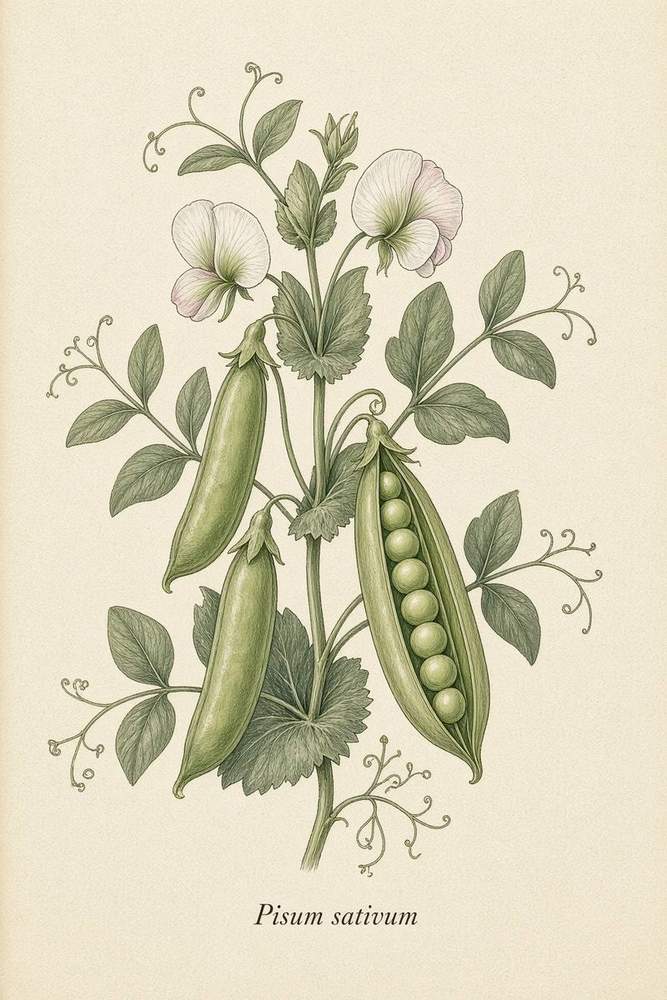
Herb. No. 203 · Fabaceae
Near Eastern origin; a cool-season pulse of Europe, India, and temperate gardens.
Native · West Asia · Mediterranean
Native Also grownNow a garden plant worldwide
LegalGentleplant
Pea
Pisum sativum
Fruit & vegetableHarvestCompanionsLookalikes
A cool-season vine you eat as pod or seed — plant early, pick often, and never confuse it with a sweet pea.
Garden pea is an Old World pulse. Traditional European and Asian kitchens eat the immature seed, the edible pod (snow, snap), or the dried split pea. Culinary amounts are the path. Lathyrus sweet pea is a different, ornamental genus — not food. Heat ends the crop. A fall sowing sometimes pays in the South.
Flavor
Sweet when young. Starchy when old. Dried split pea is a winter soup, not a salad.
Parts used
Immature seed · Edible pod · Dried seed
Helpful
- Fixes a little nitrogen
- A true spring crop
Cautions
- Heat finishes it
- Powdery mildew late
- Sweet pea is not this plant