The Herbarium
Part IV · Fruit & vegetable
Herb. No. 203
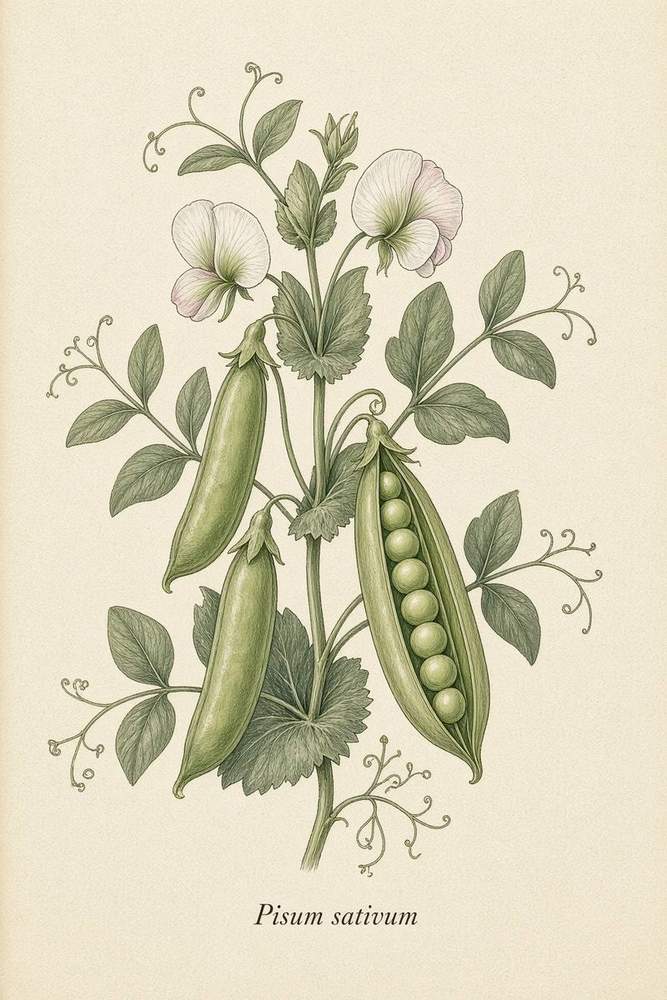
Pea
Pisum sativum
Fabaceae
A cool-season vine you eat as pod or seed — plant early, pick often, and never confuse it with a sweet pea.
Garden pea is food. Sweet pea (Lathyrus odoratus) is an ornamental and not a supper.
- Parts used
- Immature seed · Edible pod · Dried seed
- Traditional notes
- Kitchen pulse · Cool-season green · Traditional potage
- Grow · USDA 6b
- Cool-season annual. Sow as soon as the ground can be worked. Direct, early. A trellis for tall types. In work: Feb · Mar · Apr · May · Sep · Oct
- Harvest
- Snap and snow when flat-to-plump; shelling when pods fill but are still green.
- A midsummer planting is a waste in heat. Try again in September in the South.
- Inoculant in new ground.
Safety
Sweet pea (Lathyrus) as food Known pea allergy (uncommon)
Companions
Plant with Carrot, Corn, Cucumber, Dill, Nasturtium, Spinach.
Keep apart from Fennel, Garlic, Onion, Sweet pea.
Lookalikes
- Sweet pea — Lathyrus odoratus is a perfume screen. The seed is not food. Garden pea and sweet pea on one trellis is how someone eats the wrong pod.
Lore
Mendel’s monastery garden was this plant. The English ‘pea’ is older than the vegetable marrow. Split-pea soup is a medieval pottage that never needed a rebrand. The ornamental sweet pea stole the name and none of the supper.
The Herbarium — a teaching catalog, not a clinic. Traditional use is history, not a prescription. USDA 6b dates are a week either way, not a promise. Do not eat, drink, or harvest a plant you cannot name.