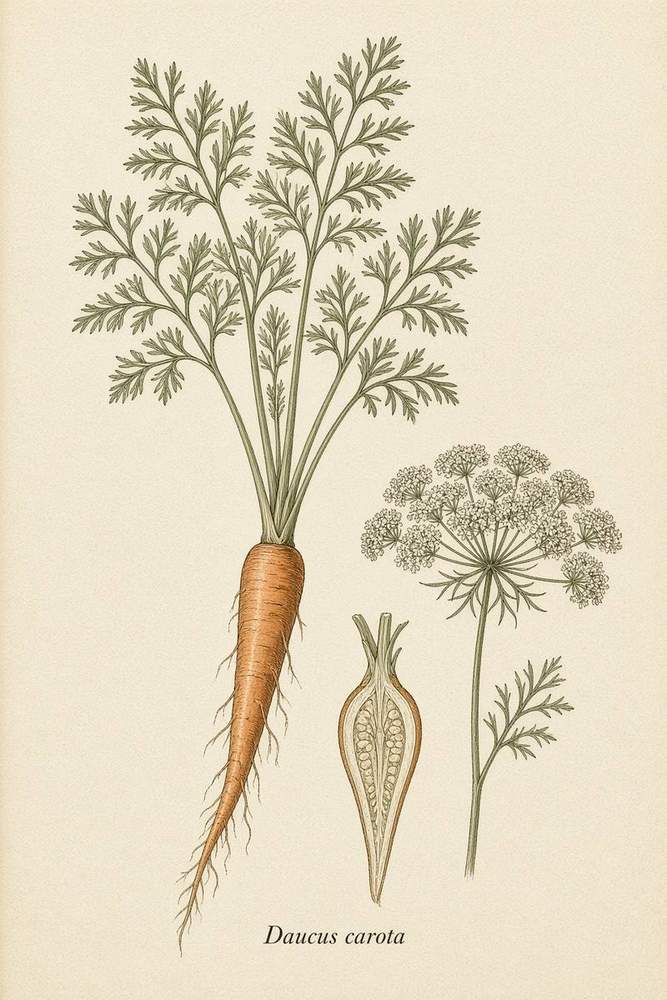
Herb. No. 191 · Apiaceae
Afghanistan and the Near East as a purple and yellow root; Dutch breeders made it orange.
Native · West Asia · Europe
Carrot
Daucus carota subsp. sativus
Fruit & vegetableHarvestCompanionsLookalikes
The orange kitchen root — a biennial you pull in year one, with a folklore about eyesight that outran the soup.
Garden carrot is a selected form of a wild Eurasian umbellifer. Traditional use is as food. The eyesight story is partly pigment (beta-carotene) and partly a wartime rumor about British pilots. Culinary root is the path. Do not mistake poison hemlock or water hemlock for a wild carrot — this plate is a named garden row.
Flavor
Sweet earth, especially after a frost. Old woody cores taste like the word ‘storage.’
Parts used
Root · Young leaf (kitchen, modest)
Helpful
- Stores in sand or the fridge
- A real row crop
Cautions
- Forked in stones
- Wild lookalikes if you forage
- Juice is not a protocol