The Herbarium
Part IV · Fruit & vegetable
Herb. No. 191
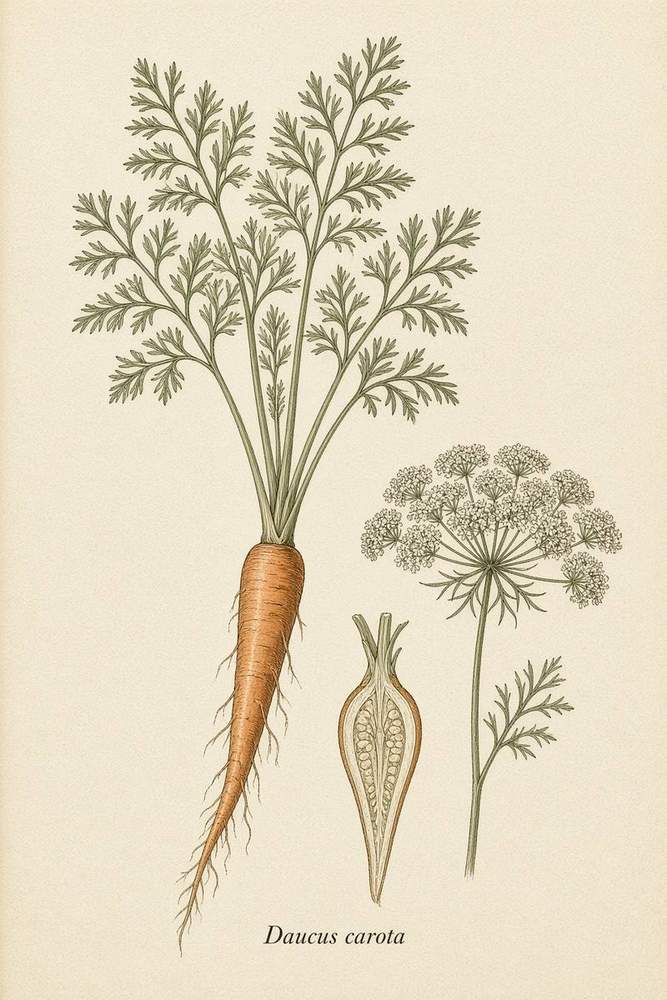
Carrot
Daucus carota subsp. sativus
Apiaceae
The orange kitchen root — a biennial you pull in year one, with a folklore about eyesight that outran the soup.
Garden root is food. Wild carrot (Queen Anne’s lace) has deadly lookalikes in the same family — do not forage umbels you cannot name.
- Parts used
- Root · Young leaf (kitchen, modest)
- Traditional notes
- Kitchen root · Traditional winter staple · A cooked sweet
- Grow · USDA 6b
- Cool-season biennial, USDA 4–10 as a root crop Direct-sow. Thin ruthlessly or you grow threads. In work: Mar · Apr · May · Jun · Jul · Aug · Sep · Oct
- Harvest
- When shoulders are the size you want. A frost sweetens them.
- Cover seed — it is slow and the rain crusts it.
- Carrot fly: a fine mesh in some counties.
- Leave a few for year-two umbels only if you want seed, and you know they are not hemlock.
Safety
Unidentified wild carrot-family plants Carrot juice as a replacement for meals
Companions
Plant with Chives, Garden sage, Onion, Pea, Rosemary, Spinach.
Keep apart from Dill, Fennel.
Lookalikes
- Poison hemlock — Queen Anne’s lace and poison hemlock share a white umbrella. One is a taproot. The other shuts the nerves down.
Lore
The original carrot was purple, yellow, or white. Orange is a 17th-century Dutch patriotism story that may even be true. The Blitz-era tale that carrots gave RAF pilots night vision was a cover for radar. Your grandmother was not entirely wrong about the pigment. She was wrong about the Spitfire.
The Herbarium — a teaching catalog, not a clinic. Traditional use is history, not a prescription. USDA 6b dates are a week either way, not a promise. Do not eat, drink, or harvest a plant you cannot name.