Herb. No. 192 · Amaranthaceae
Mediterranean seabeet ancestry; a garden root from Russia to the American table.
Native · Mediterranean · West Asia
Native Also grownNow a garden plant worldwide
LegalGentleplant
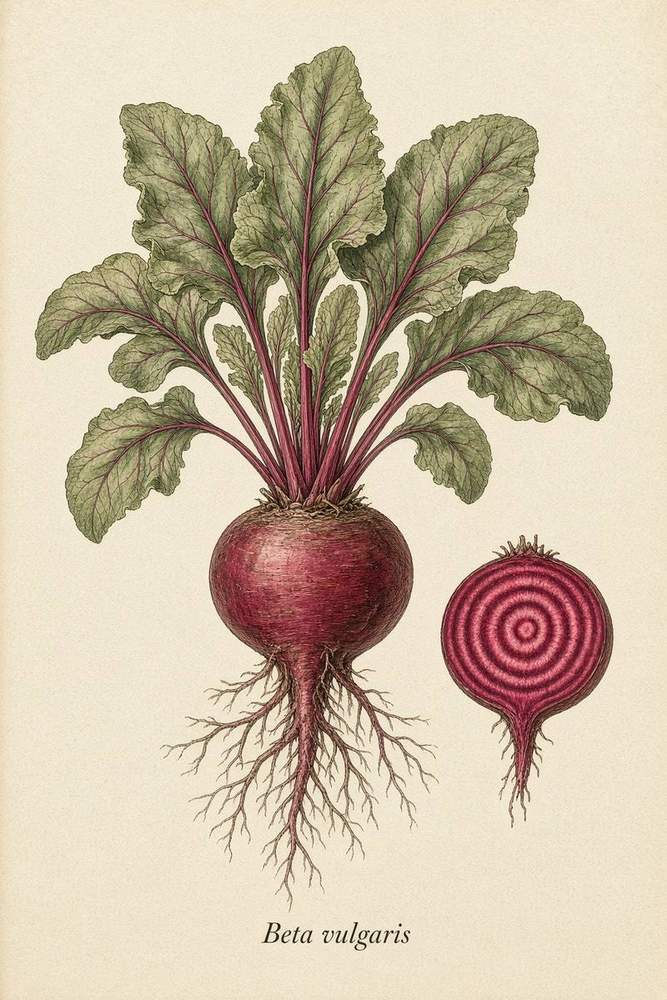
Beet
Beta vulgaris
Fruit & vegetableHarvestCompanions
A magenta kitchen root that stains the board — leaf and globe both food, with a folklore as a blood builder that is mostly the color talking.
Beet is a Mediterranean chenopod. Traditional European kitchens eat the root roasted or pickled and the leaf like chard (it is chard’s sister). The ‘blood’ folklore is the pigment betalain, not a hematology. Culinary amounts are the path. Beeturia — pink urine — is a curiosity, not an emergency, in a healthy adult.
Flavor
Sweet earth, a little iron. Leaf is chard with more spine.
Parts used
Root · Leaf
Helpful
- Two crops from one sowing
- Stores well
Cautions
- Stains everything
- Oxalate in leaf for some stone-formers
- The juice cleanse is a fad