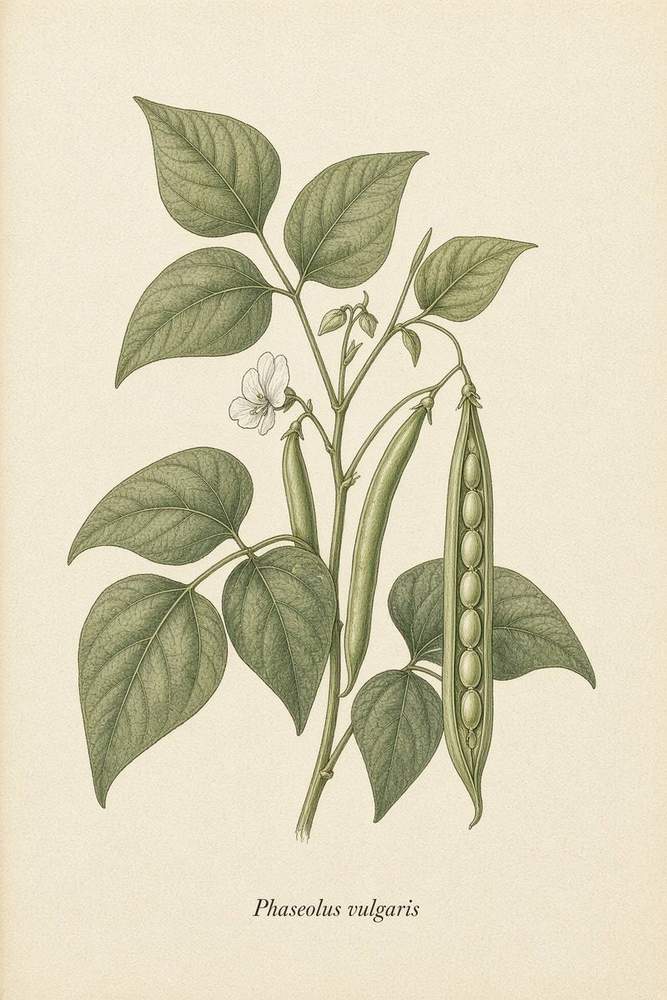
Herb. No. 202 · Fabaceae
Mesoamerican origin; a garden bean from the Andes to every temperate plot.
Native · Mexico & Central America · South America
Green bean
Phaseolus vulgaris
Fruit & vegetableHarvestCompanionsLookalikes
The snap pod of the common bean — pick young, cook, and do not confuse a tender filet with a raw red kidney.
Common bean is a Mesoamerican staple. Green beans are the immature pod. Traditional use is as a cooked vegetable. Culinary cooked pods are the path. Mature kidney and cannellini seeds must be boiled hard — raw or slow-cooker undercooked red kidneys have sent people to the sink with lectin. This plate is the snap pod.
Flavor
Green, a little sweetness. A stringy old pod tastes like the word ‘should have picked yesterday.’
Parts used
Young pod · Mature seed (cooked separately, thoroughly)
Helpful
- Fast, productive
- Bush or pole to fit the bed
Cautions
- Raw mature kidneys are not food
- Mexican bean beetle
- Old pods string