The Herbarium
Part IV · Fruit & vegetable
Herb. No. 202
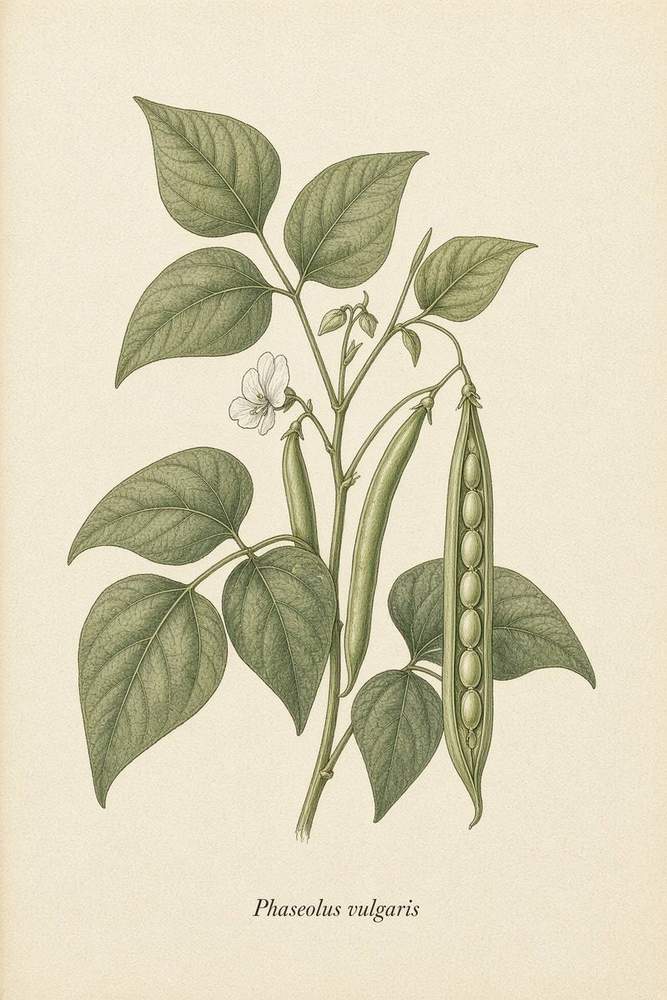
Green bean
Phaseolus vulgaris
Fabaceae
The snap pod of the common bean — pick young, cook, and do not confuse a tender filet with a raw red kidney.
Young pods of common bean are food cooked. Raw kidney beans (the mature seed) are a lectin problem — cook those thoroughly.
- Parts used
- Young pod · Mature seed (cooked separately, thoroughly)
- Traditional notes
- Kitchen pod · A cooked green · Dried seed as a staple (well boiled)
- Grow · USDA 6b
- Tender annual. After frost. Direct. Bush for speed, pole for a longer picking. In work: May · Jun · Jul · Aug · Sep
- Harvest
- Young, often. A swollen seed in the pod is already a shelling bean.
- Inoculant helps in new ground.
- Pick every two days or they go to seed.
Safety
Raw or undercooked kidney beans Known bean allergy
Companions
Plant with Calendula, Corn, Dog rose, Eggplant, French marigold, Horseradish.
Keep apart from Fennel, Garlic, Onion, Sweet pea.
Lookalikes
- Castor bean — Ricinus seeds look like ticks, not snap beans. One chewed seed is a ricin problem. This is a poison-garden plant, not a pot crop.
Lore
Phaseolus fed the Americas before wheat did. The French haricot and the Italian fagiolini are the same species in a younger dress. ‘String bean’ is the old fiber along the seam that modern filet types bred out. The lectin story is real for red kidneys, which is why the snap pod and the chili bean are cousins you treat differently.
The Herbarium — a teaching catalog, not a clinic. Traditional use is history, not a prescription. USDA 6b dates are a week either way, not a promise. Do not eat, drink, or harvest a plant you cannot name.