Symptom index
Find a plant by how you feel
Type a symptom — cough, sleep, skin — or tap a chip. Matching plates, teas, and remedies rise to the top. This is a folk index, not a diagnosis.
32 plates for anxiety
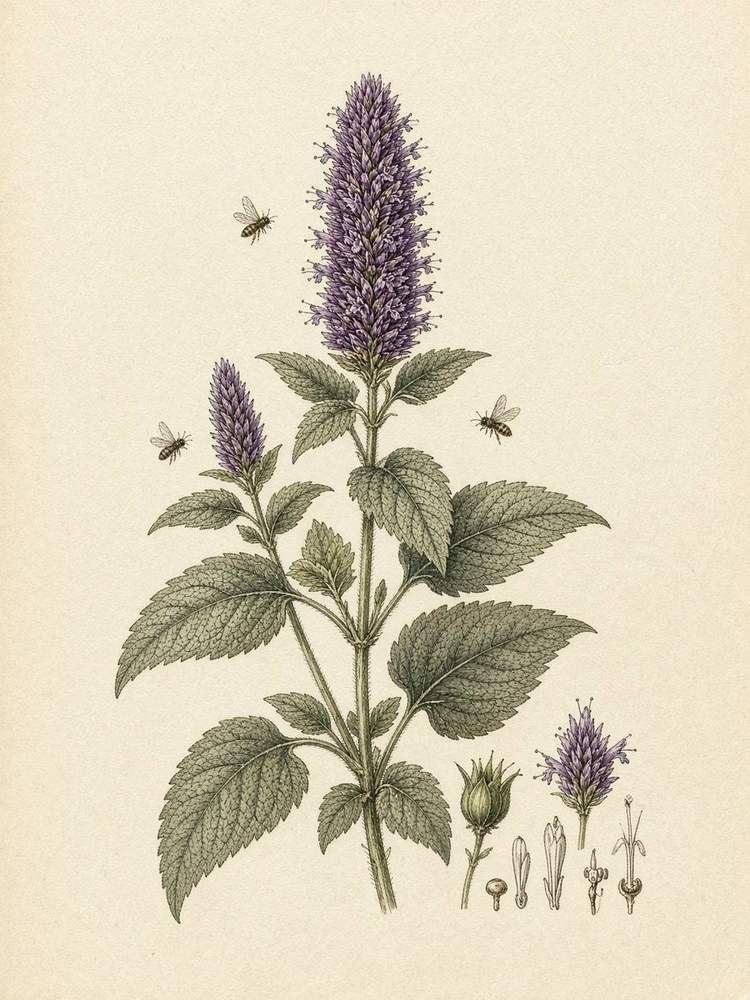
Anise hyssop
Agastache foeniculum
A prairie mint that smells of licorice and basil — a bee spike, a tea, and a name that lies in two directions.
anxiety
1/1LegalGentle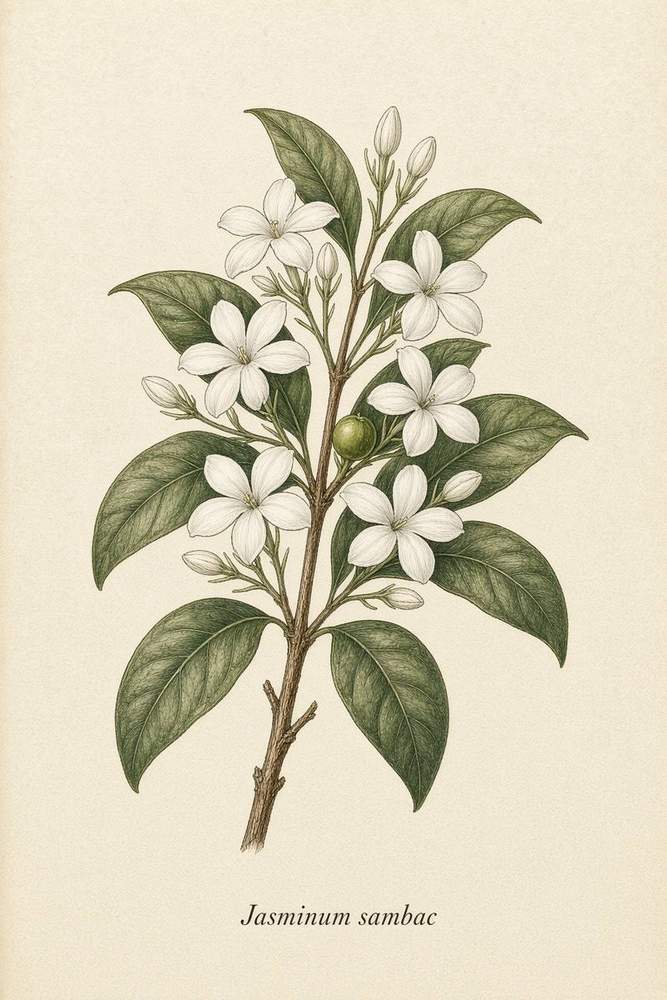
Arabian jasmine
Jasminum sambac
Waxy night-scented flowers for scenting tea — a pot plant in zone 6b, a hedge where frost is a rumor.
anxiety
1/1LegalGentle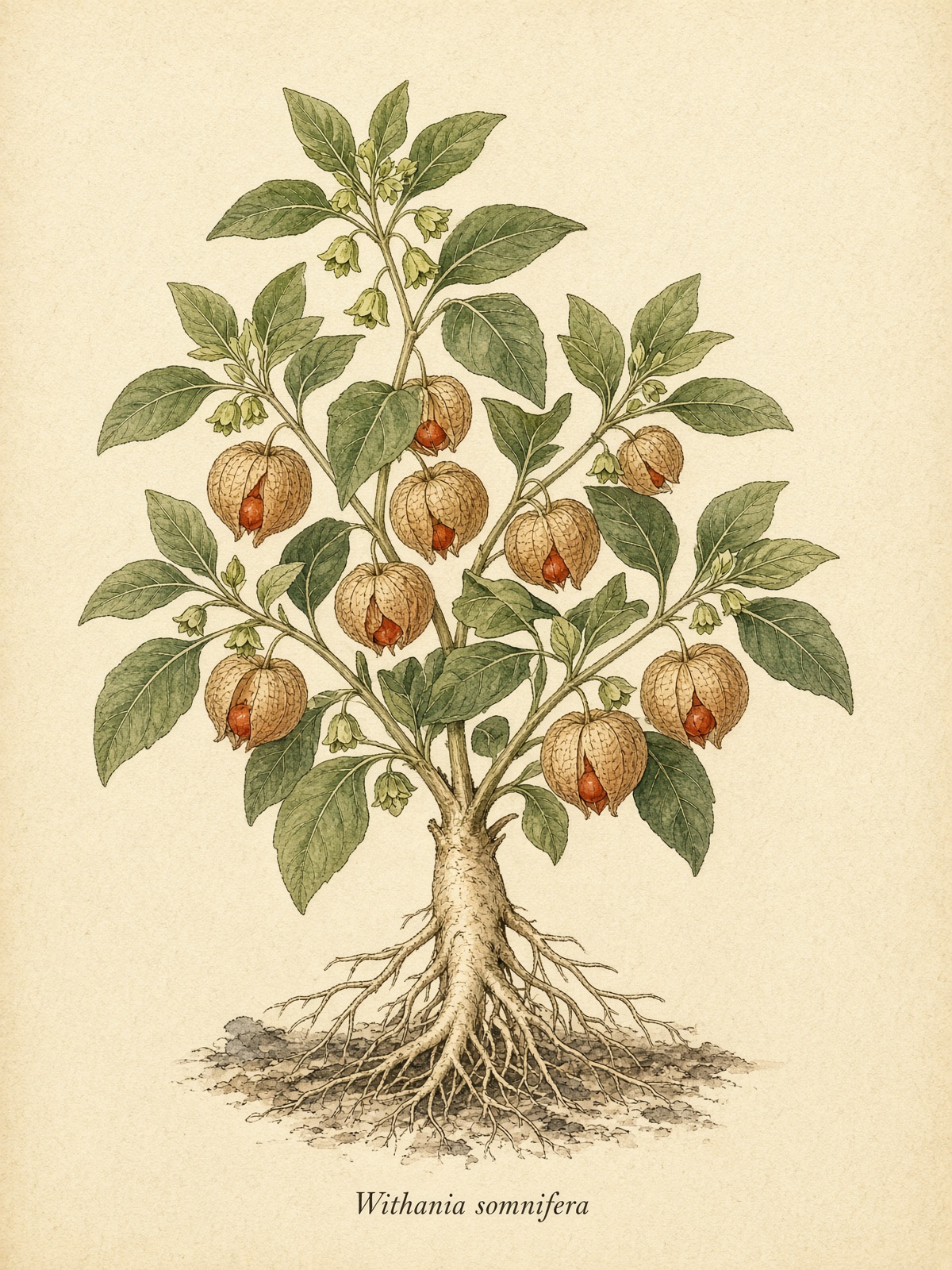
Ashwagandha
Withania somnifera
Winter cherry root — an adaptogen for wired-and-tired nights, not a stimulant.
anxiety
1/1LegalCaution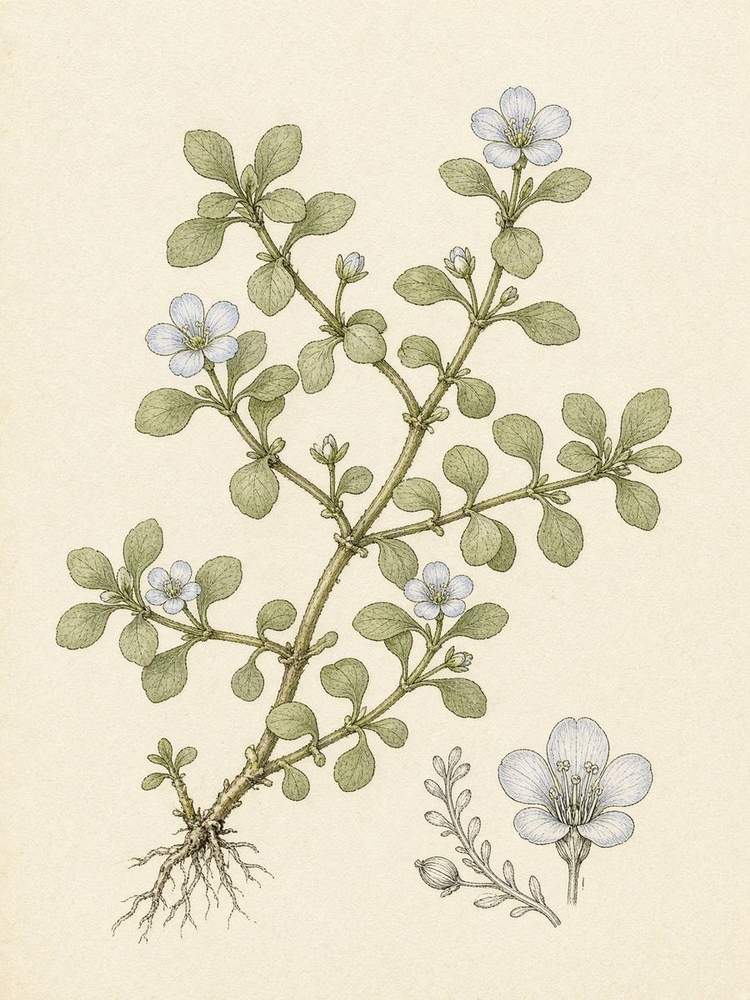
Bacopa
Bacopa monnieri
A pond-edge succulent of Ayurvedic memory folklore — a small white flower, a bitter leaf, a slow herb.
anxiety
1/1LegalGentle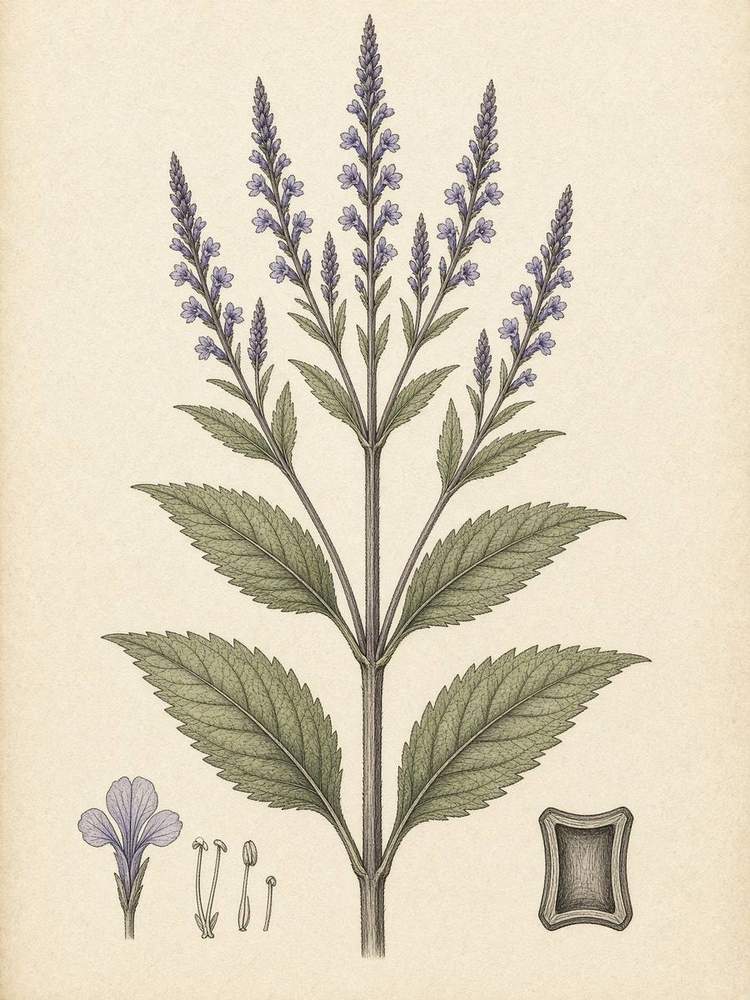
Blue vervain
Verbena hastata
A candelabra of purple spikes in wet ground — a bitter American nervine of the old Eclectic physicians.
anxiety
1/1LegalGentle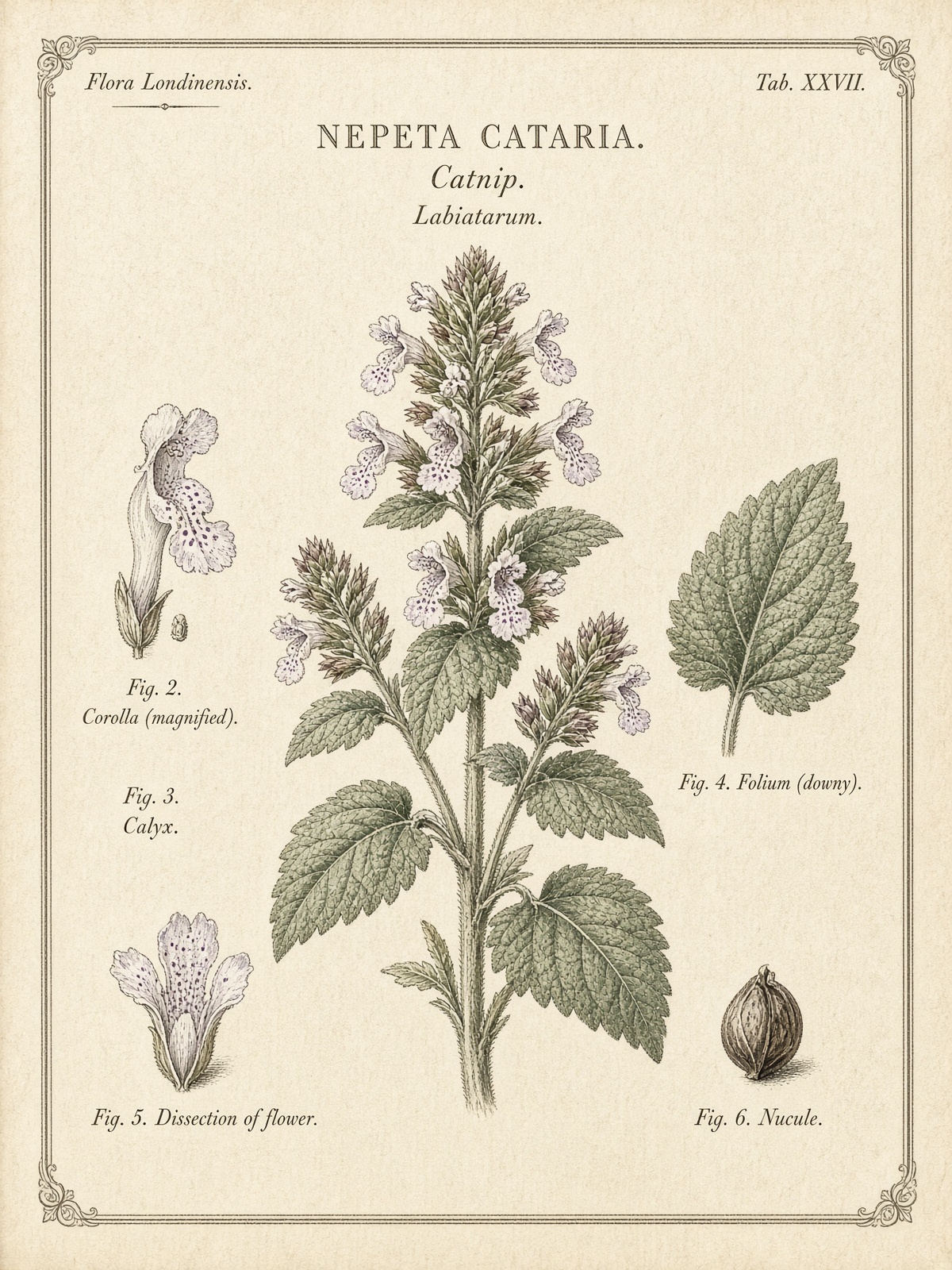
Catnip
Nepeta cataria
A grey mint that sends cats sideways and, as a mild tea, settles people the other direction.
anxiety
1/1LegalGentle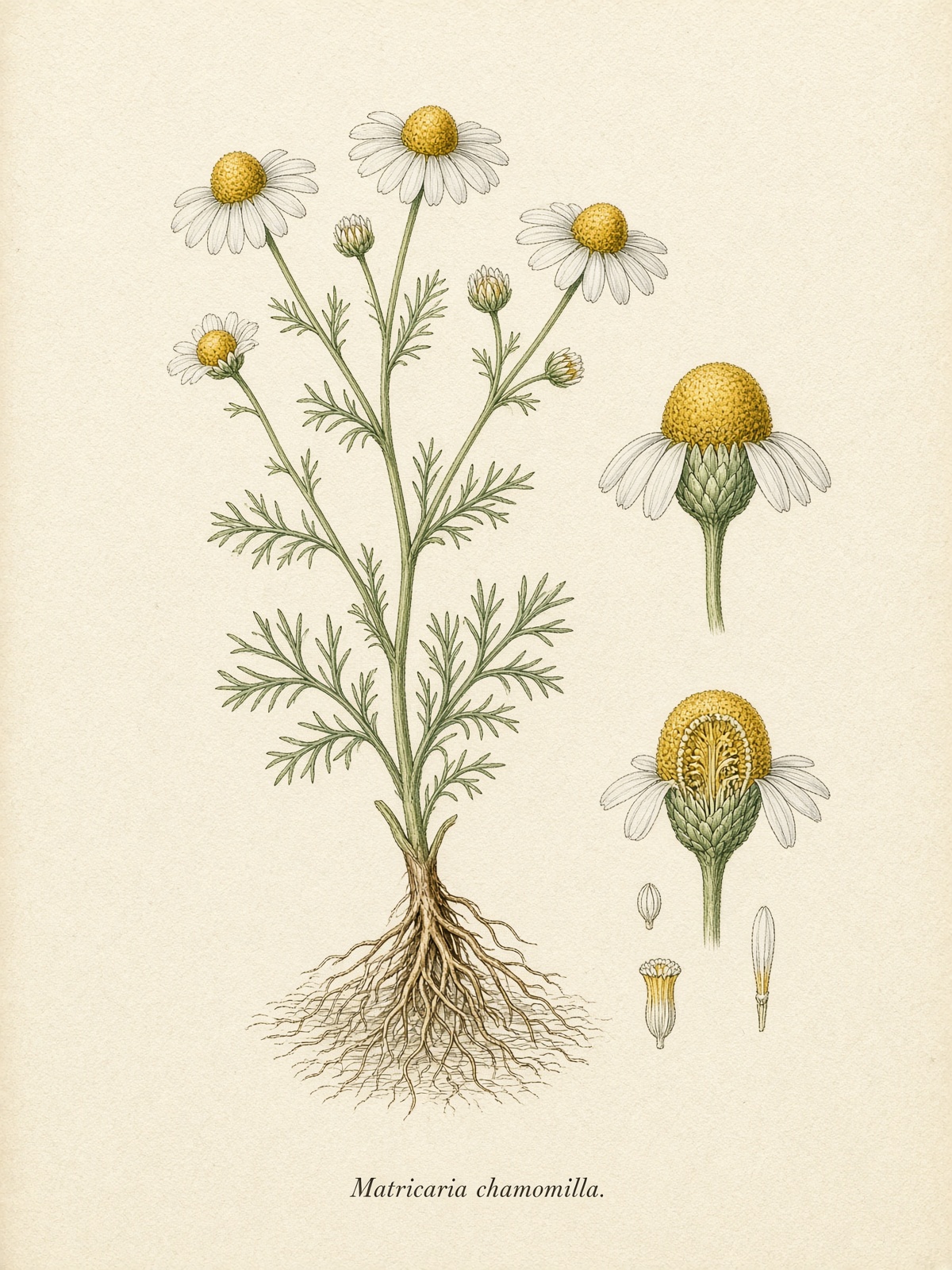
Chamomile
Matricaria chamomilla
A small daisy used for centuries as an evening tea for restlessness and mild digestive cramp.
anxiety
1/1LegalGentle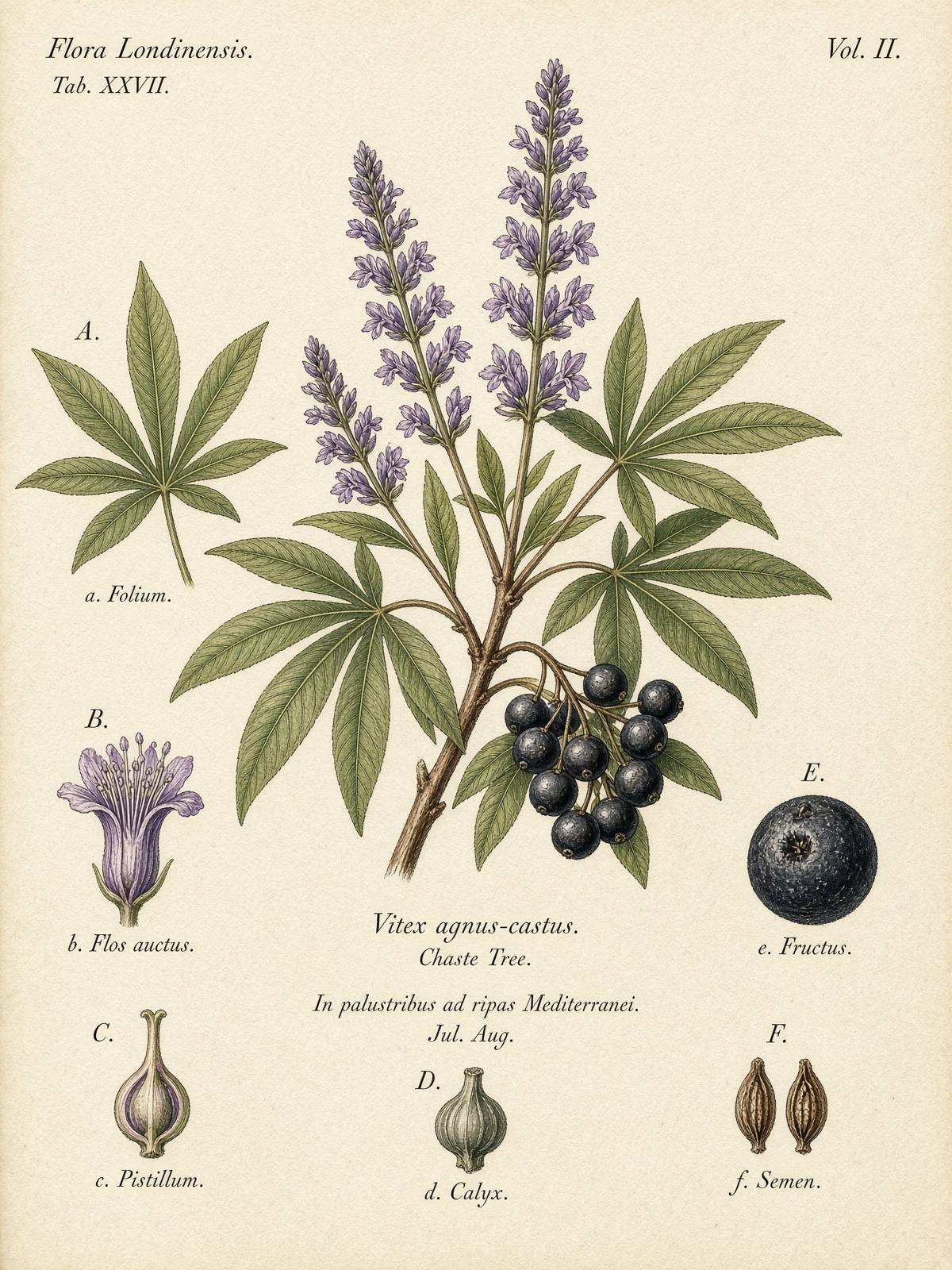
Chaste tree
Vitex agnus-castus
A lilac-like Mediterranean shrub whose peppercorn berries are a cycle herb with a hormone reputation.
anxiety
1/1LegalCaution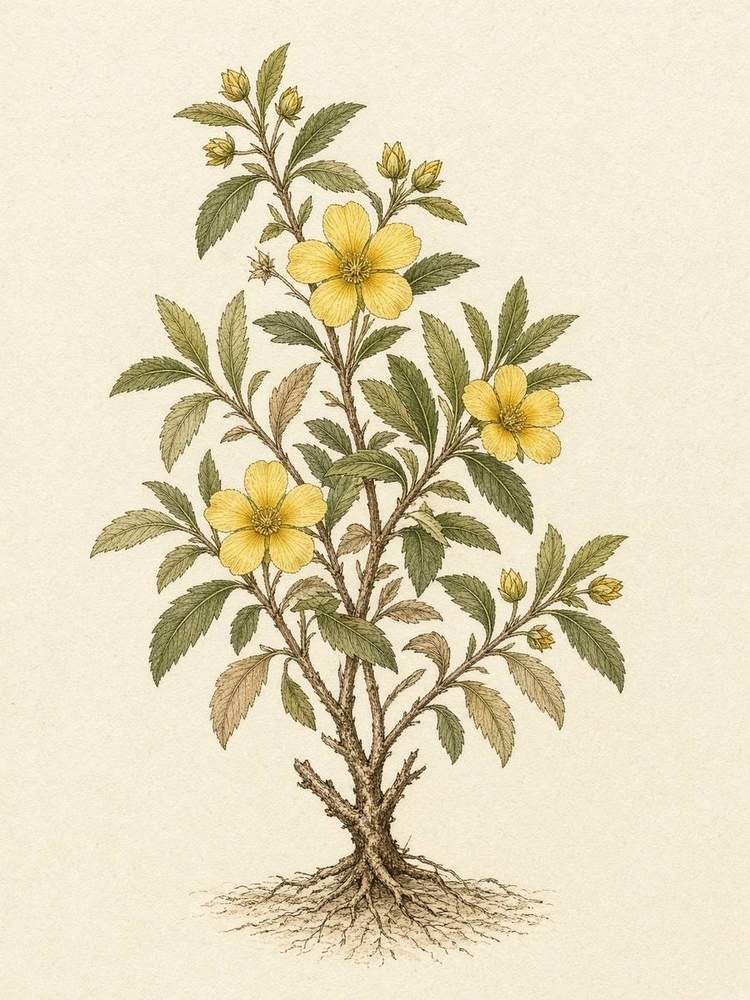
Damiana
Turnera diffusa
A small yellow-flowered shrub of Mexican dryland — a bitter-aromatic tea with a long bedroom reputation it has not entirely earned.
anxiety
1/1LegalGentle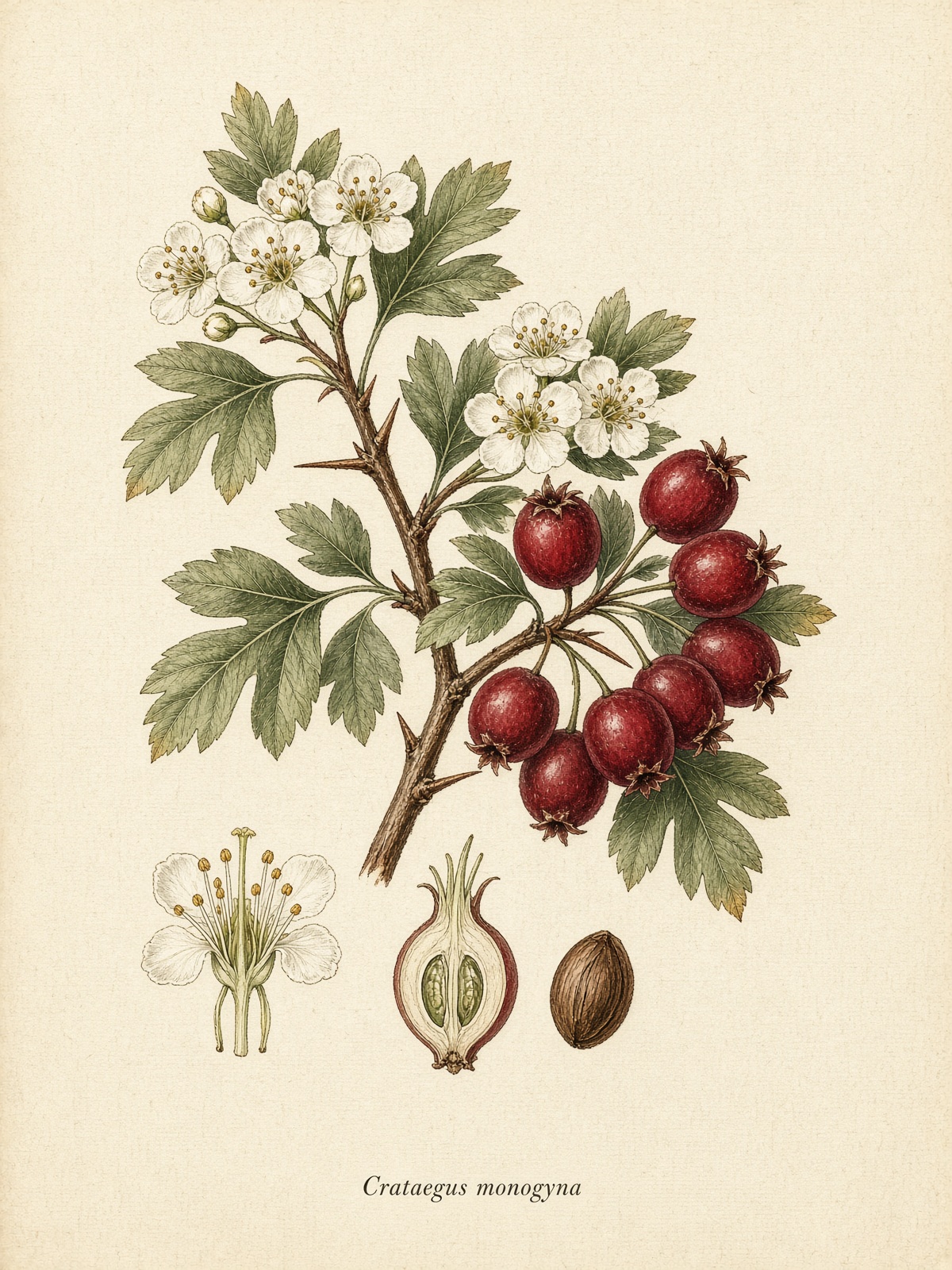
Hawthorn
Crataegus monogyna
Hedgerow thorn whose leaf, flower, and berry are Europe's classic heart trophorestorative.
anxiety
1/1LegalCaution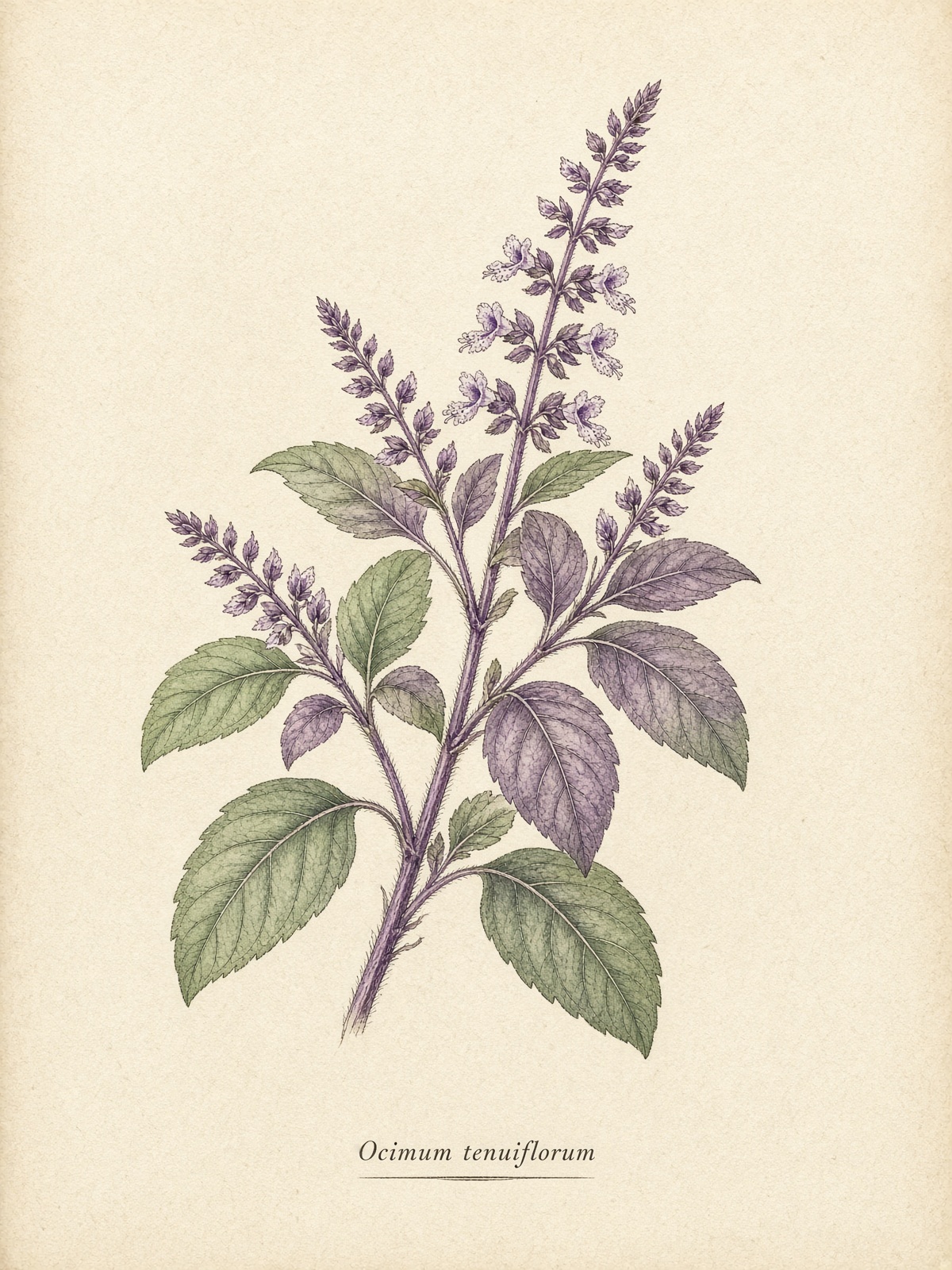
Holy basil
Ocimum tenuiflorum
Tulsi — the daily adaptogen tea of Indian households, peppery and clarifying.
anxiety
1/1LegalGentle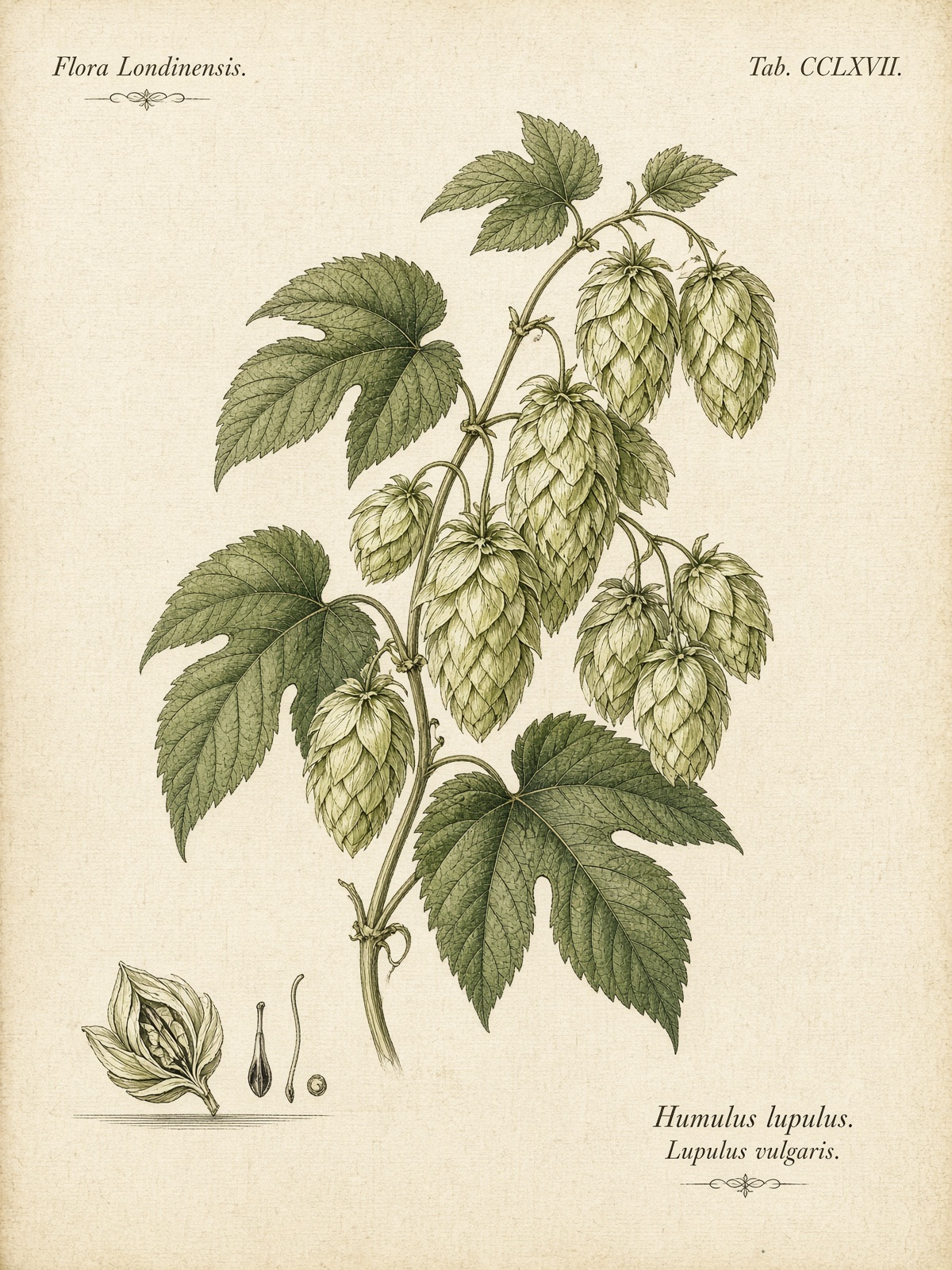
Hops
Humulus lupulus
The beer flower — a bitter, estrogenic sedative that also climbs the shed.
anxiety
1/1LegalGentle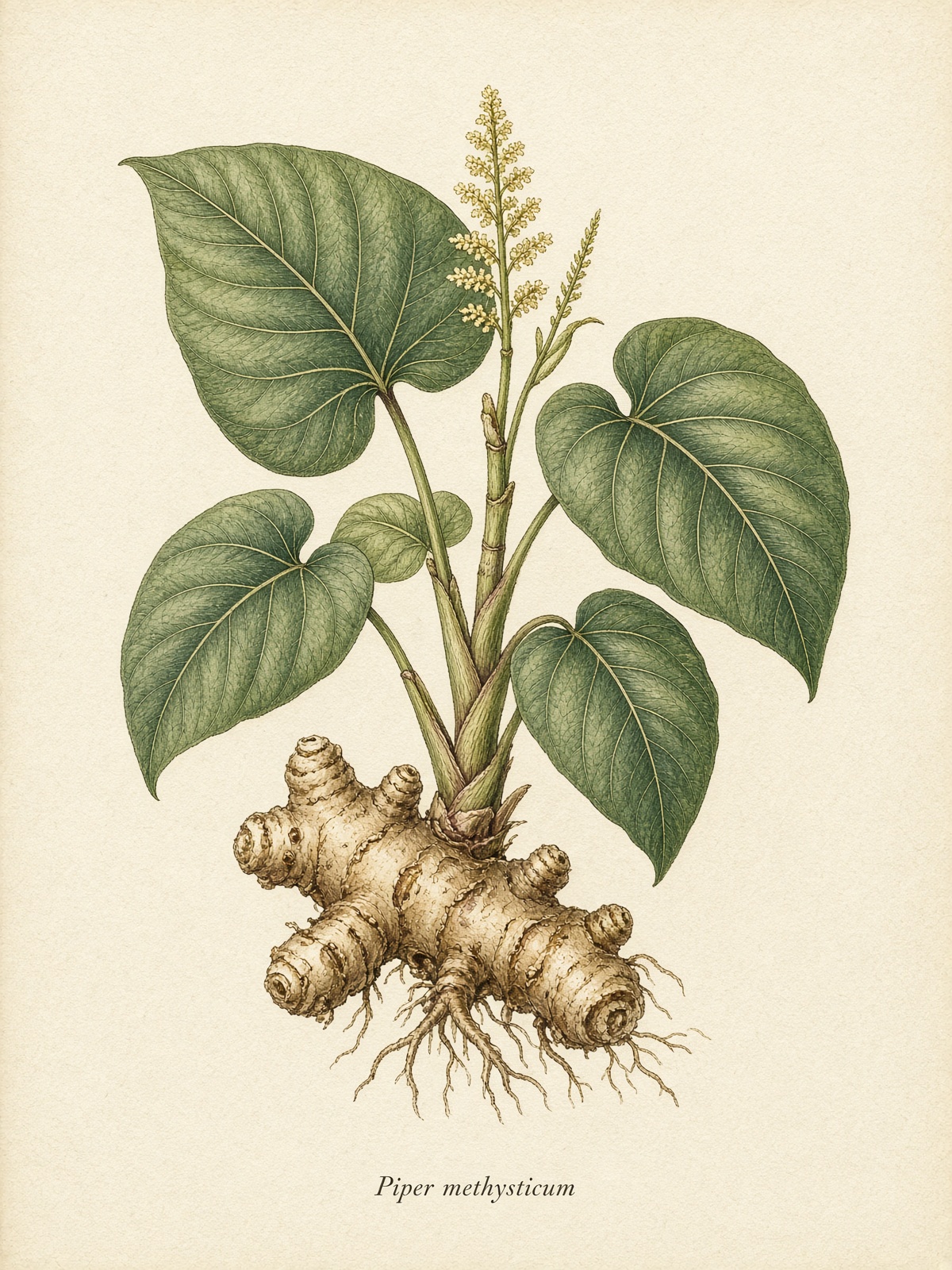
Kava
Piper methysticum
Pacific ceremonial root for social ease and muscle quiet — liver-safe only as traditional aqueous preparations.
anxiety
1/1RegulatedCaution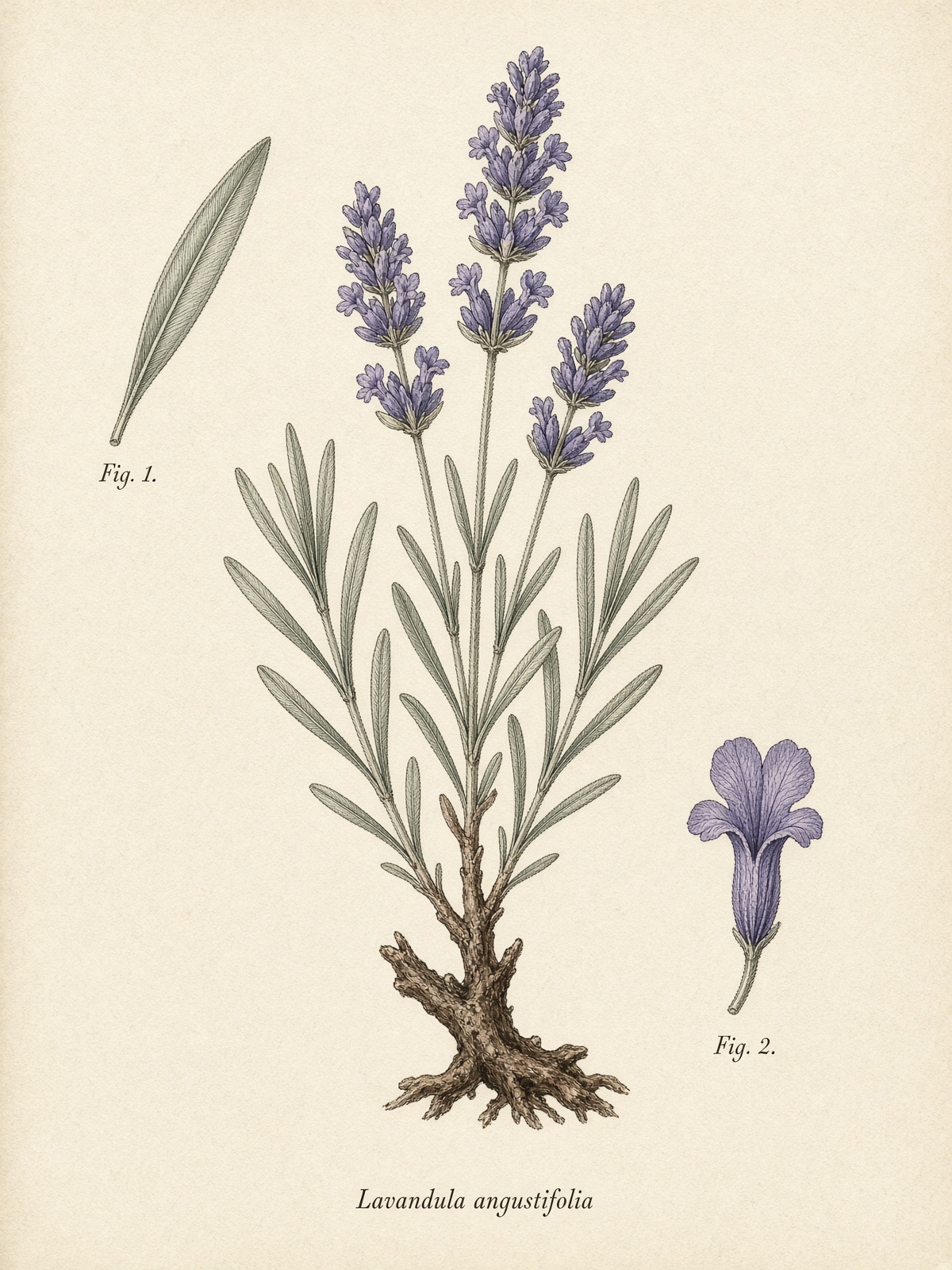
Lavender
Lavandula angustifolia
Silver-leaved Mediterranean shrub; the scent alone is a documented mild anxiolytic.
anxiety
1/1LegalGentle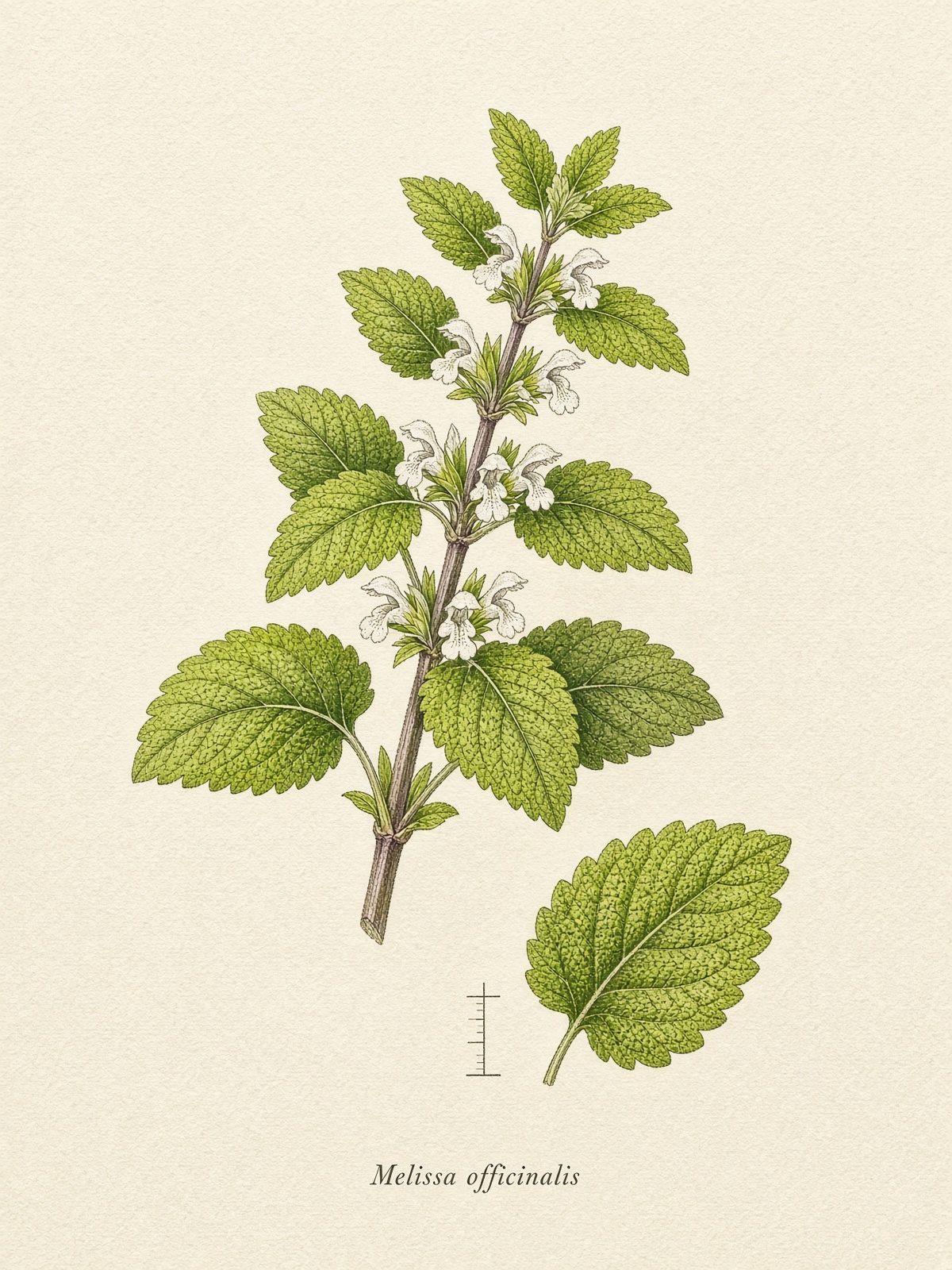
Lemon balm
Melissa officinalis
Lemon-scented mint for fretful moods, a racing mind, and cold-sore lips.
anxiety
1/1LegalGentle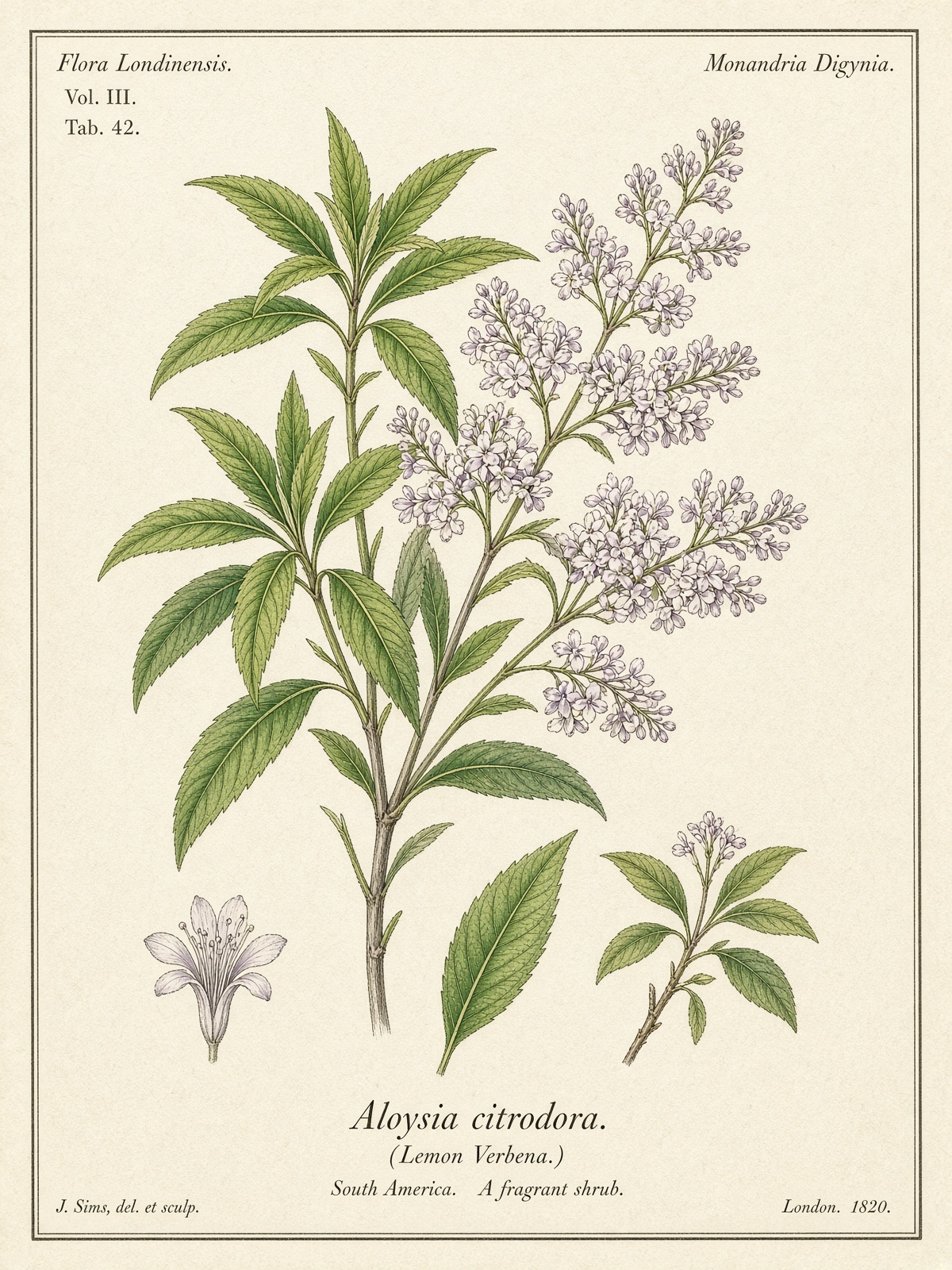
Lemon verbena
Aloysia citrodora
An Andean shrub that smells more of lemon than lemon does — a digestive and evening leaf.
anxiety
1/1LegalGentle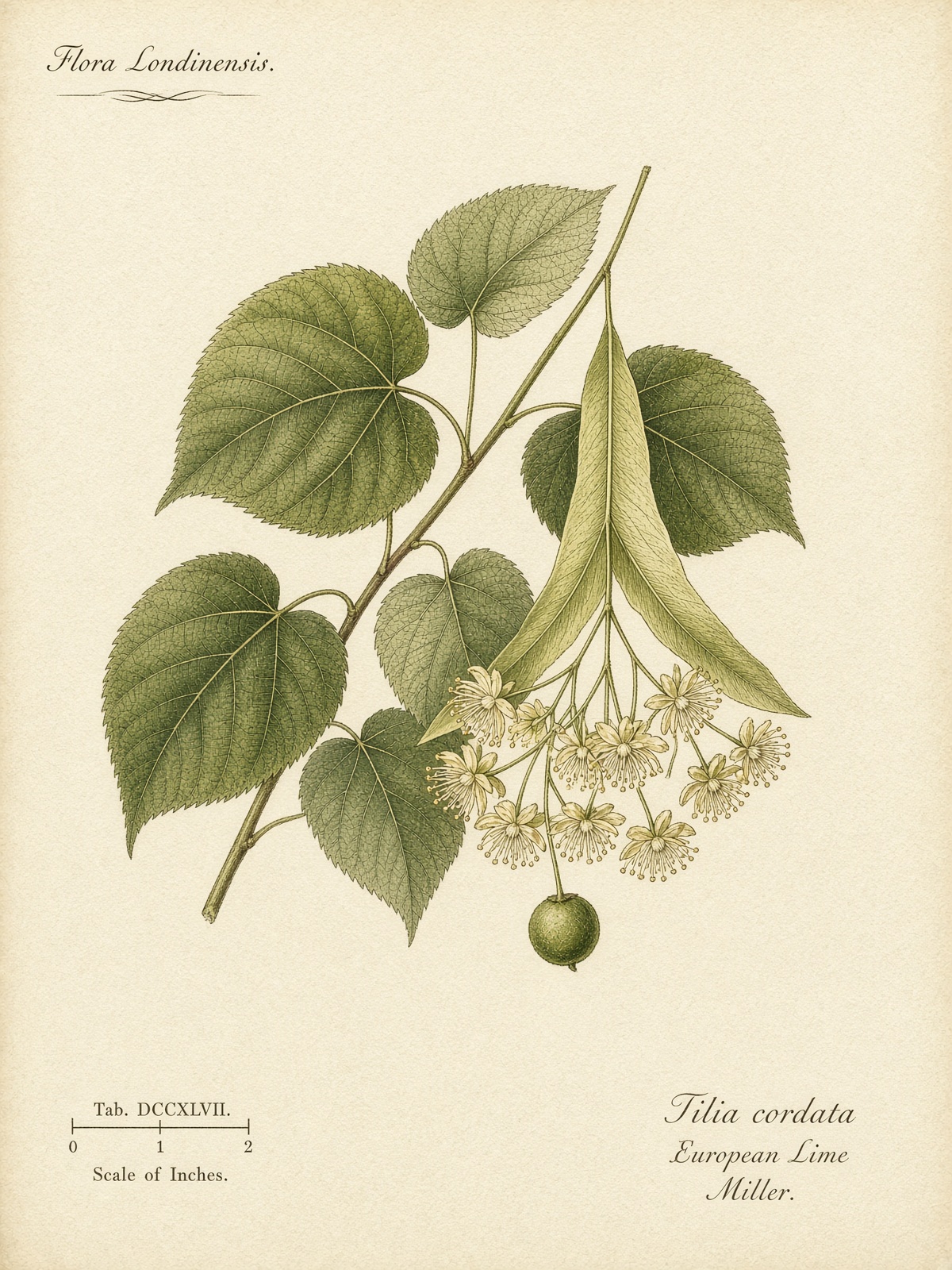
Linden
Tilia cordata
Heart-shaped leaves and a honey-bract blossom — the classic European calm-and-cold tea.
anxiety
1/1LegalGentle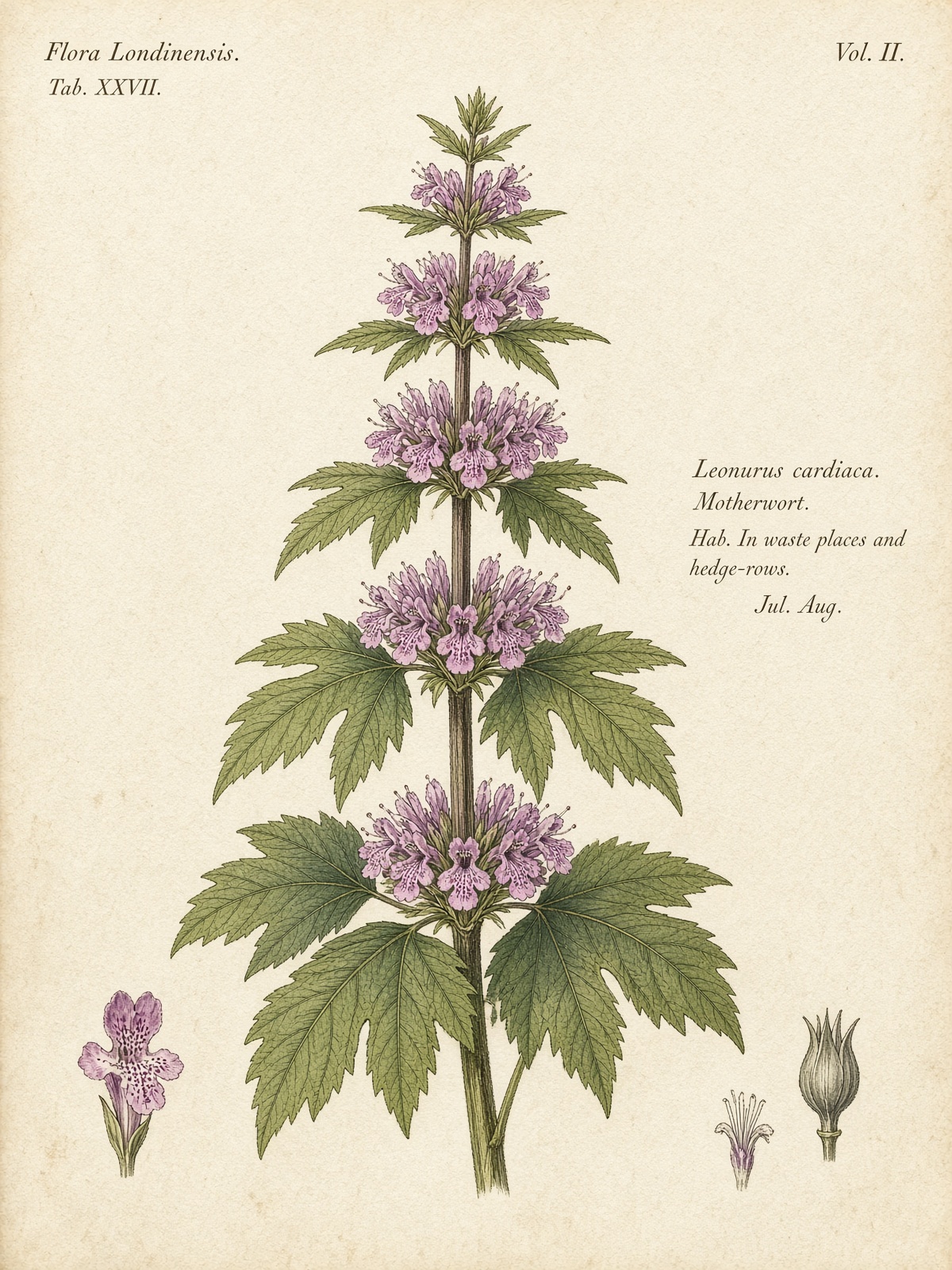
Motherwort
Leonurus cardiaca
A bitter mint for a racing heart and a spinning mind — not a culinary leaf.
anxiety
1/1LegalCaution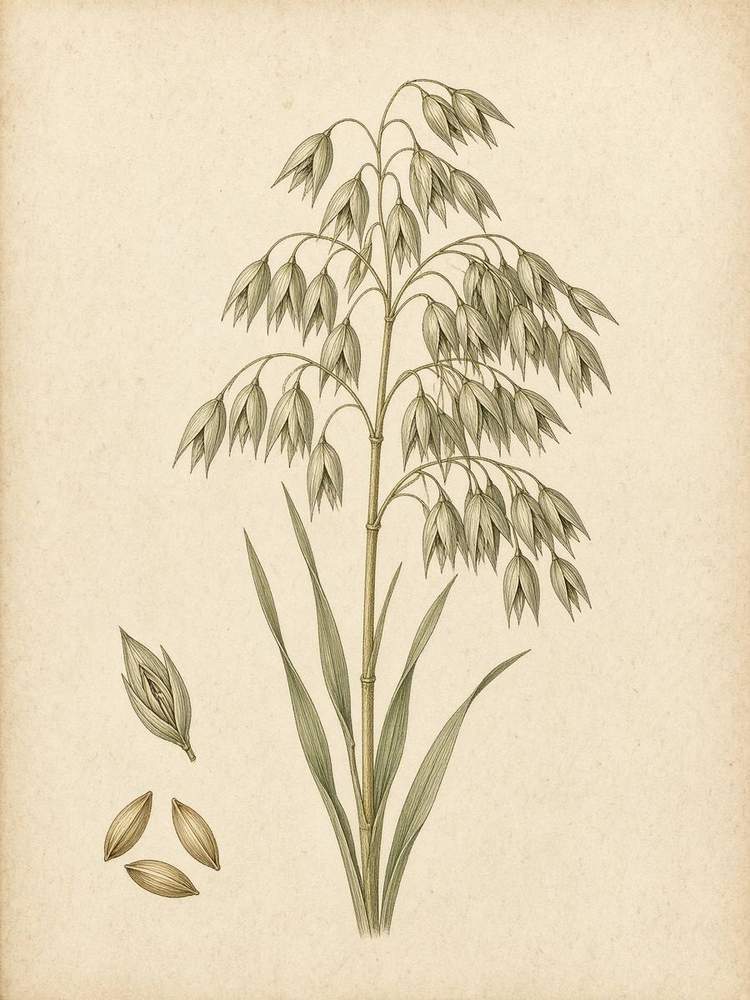
Oatstraw
Avena sativa
The same plant as breakfast — milky tops and straw as a traditional nervine food-tea.
anxiety
1/1LegalGentle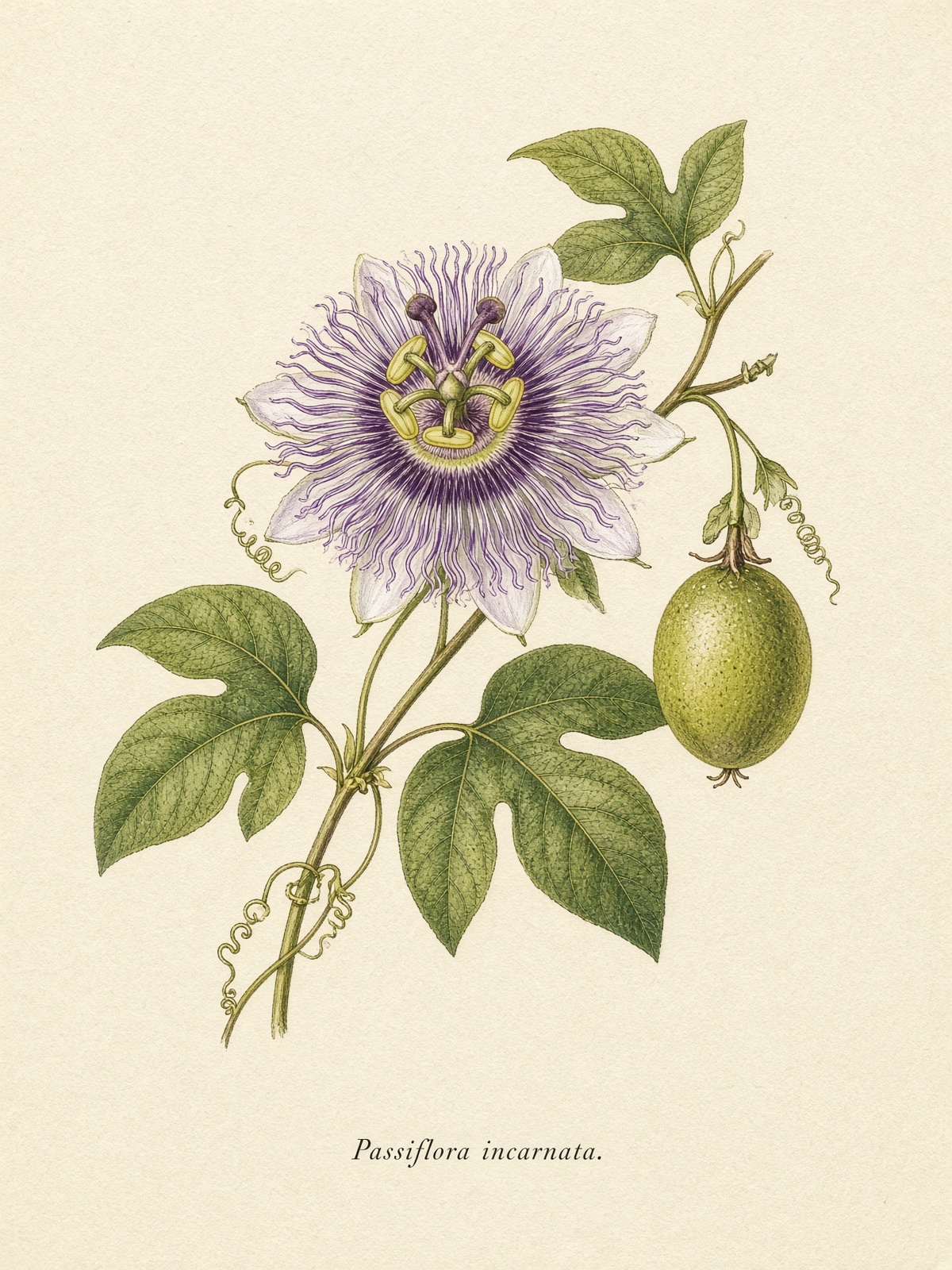
Passionflower
Passiflora incarnata
A climbing vine with baroque flowers, used when the mind will not step off the wheel.
anxiety
1/1LegalGentle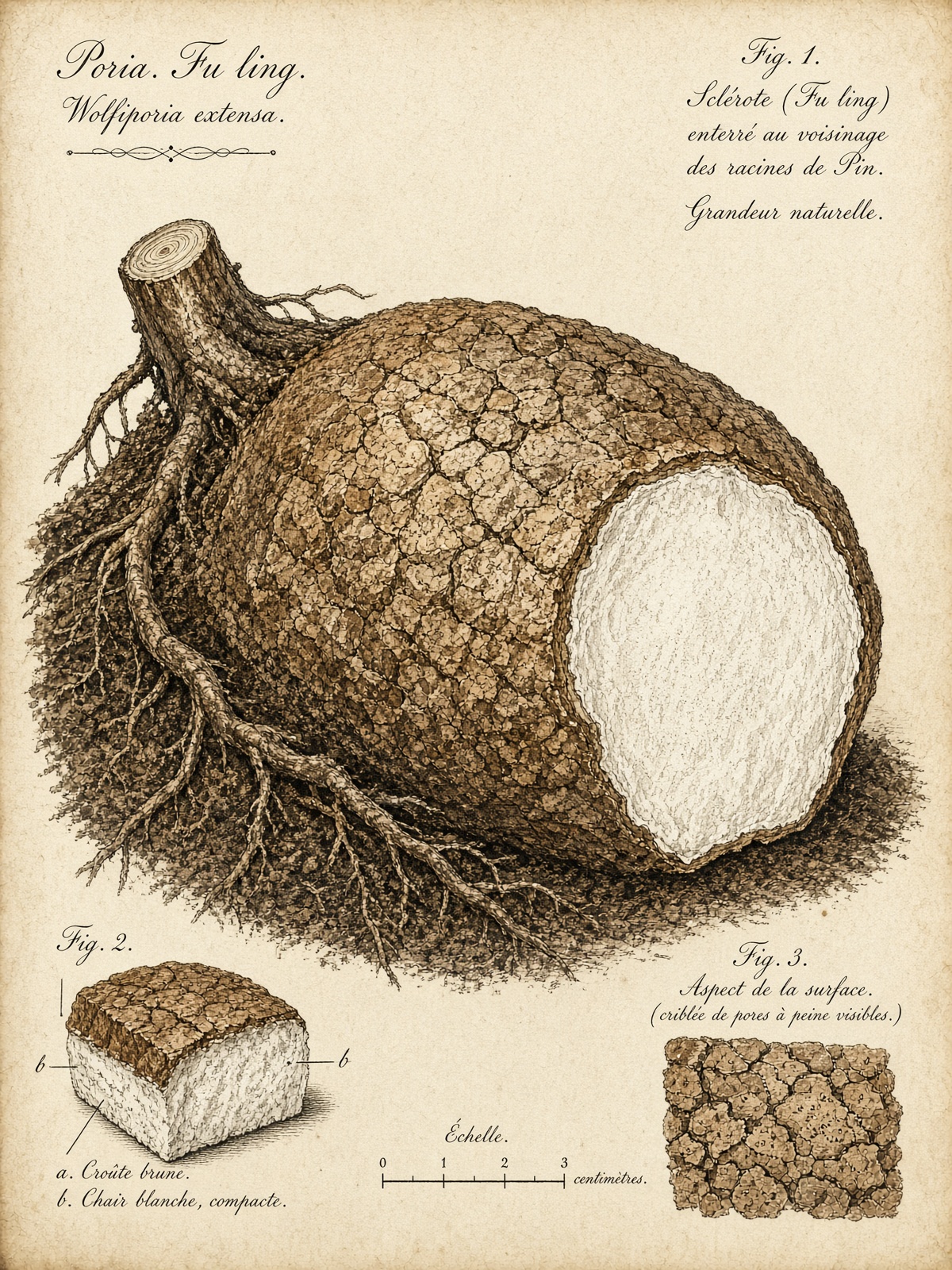
Poria
Wolfiporia extensa
A buried pine fungus used in Chinese soups for dampness, gut, and calm — a sclerotium, not a mushroom cap.
anxiety
1/1LegalGentle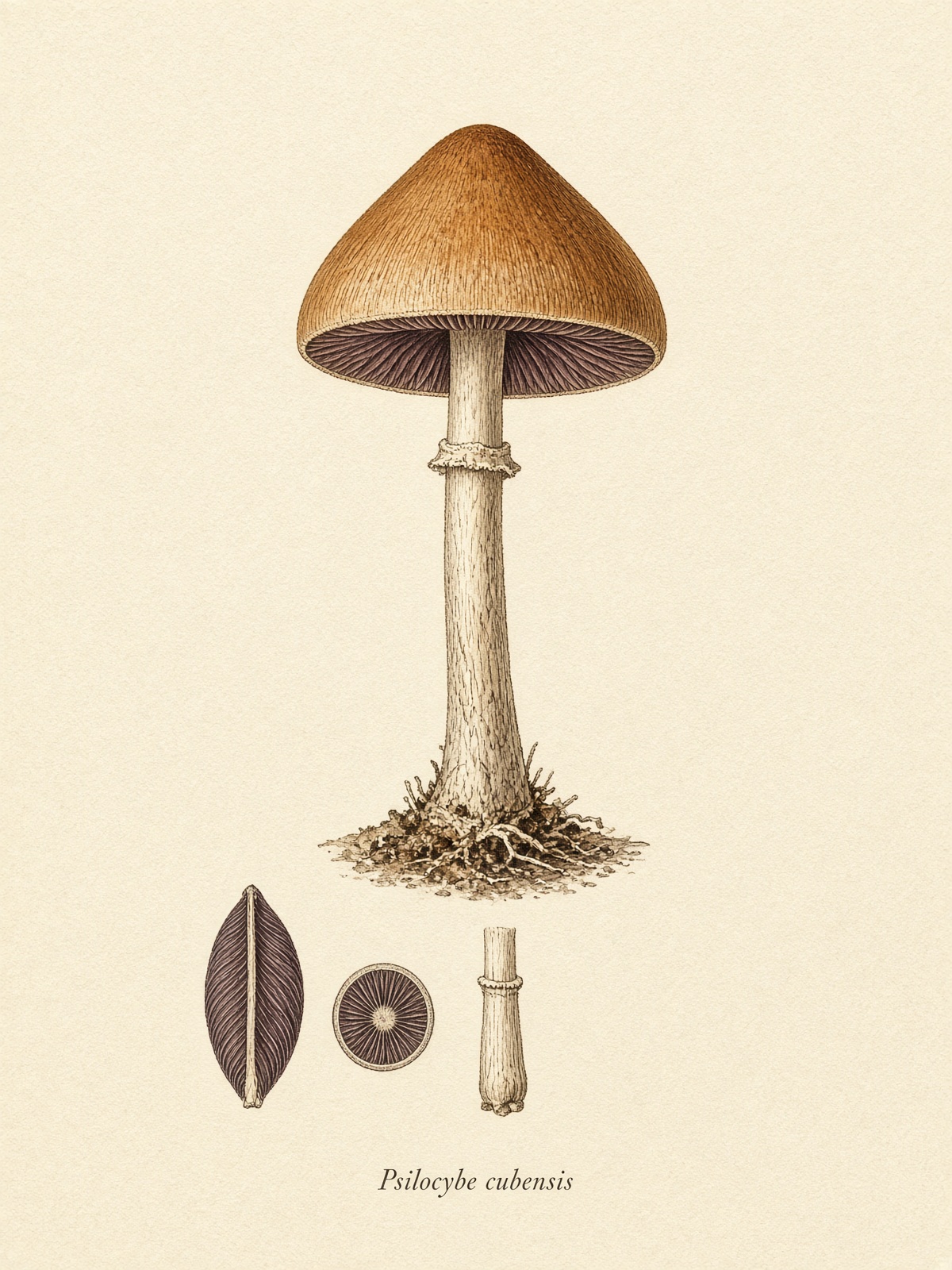
Psilocybe mushrooms
Psilocybe cubensis
A well-known psychoactive woodland and pasture genus, now in clinical trials for depression — still illegal to grow or possess in most places.
anxiety
1/1RestrictedCaution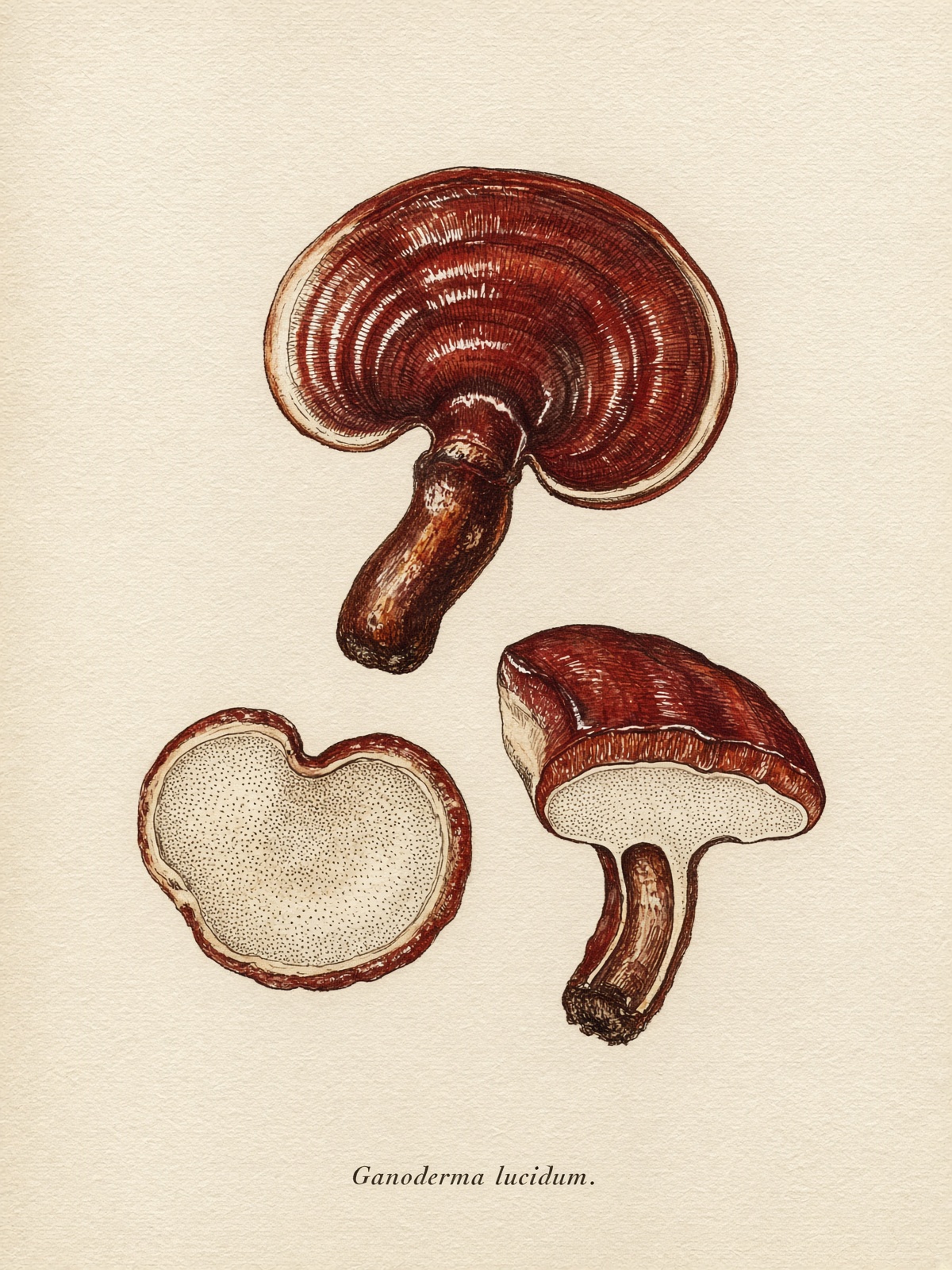
Reishi
Ganoderma lucidum
The lacquered 'mushroom of immortality' — a bitter decoction for recovery, sleep, and immune tone.
anxiety
1/1LegalGentle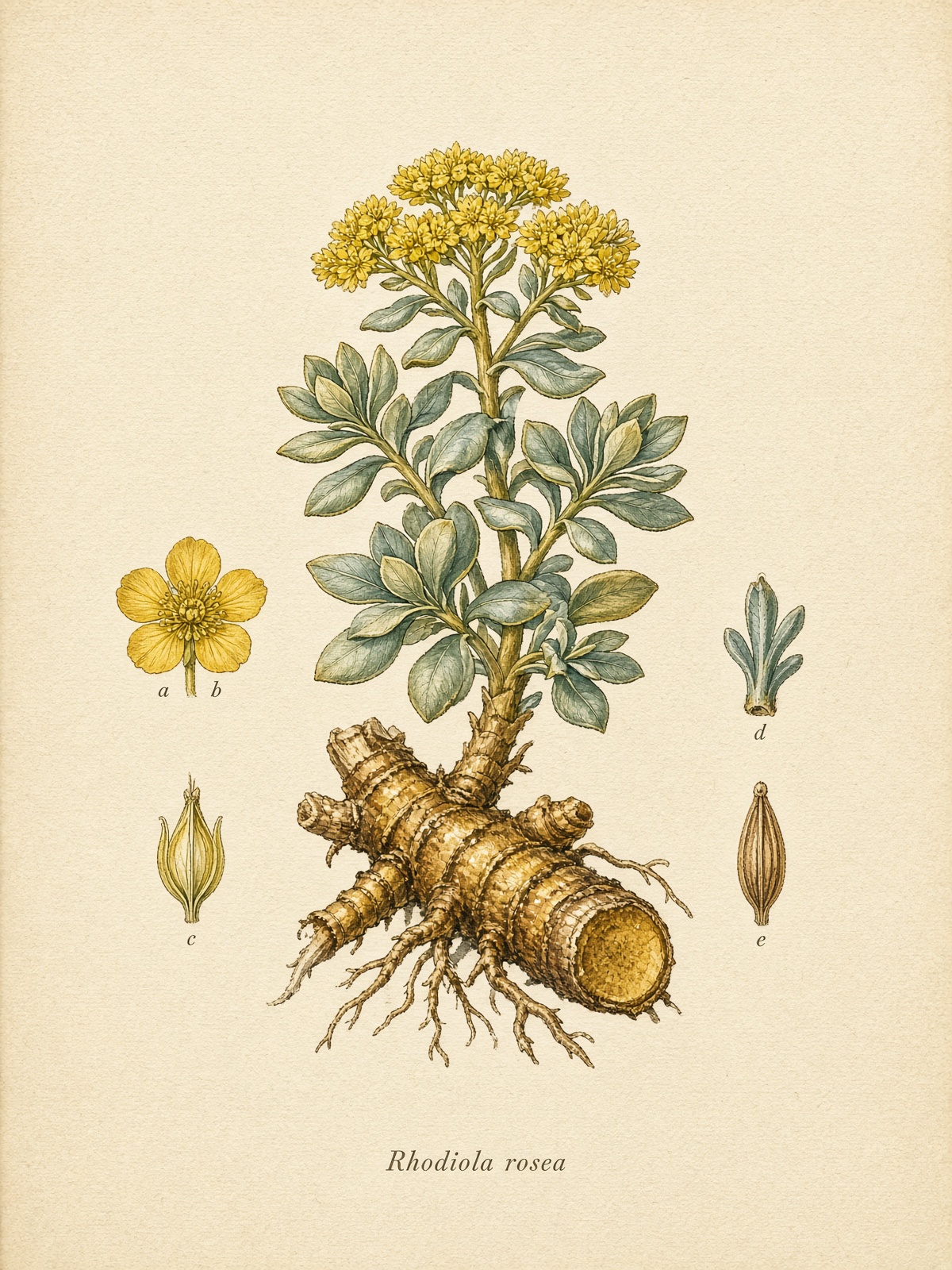
Rhodiola
Rhodiola rosea
Rose-root of the Arctic — an adaptogen for fatigue that can also overstimulate.
anxiety
1/1LegalCaution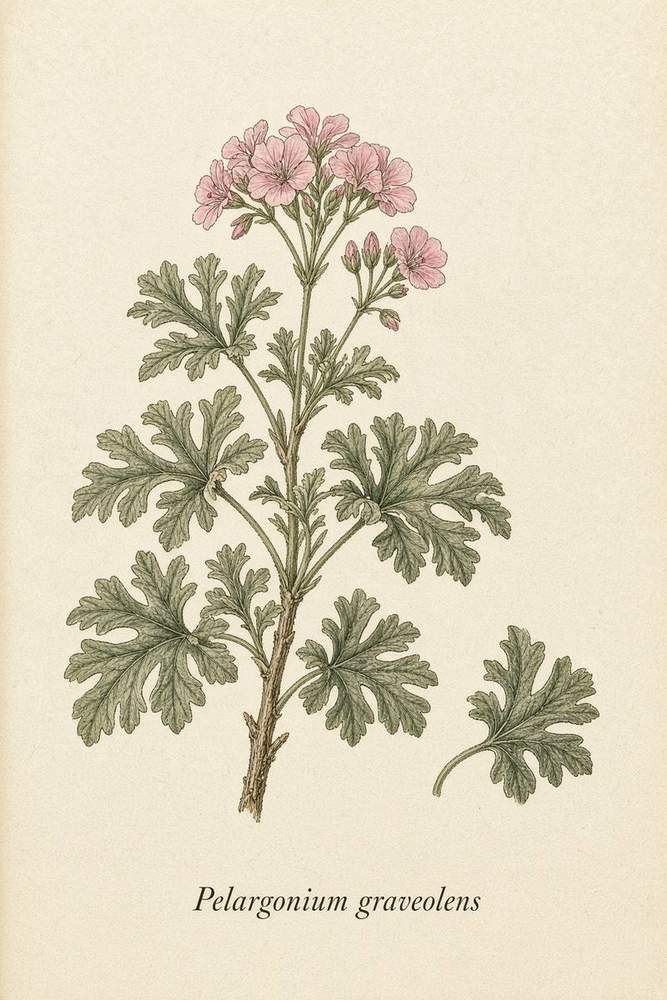
Rose geranium
Pelargonium graveolens
A rose-scented leaf for sugar, cake, and a finger bowl — the windowsill pelargonium, not the hardy cranesbill.
anxiety
1/1LegalGentle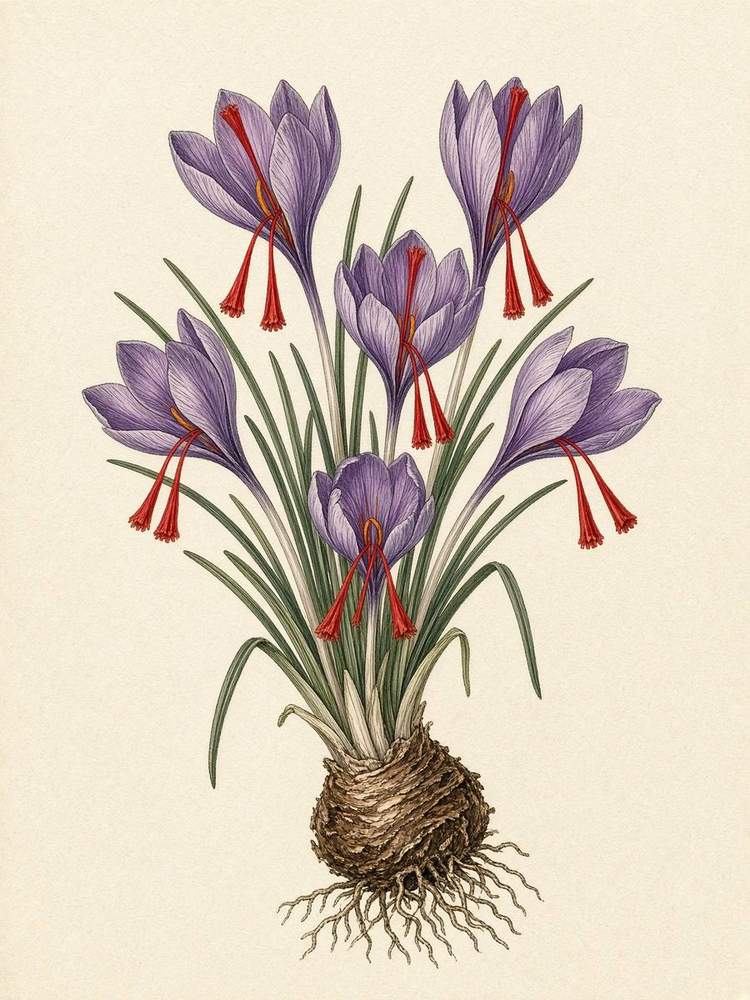
Saffron
Crocus sativus
Three red threads from a sterile autumn crocus — the dearest spice on earth, and a traditional mood-and-digestion pinch.
anxiety
1/1LegalCaution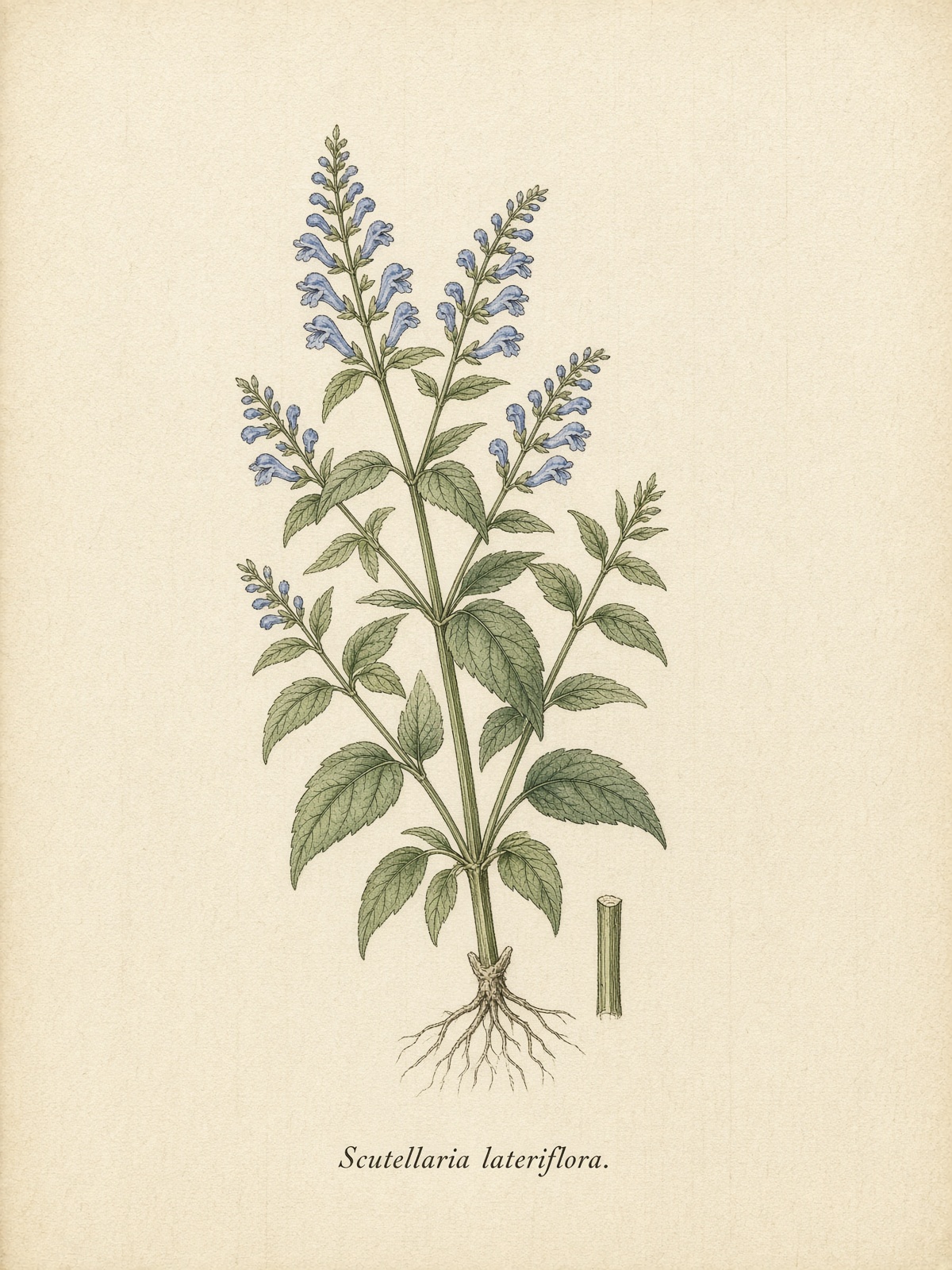
Skullcap
Scutellaria lateriflora
A wetland mint for circular thinking — a nervine that wants the right species.
anxiety
1/1LegalCaution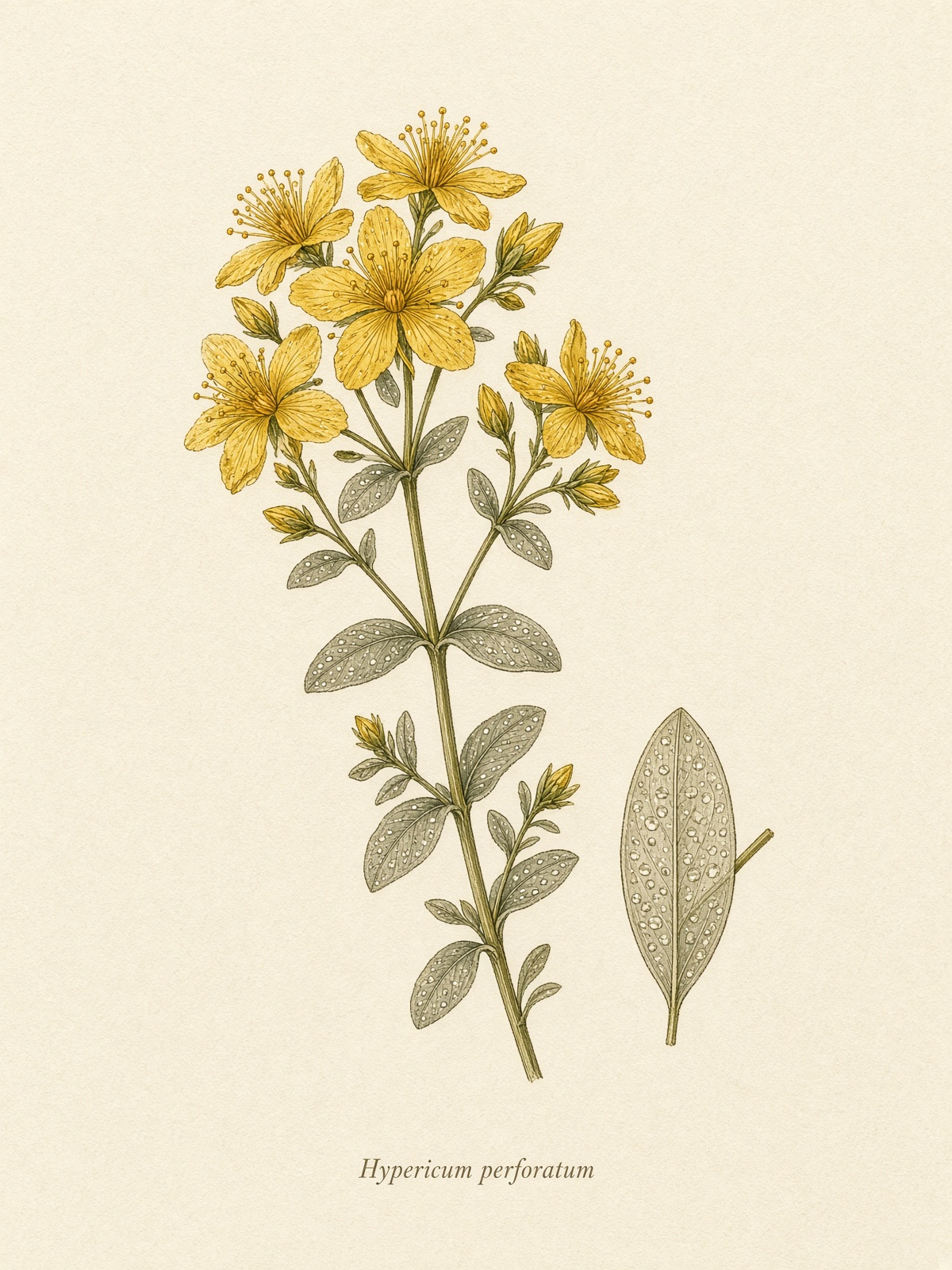
St. John's wort
Hypericum perforatum
Sunshine-yellow roadside herb for low mood — famous, effective in mild cases, and a notorious interactor.
anxiety
1/1LegalCaution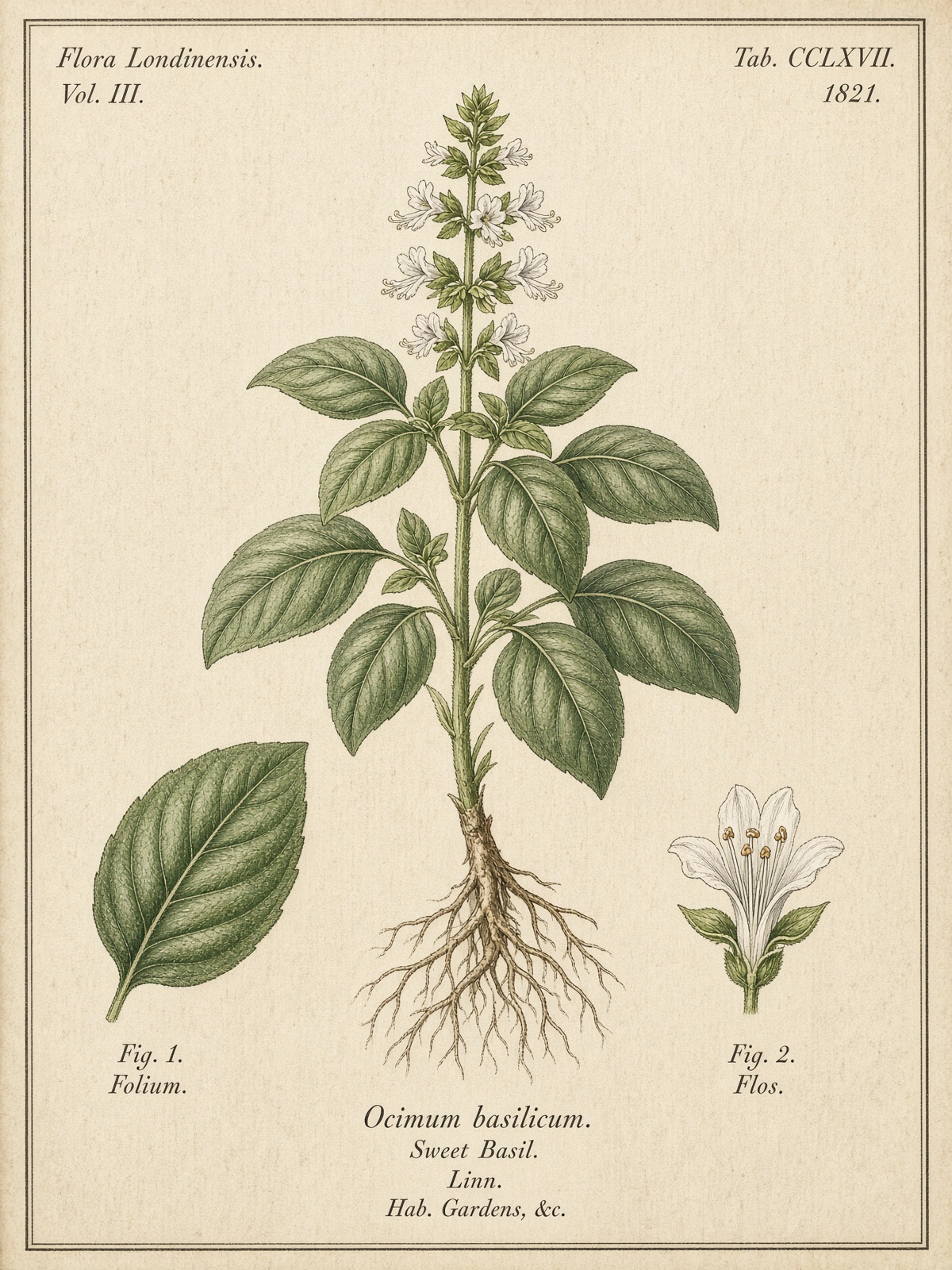
Sweet basil
Ocimum basilicum
The pesto leaf — a cooling kitchen mint for digestion and summer nerves.
anxiety
1/1LegalGentle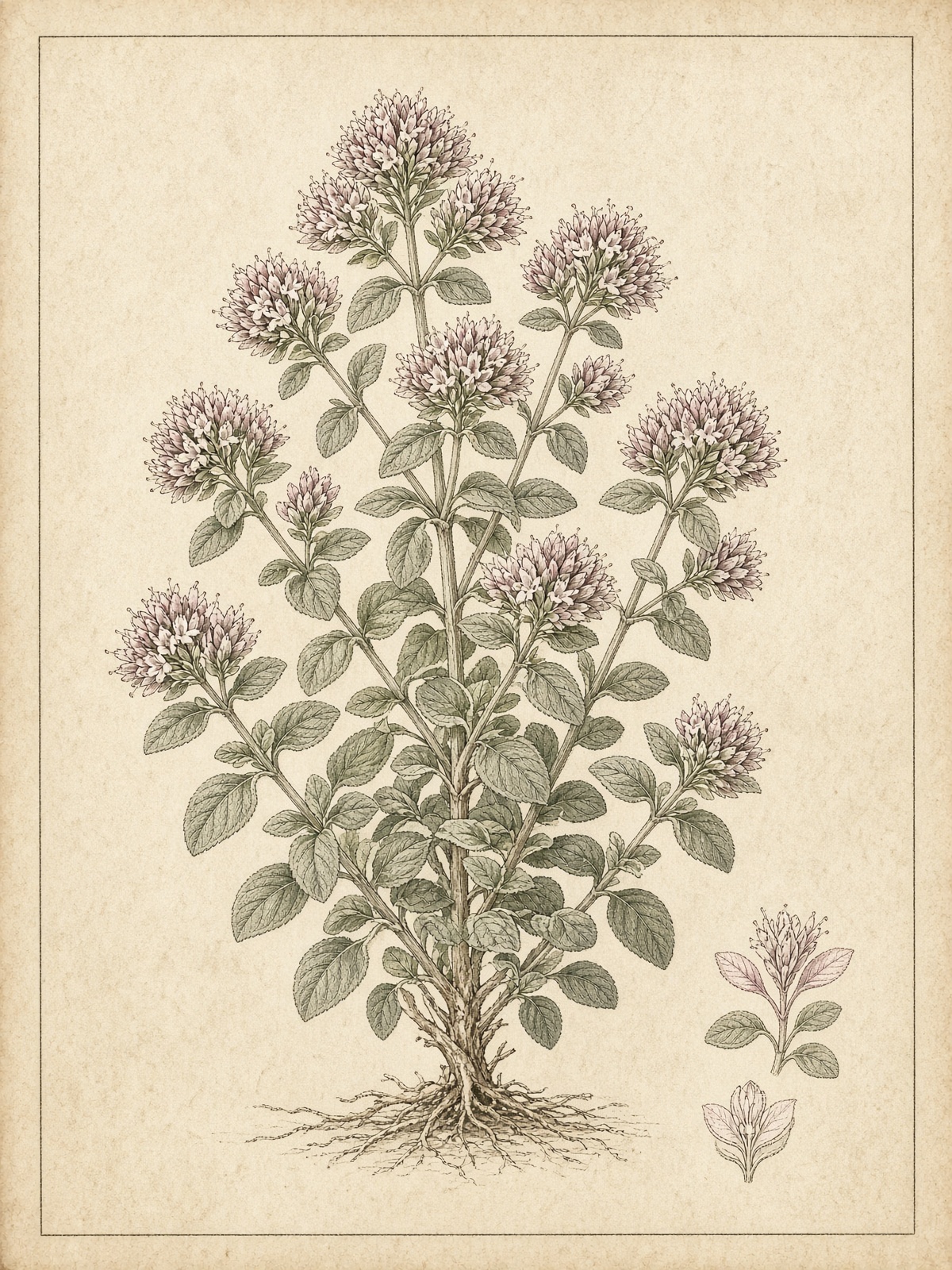
Sweet marjoram
Origanum majorana
Oregano’s sweeter kitchen cousin — a tender Mediterranean mint for digestion and a quiet evening cup.
anxiety
1/1LegalGentle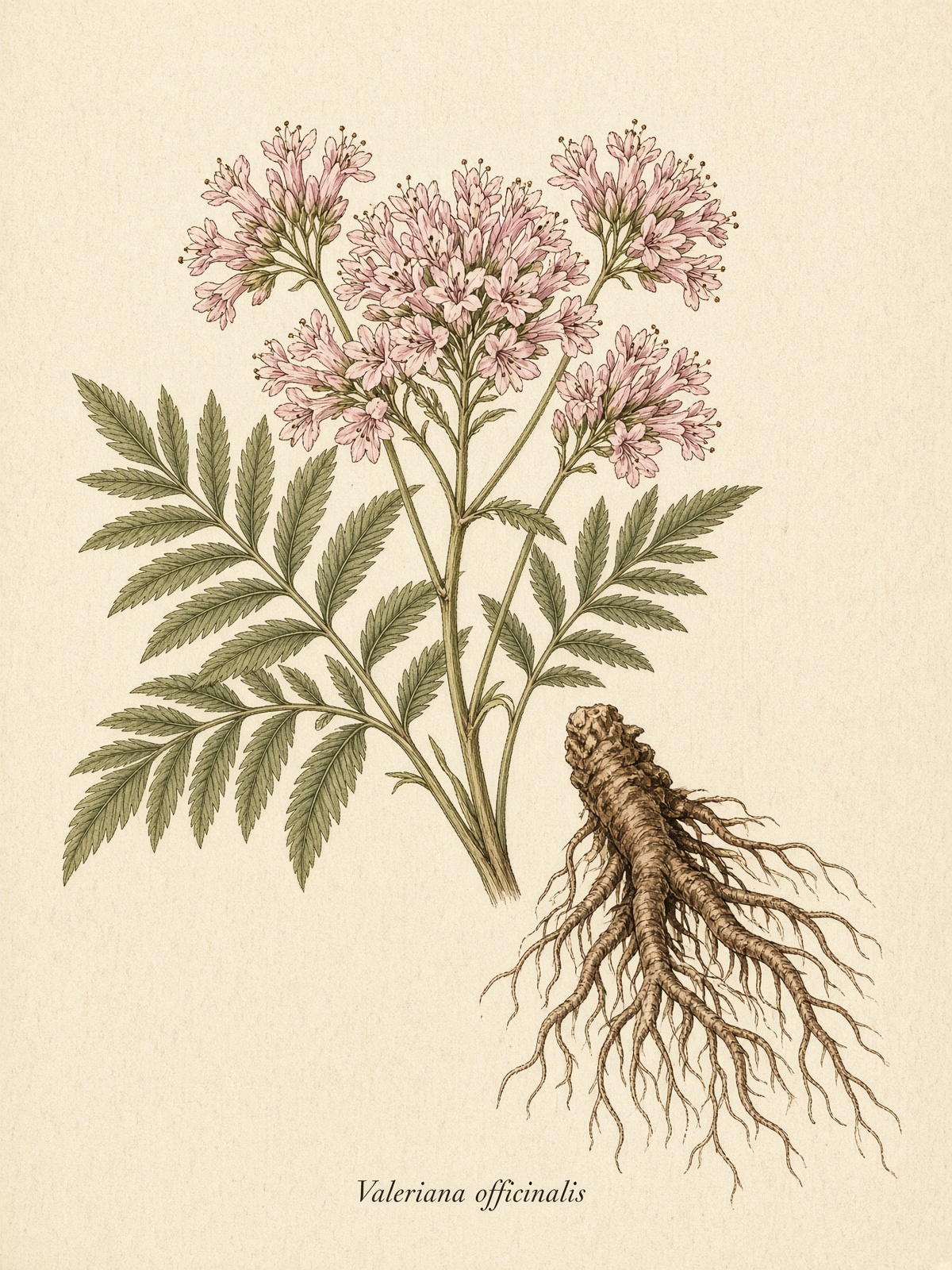
Valerian
Valeriana officinalis
Foul-sweet root used as a non-habit-forming night herb — strong, uneven, not for everyone.
anxiety
1/1LegalCaution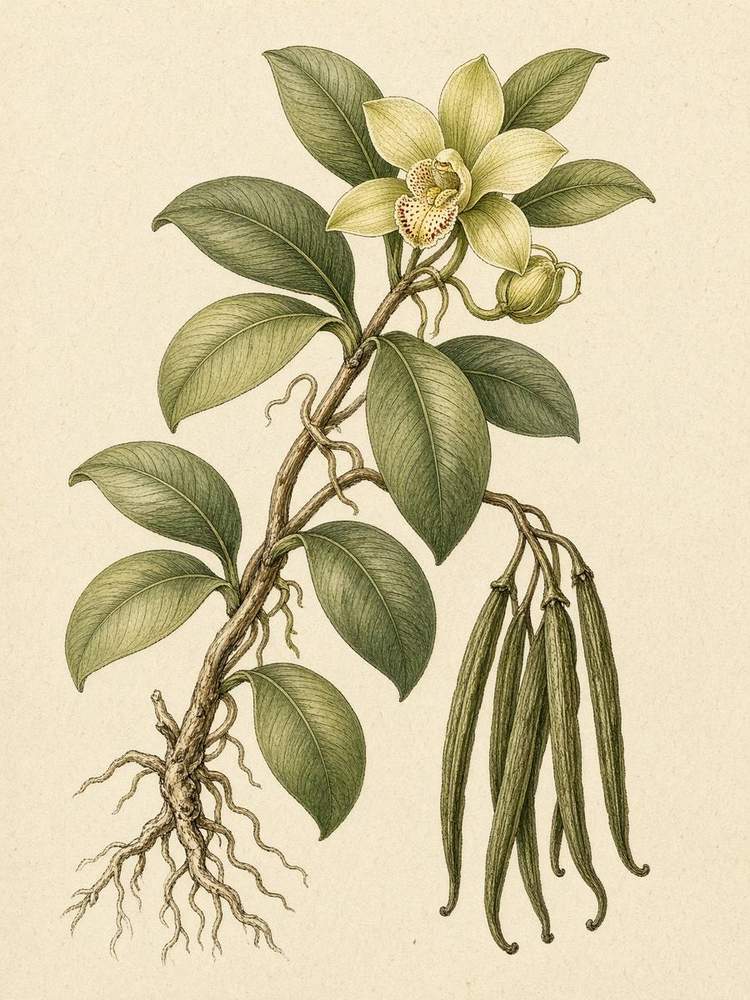
Vanilla
Vanilla planifolia
A climbing orchid whose green bean is cured into the world’s dessert spice.
anxiety
1/1LegalGentle
Teas for the same symptoms
Medicinal teas
Evening chamomile cup
A gentle close to the day when the mind will not sit down.
anxiety
Hops and catnip bitter
A greener, more bitter night cup when chamomile is too polite.
anxiety
Linden night blossom
A honeyed European street-tree tea for a tense evening or a dry, tight cold.
anxiety
Marjoram night
A sweeter oregano cousin for a tense, over-full evening — quieter than hops.
anxiety
Reishi evening decoction
A bitter wood cup for a long recovery, not a fever rescue.
anxiety
Saffron evening pinch
A golden, hay-honey cup when the mood is thin — a kitchen pinch, not a clinic dose.
anxiety
Sweet basil after-supper
A clove-green cup after a tomato-heavy plate — cooling, not a sleep drug.
anxiety
Tulsi afternoon
A pepper-clove adaptogen cup for a frayed, foggy middle of the day.
anxiety
Household protocols
Natural remedies
Evening wind-down cup
A gentle kitchen tea when the day will not leave the body.
Dose: Adult: one 8 oz cup, 45–60 minutes before bed. Not a second pot. Children: skip, or a clinician’s advice — this folio doses adults.
Safety: Asteraceae allergy (chamomile / lavender) · Before driving if you added passionflower
Milky oat and linden
A mineral, food-like nervine when the week has been long and the sleep is thin.
Dose: Adult: 1 handful (about 1–2 tbsp) oatstraw per 12 oz, once daily. Linden: 1 tbsp evening. Skullcap: 1 tsp, not a quart.
Safety: Oat allergy · Uncertified oats in celiac disease