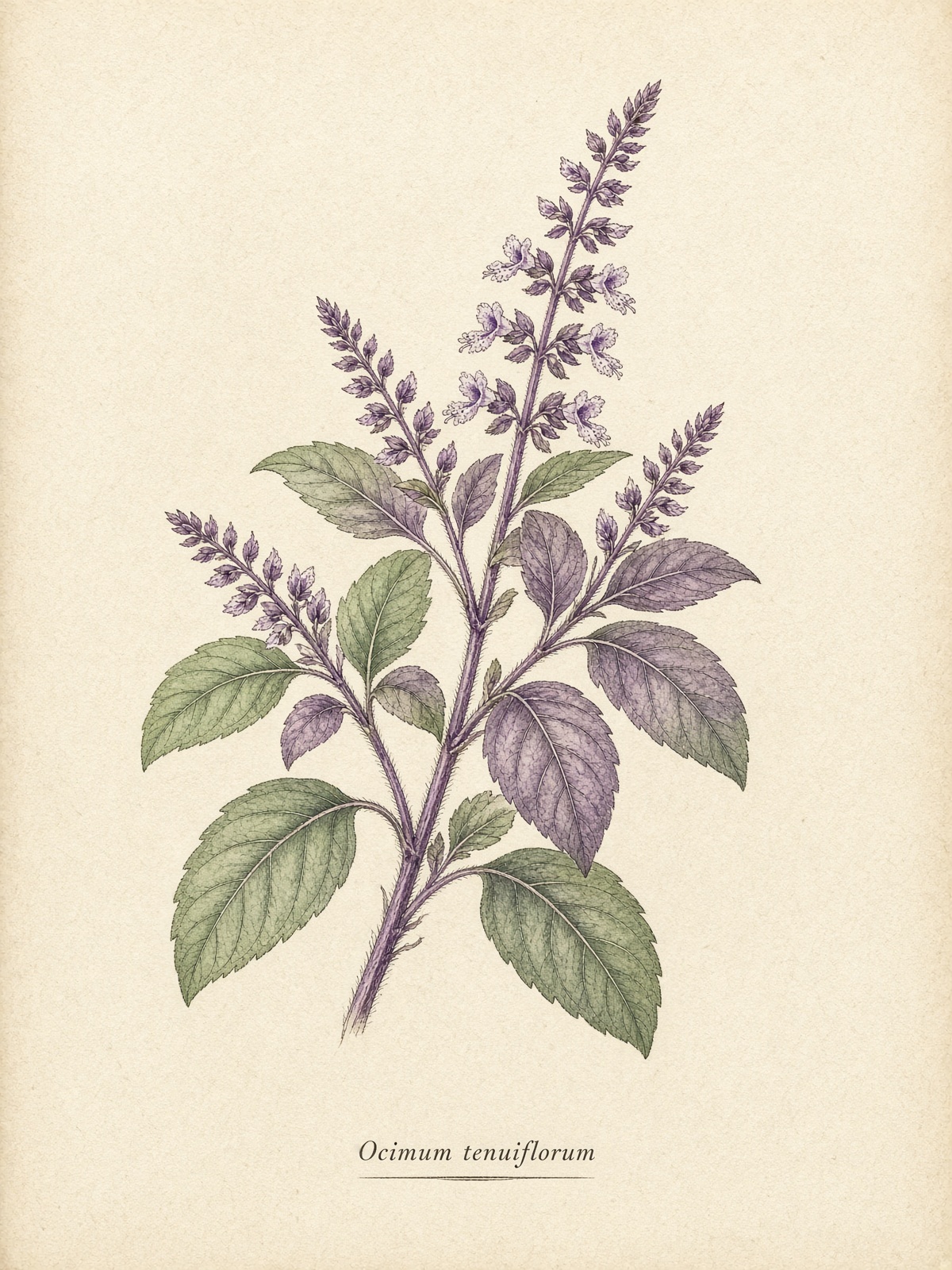
Holy basil botanical plate

Herb. No. 016 · Lamiaceae

RangeFig. atlas
Approximate native range — a teaching atlas, not a survey

Sacred basil of the Indian subcontinent; a tender annual in temperate gardens.

Native · South Asia

Native Also grown
LegalGentleplant

Holy basil

Ocimum tenuiflorum

Medicinal herbsKitchenHarvestLookalikes

Tulsi — the daily adaptogen tea of Indian households, peppery and clarifying.

Ocimum tenuiflorum (syn. O. sanctum) is distinct from sweet basil. Rama, Krishna, and Vana types differ in color and scent. Traditional use is for stress, dull mind, and mild respiratory congestion. A pot on the step is both medicine and devotion in many homes.

Flavor

Pepper, clove, and sweet basil; Krishna types run more spicy.

Parts used

Leaf and flowering tops

Helpful

  • Delicious daily tea
  • Easy summer annual
  • Bees love it

Cautions

  • May ease conception — caution if trying not to conceive
  • Eugenol-rich: go gently with bleeding risk

Field assistant

Ask about traditional use, safety, or the law. The assistant will not teach illegal cultivation or give medical orders.

Teas with this plant

Remedies with this plant

  • Lion’s mane and tulsi week

    Adult: a culinary portion of lion’s mane (about a cup cooked) several times a week. Tulsi: one 8 oz cup in the afternoon. Rosemary: kitchen leaf, not the bottle of oil.

  • Milk-thistle and dandelion bitter

    Adult: 1 tsp (about 3–5 g) ground milk-thistle seed daily with food. Dandelion root: 1 tsp dried decoction, once before a meal. Two to four weeks, then stop.

Harvest this plant

When to cut, how to dry, and how to store it — garden and kitchen crops only.

Open harvest notes

Lookalikes

1 named mix-up for this plate.

Open lookalikes