Symptom index
Find a plant by how you feel
Type a symptom — cough, sleep, skin — or tap a chip. Matching plates, teas, and remedies rise to the top. This is a folk index, not a diagnosis.
14 plates for congestion
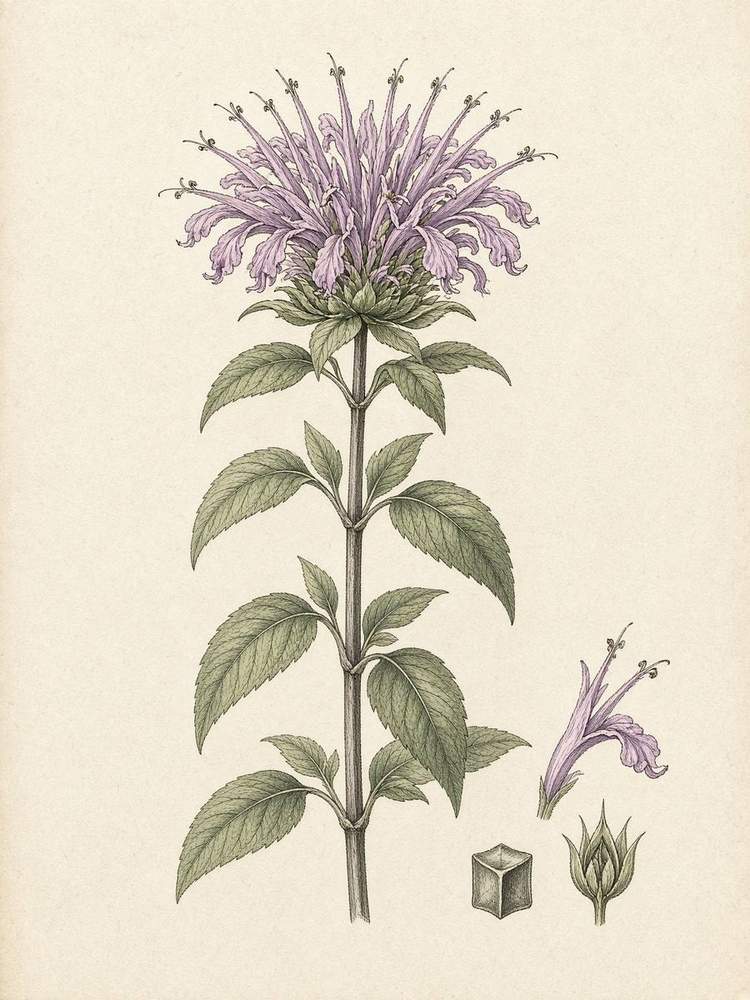
Bee balm
Monarda fistulosa
Wild bergamot — a ragged native mint whose leaf is an Earl Grey rumor and a traditional cold tea of the Northeast.
congestion
1/1LegalGentle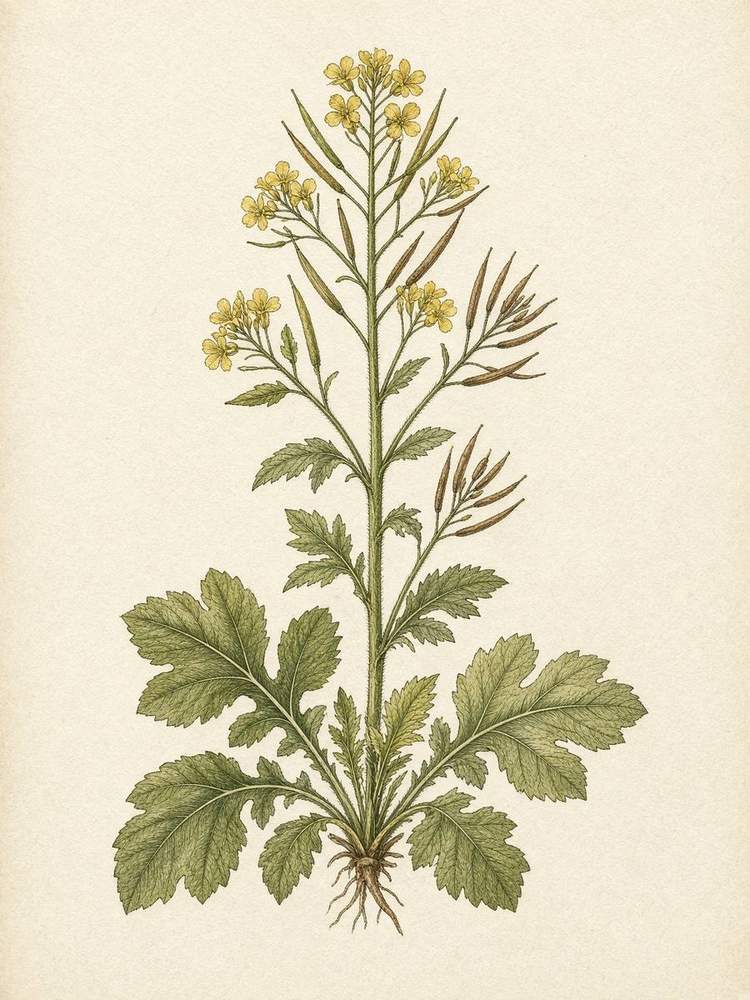
Brown mustard
Brassica juncea
The yellow flower that became a jar — a pungent seed, a bitter green, and a traditional chest-plaster plant.
congestion
1/1LegalGentle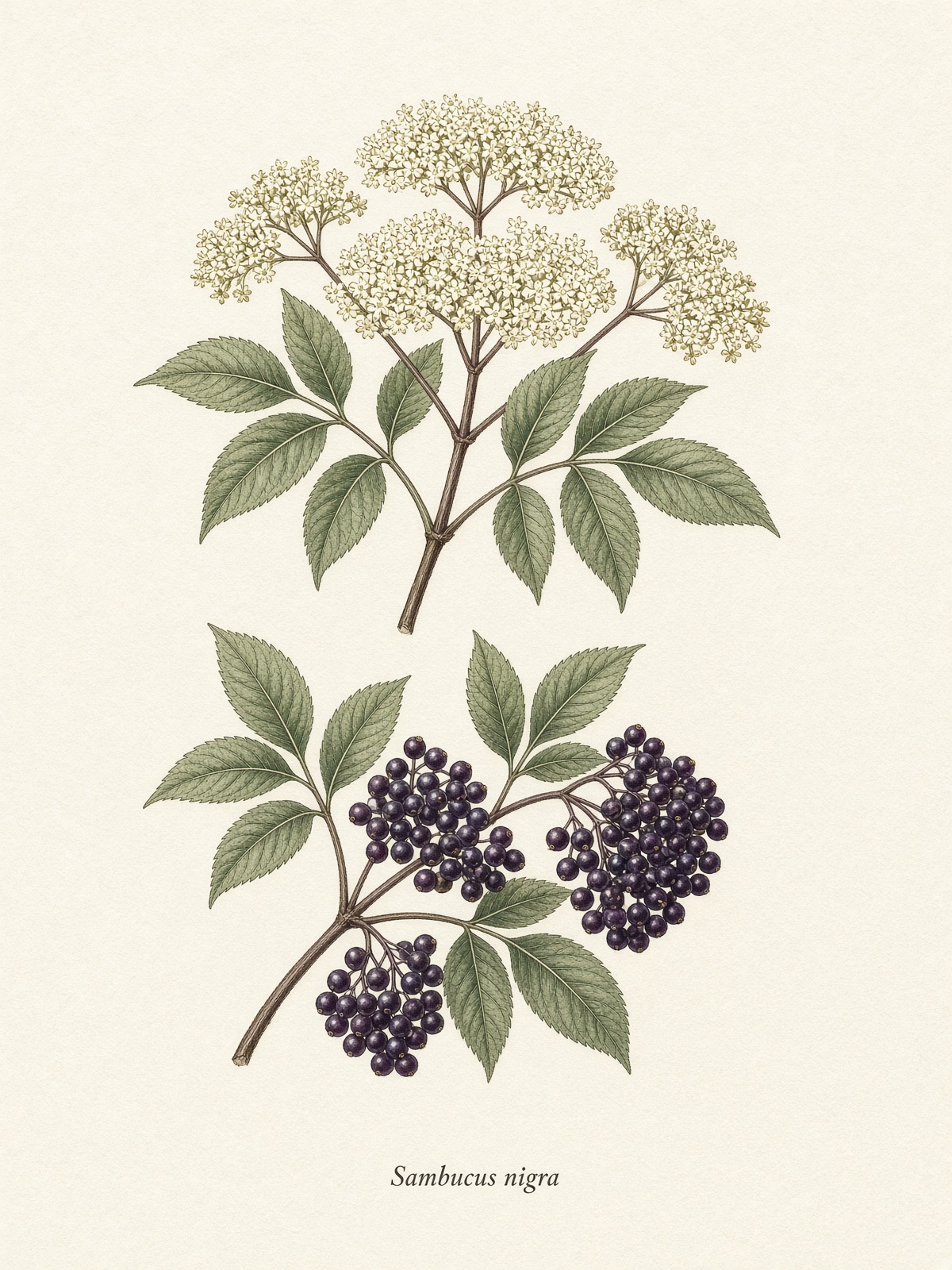
Elderberry
Sambucus nigra
Dark berries cooked into syrup at the first winter cough — never eaten raw.
congestion
1/1LegalCaution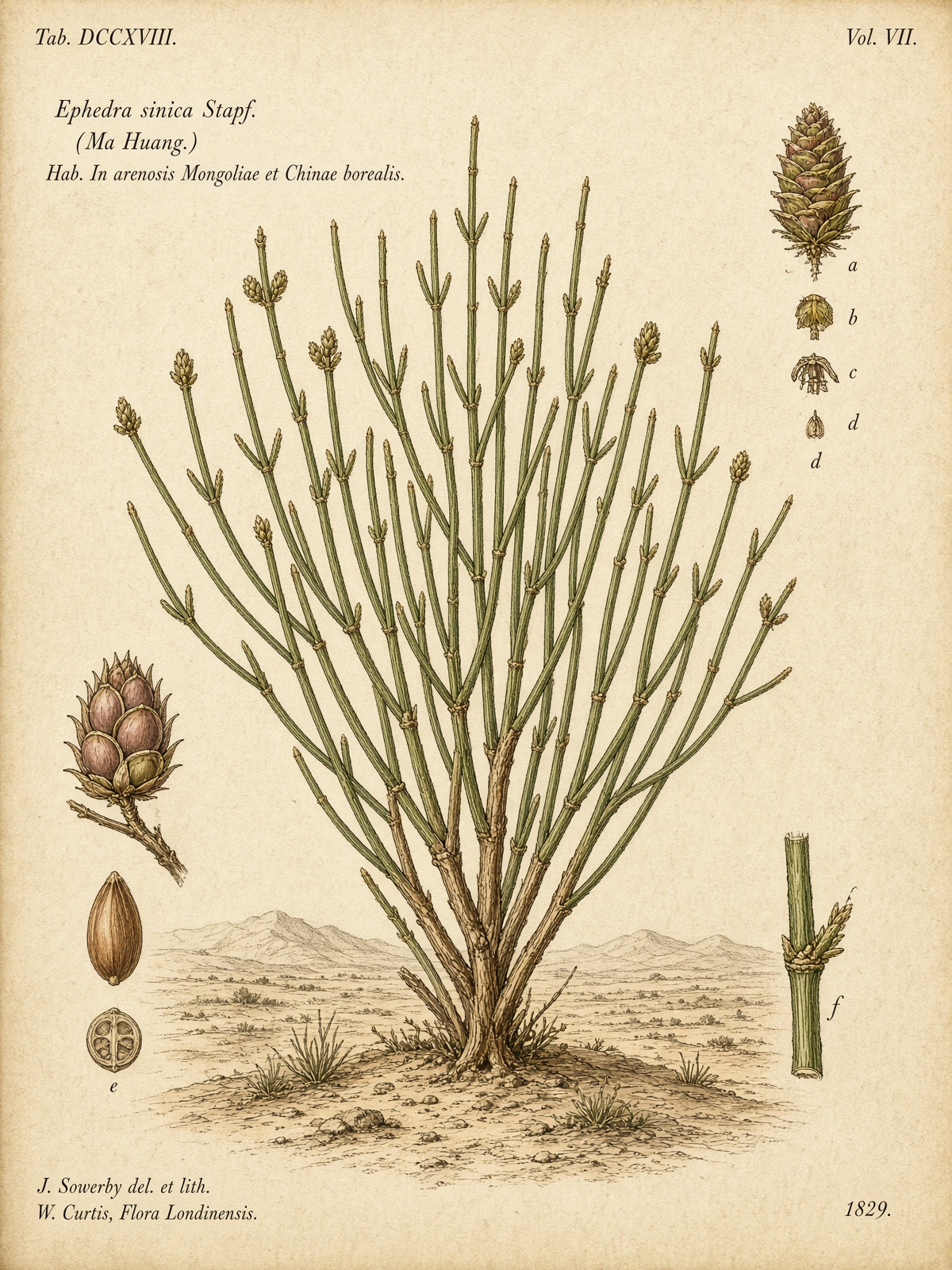
Ephedra
Ephedra sinica
Ma huang — the desert shrub behind ephedrine. A regulated stimulant, not a kitchen tea.
congestion
1/1RegulatedCaution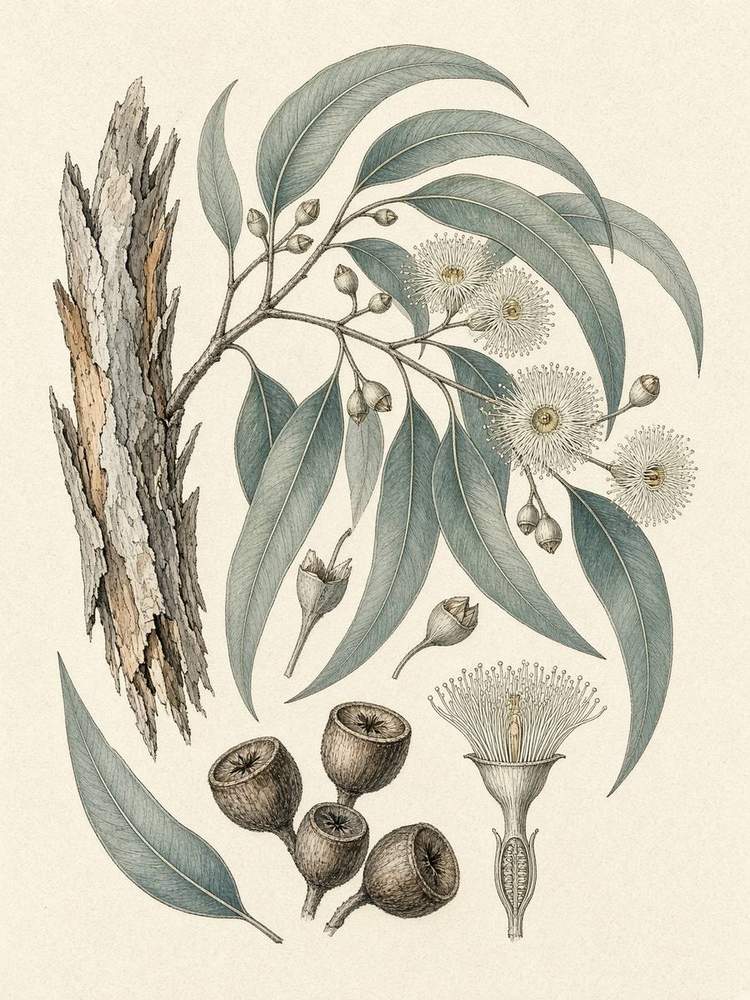
Eucalyptus
Eucalyptus globulus
Blue gum — the fever tree of Australia, a steam-inhalation leaf, and an oil that does not belong in a cup.
congestion
1/1LegalCaution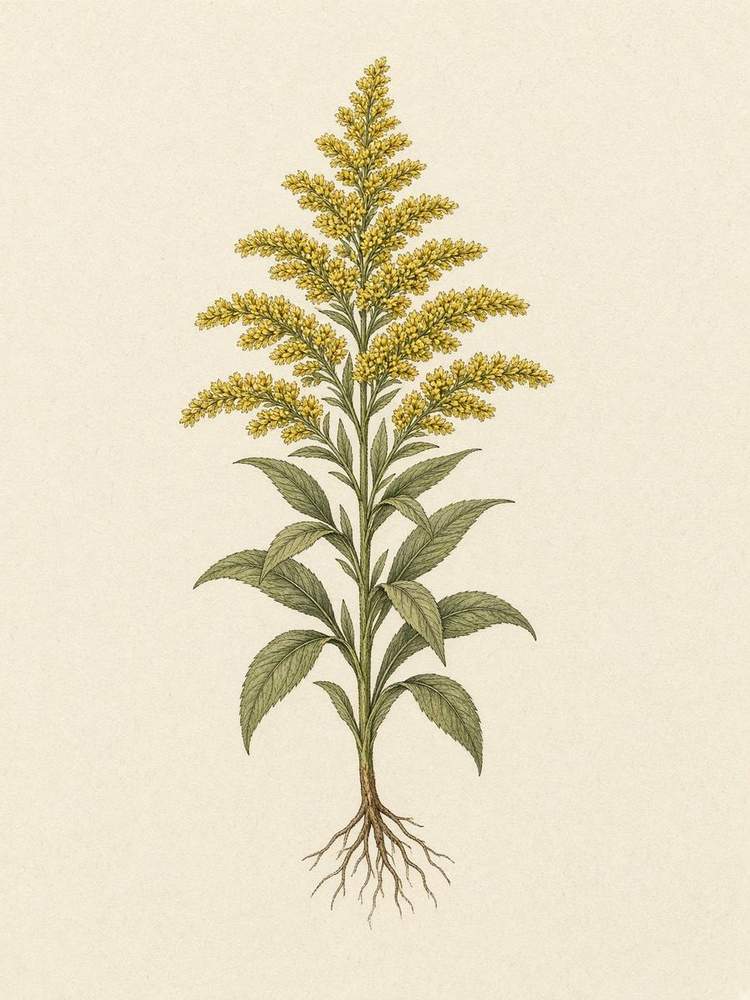
Goldenrod
Solidago canadensis
A hay-scented late-summer infusion, unfairly blamed for ragweed, useful when the head is thick.
congestion
1/1LegalGentle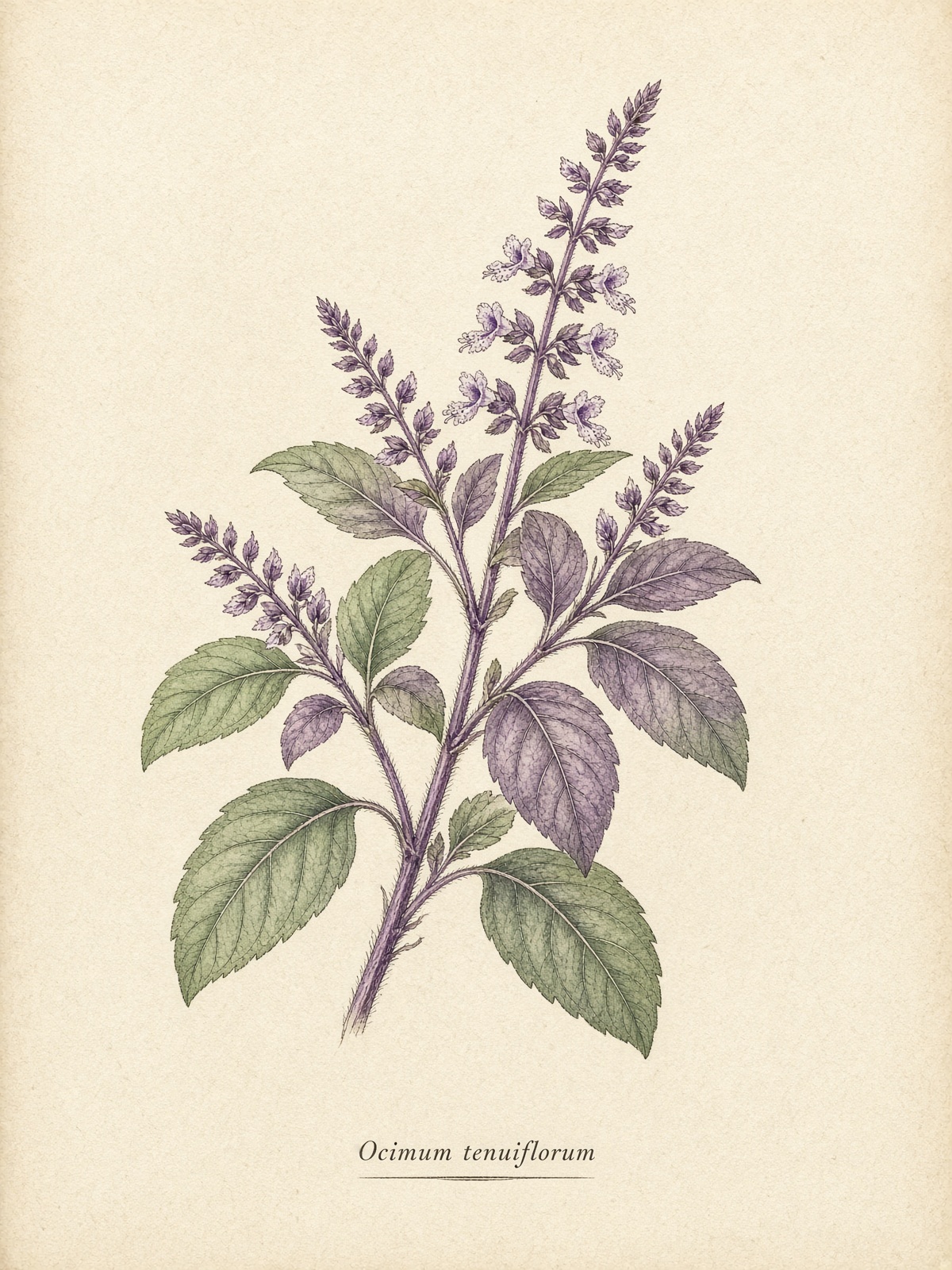
Holy basil
Ocimum tenuiflorum
Tulsi — the daily adaptogen tea of Indian households, peppery and clarifying.
congestion
1/1LegalGentle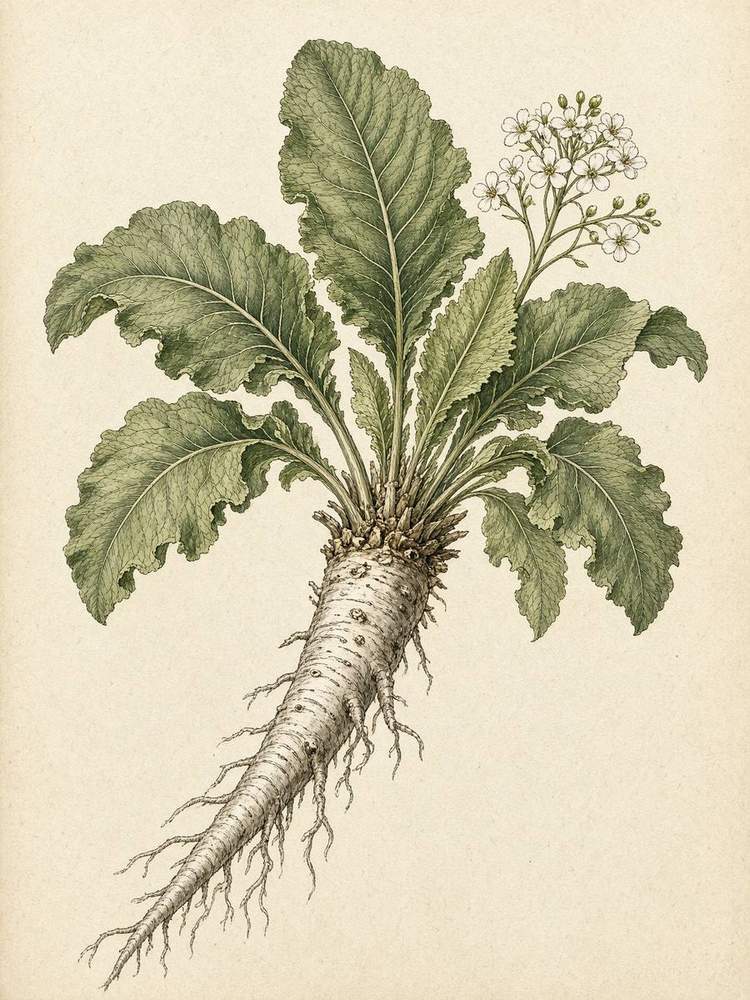
Horseradish
Armoracia rusticana
The sinus-clearing white root of spring — a prepared-sauce plant with a traditional wet-cough folklore.
congestion
1/1LegalGentle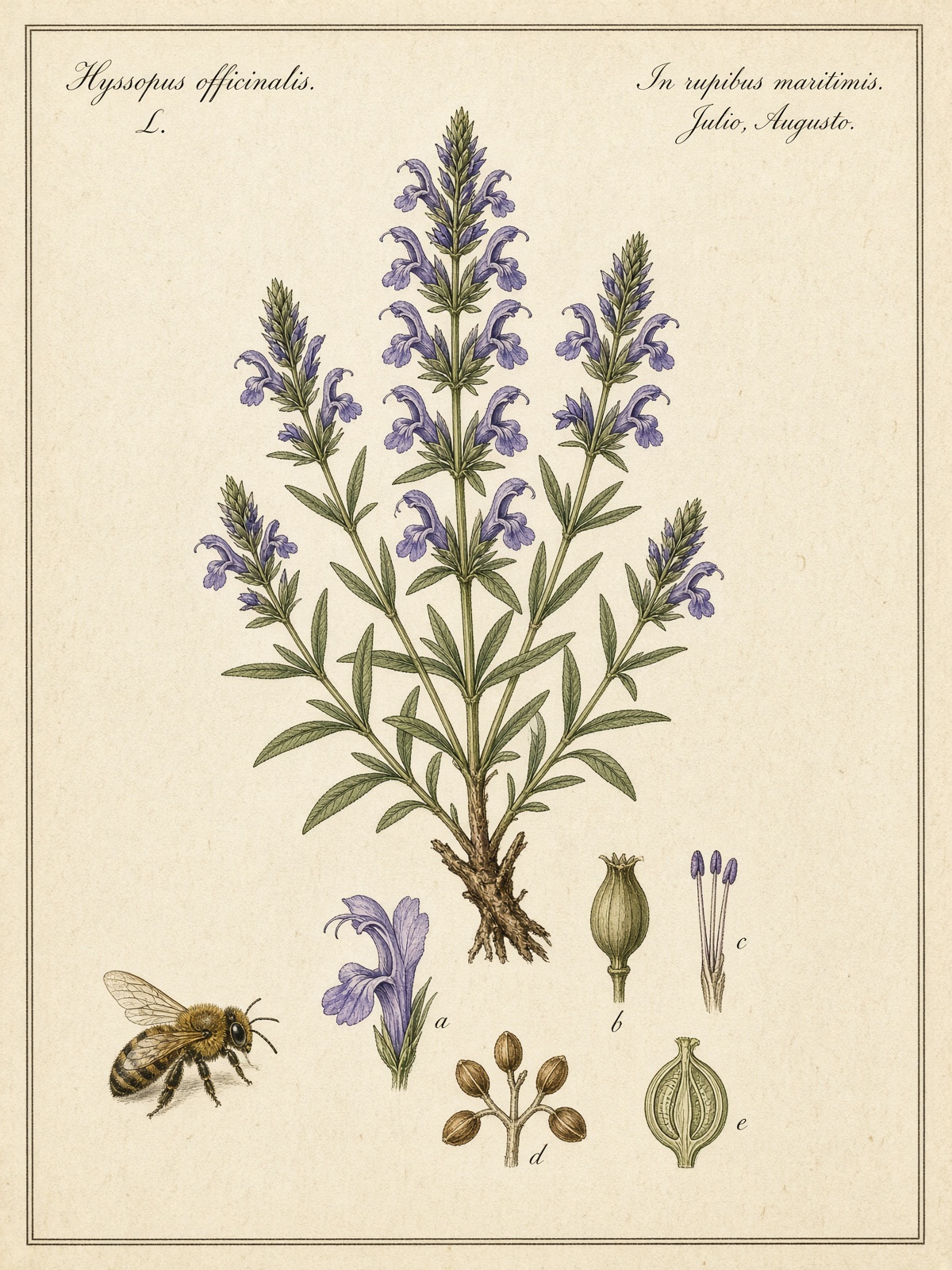
Hyssop
Hyssopus officinalis
A blue-spike Mediterranean bitter for the chest — a bee plant with a camphor edge.
congestion
1/1LegalGentle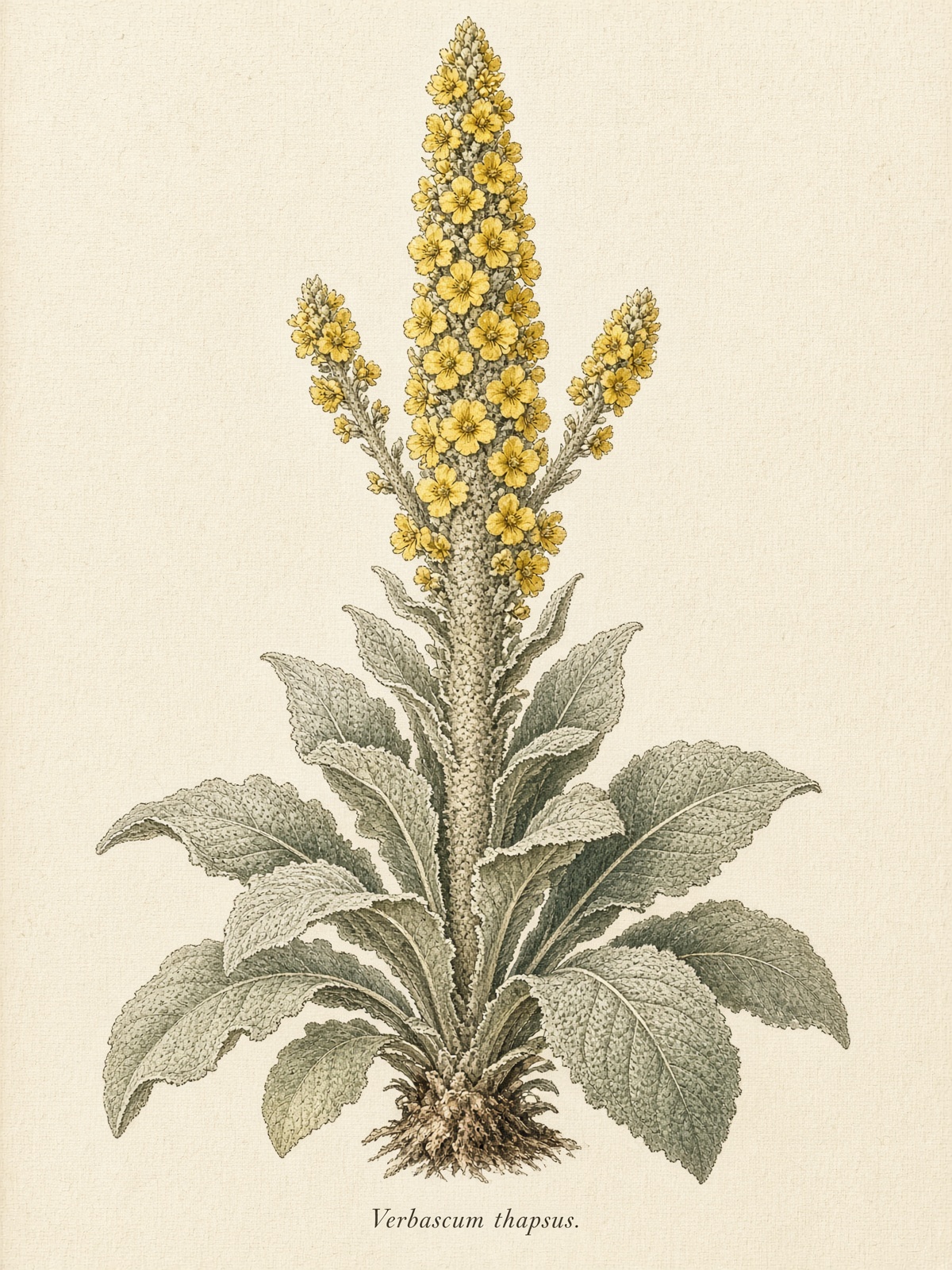
Mullein
Verbascum thapsus
A woolly candelabra for the lungs — flowers also oil for the ear in folk practice.
congestion
1/1LegalGentle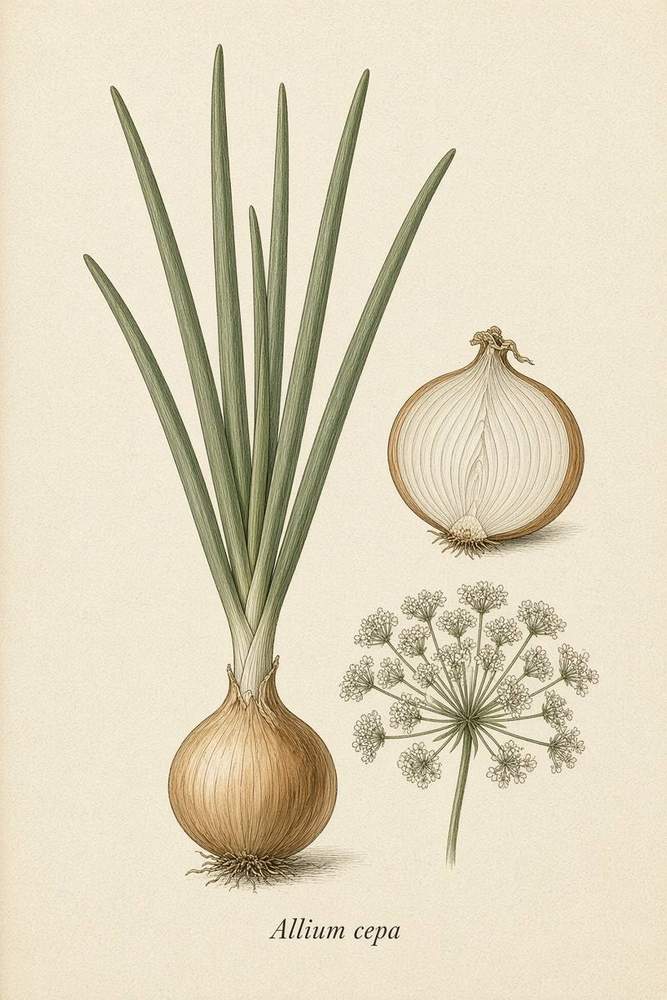
Onion
Allium cepa
The bulb that starts the pan — a kitchen allium with a long folk record as food, not as a syrup protocol.
congestion
1/1LegalGentle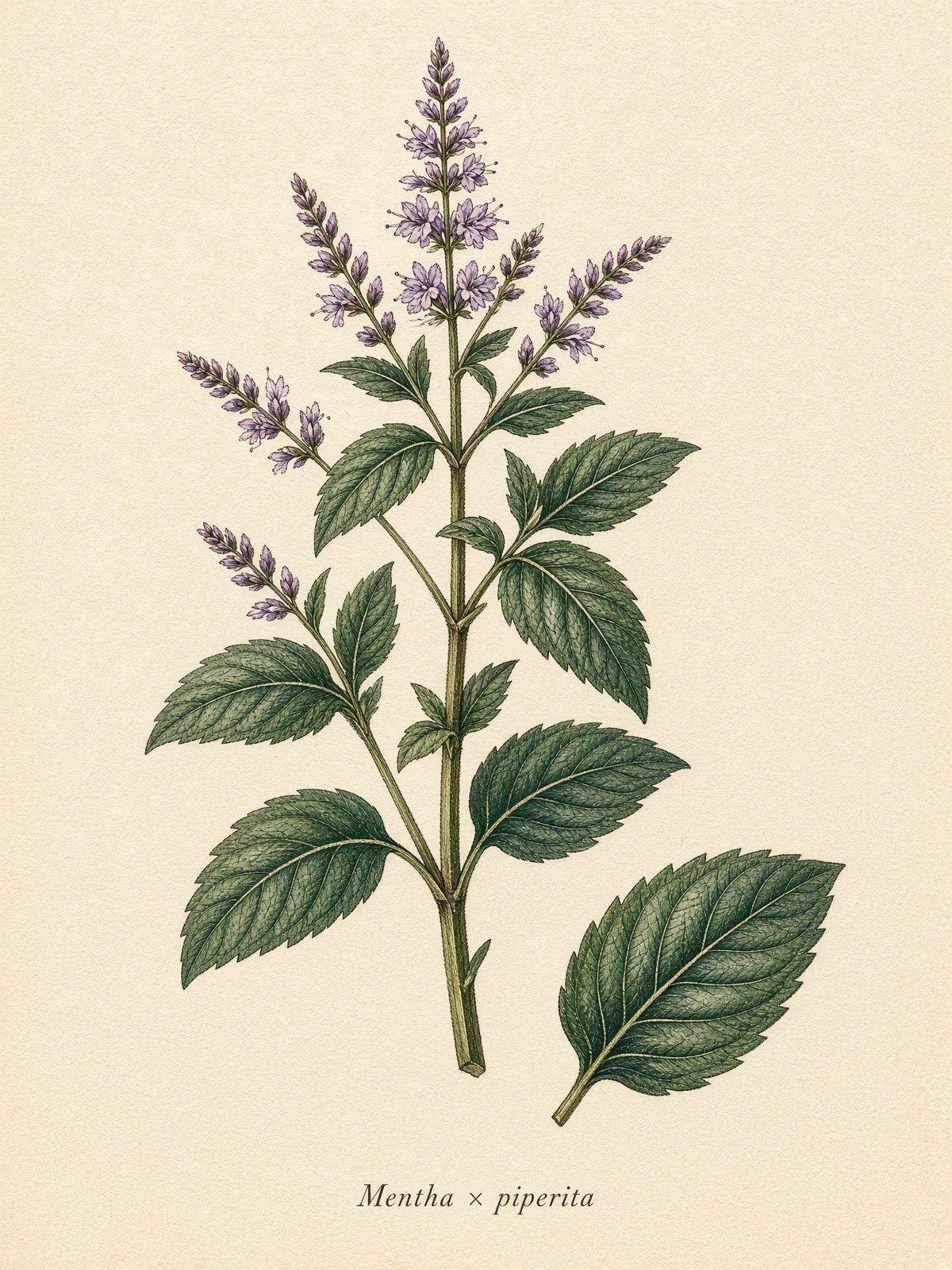
Peppermint
Mentha × piperita
A hybrid mint whose menthol cools the gut and opens the sinuses — classic after-dinner leaf.
congestion
1/1LegalGentle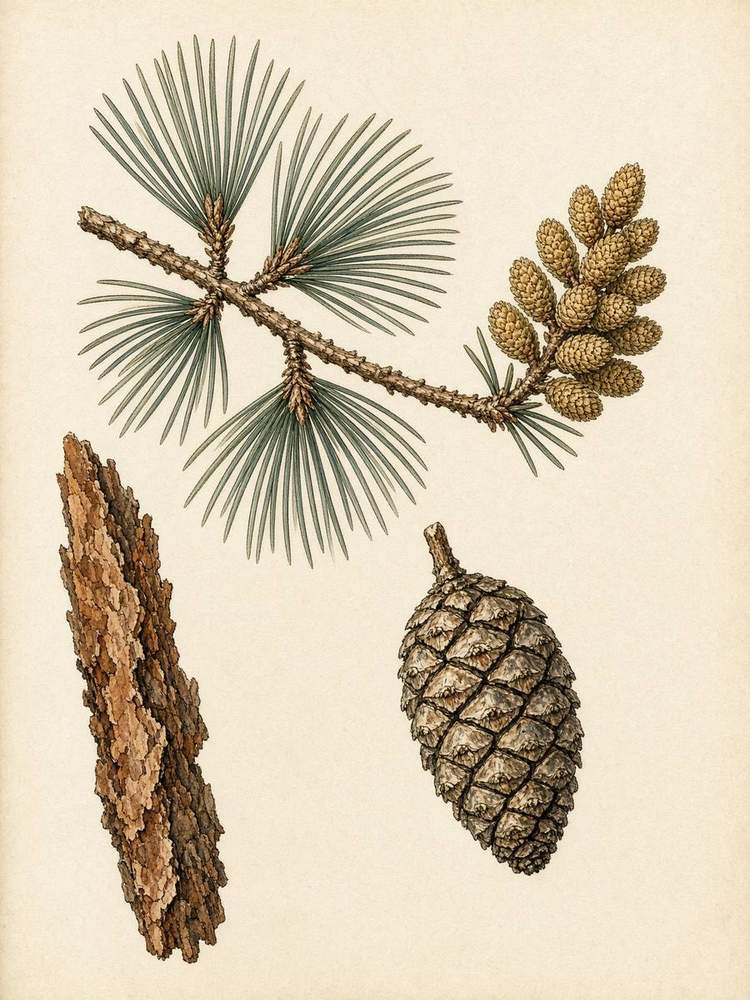
Pine
Pinus sylvestris
A bright, resinous needle tea from a tree you can name — never from a hedge you cannot.
congestion
1/1LegalCaution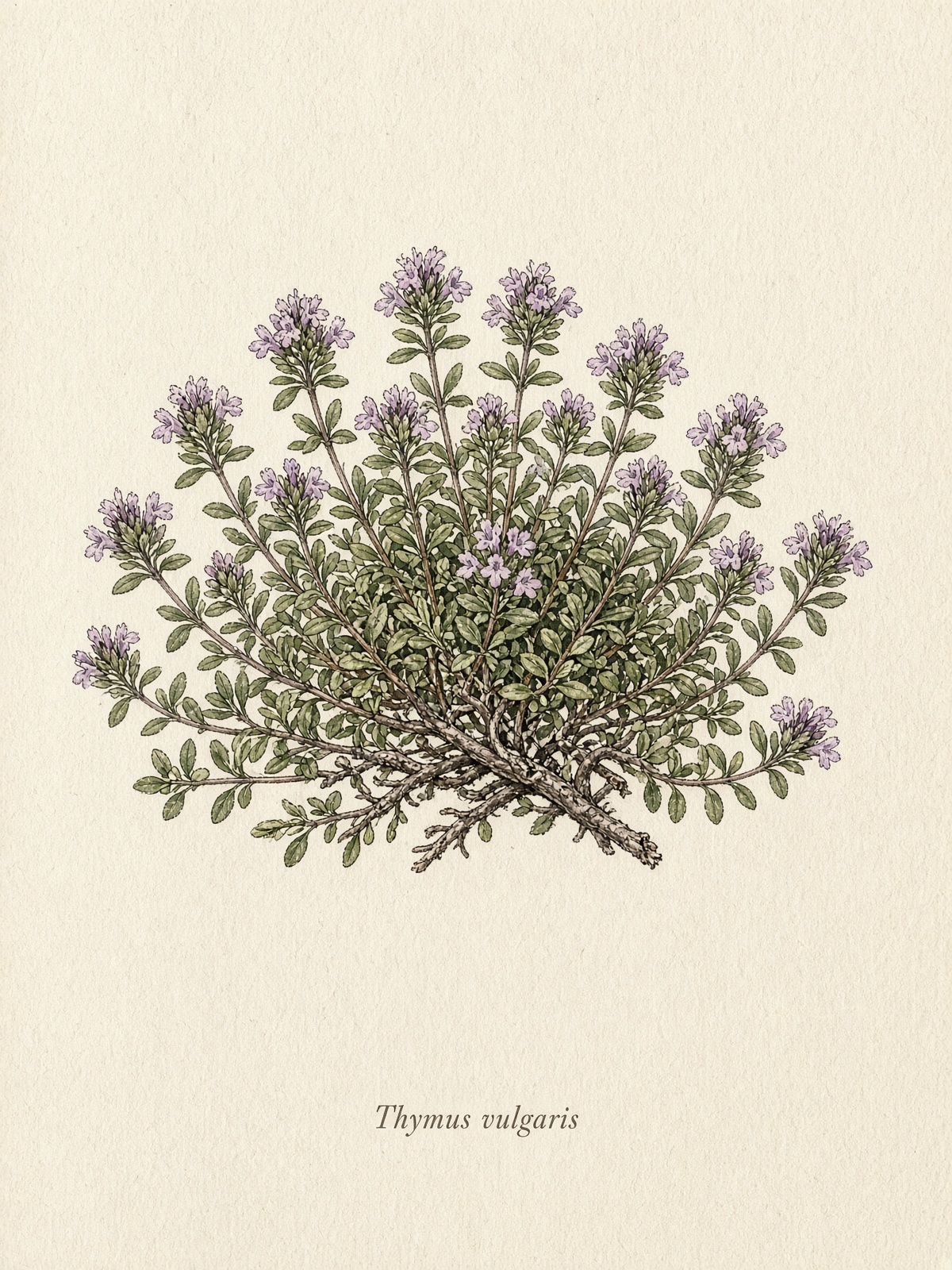
Thyme
Thymus vulgaris
A low cushion of thymol — the classic kitchen antimicrobial for coughs.
congestion
1/1LegalGentle
Teas for the same symptoms
Medicinal teas
Household protocols
Natural remedies
First-scratch cold tray
Short, early kitchen support at the first sore throat or chill — not a flu treatment.
Dose: Elderberry: follow the jar; typically 1 tsp cooked syrup, 2–3 times, 2–3 days. Ginger: one 8–12 oz cup, 2–3 times. Garlic: 1 crushed culinary clove in food, once or twice. Yarrow: one 8 oz cup, once.
Safety: Raw elderberry · Infants (honey, garlic oil)
Goldenrod late-summer cup
A hay-scented infusion for a thick, allergic head — often blamed for ragweed’s sins.
Dose: Adult: 1 tsp dried tops per 8 oz, 1–2 times a day through a known stretch, then stop.
Safety: Asteraceae allergy · Anaphylaxis as a substitute for a plan
Kitchen steam
Open a thick head with leaf steam — not swallowed essential oil.
Dose: Adult: one steam session, 5–10 minutes, 1–2 times a day for a stuffed cold. Not a closed-bathroom marathon.
Safety: Asthma that worsens with menthol steam · Infants over a boiling bowl
Nettle before the season
Nettle infusion taken before and through a known pollen stretch.
Dose: Adult: 1 tbsp dried nettle per 12 oz, once daily through the season. Elderflower: 1 tsp dried, 8 minutes, as needed. Not a substitute for epinephrine.
Safety: Anaphylaxis history as a substitute for epinephrine · Asteraceae allergy (goldenrod, elderflower caution)
Pine-needle winter cup
A bright, resinous trail tea from a named Pinus — not yew, not unknown evergreens.
Dose: Adult: a small handful (about 1 tbsp chopped) per 8 oz, one cup. Not a daily quart. Not any evergreen you cannot name to genus.
Safety: Yew, oleander, or any unnamed evergreen · Pregnancy in large pine-needle amounts (some species are traditional abortifacients — this is a named Pinus, a small cup, not a protocol)
Thyme-and-honey kettle
A hot aromatic cup for a wet, rattly cough — kitchen thyme, not oil of thyme.
Dose: Adult: one 8 oz cup, 2–3 times a day, 3–5 days. Thyme is the teaspoon; licorice is a thin slice, not a handful. Honey: ½–1 tsp per cup. Not for infants.
Safety: Infants (honey) · Uncontrolled hypertension (licorice)