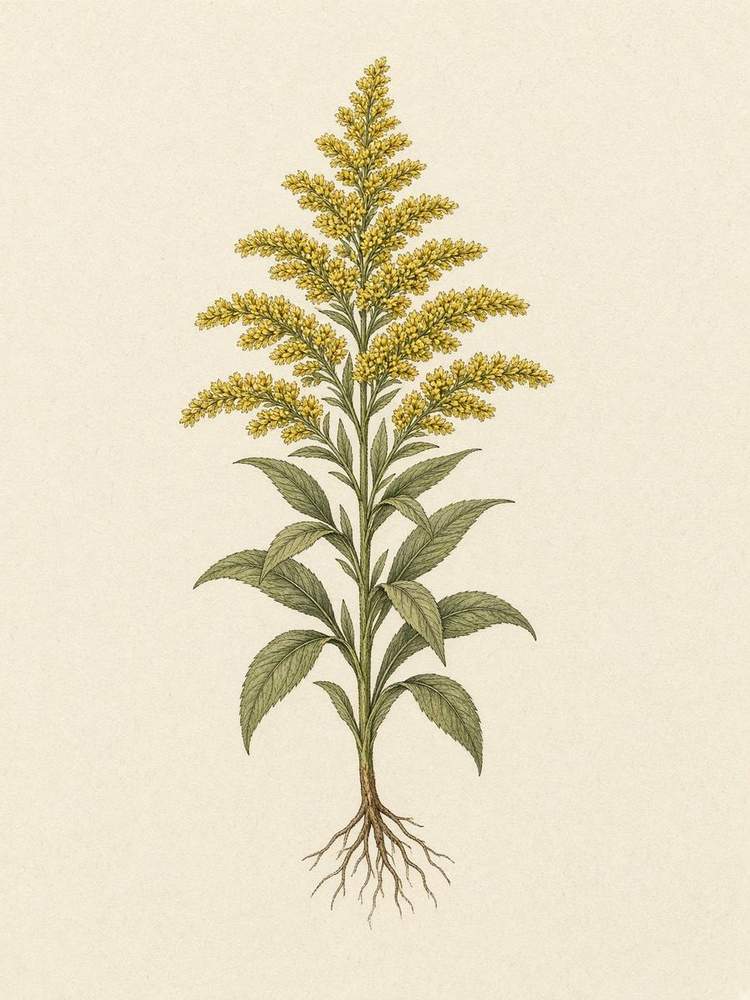
Herb. No. 184 · Asteraceae
Canada goldenrod of eastern and central North American meadows, now a roadside plant in Europe too.
Native · North America
Native Also grown
LegalGentleplant
Goldenrod
Solidago canadensis
A hay-scented late-summer infusion, unfairly blamed for ragweed, useful when the head is thick.
Canada goldenrod is a North American meadow plant now common on roadsides. Flowering tops make a hay-scented tea traditionally used for a thick, allergic head and as a mild urinary herb. Ragweed blooms at the same time and rides the wind; goldenrod’s pollen is heavy and insect-carried. Asteraceae allergy still applies. This is a short late-summer cup, not a year-round pot.
Flavor
Hay, honey, a little bitter green. The flower is the perfume.
Parts used
Flowering tops · Leaf
Helpful
- Easy to find and dry
- The ragweed myth is worth knowing
Cautions
- Asteraceae allergy
- Spreads in a garden
- Looks like a weed until you smell it