Herb. No. 182 · Pinaceae
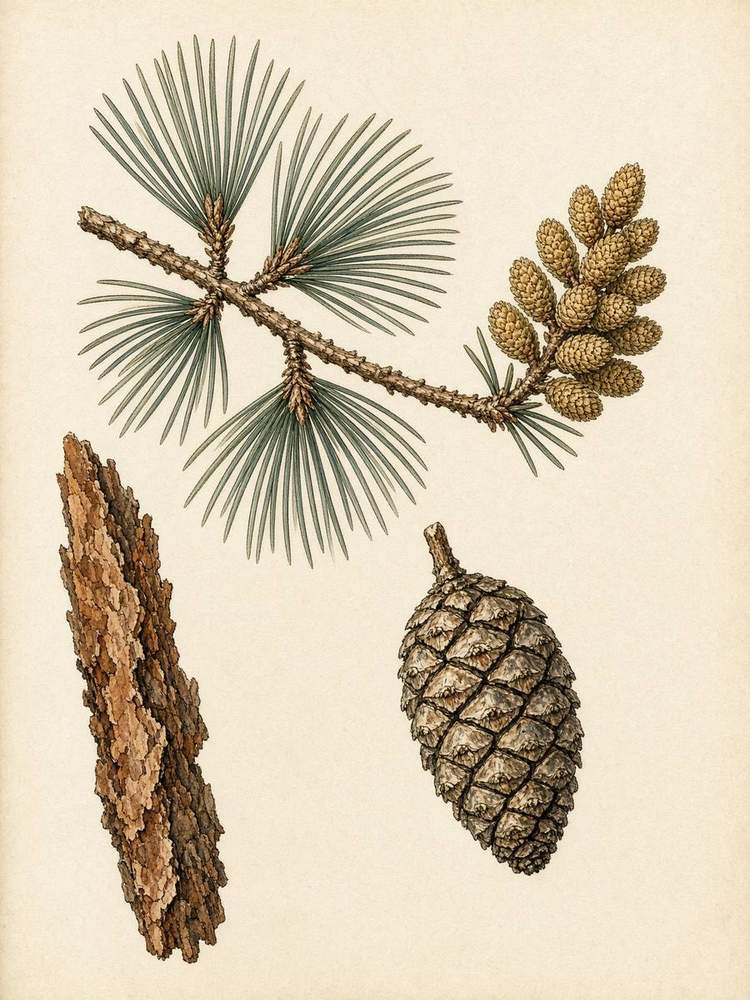
Scots pine of Eurasian woods; related Pinus across the north temperate zone. Named species only.
Native · Europe · North America
Pine
Pinus sylvestris
Medicinal herbsHarvestCompanionsLookalikes
A bright, resinous needle tea from a tree you can name — never from a hedge you cannot.
Scots pine is a northern conifer whose young needles make a vitamin-C folklore tea. The cup is a trail drink from a named Pinus: paired needles in a sheath, papery bark, a resin smell. Yew is a different, deadly tree with flat needles in two ranks and red arils. If you cannot tell them apart, do not make tea from a hedge. Large amounts of some pine species have a traditional abortifacient record — this plate is a small cup from named Pinus, not a protocol.
Flavor
Resin, lemon-peel, a walk in a cold wood. Over-boiled, it turns tarry.
Parts used
Fresh needles of named Pinus
Helpful
- Easy to identify once you know pine
- A true woods cup
Cautions
- Yew lookalike if you are careless
- Not a daily quart
- Some species are traditional abortifacients in large amounts