The Herbarium
Part I · Medicinal herbs
Herb. No. 182
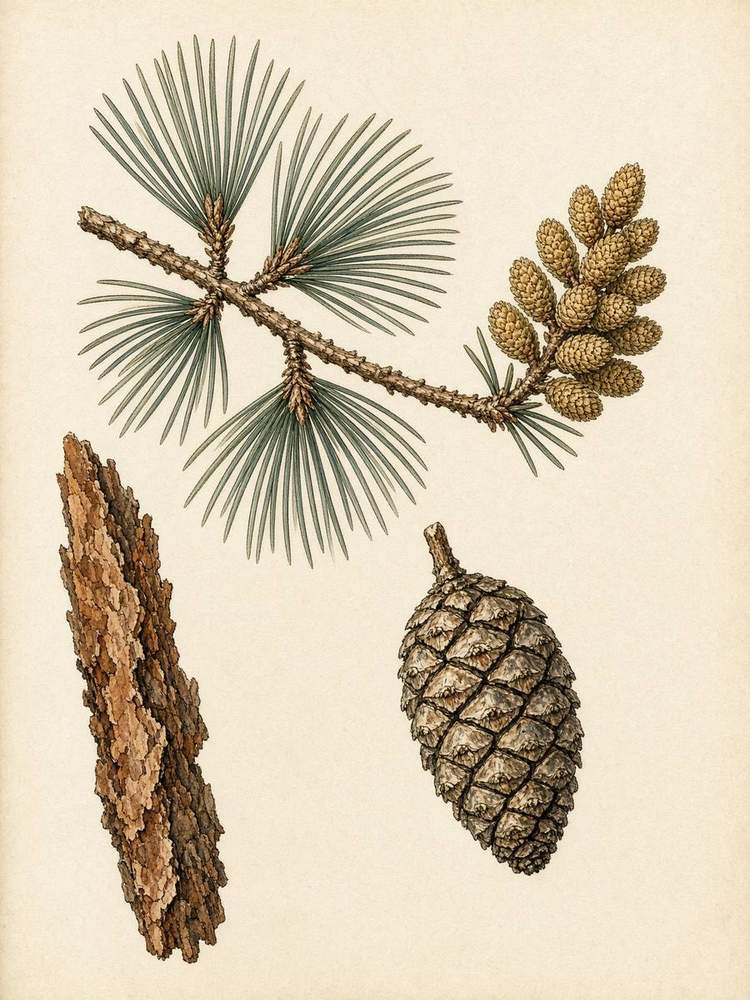
Pine
Pinus sylvestris
Pinaceae
A bright, resinous needle tea from a tree you can name — never from a hedge you cannot.
Named Pinus only. Yew, oleander, and unknown evergreens are not this tea.
- Parts used
- Fresh needles of named Pinus
- Traditional notes
- A winter trail tea · Traditional cold cup · Resinous steam
- Grow · USDA 6b
- Tree, USDA 2–7 for Scots pine Stratified seed, or a nursery tree. Not a windowsill crop. In work: Nov · Dec · Jan · Feb · Mar
- Harvest
- Young needles from a tree you planted or a named stand you have permission to pick.
- Learn yew first: flat needles in two ranks, red arils, no cones.
- A small cup from a named Pinus. Not a boiled tar. Not a hedge guess.
Safety
Pregnancy in large needle amounts Yew or any unnamed evergreen Swallowing pine oil
Companions
Plant with Blueberry, Yarrow.
Lookalikes
- English yew — A winter evergreen tea from the wrong needle is taxine, not vitamin C. English yew is a churchyard tree, not a white pine.
Lore
Scurvy-era sailors boiled spruce and pine when citrus ran out. The Cree and many northern peoples already knew the needle cup. Linnaeus named P. sylvestris from the Swedish woods he walked. The English ‘deal’ is the timber; the tea is the leftover brightness of the same tree.
The Herbarium — a teaching catalog, not a clinic. Traditional use is history, not a prescription. USDA 6b dates are a week either way, not a promise. Do not eat, drink, or harvest a plant you cannot name.