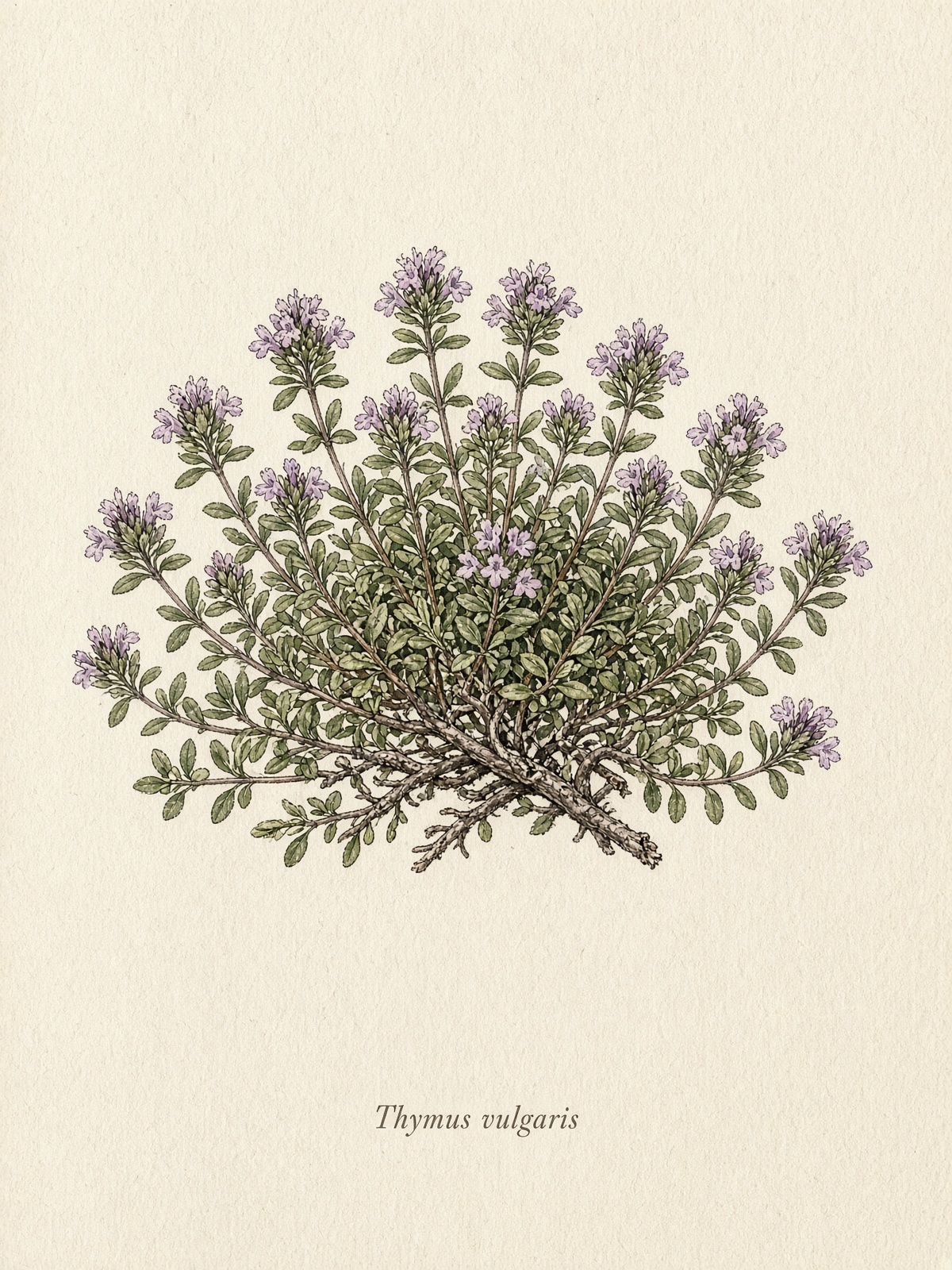
Thyme botanical plate

Herb. No. 047 · Lamiaceae

RangeFig. atlas
Approximate native range — a teaching atlas, not a survey

Western Mediterranean garrigue. A gravel-garden plant almost anywhere with sun.

Native · Mediterranean

Native Also grownNow a garden plant worldwide
LegalGentleplant

Thyme

Thymus vulgaris

Medicinal herbsKitchenHarvestCompanions

A low cushion of thymol — the classic kitchen antimicrobial for coughs.

Garden thyme is a Mediterranean subshrub. Thymol and carvacrol define the warming, antiseptic tradition for winter coughs. Culinary and tea use is long-standing; thyme oil is a different, harsher drug.

Flavor

Warm, medicinal-savory, lemon-pepper when you bruise a leaf.

Parts used

Aerial parts

Helpful

  • Tiny plant, huge flavor
  • Bees love the bloom

Cautions

  • Oil burns mucosa
  • Very drying as a strong tea

Field assistant

Ask about traditional use, safety, or the law. The assistant will not teach illegal cultivation or give medical orders.

Teas with this plant

Remedies with this plant

  • Sage and thyme gargle

    Adult: gargle 1 cup, 2–3 times a day, for 2–3 days. Do not swallow cup after cup of strong sage — thujone lives there.

  • Thyme-and-honey kettle

    Adult: one 8 oz cup, 2–3 times a day, 3–5 days. Thyme is the teaspoon; licorice is a thin slice, not a handful. Honey: ½–1 tsp per cup. Not for infants.

  • Kitchen steam

    Adult: one steam session, 5–10 minutes, 1–2 times a day for a stuffed cold. Not a closed-bathroom marathon.

  • Onion-and-honey spoon

    Adult: 1 tsp of the collected syrup, 2–3 times a day, 2–3 days. Not for infants (honey).

Harvest this plant

When to cut, how to dry, and how to store it — garden and kitchen crops only.

Open harvest notes

Companion planting

19 to plant with.

Open companion beds