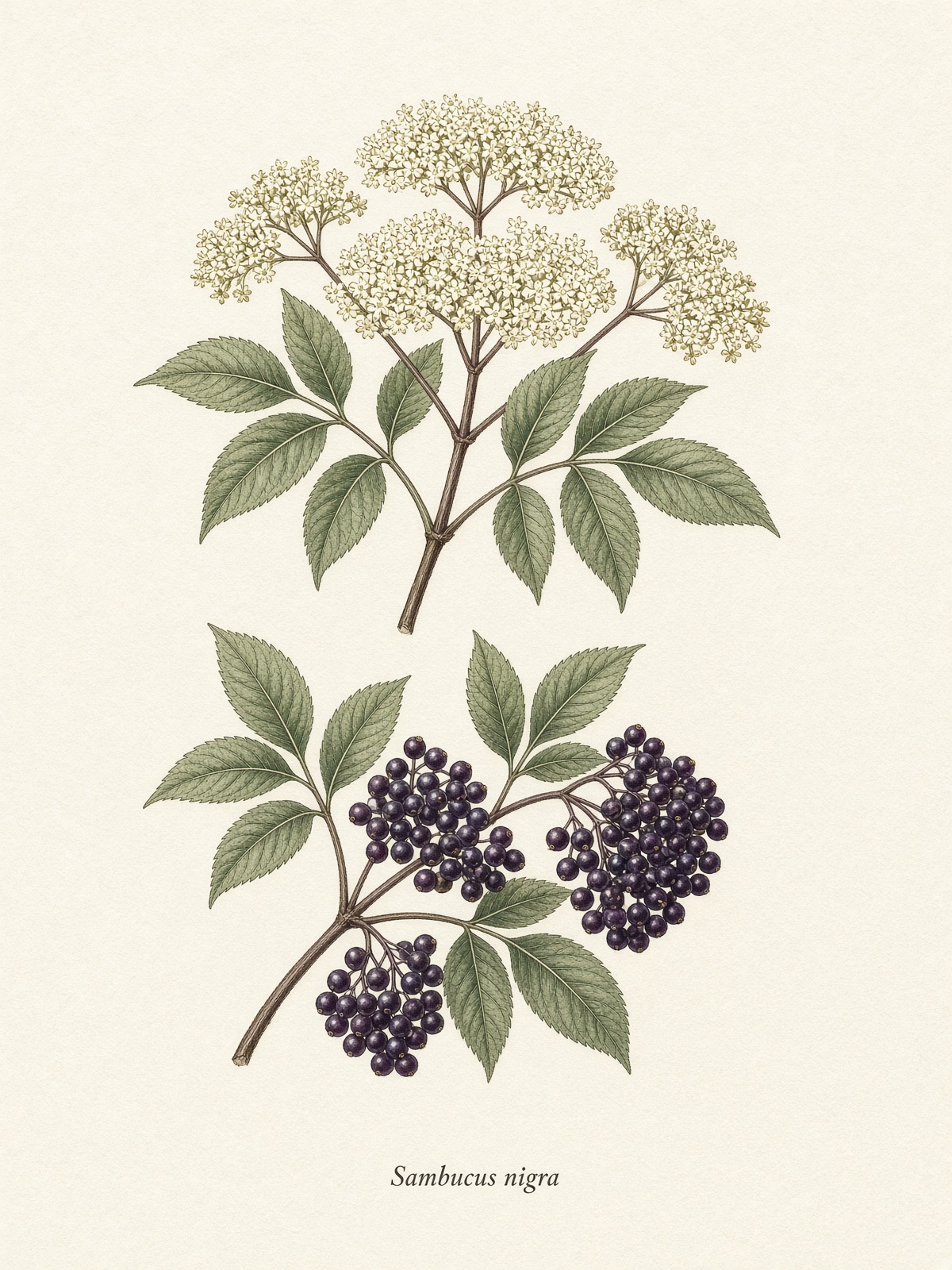
Herb. No. 009 · Viburnaceae
Sambucus nigra in Europe, S. canadensis in eastern North America — sister species on two continents.
Native · Europe · North America
Native Also grown
LegalCautionplant
Elderberry
Sambucus nigra
Medicinal herbsKitchenHarvestLookalikes
Dark berries cooked into syrup at the first winter cough — never eaten raw.
European elder is a hedgerow shrub. Flowers (elderflower) are a diaphoretic tea for fevers; berries are used for viral winter illnesses. Raw fruit and all green parts contain cyanogenic glycosides — they must be cooked. Commercial syrups vary in berry strength.
Flavor
Cooked berries are jammy, wine-dark, and tart; flowers are honey-muscat.
Parts used
Ripe berries (cooked) · Flowers
Helpful
- Good kitchen-project plant
- Flowers and berries both useful
- Wildlife hedge
Cautions
- Raw plant is poisonous
- Red elder (S. racemosa) is the wrong species
- Not a stand-alone flu treatment