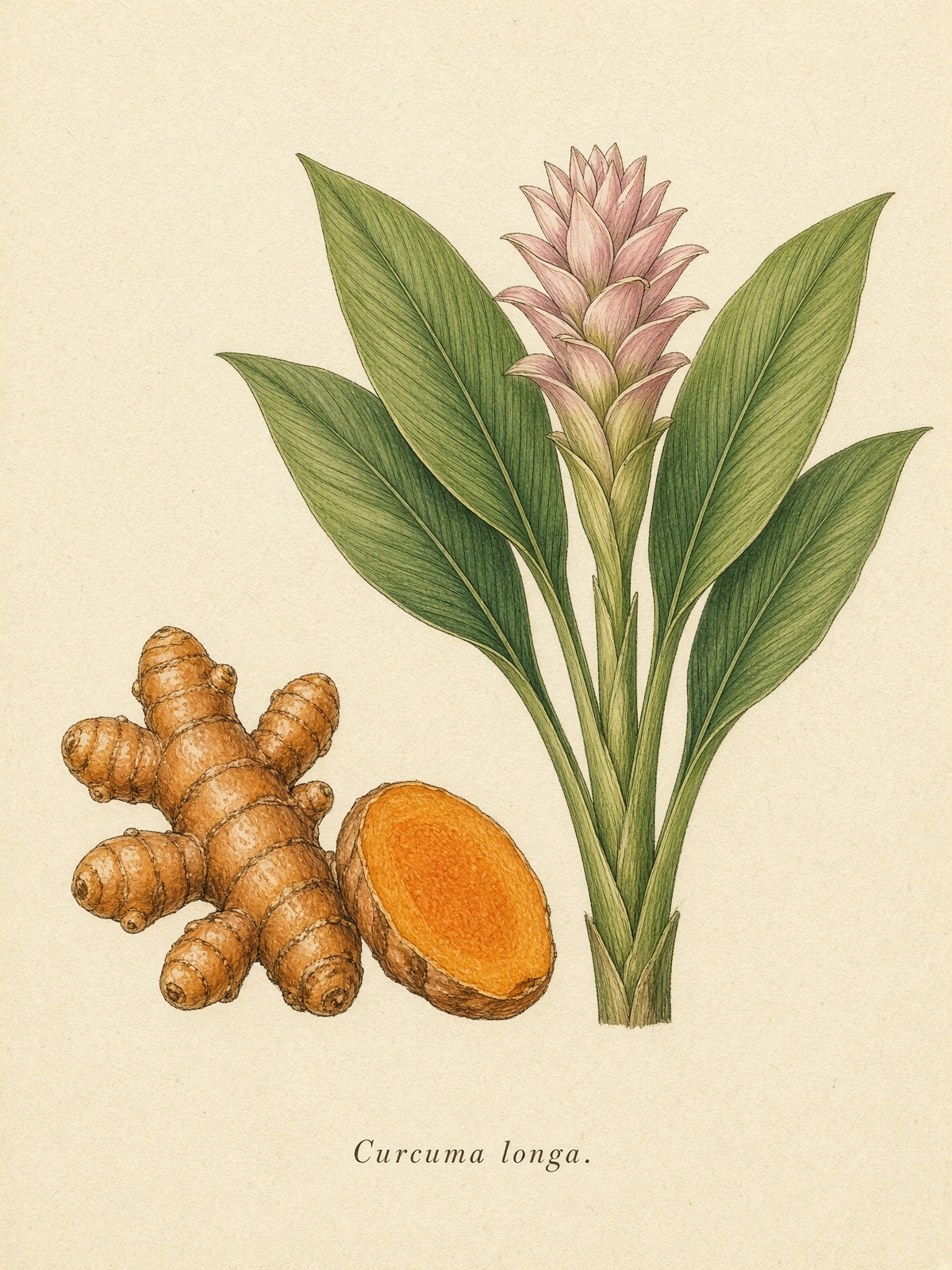
Herb. No. 004 · Zingiberaceae
Indian subcontinent native; now a tropical farm crop from the Caribbean to Southeast Asia.
Native · South Asia
Native Also grown
LegalGentleplant
Turmeric
Curcuma longa
Golden rhizome of South Asian cooking, taken for stiff joints and low-grade inflammation.
Turmeric's color and much of its research rest on curcuminoids. Whole-food turmeric is poorly absorbed unless taken with fat and a little black pepper (piperine). Traditional Ayurvedic use is broader than the modern 'anti-inflammatory capsule' story — it was also a bitter for the liver and a dye-wound paste.
Flavor
Earthy, mustard-bitter, faintly ginger; stains the tongue gold.
Parts used
Rhizome
Helpful
- Culinary doses are very safe
- Pairs with food fats
- Stains everything a cheerful gold
Cautions
- Isolated high-dose curcumin can cause reflux and, rarely, liver injury
- Piperine-boosted extracts change drug levels
- Not a substitute for inflammatory disease treatment