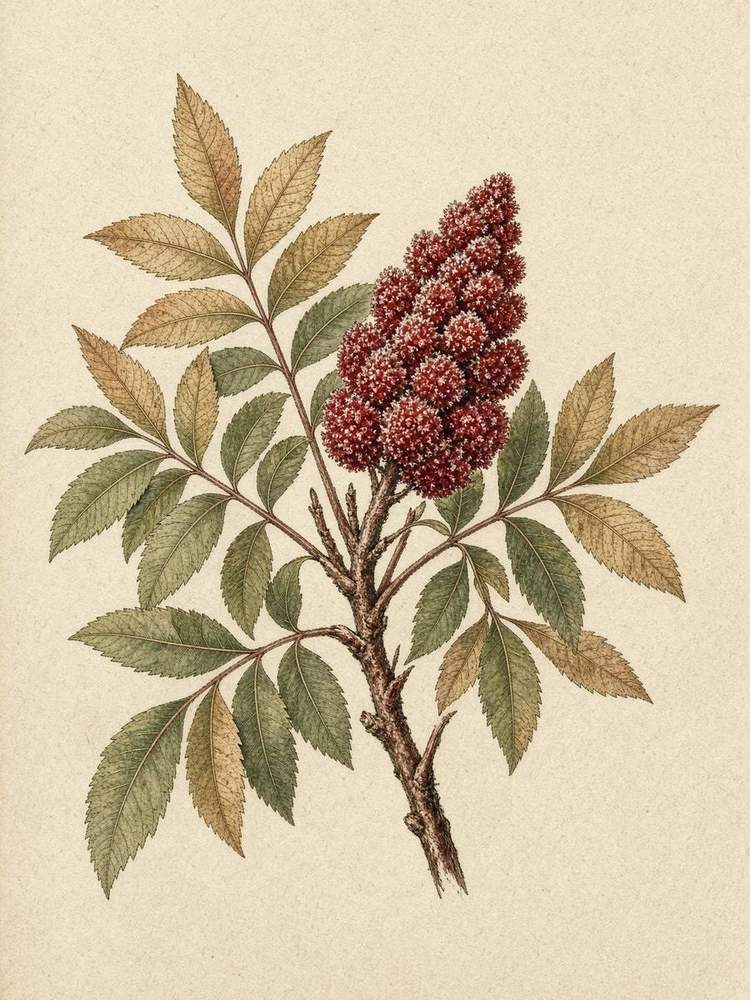
Herb. No. 142 · Anacardiaceae
Sicilian and West Asian Rhus. Staghorn cousins in North America are a separate lemonade.
Native · Mediterranean · West Asia
Native Also grown
LegalGentleplant
Sumac
Rhus coriaria
The sour red dust of za’atar — a Mediterranean berry-spice, not the white-berried swamp plant that raises blisters.
Culinary sumac is the dried, ground drupe of Rhus coriaria, a Mediterranean shrub. The taste is lemon without citrus. Traditional use is as a souring spice and a mild astringent. North American staghorn sumac (R. typhina) makes a similar lemonade from the red cones. Poison sumac has white berries and lives in bogs. If it is white, walk away.
Flavor
Lemon, salt, a little tannin. The red powder is the spice; the seed is woody.
Parts used
Ripe red fruit (dried)
Helpful
- A pantry sour when lemons run out
- A handsome shrub
Cautions
- Wrong genus raises blisters
- Cashew-family allergy