The Herbarium
Part I · Medicinal herbs
Herb. No. 142
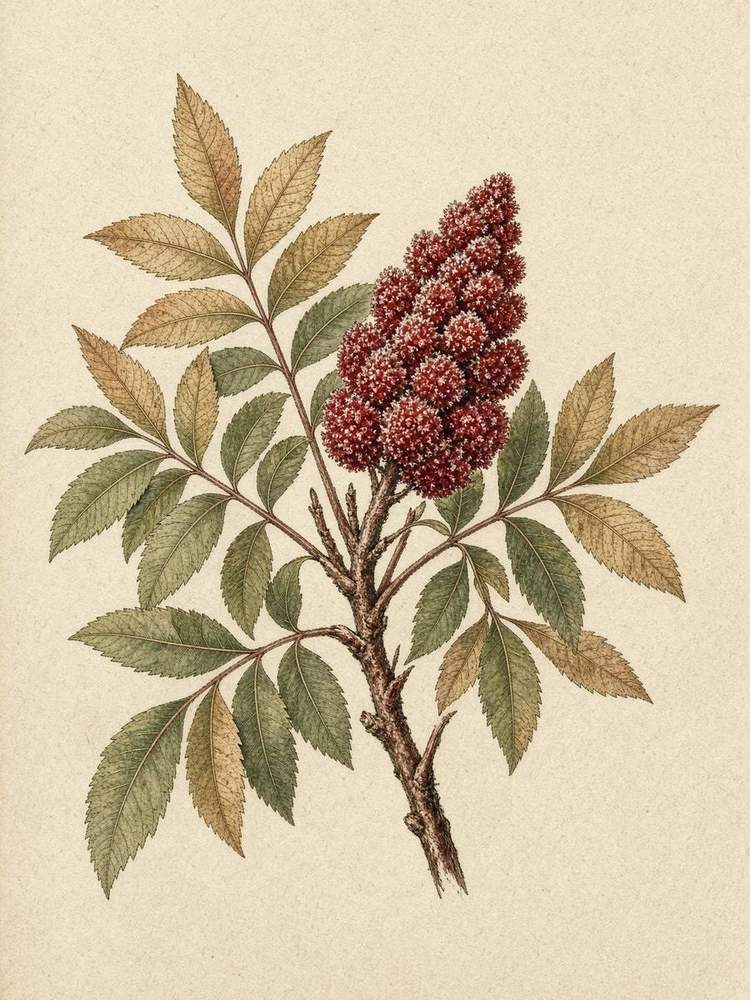
Sumac
Rhus coriaria
Anacardiaceae
The sour red dust of za’atar — a Mediterranean berry-spice, not the white-berried swamp plant that raises blisters.
Culinary dried fruit of R. coriaria or North American staghorn types used as spice. Poison ivy, poison oak, and poison sumac (Toxicodendron) are not this plate.
- Parts used
- Ripe red fruit (dried)
- Traditional notes
- Kitchen sour · After grilled meat · Traditional astringent folklore
- Grow · USDA 6b
- Shrub, USDA 8–10 for R. coriaria; staghorn is USDA 3–8 A named culinary type. Seed needs cold. In work: Jul · Aug · Sep
- Harvest
- Red clusters when fully colored, before rain washes the sour off.
- Red cones only. White is the other plant.
- Dry and grind, or steep the cones for a sour drink.
Safety
Cashew/mango/poison-ivy allergy caution White-berried Toxicodendron
Lore
The Romans used it as a sour before lemons were common in Europe. The Arabic summāq is the same red dust on a kebab. Leather tanners used a different sumac for the tannin; the kitchen kept the fruit. If your field guide says white berries, you have left the spice aisle.
The Herbarium — a teaching catalog, not a clinic. Traditional use is history, not a prescription. USDA 6b dates are a week either way, not a promise. Do not eat, drink, or harvest a plant you cannot name.