32 named mix-ups — tea leaves, white umbels, autumn cups, and two plants that share a common name. A comparison is not a forage license.
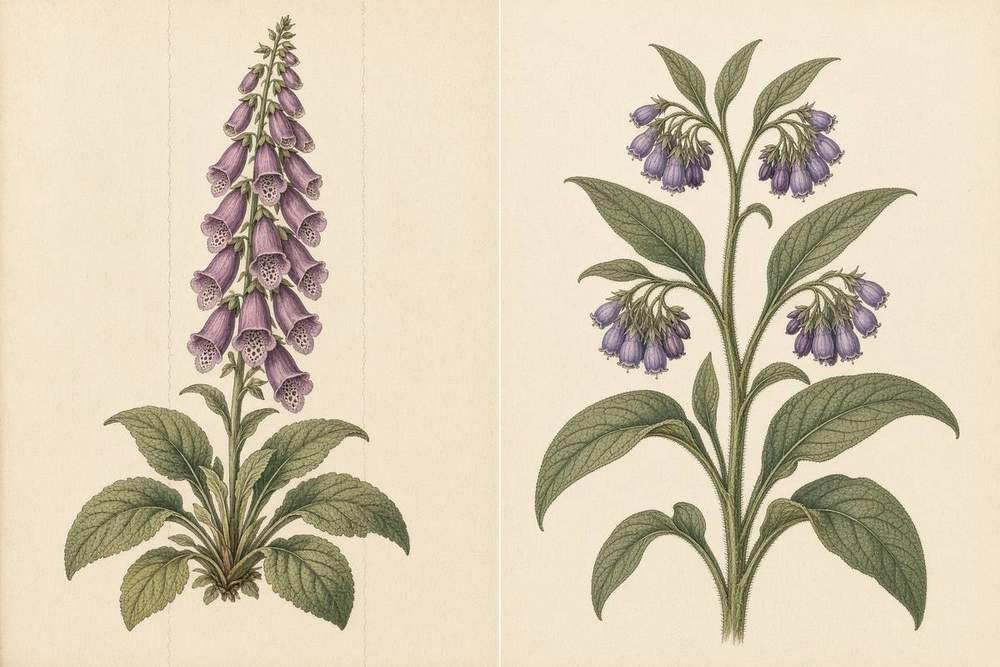
Foxglove for comfrey in a kettle is the worst garden story in this folio. Poison hemlock for parsley is the worst roadside one. If a plant is not in flower and you cannot name it, it is not tea, salad, or a wild carrot.
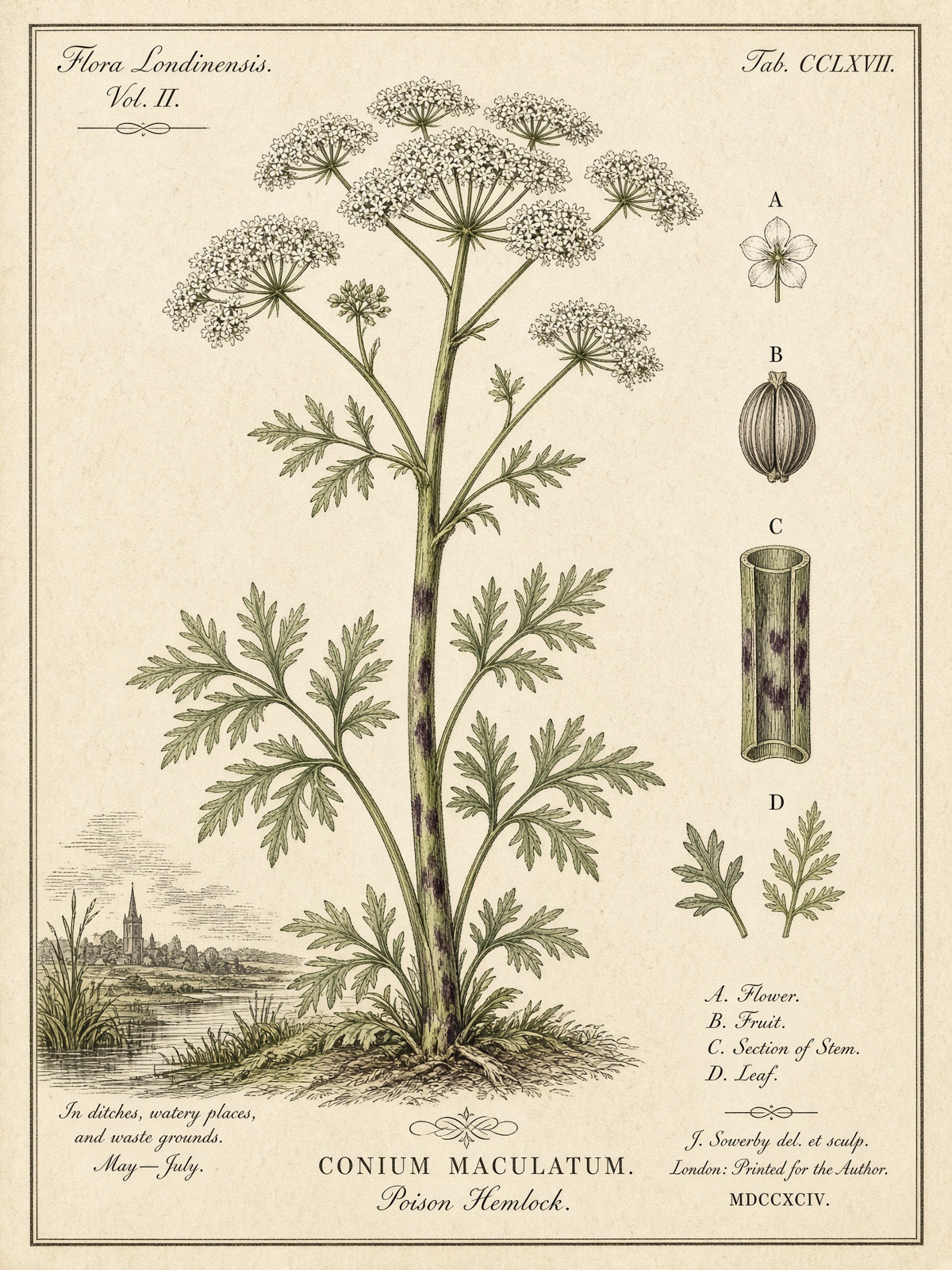
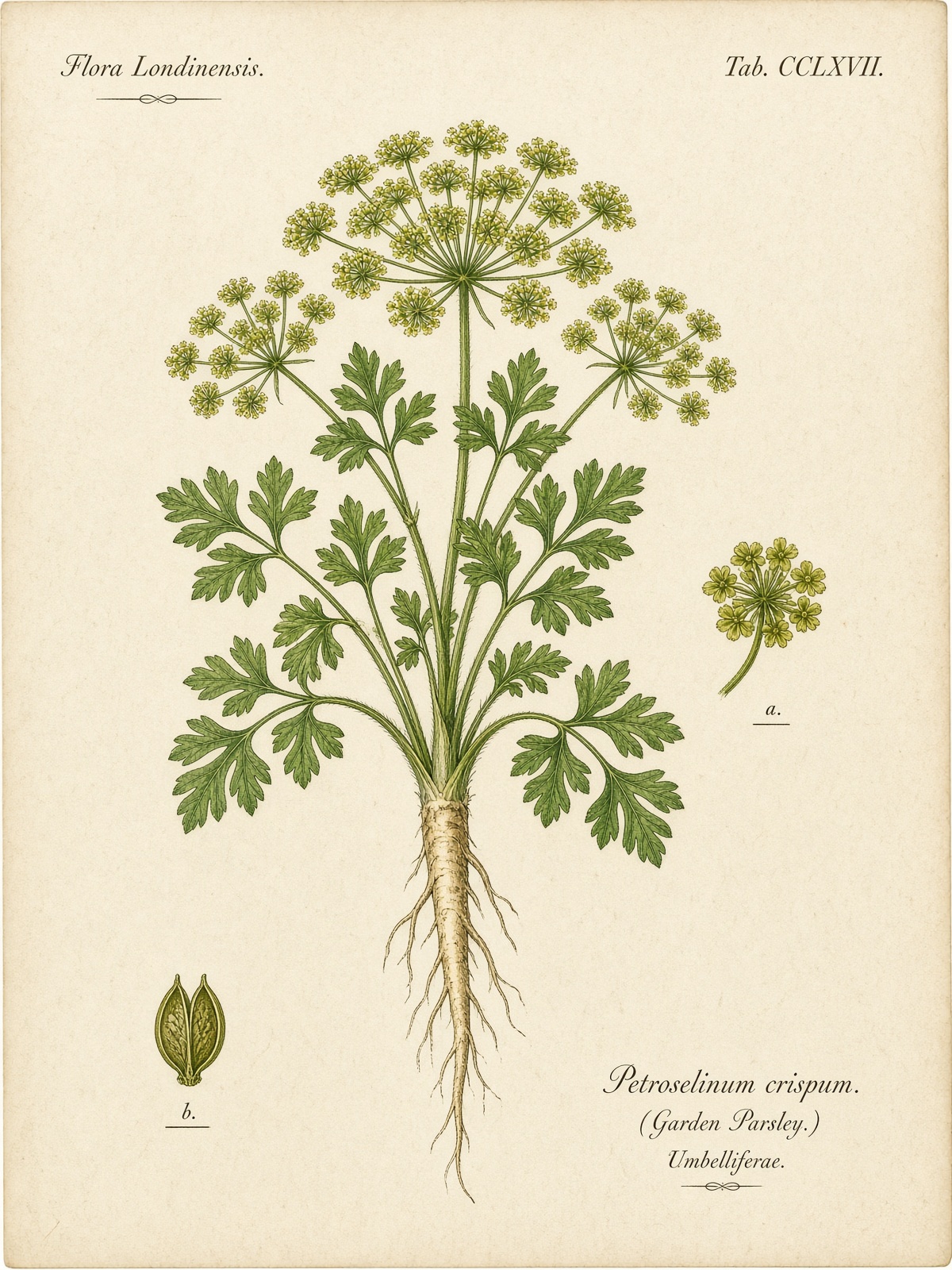
Poison hemlock is still pulled as ‘wild parsley.’ A purple-spotted stem is the difference between supper and Socrates’ cup.
Conium has smooth, hollow, purple-blotched stems and a mousy smell when crushed. Garden parsley is green to the ground, never blotched, and smells of the kitchen. Hairless white umbels on a roadside are not an herb.
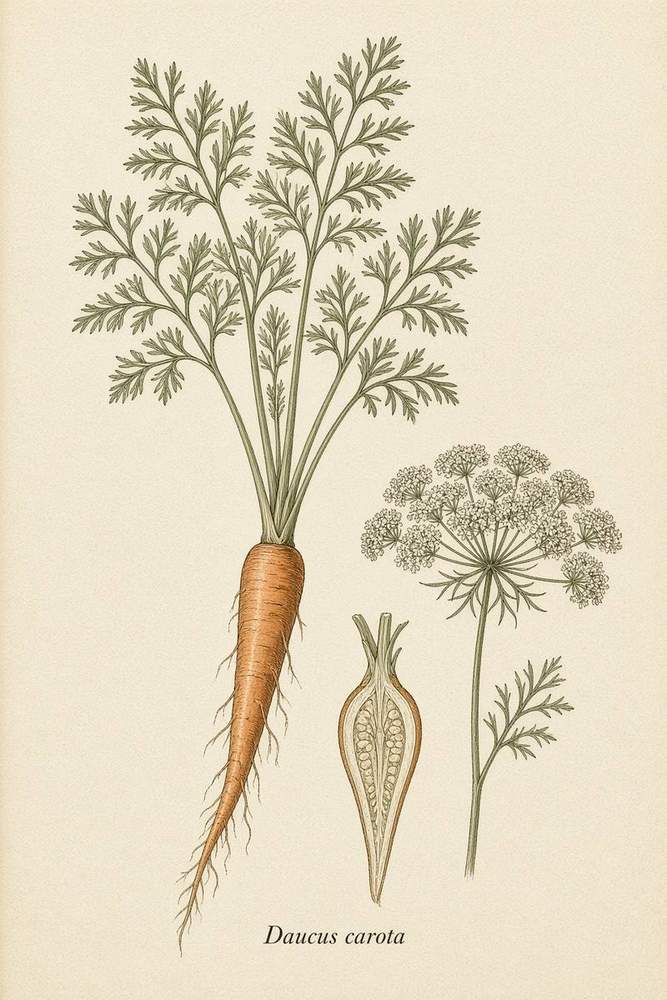
Queen Anne’s lace and poison hemlock share a white umbrella. One is a taproot. The other shuts the nerves down.
Wild carrot has a hairy stem, a three-forked bract under the umbel, and often a dark floret in the center. Hemlock is hairless, purple-spotted, and the bracts are short and even. Do not forage a white umbel from a ditch.
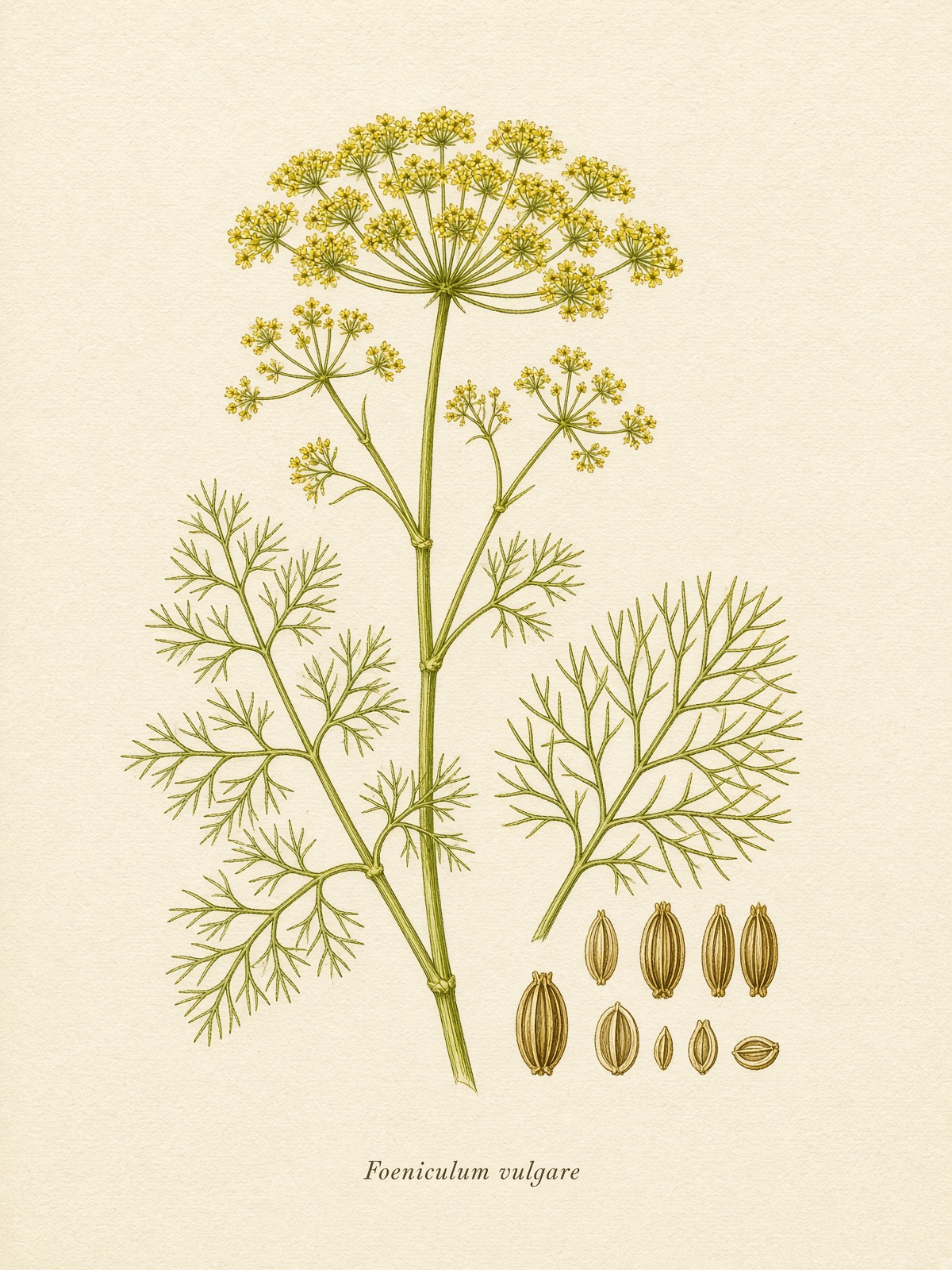
Anise-scented foliage is not a field test. Poison hemlock has been called ‘wild fennel’ by people who then got very still.
Fennel is glaucous, yellow-flowered, and smells of liquorice even in the stem. Hemlock flowers white, stinks of mouse, and carries those purple spots. Crush, look, and walk away if you are unsure.
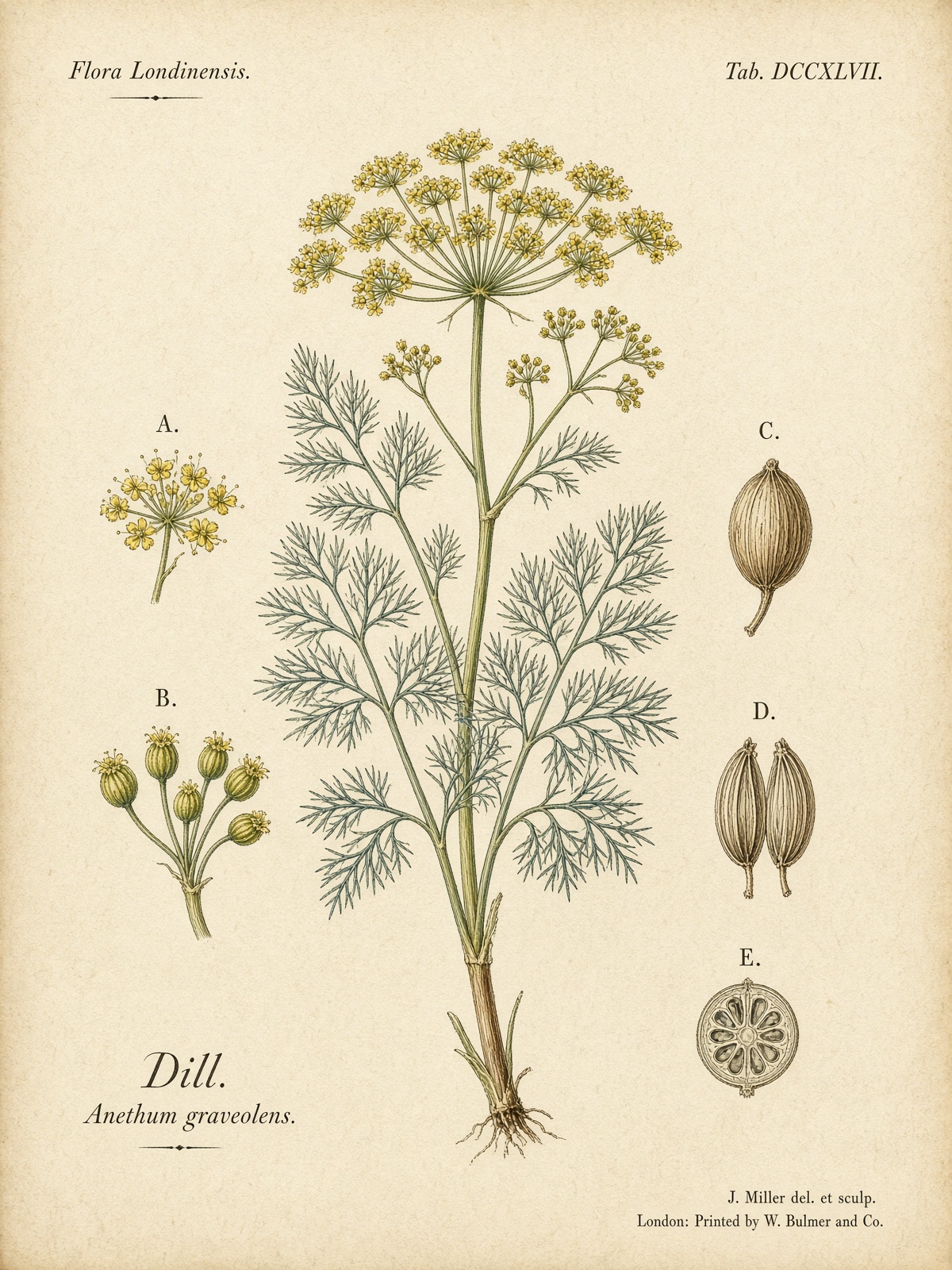
A feathery roadside weed is not a pickle herb. Dill is annual and yellow; hemlock is a biennial tower with white umbels.
Dill is blue-green, anise-soft, and the umbel is flat and yellow. Hemlock is taller, white, purple-blotched, and the leaf is triangular, not thread-fine. Never pick an unknown umbel for the jar.
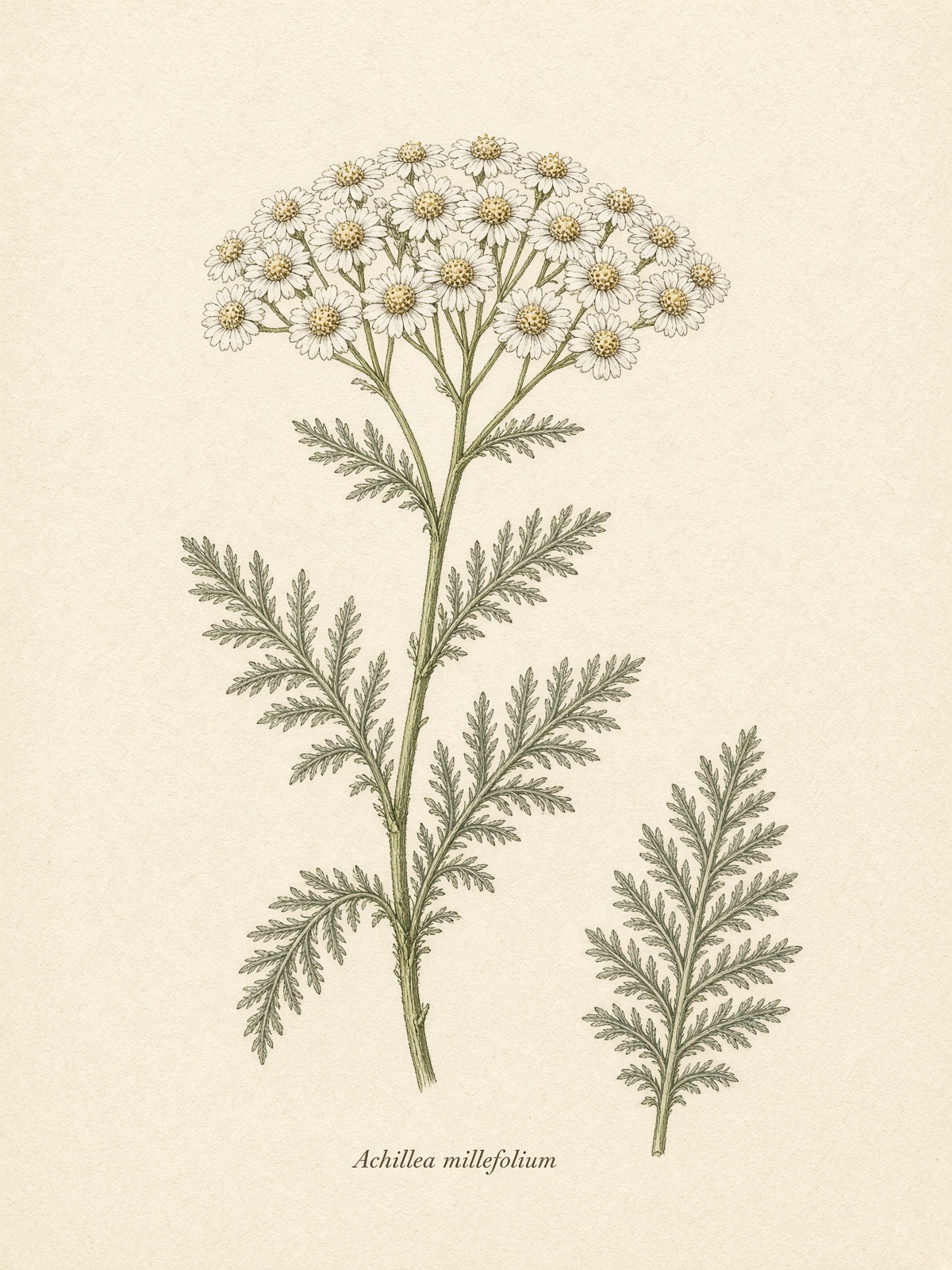
Achillea is a flat, ferny aster, not an umbel. People still call any white roadside head ‘yarrow’ — and some of those heads are hemlock.
Yarrow leaves are finely divided, aromatic, and alternate on a tough stem; the head is a cluster of tiny daisies, not an umbel. Hemlock is a true parsley-family umbrella. If you cannot see the little daisy discs, it is not yarrow.