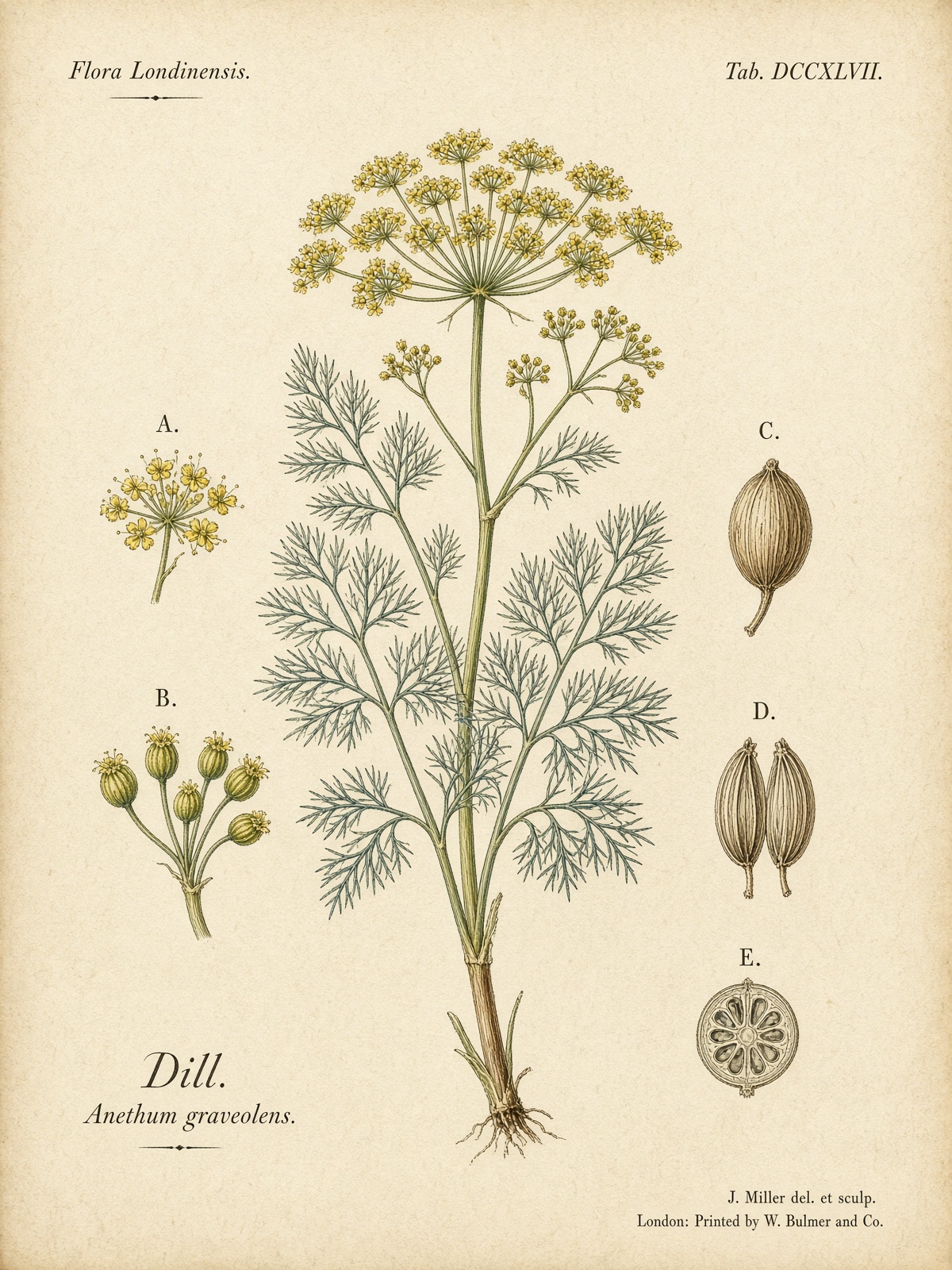
Herb. No. 103 · Apiaceae
Black Sea and Mediterranean annual, a pickle herb wherever summers are not tropically wet.
Native · Mediterranean · West Asia · Europe
Native Also grownNow a garden plant worldwide
LegalGentleplant
Dill
Anethum graveolens
Medicinal herbsKitchenHarvestCompanionsLookalikes
Feathery kitchen green and a caraway-cousin seed — the pickle herb, also an after-dinner chew.
Dillweed is the leaf; dill seed is the spice. Traditional European and Indian use of the seed is for gas and colic folklore. Culinary amounts are gentle. It cross-pollinates with fennel if you want true seed — keep them apart. Wild lookalikes in Apiaceae are the usual caution.
Flavor
Leaf is green anise and grass; seed is warmer, caraway-adjacent, a little citrus.
Parts used
Leaf · Ripe seed
Helpful
- Fast from seed
- Leaf and seed both useful
Cautions
- Bolts in heat
- Lookalikes
- Fennel will hybridize it