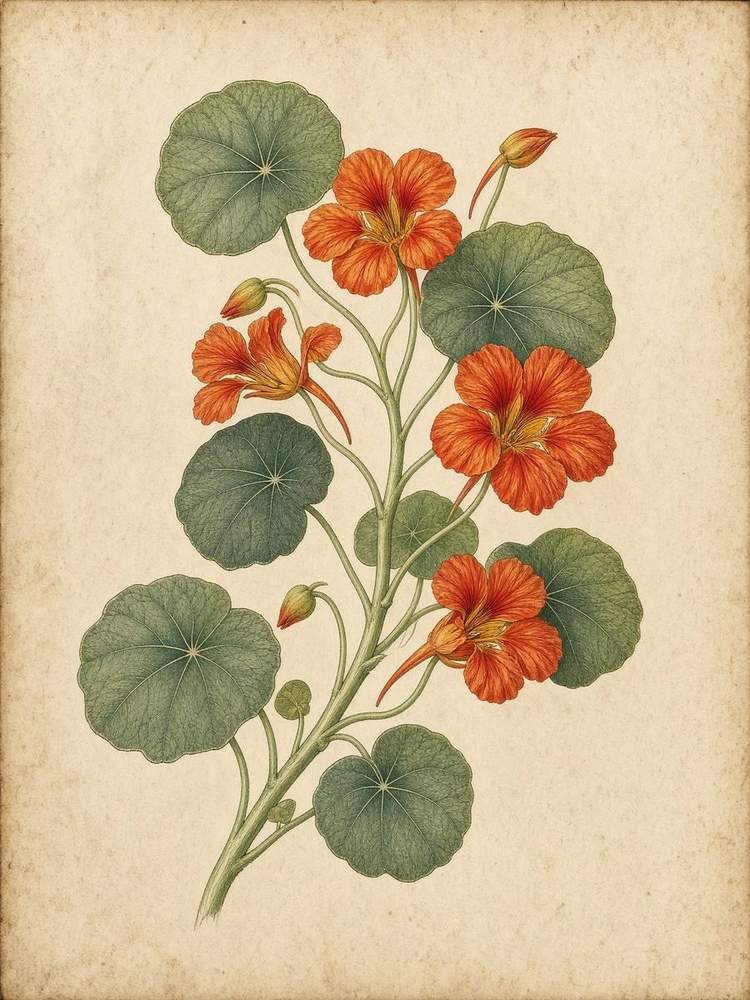
Herb. No. 117 · Tropaeolaceae
Andean Tropaeolum, a tender annual garnish wherever summers are not tropically wet.
Native · South America
Native Also grownNow a garden plant worldwide
LegalGentleplant
Nasturtium
Tropaeolum majus
Medicinal herbsKitchenHarvestCompanions
Peppery lily-pad leaves and a spurred flower — a salad plant whose pickled seeds stand in for capers.
Garden nasturtium is a South American Tropaeolum, not the watercress genus that borrowed its name. Leaf and flower are a mustardy bite. The green seeds, pickled, are poor man’s capers. Traditional use as a winter ‘cress’ is food-level, not a drug. Easy from seed, and the aphids will tell you so.
Flavor
Watercress, mustard, a little honey in the flower. Seed is hotter.
Parts used
Leaf · Flower · Green seed
Helpful
- Grows in poor soil
- Every part of the garnish is edible
Cautions
- Aphids love it
- Not a medicine chest