The Herbarium
Part I · Medicinal herbs
Herb. No. 117
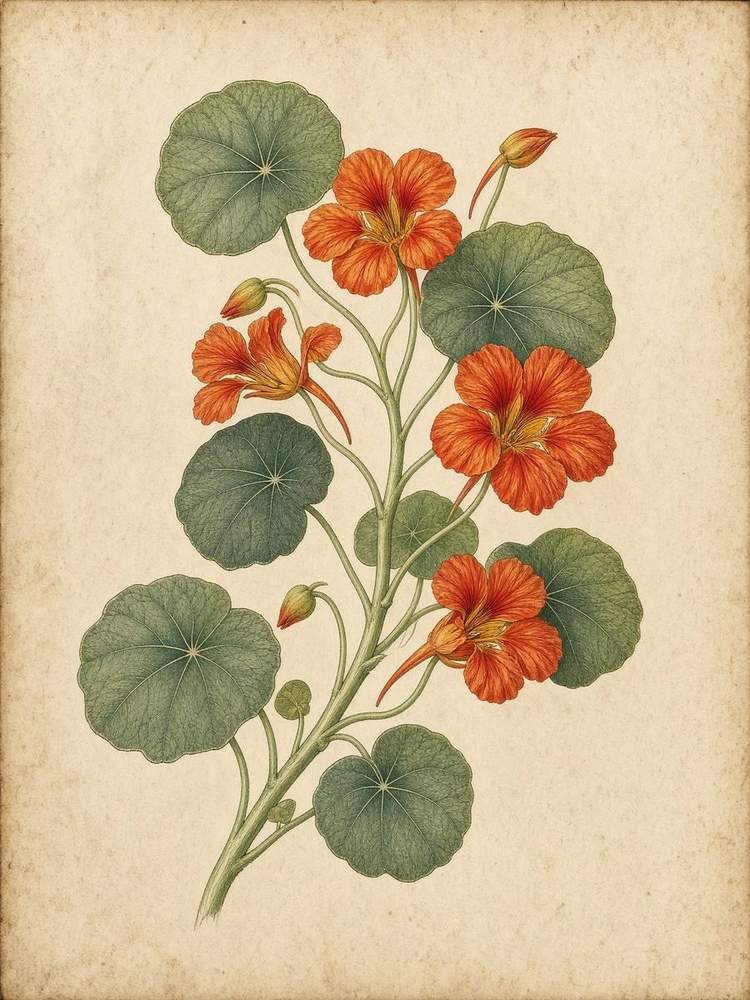
Nasturtium
Tropaeolum majus
Tropaeolaceae
Peppery lily-pad leaves and a spurred flower — a salad plant whose pickled seeds stand in for capers.
Culinary flower, leaf, and pickled seed. Not watercress (Nasturtium officinale), a different plant that stole the name.
- Parts used
- Leaf · Flower · Green seed
- Traditional notes
- Salad · Pickled seed · Traditional winter cress folklore
- Grow · USDA 6b
- Tender annual. Frost kills it. Direct-sow after frost, or start indoors. Soak seed overnight. In work: May · Jun · Jul · Aug · Sep
- Harvest
- Leaves anytime; flowers as they open; green seeds for pickle.
- Poor soil, more flowers. Compost makes a vine of leaves.
- Aphids: a rinse, or plant extra.
- Climbing types want a fence; dwarfs stay in a pot.
Safety
Mustard-family caution if you react to cress
Companions
Plant with Anise hyssop, Apple, Artichoke, Bee balm, Borage, Broccoli.
Lore
Linnaeus named it Tropaeolum from tropaeum, a trophy — the round leaves and flowers looked to him like shields and helmets on a battlefield pole. Victorian salads were not complete without it. The pickled seeds fooled no one as capers, and fooled everyone as a good idea.
The Herbarium — a teaching catalog, not a clinic. Traditional use is history, not a prescription. USDA 6b dates are a week either way, not a promise. Do not eat, drink, or harvest a plant you cannot name.