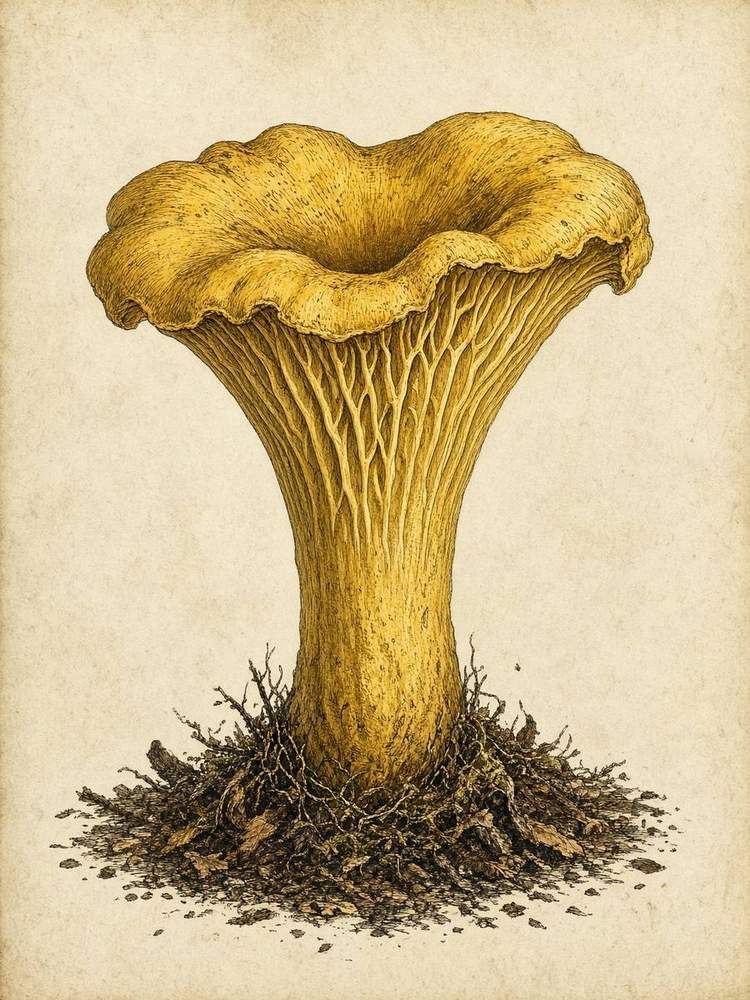
Herb. No. 119 · Cantharellaceae
Mycorrhizal woods of several continents. Habitat map, not a pin for this year’s flush.
Native · Europe · North America · Africa
Chanterelle
Cantharellus cibarius
The golden forest vase — a prized edible whose blunt false gills separate it from lookalikes that cramp.
True chanterelles run blunt, forked ridges down the stem, smell of apricot, and do not grow in tight shelves on wood. Jack-o’-lantern (Omphalotus) is orange, sharp-gilled, and a gut bomb; false chanterelle is a different, thinner mushroom. This plate teaches recognition and cooking. It is mycorrhizal — there is no reliable kitchen-block crop — so the grow lab is habitat only.
Flavor
Apricot, pepper, egg-yolk. Dry-sauté first or they water themselves into a stew.
Parts used
Fruiting body
Helpful
- Among the best wild edibles when you are sure
- A smell you can learn
Cautions
- Lookalikes
- Not a garden crop
- Bugs and rain can ruin a basket