The Herbarium
Part II · Medicinal fungi
Herb. No. 119
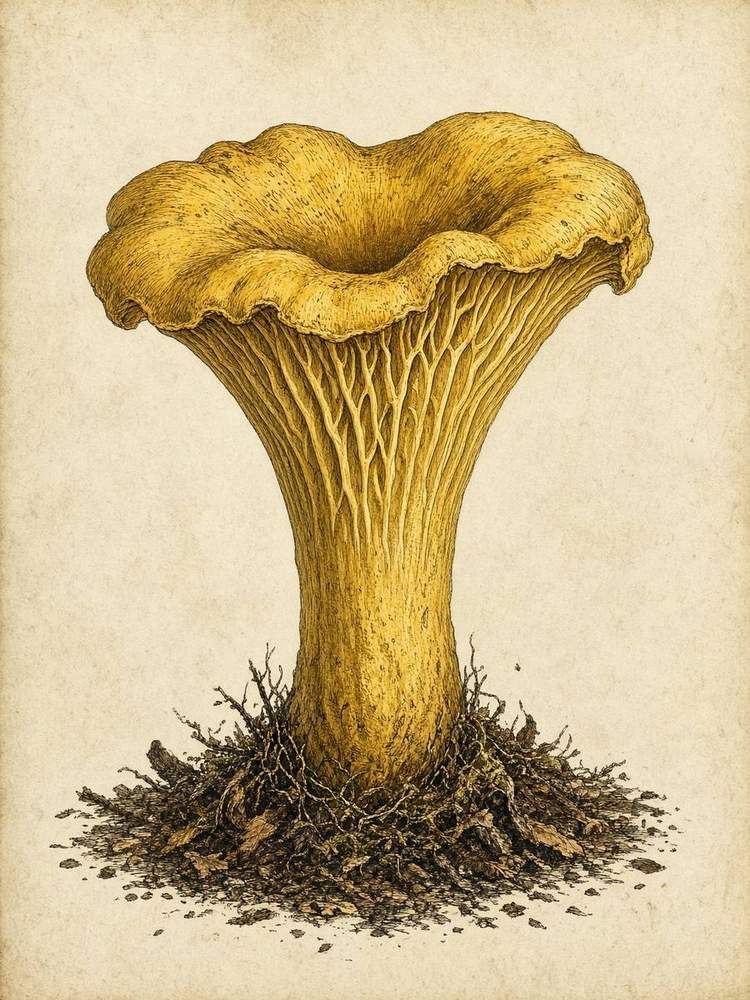
Chanterelle
Cantharellus cibarius
Cantharellaceae
The golden forest vase — a prized edible whose blunt false gills separate it from lookalikes that cramp.
Wild edible when correctly identified. False chanterelles and jack-o’-lanterns fool the hurried. Not a home-cultivated block crop.
- Parts used
- Fruiting body
- Traditional notes
- Kitchen (correctly identified) · Traditional woodland food
- Habitat only
- Mycorrhizal with oaks, pines, and other trees in temperate woods. Summer to autumn, after rain, on soil — not on logs in shelves. Habitat map, not a pin for this year’s flush.
- Apricot smell, blunt forked ridges, white spore, grows on the ground.
- Jack-o’-lantern has sharp true gills, grows in clumps on wood, and may glow.
- A photograph is not a supper. If you are new, go with someone who is not.
Safety
Any orange mushroom you cannot name to species Raw wild mushrooms
Lore
Linnaeus listed it among the few mushrooms he trusted. The French called it girolle; the Germans Pfifferling. It has never really been farmed, which is why a basket still feels like luck. The apricot smell is the field test the old books keep repeating because it works.
The Herbarium — a teaching catalog, not a clinic. Traditional use is history, not a prescription. USDA 6b dates are a week either way, not a promise. Do not eat, drink, or harvest a plant you cannot name.