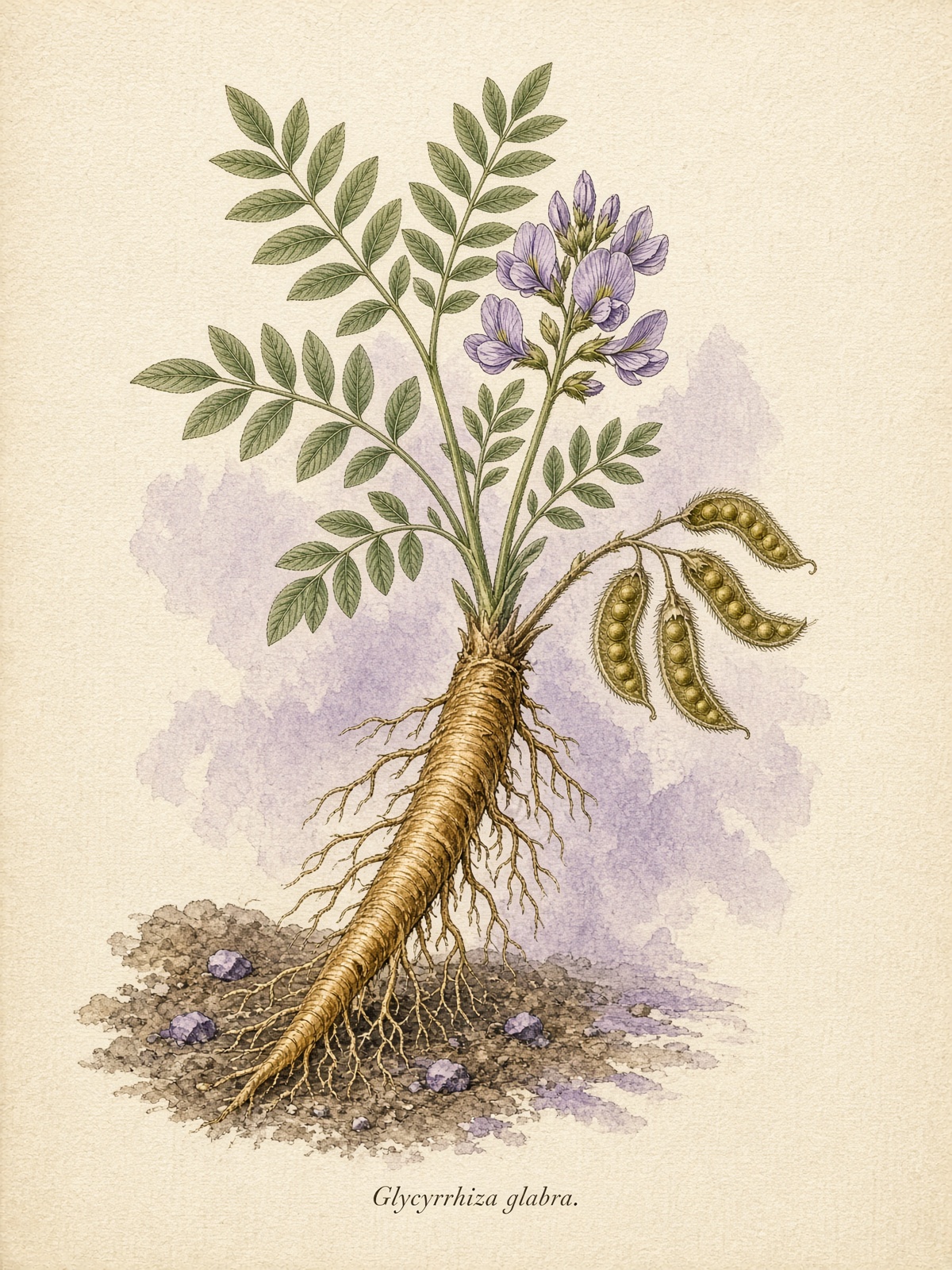
Herb. No. 024 · Fabaceae
Deep-rooted plant of dry West and Central Asia. A long-game crop.
Native · West Asia · Mediterranean · Central Asia
Native Also grown
LegalCautionplant
Licorice
Glycyrrhiza glabra
Sweet root that soothes mucosa and supports adrenals — and can raise blood pressure if overused.
Glycyrrhizin is 50 times sweeter than sugar and inhibits cortisol breakdown, which is why chronic high-dose licorice causes hypertension, edema, and low potassium. Short courses for a raw throat or DGL for the stomach spare most of that risk. A formula harmonizer in Chinese herbalism.
Flavor
Intense sweet anise; aftertaste is woody and a little salty.
Parts used
Root
Helpful
- Superb demulcent
- Makes bitter formulas drinkable
Cautions
- Raises blood pressure
- Drops potassium
- Not for daily candy-level use