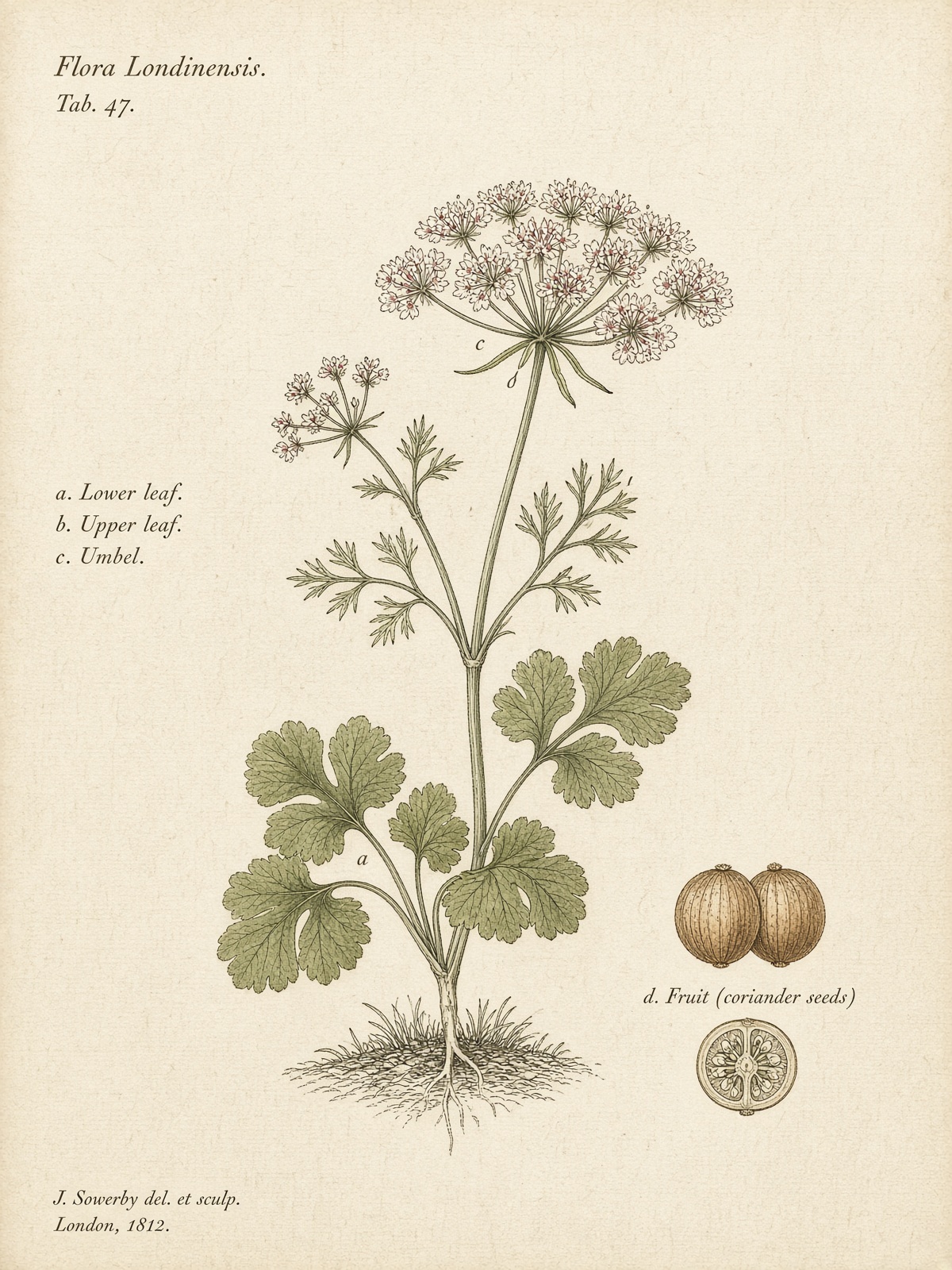
32 named mix-ups — tea leaves, white umbels, autumn cups, and two plants that share a common name. A comparison is not a forage license.
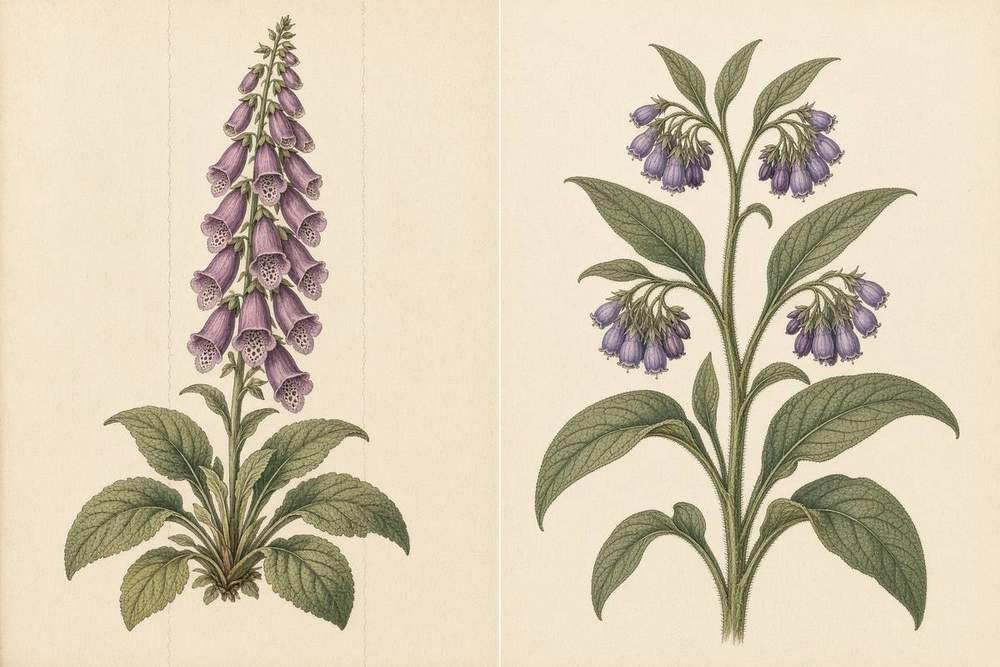
Foxglove for comfrey in a kettle is the worst garden story in this folio. Poison hemlock for parsley is the worst roadside one. If a plant is not in flower and you cannot name it, it is not tea, salad, or a wild carrot.
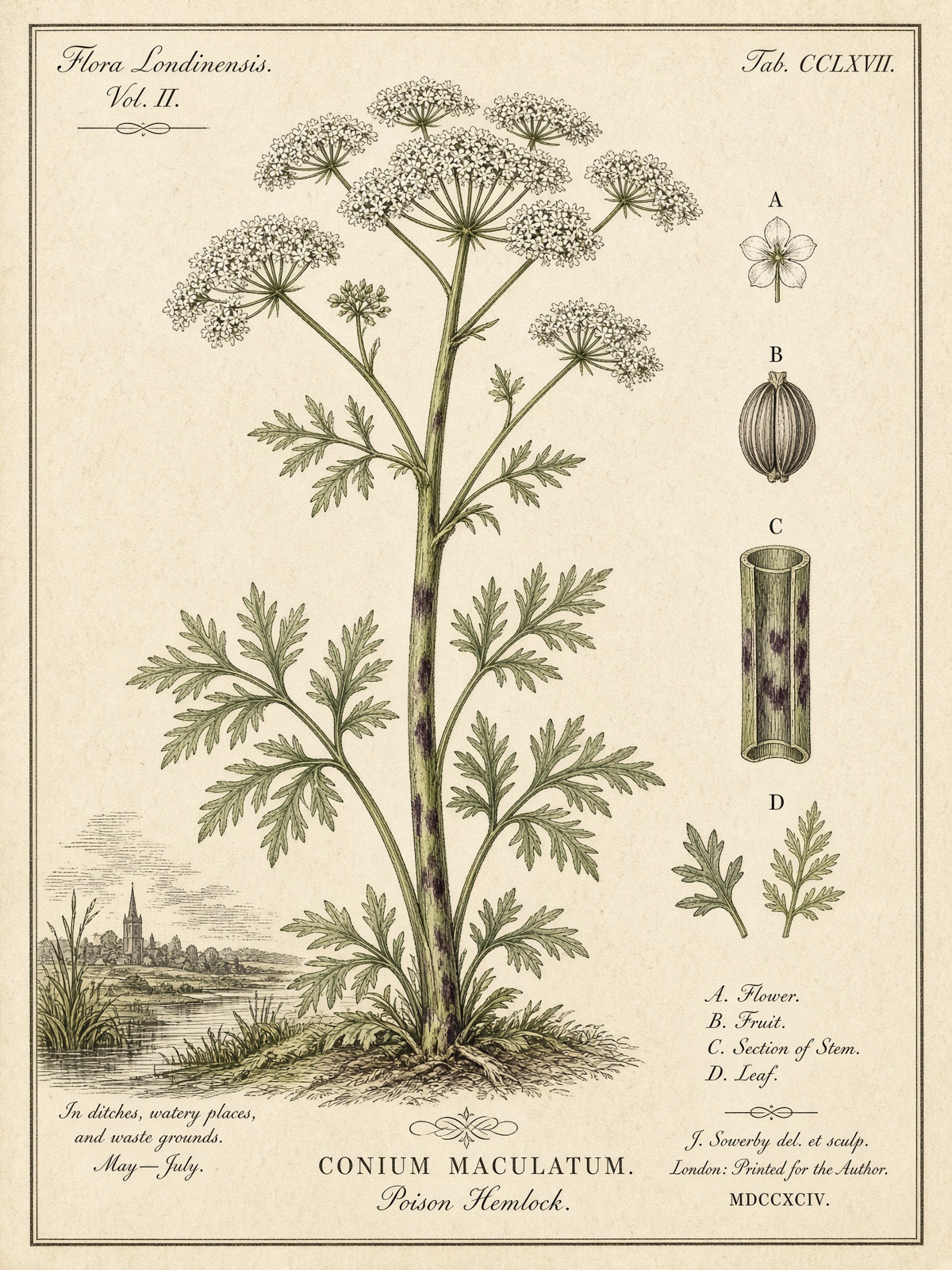
Poison hemlock is still pulled as ‘wild parsley.’ A purple-spotted stem is the difference between supper and Socrates’ cup.
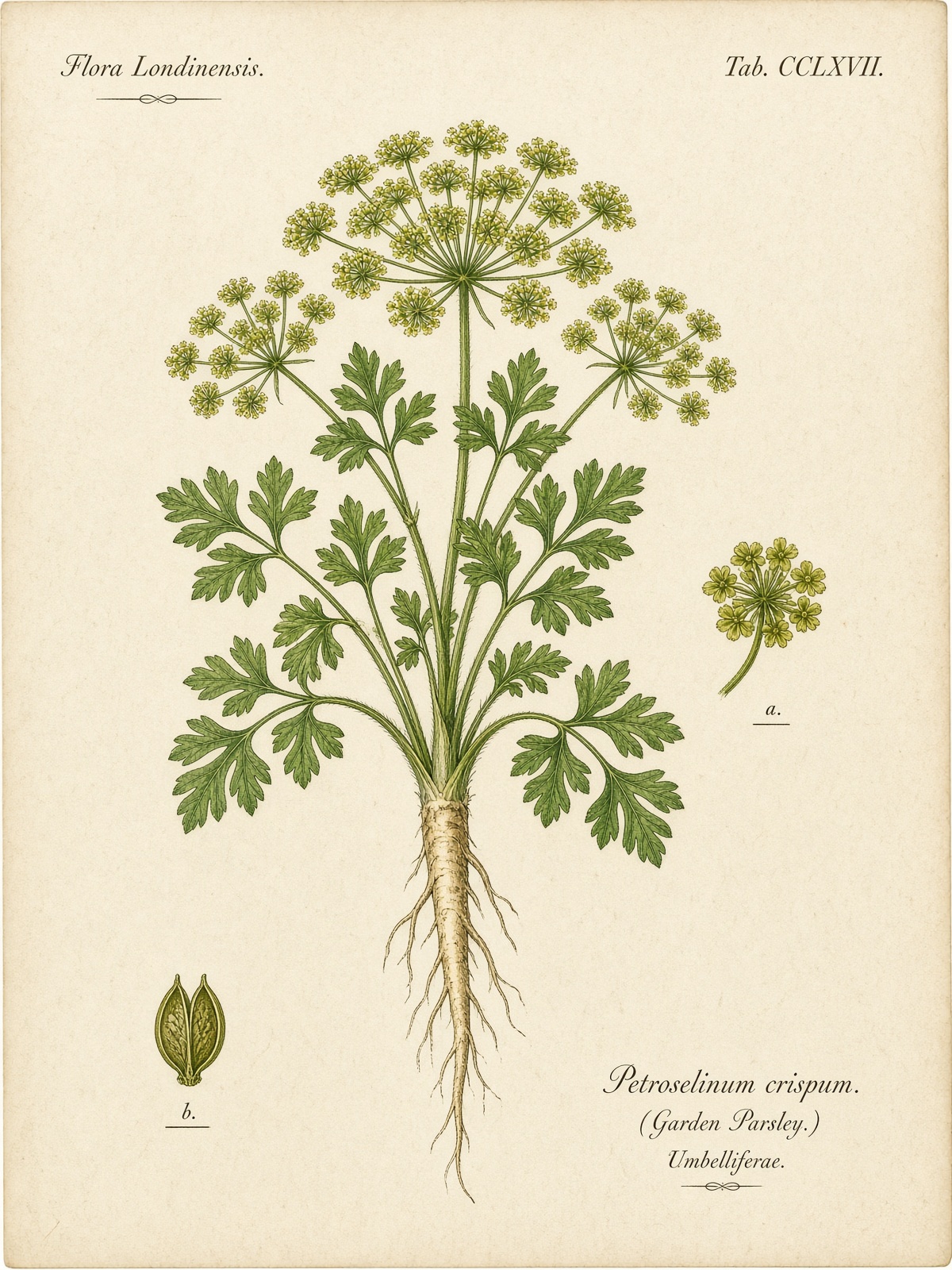
Conium has smooth, hollow, purple-blotched stems and a mousy smell when crushed. Garden parsley is green to the ground, never blotched, and smells of the kitchen. Hairless white umbels on a roadside are not an herb.
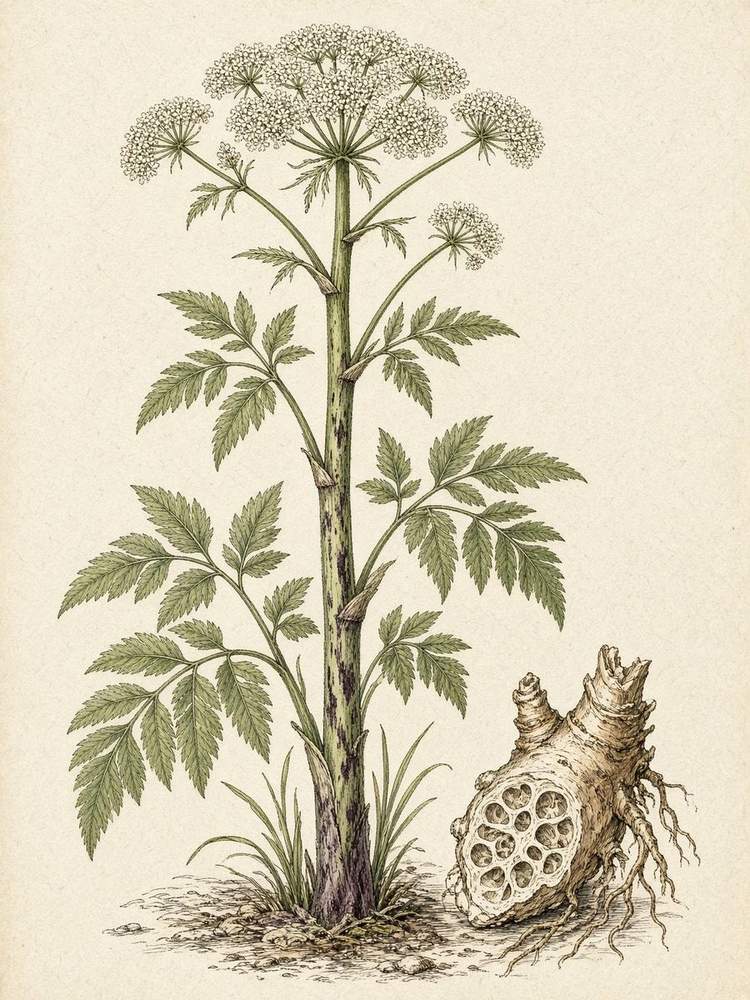
Cicuta is the deadliest plant in North American ditches. A wet-ground parsley look-alike has killed people who wanted a garnish.
Water hemlock stands in wet ground, the leaf veins run to the notches, and the root is chambered. Parsley does not grow in a creek. If the feet are wet, it is not parsley.
Two flat-leaf herbs on the same board. One is coriander. The other is Petroselinum. A soapy leaf is not hemlock — but the umbel family still wants a name.
Cilantro leaf is rounded and scalloped; parsley is saw-toothed and denser. Both are green to the crown. The deadly look-alikes are the roadside umbels, not each other — still, label the bunch.