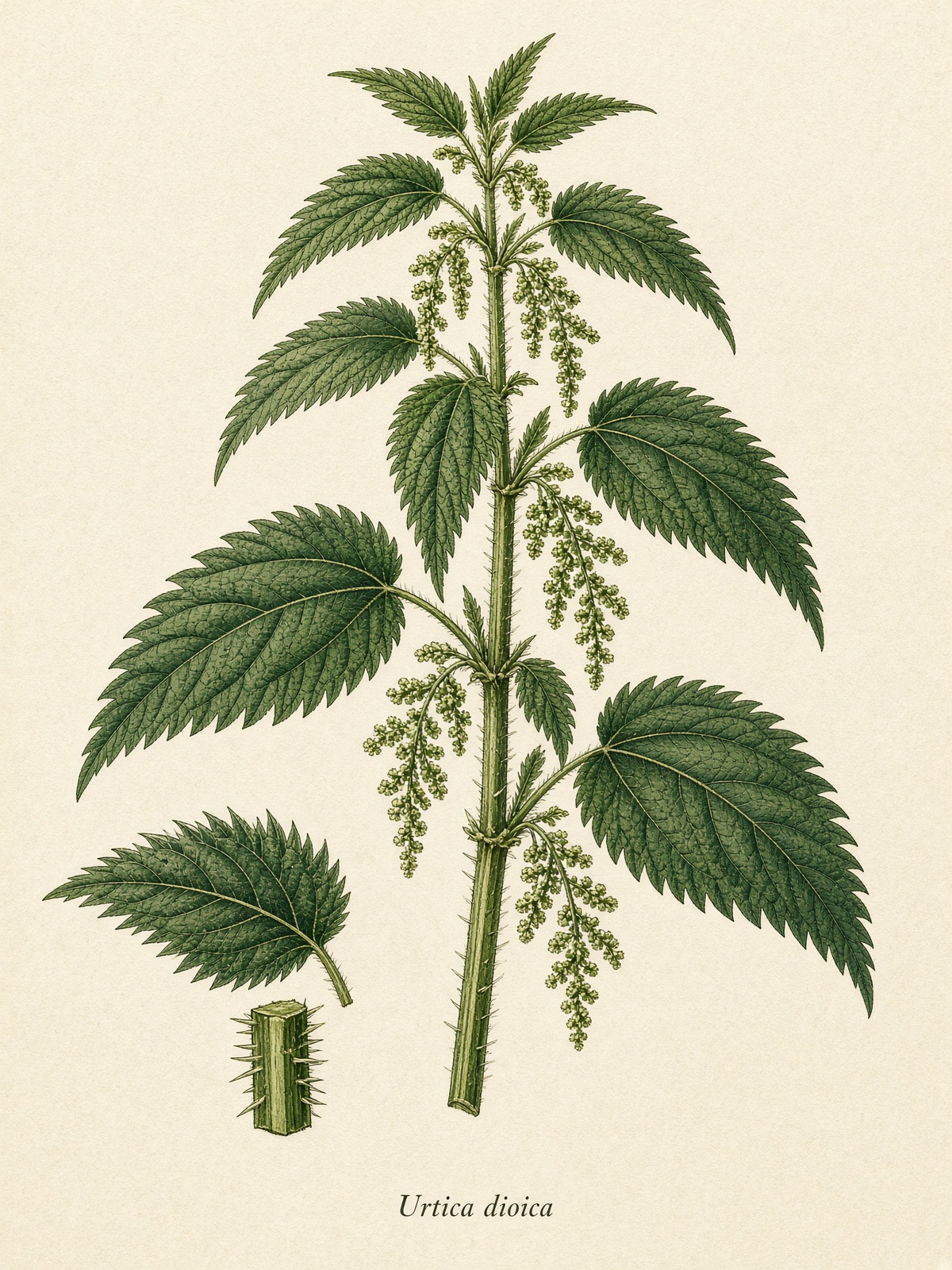
Herb. No. 018 · Urticaceae
Temperate riverbanks of the northern hemisphere.
Native · Europe · North America · West Asia
Native Also grown
LegalGentleplant
Nettle
Urtica dioica
Medicinal herbsKitchenHarvestCompanions
The mineral-rich weed that stings, then feeds — spring tonic, hay-fever leaf, prostate root.
Stinging hairs inject histamine, acetylcholine, and formic acid. Cooking or drying disarms them. Young tops are a spinach-like food; dried leaf is a mineral tea; the root is used for urinary symptoms of an enlarged prostate. One of the most nutritious plants in the temperate flora.
Flavor
Cooked leaf tastes like spinach and green tea, mineral and clean.
Parts used
Young leaf · Root
Helpful
- Food and medicine
- Abundant
- Root and leaf are different, complementary drugs
Cautions
- The sting is real
- Leaf is drying — add moisture herbs if the mouth feels like paper
- Root is not a prostate-cancer treatment