The Herbarium
Part I · Medicinal herbs
Herb. No. 157
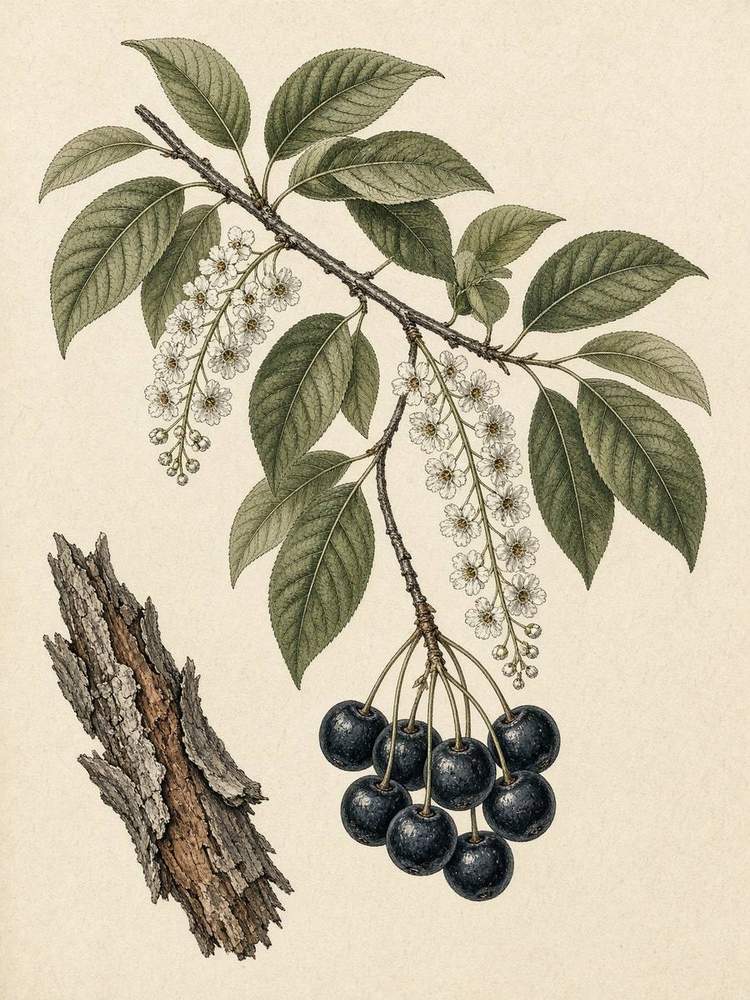
Wild cherry
Prunus serotina
Rosaceae
Black cherry of eastern woods — a cough-bark folklore, and a tree whose wilted leaves are a livestock warning.
Inner bark as a traditional cough syrup. Wilted leaves and pits contain cyanogenic glycosides — do not make tea from fallen leaves or crushed pits.
- Parts used
- Inner bark · Fruit (pits out)
- Traditional notes
- Dry cough folklore · Kitchen jelly from fruit
- Grow · USDA 6b
- Tree, USDA 3–9 A nursery tree, or a pit after a winter outside. You are planting for a decade. In work: Jun · Jul · Aug
- Harvest
- Fruit when black; bark only from prunings. Do not strip a standing wild cherry.
- Fence it from cattle if leaves will wilt in a paddock.
- The cough syrup in the cupboard is the honest bark.
Safety
Wilted-leaf tea Pit tea Girdling a wild tree for bark
Lore
The American cough drop is this bark in sugar. Eclectic physicians wrote of Prunus virginiana and P. serotina almost interchangeably. Cabinetmakers prized the wood. A wilted branch in a hayfield is a different, uglier story — cyanide is the same family trick as bitter almond.
The Herbarium — a teaching catalog, not a clinic. Traditional use is history, not a prescription. USDA 6b dates are a week either way, not a promise. Do not eat, drink, or harvest a plant you cannot name.