The Herbarium
Part IV · Fruit & vegetable
Herb. No. 187
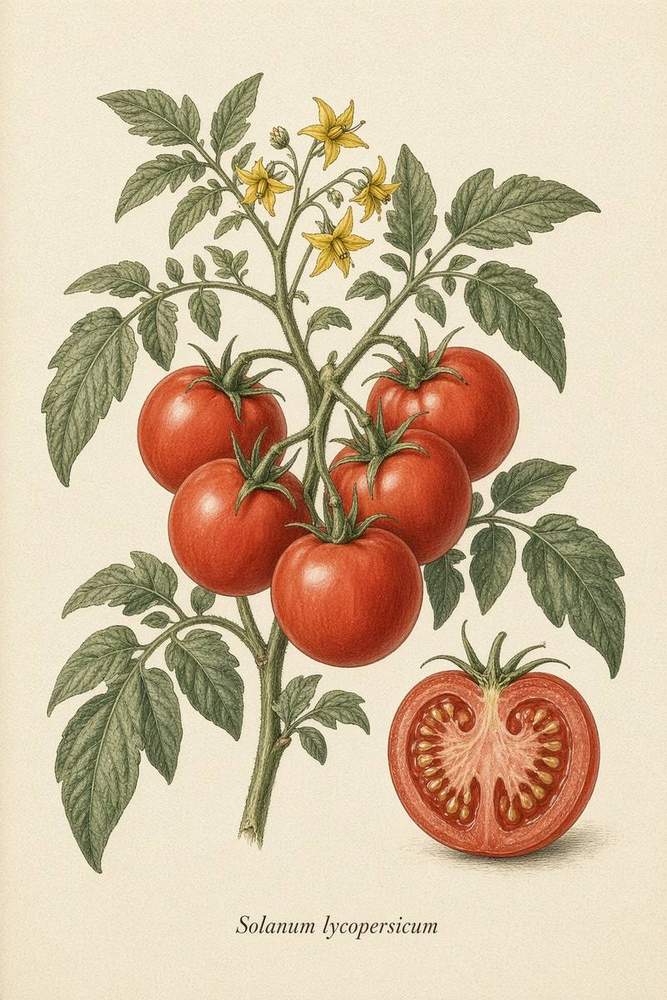
Tomato
Solanum lycopersicum
Solanaceae
The kitchen-garden berry we treat as a vegetable — acid, sweet, and the color of a summer table.
Ripe fruit is food. Leaves, stems, and green fruit in quantity are a nightshade, not a tea.
- Parts used
- Ripe fruit
- Traditional notes
- Kitchen fruit · Sauce and salad · Traditional summer table
- Grow · USDA 6b
- Tender annual. Start indoors; plant out after frost. Seed 6–8 weeks before last frost, or a stout transplant. In work: May · Jun · Jul · Aug · Sep · Oct
- Harvest
- When the shoulder yields and the color is true. Flavor finishes on the plant.
- Stake or cage. A sprawl is a slug hotel.
- Water the soil, not the leaf, if blight lives in your county.
- A few plants well fed beat a jungle.
Safety
Nightshade leaf tea Known tomato allergy Severe reflux if it is your trigger
Companions
Plant with Asparagus, Bee balm, Borage, Calendula, Carrot, Chives.
Keep apart from Blueberry, Broccoli, Cabbage, Eggplant, Fennel, Kale.
Lore
Nahuatl tomatl. The Spanish brought it; Italians named it pomodoro, golden apple, before it was red. Northern Europe treated it as an ornamental poison for a century because it is a nightshade. Jefferson grew it at Monticello anyway. The ketchup bottle is a later, sweeter argument.
The Herbarium — a teaching catalog, not a clinic. Traditional use is history, not a prescription. USDA 6b dates are a week either way, not a promise. Do not eat, drink, or harvest a plant you cannot name.